 📺
📺
The Finished Work of Christ — Why the Work Declared Finished Continues Until Death Is Abolished
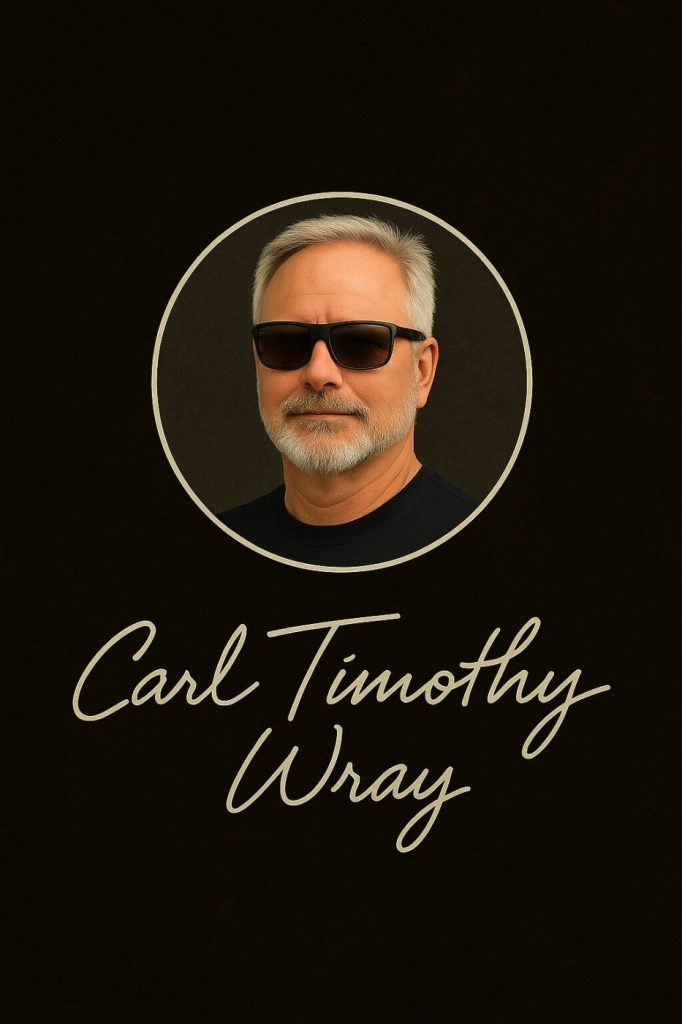
AUTHOR: By Carl Timothy Wray
For decades, the Church has rightly declared that the work of Christ is finished—yet has often struggled to explain why Scripture still speaks of reign, enemies, patience, and transformation. This book was written to resolve that tension, not by weakening the Finished Work, but by unveiling how a work completed in Christ is applied until death itself is abolished. What was finished at the Cross was not delayed—it was destined to reign.
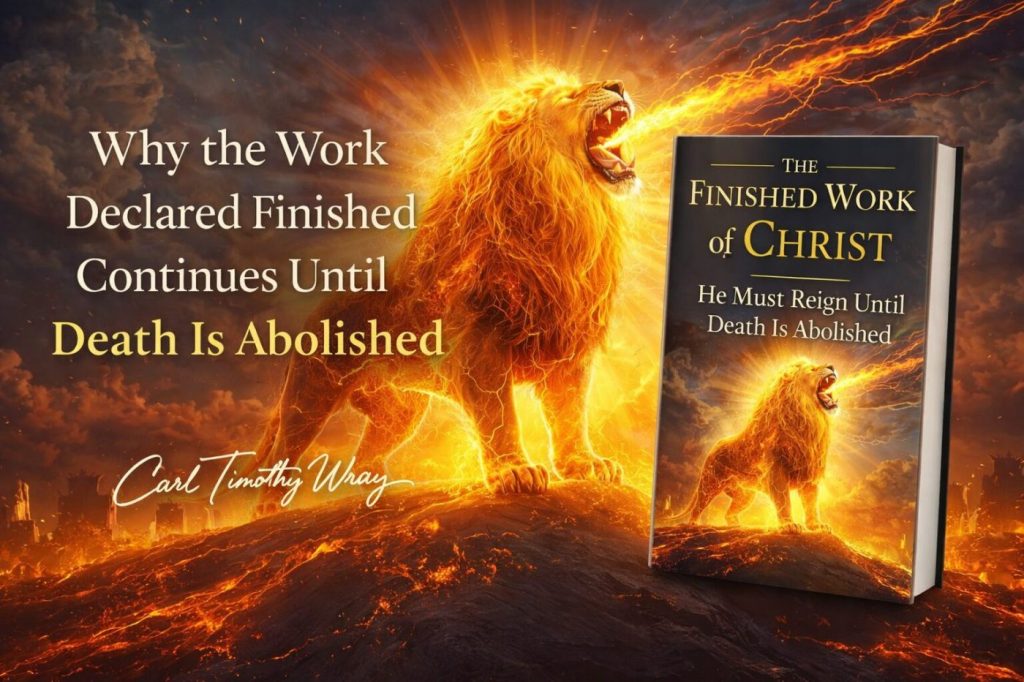
- The Finished Work of Christ: 2. Download The Finished Work of Christ Book: 3. Read The Finished Work of Christ Series:
The Finished Work of Christ: INTRODUCTION
Few declarations in Scripture are as triumphant—or as misunderstood—as the words, “It is finished.” Spoken by Christ from the Cross, they have echoed through the Church for generations as a banner of victory, rest, and assurance. And rightly so. The work of redemption was completed, sin was judged, reconciliation was accomplished, and nothing was left undone.
Yet Scripture speaks just as clearly of something that follows.
Paul declares, “For He must reign, till He hath put all enemies under His feet.” And then adds with unmistakable precision, “The last enemy that shall be destroyed is death.” These words have unsettled many believers. If the work is finished, why must Christ still reign? If victory is complete, why does Scripture speak of enemies yet to be abolished?
This book contends that the tension is not found in Christ, nor in the Cross, nor in Scripture—but in our failure to discern the realms from which God speaks.
The Finished Work of Christ is finished in origin, authority, and truth. Nothing has been added to it, nothing can be taken from it, and nothing can undo it. Yet what is finished in Christ must still be applied, revealed, and manifested in the realms where death, corruption, and resistance once reigned. Reign does not contradict the Finished Work—it is the means by which the Finished Work finishes everything it was sent to accomplish.
This book was written to show how Scripture speaks consistently from beginning to end:
a work finished in Christ,
a reign required in time,
and a consummation where death itself is abolished and God becomes all in all.
Here, “He must reign until” is not a denial of the Cross, but its rightful administration. Not uncertainty, but purpose. Not delay, but design. The Cross declares the victory; the reign applies it—until no enemy remains.
This is not a call to strive. It is an invitation to understand.
Not a retreat from finished truth, but a deeper entrance into it.
What was declared finished did not stop working.
It began reigning.
And it will not cease—
until death itself is swallowed up in victory.
The Finished Work of Christ is one of the most proclaimed truths in Christianity—and one of the least understood in its full scope. While Scripture boldly declares “It is finished,” it also declares with equal clarity that “He must reign until death is abolished.” This book was written to reconcile those truths, not by diminishing either, but by discerning the realms from which God speaks. What was finished in Christ at the Cross was not suspended in heaven—it was released into history to reign, transform, and ultimately abolish death itself. Understanding the Finished Work of Christ requires seeing not only what was completed, but how that completion unfolds until God becomes all in all.
Chapter 1 — Finished in Christ, Not Finished in Visibility
The Declaration of Completion and the Beginning of Reign
The words “It is finished” were not spoken as a sigh of relief, nor as a statement of exhaustion. They were not the conclusion of struggle, but the proclamation of victory. When Christ declared the work finished, He was not hoping the outcome would hold—He was announcing that it already did.
From the moment those words were spoken, the work of redemption stood complete. Sin had been judged, reconciliation accomplished, separation ended, and every requirement of righteousness fulfilled. Nothing remained undone. Nothing awaited supplementation. Nothing required correction.
Yet Scripture does not end at the Cross.
The same Word that preserves the finality of Christ’s declaration also insists that something follows. Paul writes with equal authority:
“For He must reign, till He hath put all enemies under His feet.”
(1 Corinthians 15:25)
This reign is not introduced as a contingency, nor as a repair to a failed work. It is presented as necessity—He must reign. The question, then, is not whether the work was finished, but what kind of finishing Scripture is describing.
The gospel never teaches that “finished” means “instantly visible in every realm.” It teaches that finished means settled in Christ—established in authority, irreversible in truth, and complete in origin. What follows the Cross is not uncertainty, but application. Not effort, but administration. Not doubt, but dominion.
Christ’s finished work was never meant to remain a declaration alone. It was meant to reign.
Reign is how a finished victory moves into contested territory. It is how what is eternally true becomes experientially manifest. Reign does not question completion—it assumes it. Only a finished work can reign, because only a finished victory can be applied without fear of loss.
This is why Scripture never says Christ reigns to become victorious. It says He reigns until every enemy is placed under His feet. The reign is not the pursuit of triumph; it is the distribution of it.
And Scripture names the enemies clearly.
“The last enemy that shall be destroyed is death.”
(1 Corinthians 15:26)
If death must still be destroyed, then the reign must still be active. Not because the Cross failed, but because the Cross addressed the root, while reign addresses the reach. The Cross settled the verdict; the reign enforces it. The Cross finished the work in Christ; the reign applies that finished work until no realm remains untouched.
This distinction matters deeply.
Many believers have been taught—sometimes subtly, sometimes explicitly—that acknowledging process somehow weakens faith. Others, observing ongoing suffering and death, have assumed that the Finished Work must be incomplete or delayed. Scripture allows neither conclusion. It refuses to sacrifice completion for honesty, or honesty for completion.
Instead, it reveals order.
What is finished in Christ must be revealed in time.
What is settled in heaven must be applied in earth.
What is complete in spirit must be worked out in soul and body.
This is not contradiction—it is design.
The reign of Christ is the bridge between declaration and consummation. It is the means by which the Finished Work continues—not because it lacks anything, but because it was sent to abolish everything that stands opposed to life.
Until death is destroyed, the reign continues.
Until resistance collapses, the reign continues.
Until God is all in all, the reign continues.
What was declared finished did not stop working.
It began reigning.
And to understand that reign rightly, we must now go deeper—beyond the Cross alone—into the nature of the work that was finished, and the purpose for which it was sent.
That journey begins where Scripture itself begins to frame it:
in Christ, before death ever appeared.
Before the Foundation of the World
The Finished Work of Christ did not originate at Calvary—it was settled before the foundation of the world. Scripture reveals that the Lamb was slain in God’s eternal counsel long before sin, death, or time entered human experience. This chapter establishes the eternal origin of the Finished Work, showing that redemption was not God’s reaction to Adam, but His predetermined purpose in Christ. By anchoring the Finished Work of Christ in eternity, we gain clarity on why nothing in time can undo what was already complete in God.
Chapter 2 — Before Death Ever Appeared
Chosen in Christ Before the World Began
To understand why the Finished Work must reign, we must first understand where it began. Scripture does not introduce Christ’s work as a reaction to failure, nor does it locate its origin at Calvary. Long before sin entered history, long before Adam was formed from the dust, and long before death appeared as an enemy, the work of Christ already existed as completed reality in God.
The apostle John reveals this without qualification:
“The Lamb slain from the foundation of the world.”
(Revelation 13:8)
This statement does not describe an event occurring in time—it unveils a truth settled before time. The Lamb was not slain because man fell; man fell within a story where the Lamb was already slain. Redemption was not God’s response to sin; sin entered a creation where redemption was already secured.
Hebrews confirms this same reality:
“Although the works were finished from the foundation of the world.”
(Hebrews 4:3)
Here, Scripture anchors the Finished Work beyond history, beyond contingency, beyond possibility of failure. In this realm—what Scripture consistently calls before the foundation of the world—nothing is pending. Nothing is threatened. Nothing is awaiting outcome. The work exists as complete, eternal fact.
Paul speaks from this same realm when he writes:
“According as He hath chosen us in Him before the foundation of the world.”
(Ephesians 1:4)
Notice the language carefully. We were chosen in Him, not in Adam. Not in response to obedience. Not after belief. Not after sin. Before the world existed, man already existed in Christ. Before time began to count, life was already accounted for.
This is the realm where Scripture speaks in absolutes:
chosen
holy
complete
in Christ
Here, there is no fall to repair, no enemy to defeat, and no death to abolish—because none have yet appeared. All is life. All is union. All is settled.
Jesus Himself bears witness to this realm when He prays:
“Glorify Thou Me with the glory which I had with Thee before the world was.”
(John 17:5)
Glory precedes incarnation. Union precedes manifestation. Completion precedes experience.
This is the first and highest dimension of the Finished Work—the realm of origin, faith, and promise. Here, God speaks from eternity, not process. From settlement, not struggle. From truth, not appearance.
Yet Scripture does not remain here.
The same Word that reveals completion before time also reveals a deliberate descent into time. The same God who speaks from eternity also speaks into experience. And the same Finished Work that exists in origin is later introduced into a world where resistance, learning, patience, and death must be confronted.
Understanding this realm is essential. Without it, everything that follows sounds like contradiction. With it, everything that follows comes into harmony.
The Finished Work did not begin in history.
It entered history.
And the moment it entered, Scripture begins to speak not only of faith—but of patience. Not only of completion—but of reign.
To understand why the Finished Work would ever descend from such a realm, we must now ask the question Scripture itself answers:
Why would a perfect work be introduced into an imperfect world at all?
That answer leads us forward—into the mystery of creation subjected in hope.
Morning Stars and Sons of God
Before Adam, before flesh, and before resistance, Scripture reveals sons of God rejoicing in the presence of their Creator. This chapter explores humanity’s pre-temporal identity in Christ, showing that the Finished Work of Christ is rooted in union, not recovery. By understanding man’s existence in spirit before time, we see that salvation does not create something new—it restores what was already chosen in Christ before the world began. This perspective protects the Finished Work of Christ from being reduced to mere damage control.
Chapter 3 — Subjected in Hope
Why Creation Was Lowered into Vanity
Once the realm of origin is seen clearly—life settled in Christ before time, the work finished before foundation, sons chosen before creation—the next question becomes unavoidable:
Why would God introduce such a finished, perfect work into a world marked by vanity, resistance, and death?
Scripture does not evade this question, nor does it answer it emotionally or philosophically. It answers it purposefully.
Paul states it plainly:
“For the creature was made subject to vanity, not willingly, but by reason of Him who hath subjected the same in hope.”
(Romans 8:20)
Creation was not subjected because God lost control.
It was not lowered because sin surprised Him.
It was not cast into process because something went wrong.
Creation was subjected by Him—and it was subjected in hope.
Vanity, therefore, is not punishment. It is process. It is the realm into which the Finished Work would descend so that what was settled eternally could be revealed experientially. God did not abandon creation to decay; He placed it within a pathway that leads to liberation.
Paul continues:
“Because the creature itself also shall be delivered from the bondage of corruption into the glorious liberty of the children of God.”
(Romans 8:21)
Notice the certainty. Creation shall be delivered. Vanity is never presented as permanent, final, or victorious. It is framed as temporary—a necessary environment in which something greater is being accomplished.
The purpose of that lowering is revealed later, with even greater clarity:
“For God hath concluded them all in unbelief, that He might have mercy upon all.”
(Romans 11:32)
This statement stands at the summit of Paul’s theology. God gathers all into unbelief—not to condemn all, but so that none would be excluded from mercy. Mercy is not God’s reaction to failure; it is the revelation of His nature.
In the realm of origin, nothing required mercy because nothing was broken. But God’s purpose was not merely to preserve perfection—it was to reveal Himself fully. Mercy cannot be revealed where there is no wound. Restoration cannot be known where nothing has been lost. Redemption cannot be displayed where there has been no captivity.
Vanity created the stage upon which mercy would be made known.
This is why Scripture never presents the fall as the center of the story. The fall is not the revelation—mercy is. Sin does not define God’s purpose; mercy reveals it. Death does not threaten God’s plan; it becomes the enemy through which life will be displayed as superior.
Seen this way, creation was not lowered into vanity to be discarded—but to be included.
The Finished Work was not introduced into time to escape creation, but to fill it. God did not subject creation because He intended to abandon it. He subjected it because He intended to deliver it.
This is why Scripture consistently pairs subjection with hope, bondage with promise, and decay with expectation. Vanity is always temporary. Hope is always final.
The lowering into vanity introduces:
time
contrast
learning
obedience
patience
experience
But it never cancels what was settled in origin.
What was finished before the foundation of the world is not threatened by process. It is revealed through it.
This is why Paul later says that creation itself groans—not in despair, but in anticipation:
“Waiting for the manifestation of the sons of God.”
(Romans 8:19)
Creation is not waiting for annihilation. It is waiting for revelation. It is waiting for what was always true in Christ to be made visible through the sons.
Vanity, then, is not evidence of delay—it is evidence of design. It is the realm where mercy would be known, patience would be exercised, and the Finished Work would begin its long descent into experience.
With creation now subjected, Scripture introduces the first man—not as origin, but as entry point.
With Adam, process begins.
With Adam, learning begins.
With Adam, death enters experience—not as finality, but as the last enemy that must eventually be abolished.
And so the story now moves from purpose to pathway.
From the reason creation was lowered,
to the man through whom time, soul, and mortality would be introduced.
That man is Adam.
And with Adam, the Finished Work enters the realm where it must now be worked out.
Why Creation Was Subjected to Vanity
If the Finished Work of Christ was settled in eternity, why was creation lowered into vanity at all? Scripture answers plainly: “that He might have mercy upon all.” This chapter explains how vanity, decay, and resistance were not accidents, but purposeful stages in the outworking of a finished redemption. The Finished Work of Christ was not threatened by process—it was revealed through it. Understanding this truth reframes the fall, suffering, and history itself as pathways toward mercy, not evidence of failure.
Chapter 4 — Adam and the Entrance of Process
From Eternal Settlement to Temporal Experience
With Adam, the story does not begin—it enters time.
Adam is not the origin of humanity in God’s mind; he is the point at which humanity steps into experience. Scripture never presents Adam as the starting place of God’s purpose, but as the doorway through which what was already settled eternally would now be worked out temporally.
Paul states this with precision:
“The first man Adam was made a living soul.”
(1 Corinthians 15:45)
Adam is introduced not as spirit-origin, but as soul-life. This distinction is essential. Before Adam, Scripture speaks of life in Christ beyond time. With Adam, Scripture speaks of life framed within time—learning, obedience, contrast, and consequence.
Paul continues:
“Howbeit that was not first which is spiritual, but that which is natural; and afterward that which is spiritual.”
(1 Corinthians 15:46)
This is not a denial of origin—it is a description of order in manifestation. What is spiritual exists first in God; what is natural appears first in experience. Adam does not negate what existed before him; he introduces the realm where it must now be expressed.
Adam is created innocent, not perfected. He is alive, but not yet complete in experience. He is capable of obedience, capable of growth, and capable of learning. He is not fallen at creation—but neither is he finished. In Adam, humanity enters a world where truth must be walked, not merely known.
With Adam comes:
time
instruction
choice
sequence
patience
death as experience
Yet even here, the Finished Work is not threatened.
Scripture never presents Adam as surprising God, nor does it portray God scrambling to recover control. Adam’s world unfolds exactly as Romans declared—subjected in hope. Death enters experience, but not as final authority. Corruption appears, but not as ultimate reality.
Paul summarizes this movement with remarkable balance:
“For as in Adam all die, even so in Christ shall all be made alive.”
(1 Corinthians 15:22)
Adam introduces death as an experience. Christ introduces life as destiny. Adam opens the door to process; Christ guarantees the outcome of that process.
This is why Scripture never teaches that Adam canceled God’s plan. Adam activates the pathway through which that plan would be revealed. What was settled in Christ before time now begins its long journey through time—through obedience, suffering, learning, and transformation.
In Adam, God’s language changes.
He no longer speaks only in absolutes. He begins to speak in commands, instructions, promises, warnings, and progressions—not because truth has changed, but because man now lives in a realm where truth must be learned and embodied.
This is where patience enters the story.
Faith continues to speak from origin.
Patience now governs experience.
Adam’s world becomes the training ground where what is already true in Christ must eventually be manifested in soul and body. This does not diminish grace—it reveals its depth. Grace is no longer only declared; it is now applied.
Adam is not the failure of God’s purpose.
Adam is the doorway into its unfolding.
And because Adam introduces death into experience, Scripture must now introduce the One who enters death voluntarily—not as a victim of process, but as its fulfillment.
The story cannot remain with Adam.
It must move to Christ.
And when Christ appears in time, He does not begin a new work—He reveals the old one.
That revelation begins at the Cross.
Adam, Time, and the Entrance of Process
Adam did not begin God’s plan—he marked its entrance into time. This chapter shows how the Finished Work of Christ remained complete in origin even as humanity entered a realm of learning, obedience, patience, and death. Adam introduces process, not because the work was unfinished, but because manifestation requires order. By distinguishing between eternal completion and temporal experience, this chapter clarifies why the Finished Work of Christ can be finished in truth while still unfolding in history.
Chapter 5 — The Cross: Revelation, Not Repair
What Was Finished in Christ Made Visible in Time
When Christ appears in history, He does not arrive to invent redemption.
He arrives to reveal it.
The Cross is not the beginning of the Finished Work—it is the unveiling of it. What was settled before the foundation of the world is brought into visibility within time. Calvary does not change God’s disposition toward humanity; it discloses God’s eternal intention.
Scripture makes this unmistakably clear:
“The Lamb slain from the foundation of the world.”
(Revelation 13:8)
The Cross is not God reacting to Adam’s failure. Adam’s failure unfolds within a story where Christ has already been slain. Redemption does not follow the fall; it precedes it. The Cross does not originate mercy—it reveals mercy.
This is why Jesus does not approach death with uncertainty. He does not negotiate with the Father. He does not speak as one hoping the plan will succeed. From the Cross, He declares:
“It is finished.”
(John 19:30)
This declaration is not faith attempting to become reality.
It is eternal reality speaking inside time.
At Calvary, nothing is left pending. Sin is judged. Separation is ended. Reconciliation is accomplished. The verdict is rendered, final, and irreversible.
Paul describes this with precision:
“God was in Christ, reconciling the world unto Himself.”
(2 Corinthians 5:19)
Notice the direction. God is not reconciling Himself to the world—He is reconciling the world to Himself. The Cross is not appeasement; it is alignment. It is not repair; it is revelation.
At Calvary, Christ does not become victorious.
He displays victory.
Paul makes this explicit:
“Having spoiled principalities and powers, He made a shew of them openly.”
(Colossians 2:15)
The powers were not defeated through struggle—they were exposed through truth. The Cross unmasks the lie, disarms the accuser, and reveals death as a defeated enemy long before its abolition.
Yet Scripture is careful not to present the Cross as the end of the story.
If the Cross were the conclusion, resurrection would be unnecessary. If revelation alone were sufficient, indwelling life would not follow. But the Finished Work does not stop at being seen—it must be entered.
This is why Christ does not ascend and leave humanity with a memory. He returns in a different form. He sends His Spirit. He moves the Finished Work from event to life.
The Cross reveals what is true.
The Spirit empowers what is true to be lived.
Without this movement, the Finished Work would remain external—declared, defended, and admired, yet never embodied. But God’s intention was never mere declaration. It was participation.
This is why Jesus said:
“It is expedient for you that I go away.”
(John 16:7)
As long as Christ remained external, the Finished Work could be proclaimed but not inhabited. By departing in the flesh and returning in the Spirit, Christ moves the finished victory into man.
Calvary is the doorway where eternal truth steps into time.
What follows is the moment where that truth steps into humanity.
That moment is Pentecost.
And without Pentecost, the reign could never begin.
The Cross: Revelation, Not Repair
The Cross did not repair something God failed to foresee—it revealed what was already finished in Christ. This chapter explains why Jesus’ declaration “It is finished” speaks from eternal authority, not hopeful anticipation. The Finished Work of Christ was not achieved at the Cross; it was unveiled there. Sin was judged, death was defeated, and reconciliation was accomplished—not as future possibilities, but as present realities made visible in time.
Chapter 6 — Pentecost and the Indwelling Christ
The Finished Work Moving from Heaven into Man
If the Cross reveals what was finished, Pentecost reveals where it would live.
God never intended the Finished Work of Christ to remain external—remembered as history, defended as doctrine, or admired as truth. What was settled in heaven and revealed at Calvary was always destined to take up residence within man. That movement occurs at Pentecost.
“And when the day of Pentecost was fully come, they were all with one accord in one place.”
(Acts 2:1)
Pentecost is not a new work, nor is it an addition to the Cross. It is the internalization of the Finished Work. The same Christ who walked out of the grave now returns—not beside humanity, but within humanity. What was accomplished for man is now placed in man.
This is why Jesus said:
“It is expedient for you that I go away.”
(John 16:7)
As long as Christ remained external, the Finished Work could be declared but not embodied. By departing in the flesh and returning in the Spirit, Christ moves the victory of the Cross from event into life. Pentecost does not improve what Christ finished—it applies it.
At Pentecost:
Christ no longer dwells among men
Christ dwells in men
Heaven is no longer distant
Heaven takes up residence within
This marks a decisive shift in the operation of the Finished Work. From this point forward, Scripture no longer speaks only in terms of declaration. It begins to speak in terms of transformation.
Paul captures this shift with remarkable clarity:
“Christ in you, the hope of glory.”
(Colossians 1:27)
Christ in you is not uncertainty—it is destiny. The hope of glory is not doubt about completion; it is the certainty that what is finished in Christ will be manifested through the sons. What was once outside man is now planted within him.
Yet Pentecost also introduces a new arena.
The spirit of the believer is made complete at regeneration.
“He that is joined unto the Lord is one spirit.”
(1 Corinthians 6:17)
But the soul and body do not instantly reflect what the spirit already possesses. This is not deficiency—it is order. The Finished Work must now move outward from spirit to soul, from soul to body, and eventually into creation itself.
This is why Scripture’s language expands.
Not only “It is finished,”
but also “be transformed,” “walk,” “grow,” “put off,” “put on.”
Paul explains this without confusion:
“Work out your own salvation with fear and trembling.”
(Philippians 2:12)
He does not say work for salvation. He calls it your salvation—already possessed. The command is not to create what Christ failed to complete, but to express what Christ has already finished.
Pentecost introduces patience.
Faith continues to speak from heaven.
Patience now governs life on earth.
The Spirit is not given to finish what the Cross left undone. The Spirit is given to apply the Finished Work to every resisting layer of human existence—mind, will, emotion, body, and ultimately the creation itself.
This is why Scripture can speak without contradiction:
You are complete
yet are being renewed
You have eternal life
yet await immortality
You are seated with Christ
yet are learning to walk it out
Pentecost does not delay fulfillment—it makes fulfillment possible.
And because Christ now lives in man, the Finished Work must confront the final realities that once ruled unquestioned:
corruption
decay
mortality
death
Not as threats, but as enemies already defeated—now being placed underfoot through union and reign.
Pentecost is not the end of the Finished Work.
It is the beginning of its application through reign.
For Scripture now introduces a necessity that cannot be avoided:
“For He must reign, till He hath put all enemies under His feet.”
(1 Corinthians 15:25)
That reign does not contradict what was finished.
It carries it forward—until death itself is abolished.
And it is that reign—its purpose, its scope, and its final outcome—that must now be understood.
Pentecost and the Indwelling Christ
The Finished Work of Christ was never meant to remain external. At Pentecost, what was finished in heaven and revealed at the Cross took residence within humanity. This chapter explains how Christ in us becomes the means by which the Finished Work moves from declaration to manifestation. Pentecost does not add to the Finished Work—it applies it, initiating the transformation of soul, body, and creation through patience, growth, and reign.
Chapter 7 — He Must Reign Until
The Abolition of Death and the Completion of the Work
The Finished Work of Christ does not end at declaration—it moves into government.
Scripture does not present the reign of Christ as symbolic, optional, or indefinite. It states its necessity plainly:
“For He must reign, till He hath put all enemies under His feet.”
(1 Corinthians 15:25)
This statement does not weaken the Finished Work. It explains how the Finished Work finishes everything it was sent to accomplish. Reign is not Christ attempting to secure victory; reign is Christ administering a victory already secured. The Cross settled the verdict. The reign enforces it.
The word until is critical.
Christ reigns until something is accomplished—not because the outcome is uncertain, but because manifestation unfolds in order. The reign continues until every enemy is brought into visible submission. Scripture does not leave those enemies unnamed.
Paul continues:
“The last enemy that shall be destroyed is death.”
(1 Corinthians 15:26)
Death is not the first enemy addressed, and it is not overcome merely by confession. Death belongs to the body-realm—the lowest and most resistant layer of human experience. Until that realm is transformed, the Finished Work has not yet been fully manifested, though it remains fully finished in Christ.
This resolves a long-standing confusion.
Christ is not reigning because the work is unfinished.
Christ is reigning because the work demands completion in every realm.
Reign is the movement of the Finished Work from spirit to soul, from soul to body, and from body into creation itself. What is already true in Christ must now become true in manifestation.
This is why Scripture connects reign to the sons of God:
“If we suffer, we shall also reign with Him.”
(2 Timothy 2:12)
Reign is participatory—not because Christ lacks authority, but because Christ has chosen to express His victory through union, not isolation. What He finished as the Head must be revealed through the Body.
This reign is not political, violent, or territorial in the carnal sense. It is ontological—the rule of life over death, truth over lie, incorruption over decay. Every time life penetrates a deeper realm, an enemy loses ground.
Scripture presents this progression without apology.
Enemies are placed underfoot in order.
Resistance collapses layer by layer.
Death is addressed last.
The reign is patient because manifestation is ordered.
Faith declares victory immediately.
Patience governs how that victory becomes visible.
This is why Scripture introduces a final announcement for the body-realm:
“At the last trumpet… the dead shall be raised incorruptible, and we shall be changed.”
(1 Corinthians 15:52)
The last trumpet does not announce new truth. It announces truth reaching its final depth. The body is not discarded—it is transformed. Redemption does not mean escape from embodiment; it means embodiment brought into agreement with life.
Paul explains it plainly:
“For this corruptible must put on incorruption, and this mortal must put on immortality.”
(1 Corinthians 15:53)
When this occurs, death is not postponed—it is abolished.
“Then shall be brought to pass the saying that is written, Death is swallowed up in victory.”
(1 Corinthians 15:54)
This is the moment the reign reaches its purpose. The last enemy falls, not through struggle, but through saturation—life filling the final realm where death once ruled.
And when death is destroyed, something extraordinary happens.
“Then cometh the end, when He shall have delivered up the kingdom to God, even the Father.”
(1 Corinthians 15:24)
Christ does not lose authority. He completes its assignment. The mediatorial reign that was necessary during process gives way to consummation. What began in Christ now fills all things.
Paul concludes:
“That God may be all in all.”
(1 Corinthians 15:28)
This is the Omega of the Finished Work.
Not endless struggle.
Not eternal opposition.
Not partial victory.
But God filling all things without resistance.
The reign of Christ is not endless—it is purposeful. It exists until death is abolished, until all things are reconciled, until the Finished Work reaches full expression in every realm.
What was declared finished did not stop working.
It began reigning.
And it will not cease—
until death itself is swallowed up in victory,
and God becomes all in all.
He Must Reign Until Death Is Abolished
Scripture declares that Christ must reign until all enemies are placed under His feet, and that the last enemy is death. This chapter explains why reign does not contradict the Finished Work of Christ, but completes its visible expression. The Finished Work was finished in authority, but its reign carries that authority into every realm—until death itself is abolished. This is not delay; it is design.
Conclusion — Until Death Is Abolished
The Finished Work of Christ was never in question.
From the moment Christ declared “It is finished,” the verdict was rendered, the victory secured, and the outcome settled forever. Nothing has been added to that work, nothing can be taken from it, and nothing will ever undo it. The Cross did not begin redemption—it revealed it. The work was finished in Christ, complete in authority, final in truth, and irreversible in scope.
Yet Scripture has shown us something equally certain.
What is finished in Christ does not remain confined to declaration alone. It moves. It reigns. It advances deliberately through every realm where death once exercised dominion. The reign of Christ is not an admission of delay—it is the administration of victory. Not uncertainty, but purpose. Not effort, but enforcement.
“He must reign until.”
Those words do not weaken the Finished Work. They complete its meaning. The reign exists because the work is finished—not because it is unfinished. Only a finished victory can be applied with confidence, patience, and inevitability.
The story of Scripture has never been about escape from creation, but about its restoration. Never about abandoning the body, but about redeeming it. Never about God saving a few and losing the many, but about God filling all things through Christ. Death itself, once the unquestioned ruler of the natural realm, is named as the last enemy—not the final authority.
And death will be abolished.
When that enemy falls, resistance ends. When resistance ends, reign has achieved its purpose. And when reign delivers its completed work back to the Father, mediation gives way to union, and process gives way to rest.
“God all in all” is not theological poetry—it is the final state of the Finished Work. What was settled before the foundation of the world has now passed through time, experience, patience, suffering, resurrection, indwelling life, and reign—and has emerged fully manifested.
Alpha has reached Omega.
Faith has given way to sight.
Hope has given way to fulfillment.
Patience has given way to rest.
The Finished Work of Christ was never merely about forgiveness, nor merely about heaven, nor merely about personal salvation. It was about life swallowing death, truth dissolving every lie, and God filling all things with Himself through Christ—without remainder, without failure, and without loss.
What was declared finished did not stop working.
It began reigning.
And it will not cease—
until death is abolished,
and God is all in all.
God All in All
The Finished Work of Christ does not end in struggle—it ends in rest. When death is abolished and every enemy is placed underfoot, Christ delivers the completed kingdom to the Father, and God becomes all in all. This conclusion brings the Finished Work from Alpha to Omega, showing that what was settled before time has now filled every realm through reign, transformation, and consummation. Nothing remains unfinished because nothing remains outside of Him.
Author
Carl Timothy Wray is a longtime biblical teacher and writer who has spent over four decades studying Scripture through the lens of the Finished Work of Christ and the full counsel of God. His teachings focus on discerning the realms from which God speaks—eternity and time, spirit and manifestation—so that Scripture is understood in harmony rather than contradiction. Known for addressing the tension between “It is finished” and “He must reign until” with clarity and balance, Carl writes to reveal how a work completed in Christ continues through reign until death is abolished and God becomes all in all.
The Finished Work of Christ Series:
- The Finished Work of Christ — From Alpha to Omega
- Finished Work of Christ: Faith Receives What Is Finished — Patience Reveals What Is Complete
- The Finished Work of Christ — What Was Fully Accomplished at the Cross
- Join us on our Facebook Page: