 📺
📺
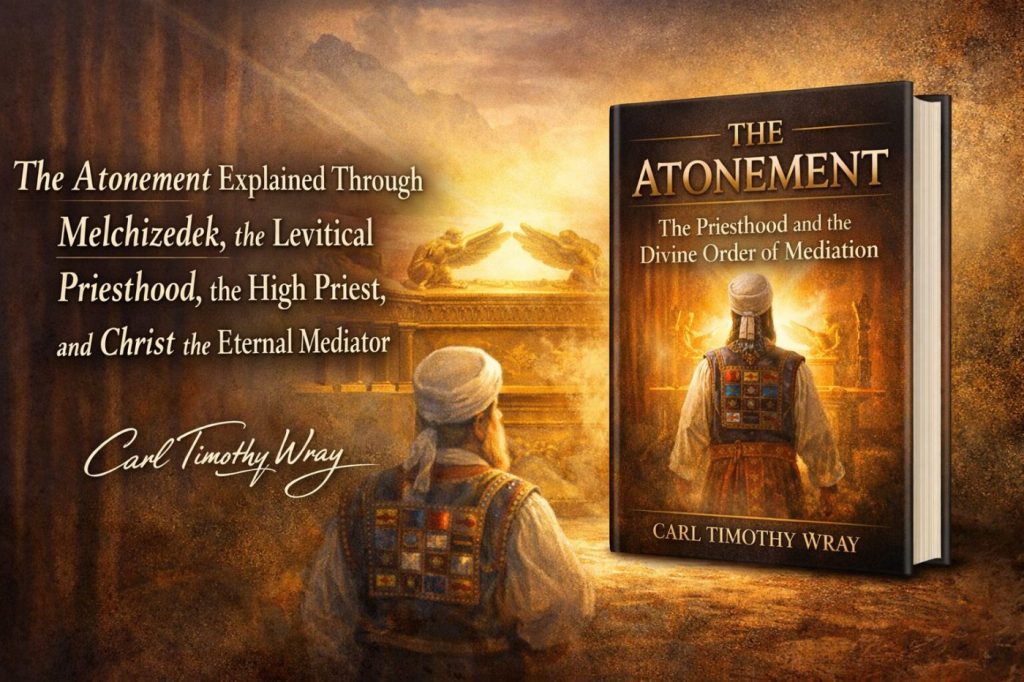
The Atonement Explained Through Melchizedek, the Levitical Priesthood, the High Priest, and Christ the Eternal Mediator
The Atonement: Author
By Carl Timothy Wray
Carl Timothy Wray is the founder of The Finished Work of Christ and the author of hundreds of theological works dedicated to exploring the full counsel of God from Genesis to Revelation. For more than four decades, Wray has devoted his life to studying the Scriptures and uncovering the deeper patterns of divine revelation that run throughout the Bible. His writings focus on the finished work of Christ, the unfolding plan of the ages, the government of God, and the revelation of Jesus Christ within His people.
Through his extensive library of books, teachings, and free resources, Wray seeks to help believers understand the unity of Scripture and the divine order through which God accomplishes redemption. His work emphasizes the harmony of the Old and New Covenants and reveals how the patterns established in the law find their ultimate fulfillment in Christ and His kingdom.
Atonement in the Bible reveals the divine structure through which God reconciles humanity to Himself. In this book, Carl Timothy Wray explores the role of the priesthood within God’s redemptive plan, tracing the pattern from Melchizedek and the Levitical priesthood to the ultimate fulfillment of atonement in Jesus Christ. By examining the high priest, the sanctuary, and the system of mediation established in Scripture, readers will discover how the priesthood reveals the wisdom of God’s government and the pathway through which reconciliation and restoration are accomplished. This study unveils how the atonement moves from shadow to fulfillment and ultimately reveals a kingdom of priests in the redemptive purpose of God.
The Atonement: Introduction
The Priesthood Within the Structure of Atonement
The message of atonement stands at the center of the Bible’s revelation of redemption. Throughout the Scriptures, God reveals a divine structure through which reconciliation between Himself and humanity becomes possible. Within that structure, one role appears again and again—the priest.
The priesthood occupies a central place in the story of redemption because it addresses one of the most profound questions in all of Scripture: how can humanity approach a holy God?
From the earliest pages of the Bible, it becomes clear that mediation is necessary. Humanity cannot simply approach the presence of God according to its own wisdom or terms. The holiness of God and the broken condition of humanity require a divinely appointed order through which reconciliation can occur.
The priesthood was established by God as the bridge between heaven and earth.
Through the priest, sacrifices were offered. Through the priest, the people approached the sanctuary. Through the priest, the covenant relationship between God and His people was maintained. The priest therefore stood at the intersection between the divine presence and the human community, serving as the mediator through whom atonement could operate.
Yet the priesthood was never meant to be understood merely as a religious institution within ancient Israel. The priesthood was part of a larger divine pattern designed to reveal the structure of redemption itself. Every aspect of the priestly ministry—from the consecration of the priest to the garments he wore and the sacrifices he offered—pointed toward a deeper reality within the plan of God.
The Scriptures reveal that the priesthood unfolds progressively throughout the Bible.
The earliest glimpse of this reality appears in the mysterious figure of Melchizedek, who appears before the law as both king and priest of the Most High God. Later, under the covenant established with Israel, the priesthood takes on a formal structure through the tribe of Levi and the family of Aaron. Through the ministry of these priests, the system of sacrifices and the rituals of the sanctuary reveal the principles through which atonement operates.
Yet even this carefully structured system was not the final expression of God’s redemptive plan. The priesthood of the Old Covenant pointed beyond itself toward a greater fulfillment yet to come.
The sacrifices had to be repeated.
The priests were subject to weakness.
The sanctuary was an earthly symbol of a greater reality.
These limitations prepared the way for the revelation of the greater priesthood that would be fulfilled in Christ.
In the New Testament, Jesus Christ is revealed as the ultimate High Priest who fulfills the patterns established throughout the law. He stands as the mediator between God and humanity, embodying both the priest who offers the sacrifice and the sacrifice that accomplishes reconciliation.
Through Him, the structure of atonement reaches its fulfillment.
Yet the story does not end there. The fulfillment of atonement in Christ opens the way for a broader revelation within the kingdom of God. The Scriptures ultimately reveal a redeemed people who participate in the life and purpose of the divine priesthood.
The vision of redemption culminates in a kingdom of priests—those who stand before God, share in His life, and participate in His redemptive purpose for creation.
This book explores the role of the priesthood within the structure of atonement. By tracing the development of the priesthood from Melchizedek to the Levitical system and ultimately to Christ, we begin to see how the divine order of mediation reveals the wisdom of God’s redemptive plan.
The study of the priesthood therefore opens a window into the mind of God concerning reconciliation, redemption, and the restoration of His creation.
In understanding the priesthood, we begin to understand the deeper structure of atonement itself.
Chapter 1
The Priesthood in the Mind of God
The message of atonement cannot be understood without first understanding the priesthood. From the beginning of Scripture, God reveals that reconciliation between Himself and humanity must occur according to a divine order. That order includes mediation. The priesthood is the office through which that mediation takes place.
The priesthood was not invented by religion, nor was it created by human imagination as a way to reach God. It was established by God Himself as part of the structure through which atonement would operate. Before the priesthood ever appeared in the rituals of Israel, it existed within the mind of God as part of His redemptive plan.
The Scriptures reveal that God governs creation according to righteousness and wisdom. His throne is established upon justice and truth, and every aspect of redemption unfolds according to that divine government. The restoration of humanity could not occur through chaos or improvisation. It required a system that honored the justice of God while revealing His mercy.
The priesthood was one of the key elements of that system.
Humanity Created for Fellowship with God
The opening chapters of Genesis reveal that humanity was created for communion with the Creator. Humanity was not designed to live separated from God, but to walk in fellowship with Him. The garden narrative illustrates a relationship in which humanity lived in awareness of God’s presence and wisdom.
Yet the entrance of sin disrupted that relationship. Humanity became alienated from the life of God and lost the clarity of spiritual awareness that once defined its existence. The Scriptures describe this condition as darkness of understanding, separation from the life of God, and spiritual death.
This separation introduced the central problem that redemption must address. If humanity is to be restored to fellowship with God, the barrier created by sin must be dealt with. Reconciliation cannot occur unless a divinely appointed means of mediation is established.
This is where the priesthood enters the story.
The Need for a Mediator
One of the most profound questions in the Bible is how humanity can approach a holy God. The holiness of God cannot simply ignore sin, and the condition of humanity prevents it from approaching God in its present state. The gap between divine holiness and human brokenness requires someone who can stand between the two.
This need is expressed powerfully in the words of Job:
“For he is not a man, as I am, that I should answer him, and we should come together in judgment. Neither is there any daysman between us, that might lay his hand upon us both.” (Job 9:32–33)
Job longed for a mediator—someone who could stand between God and humanity and bring the two together. The priesthood was God’s appointed answer to that need.
The priest stood before God on behalf of the people and represented the people before God. Through the priest, sacrifices were offered. Through the priest, the sanctuary was maintained. Through the priest, the covenant relationship between God and His people was preserved.
The priest therefore functioned as the bridge between heaven and earth.
The Priest as Representative
The priest did not act as an independent religious leader. He served as the representative of the people before God. When the priest entered the sanctuary, he did not come as an individual acting for himself alone. He came on behalf of the entire community.
The high priest carried the names of the tribes of Israel upon the breastplate that rested over his heart. This imagery communicated a profound truth: the people were being presented before God through the ministry of the priest.
This concept of representation reveals one of the central principles of atonement. Reconciliation requires someone who can stand in the place of the people and carry out the acts required for restoration.
The priest therefore embodied the principle of mediation that lies at the heart of God’s redemptive order.
The Divine Order of Access to God
Another important truth revealed through the priesthood is that access to God occurs according to the order He establishes. Humanity cannot approach God according to its own ideas or inventions. The pathway to God’s presence must be defined by God Himself.
This principle is reflected throughout the laws governing the priesthood. Every detail of the priestly ministry—from the garments worn by the high priest to the sacrifices offered upon the altar—was prescribed by divine instruction.
The sanctuary itself illustrated this order. The outer court, the holy place, and the most holy place formed a structure that governed how people could approach the presence of God. Only the priests could minister within the sanctuary, and only the high priest could enter the most holy place.
The message was clear: approaching God required mediation and divine order.
The Priesthood Within the Structure of Atonement
The priesthood cannot be separated from the system of atonement. The two function together as parts of the same divine design. The sacrifices offered upon the altar required a priest to present them before God. The blood applied to the sanctuary required the ministry of the priest.
Without the priesthood, the system of atonement could not function.
Every sacrifice required a priest.
Every act of mediation required a priest.
Every approach to the sanctuary required a priest.
The priest therefore stood at the center of the structure through which reconciliation with God could occur.
A Pattern Pointing to a Greater Priest
Although the priesthood played a vital role within the Old Covenant, the Scriptures reveal that it was not the final expression of God’s redemptive plan. The priesthood served as a prophetic pattern that prepared humanity for a greater fulfillment yet to come.
The priests of Israel were themselves human and subject to weakness. They required purification before entering the sanctuary, and their ministry had to be repeated continually. The sacrifices they offered addressed sin within the covenant system, but they could not permanently remove the deeper problem of alienation from God.
These limitations revealed that the priesthood pointed beyond itself.
The patterns established under the law were preparing humanity to understand the work of the One who would ultimately fulfill the role of mediator in its fullest sense. This greater priest would accomplish what the earlier system could only symbolize.
The story of the priesthood therefore becomes a pathway leading toward the greater revelation of God’s redemptive purpose.
As we continue this study, we will see how the priesthood unfolds throughout the Scriptures—from its earliest appearance in the mysterious figure of Melchizedek to its ultimate fulfillment in Christ, the eternal High Priest who brings the work of atonement to completion.
Chapter 2
Melchizedek — The First Priest Revealed
The first clear revelation of the priesthood in Scripture does not appear within the law of Moses. It appears centuries earlier in the mysterious figure of Melchizedek. Long before the tribe of Levi was established and long before the sacrificial system of Israel was instituted, the Bible introduces a priest who stands outside the structures that would later define the Old Covenant.
This priest is Melchizedek.
The appearance of Melchizedek in the book of Genesis is brief, yet profoundly significant. In just a few verses, the Scriptures reveal a priesthood that exists before the law, outside the Levitical system, and connected directly to the redemptive plan of God.
This early glimpse into the priesthood reveals that mediation between God and humanity was never intended to be limited to the structures of the Old Covenant. The priesthood of Melchizedek represents a deeper and more ancient order that would later become central to the fulfillment of atonement in Christ.
The Appearance of Melchizedek
The story of Melchizedek appears in Genesis after Abram returns from rescuing Lot and defeating the kings who had invaded the region. As Abram returns from battle, he encounters a figure who stands apart from the surrounding nations and their conflicts.
The Scriptures record the encounter in these words:
“And Melchizedek king of Salem brought forth bread and wine: and he was the priest of the most high God. And he blessed him, and said, Blessed be Abram of the most high God, possessor of heaven and earth.” (Genesis 14:18–19)
This moment is remarkable because it introduces a priest who is not connected to any tribe of Israel, for Israel itself does not yet exist. The Levitical priesthood has not yet been established, the law has not yet been given, and the sacrificial system has not yet been formed.
Yet here stands a priest of the Most High God.
This reveals that the concept of priesthood existed long before the covenant structures of Israel were established. The priesthood did not originate with Moses; it was already present within the unfolding purpose of God.
A King and a Priest
One of the most striking aspects of Melchizedek is that he is described as both a king and a priest. The Scriptures identify him as the king of Salem and the priest of the Most High God.
This combination of roles is unusual within the structures of the Old Covenant. Under the law of Moses, kingship and priesthood were kept separate. Kings came from the tribe of Judah, while priests came from the tribe of Levi.
Yet Melchizedek unites both roles in one person.
This union of kingship and priesthood reveals an important dimension of God’s redemptive plan. The priesthood was never intended to function merely as a religious office separate from the government of God. Instead, it reflects a deeper reality in which authority and mediation work together within the divine order.
This union of king and priest anticipates the greater reality that will later be revealed in Christ.
Bread and Wine
Another remarkable detail in the story of Melchizedek is the offering he presents to Abram. The Scriptures tell us that Melchizedek brought forth bread and wine.
At first glance, this may appear to be a simple act of hospitality, but within the broader context of Scripture it carries deep symbolic meaning. Bread and wine later become powerful symbols within the covenant relationship between God and His people.
In the New Testament, these same elements appear in the ministry of Jesus Christ when He establishes the covenant meal that commemorates His sacrifice.
The appearance of bread and wine in the hands of Melchizedek therefore serves as an early sign pointing toward the redemptive work that would ultimately be fulfilled in Christ.
The Blessing of Abraham
Melchizedek does more than simply greet Abram. He blesses him.
The act of blessing carries great significance in the biblical narrative. In Scripture, the one who gives the blessing occupies the position of spiritual authority. By blessing Abram, Melchizedek demonstrates that he stands within a divine order that even Abram recognizes.
Abram responds to this encounter by giving Melchizedek a tenth of the spoils he had taken in battle. This act acknowledges the authority of the priesthood represented by Melchizedek.
The book of Hebrews later reflects on this moment and draws a powerful conclusion: the lesser is blessed by the greater.
Through this act, the Scriptures reveal that the priesthood represented by Melchizedek occupies a position of profound spiritual significance.
The Eternal Order of Melchizedek
The significance of Melchizedek does not end with the brief account recorded in Genesis. Centuries later, the book of Psalms reveals that this mysterious priesthood would play a role in the coming of the Messiah.
Psalm 110 declares:
“The Lord hath sworn, and will not repent, Thou art a priest for ever after the order of Melchizedek.” (Psalm 110:4)
This statement reveals that the coming Messiah would not belong to the Levitical priesthood established under the law. Instead, He would serve as a priest according to the order of Melchizedek.
This prophecy introduces the idea that a greater priesthood exists—one that transcends the limitations of the Levitical system and operates according to a more enduring order.
The Meaning of the Name Melchizedek
Even the name Melchizedek carries deep significance. The name can be understood as meaning “king of righteousness,” while the city he rules, Salem, is often associated with peace.
Together these meanings reveal a profound picture: a king of righteousness who rules over peace.
This imagery reflects the deeper reality of God’s redemptive plan. Righteousness and peace are central themes within the story of redemption, and they ultimately find their fulfillment in Christ.
The priesthood of Melchizedek therefore serves as a symbolic preview of the greater priesthood that will be revealed in the Messiah.
A Priesthood Greater Than Levi
The book of Hebrews later explains the significance of Melchizedek in great detail. The writer points out that Melchizedek’s priesthood existed before the Levitical priesthood and therefore holds a position of greater precedence.
Because Abraham honored Melchizedek, the Scriptures reveal that the Levitical priesthood—which would later descend from Abraham—acknowledged the authority of this earlier priesthood.
This insight reveals that the priesthood of Melchizedek represents a higher order within the divine plan.
Preparing the Way for the Fulfillment of Atonement
The appearance of Melchizedek introduces a priesthood that stands outside the structures of the Old Covenant and yet points forward to the fulfillment of God’s redemptive purpose.
The priesthood of Levi would later serve an important role in revealing the principles of atonement through the sacrificial system and the rituals of the sanctuary. Yet the earlier appearance of Melchizedek reminds us that the priesthood itself belongs to a deeper order within the mind of God.
This order ultimately finds its fulfillment in Christ.
As we continue tracing the development of the priesthood throughout Scripture, we will see how the Levitical priesthood expands upon these themes and reveals the structure through which atonement would operate within the life of Israel.
Chapter 3
The Birth of the Levitical Priesthood
After the early revelation of priesthood through Melchizedek, the Scriptures move forward into a new stage of God’s redemptive plan. When God formed the nation of Israel and brought them out of Egypt, He established a structured priesthood that would operate within the covenant relationship between Himself and His people.
This priesthood became known as the Levitical priesthood because it arose from the tribe of Levi.
Unlike the earlier appearance of Melchizedek, which stood outside any national structure, the Levitical priesthood functioned within the life of a covenant nation. It was designed to serve the people of Israel by maintaining the relationship between God and the community through the ministry of sacrifice, mediation, and worship.
The birth of the Levitical priesthood therefore marks the beginning of a formal system through which atonement would operate in the life of God’s people.
Israel Called to Be a Kingdom of Priests
When God delivered Israel from Egypt and brought them to Mount Sinai, He revealed His intention for the nation in striking language. Before the law was even given, God declared His purpose for the people.
“Now therefore, if ye will obey my voice indeed, and keep my covenant, then ye shall be a peculiar treasure unto me above all people: for all the earth is mine. And ye shall be unto me a kingdom of priests, and an holy nation.” (Exodus 19:5–6)
This declaration reveals something remarkable about God’s original intention. The entire nation was meant to function as a kingdom of priests. Israel was called to represent God before the nations and to live in a covenant relationship that reflected His holiness and wisdom.
Yet the unfolding story of Israel shows that the people struggled to live within the responsibilities of this calling. As the covenant relationship developed, the priesthood became concentrated within a specific tribe that would serve on behalf of the entire nation.
The Tribe of Levi Set Apart
Among the twelve tribes of Israel, the tribe of Levi was chosen for a unique role within the covenant structure. While the other tribes were given territories within the land, the Levites were set apart for service to the sanctuary.
The Scriptures describe this separation clearly:
“At that time the Lord separated the tribe of Levi, to bear the ark of the covenant of the Lord, to stand before the Lord to minister unto him, and to bless in his name.” (Deuteronomy 10:8)
This passage reveals the core functions of the Levitical priesthood.
The Levites were entrusted with three primary responsibilities:
- To bear the ark of the covenant.
- To stand before the Lord in ministry.
- To bless the people in God’s name.
These responsibilities placed the tribe of Levi at the center of Israel’s spiritual life. Through their ministry, the covenant relationship between God and the nation was preserved.
The Appointment of Aaron and His Sons
Within the tribe of Levi, the priesthood itself was further concentrated within the family of Aaron. Aaron, the brother of Moses, was chosen by God to serve as the first high priest of Israel.
The Lord gave Moses specific instructions regarding this appointment:
“And take thou unto thee Aaron thy brother, and his sons with him, from among the children of Israel, that he may minister unto me in the priest’s office.” (Exodus 28:1)
From that moment forward, the priesthood would operate through the lineage of Aaron. His sons would serve as priests, and one among them would carry the office of the high priest.
This structure introduced an important principle within the divine order of atonement. The priesthood was not open to personal ambition or human selection. It required divine appointment.
No one could assume the role of priest unless God had established them within that calling.
The Purpose of the Levitical Priesthood
The Levitical priesthood existed to maintain the covenant relationship between God and Israel. Through their ministry, the system of sacrifices, offerings, and rituals that formed the structure of atonement could function properly.
The priests were responsible for presenting sacrifices upon the altar, applying the blood required for atonement, maintaining the sanctuary, and guiding the people in matters related to the law.
Through these duties, the priesthood served as the operational center of Israel’s worship and reconciliation with God.
Every sacrifice required the ministry of a priest.
Every act of purification required the ministry of a priest.
Every approach to the sanctuary required the ministry of a priest.
The priesthood therefore stood at the heart of the system through which atonement was carried out.
The Levites as Servants of the Sanctuary
While the priests from Aaron’s family performed the sacred rituals of sacrifice, the broader tribe of Levi served as caretakers of the sanctuary and assistants in the work of worship.
The Levites maintained the structure of the tabernacle, guarded the sacred objects, and assisted the priests in the various tasks required for the functioning of the sanctuary.
Their service ensured that the sacred space where God’s presence dwelt among the people was properly maintained.
This division of responsibilities created a carefully ordered system in which every aspect of Israel’s worship operated according to divine instruction.
The Priesthood as a Teaching Office
In addition to their duties within the sanctuary, the priests also served as teachers of the law. They were responsible for instructing the people in the covenant and helping them understand the statutes and judgments given by God.
The prophet Malachi later summarized this responsibility:
“For the priest’s lips should keep knowledge, and they should seek the law at his mouth: for he is the messenger of the Lord of hosts.” (Malachi 2:7)
Through this role, the priesthood helped guide the spiritual life of the nation. They were not merely ritual specialists but guardians of the covenant knowledge entrusted to Israel.
A Priesthood Marked by Holiness
The Levitical priesthood operated under strict standards of holiness. Because the priests ministered in the presence of God and handled sacred offerings, their lives were governed by specific regulations designed to preserve the sanctity of their office.
The rituals of consecration, the sacred garments, and the purity laws associated with the priesthood all emphasized the same principle: those who minister before God must reflect the holiness of the One they serve.
The priesthood therefore embodied the seriousness of approaching the presence of God.
A System Preparing the Way for Something Greater
Although the Levitical priesthood played a vital role in the life of Israel, the Scriptures reveal that it was never intended to be the final expression of God’s redemptive plan.
The priests themselves were subject to human weakness. They required purification before performing their duties, and their ministry had to be repeated continually throughout the generations.
The sacrifices they offered addressed sin within the structure of the covenant, but they could not permanently remove the deeper problem of humanity’s alienation from God.
These limitations were not flaws in the system. They were part of a larger design.
The Levitical priesthood served as a prophetic pattern that prepared humanity to understand the greater priesthood that would later be revealed.
The rituals of the sanctuary, the ministry of sacrifice, and the office of the high priest were all pointing toward a greater fulfillment.
As the story of redemption unfolds, we begin to see that the Levitical priesthood was preparing the way for the coming of the One who would fulfill the role of mediator in its fullest and most perfect sense.
Chapter 4
The Consecration of the Priest
The priesthood established under the covenant of Israel required more than appointment—it required preparation. Before a priest could serve in the sanctuary or approach the altar of God, he had to undergo a process of consecration. This process revealed that ministry in the presence of God could not be entered casually or according to human desire. It had to occur according to the divine order established by God Himself.
Consecration set the priest apart for sacred service. It marked the transition from ordinary life into a calling devoted entirely to the ministry of the sanctuary and the work of atonement. Through this preparation, the priest became a visible sign that those who approach God must do so in holiness and obedience.
The rituals involved in consecration were not empty religious ceremonies. Each act symbolized a deeper spiritual truth concerning purification, dedication, and the authority granted by God for priestly service.
The Preparation of the Priest
The instructions for consecrating the priesthood were given to Moses in great detail. These instructions demonstrated that the priesthood operated according to divine design rather than human preference. Every step of the process had significance, and every action reflected a principle within God’s redemptive order.
The consecration ceremony involved several key elements: washing, anointing, clothing with sacred garments, and the offering of sacrifices. Together these actions transformed the priest from an ordinary member of the community into one who was set apart for sacred ministry.
This preparation reminded Israel that the priesthood was not merely a position of honor but a calling that required dedication and reverence.
The Washing of Purification
One of the first acts in the consecration of the priest was the ritual washing with water. Before the priest could be clothed in the garments of his office, he was first washed as a sign of purification.
This act revealed an essential truth about approaching the presence of God: cleansing must precede ministry. The washing symbolized the removal of impurity and the preparation required for those who would serve in the sanctuary.
Although the washing itself was a physical act, it pointed toward a deeper spiritual reality. The priest who stood before God had to be purified from defilement and dedicated to a life of holiness.
The ritual therefore illustrated that ministry in the presence of God requires a life that reflects the purity of the One being served.
The Anointing with Oil
After the washing, the priest was anointed with sacred oil. This anointing signified the setting apart of the priest for divine service. The oil represented the authority and empowerment granted by God for the responsibilities of the priestly office.
Through the anointing, the priest was publicly marked as one who belonged to God. His ministry would now operate under the authority of the divine calling placed upon him.
The anointing also symbolized the presence and power of God working through the priest to accomplish the work of mediation and atonement.
The Clothing of the Priest
Once purified and anointed, the priest was clothed with the garments appointed for his office. These garments were not chosen according to cultural fashion or personal preference. They were designed according to divine instruction and carried symbolic meaning related to the ministry of the priesthood.
The sacred garments distinguished the priest from the rest of the people and visually communicated the holiness of the role he carried. When the priest entered the sanctuary wearing these garments, he appeared as one who had been set apart for the service of God.
The clothing of the priest therefore reinforced the idea that the ministry of the sanctuary belonged entirely to the divine order established by God.
The Offering of Sacrifices
The consecration ceremony also included the offering of sacrifices. These sacrifices served to purify the priesthood and dedicate the priests fully to their sacred responsibilities.
Through these offerings, the priests acknowledged their dependence upon the atonement system they were called to administer. Even those who served at the altar required the cleansing and reconciliation that the sacrifices symbolized.
This truth revealed an important dimension of the priesthood: the priest himself stood within the need for atonement.
The ministry of the priesthood therefore reflected both the holiness of God and the ongoing need for reconciliation between God and humanity.
The Priest as a Living Symbol
After completing the process of consecration, the priest stood before the people as a living symbol of the divine order through which reconciliation could occur. His purification represented the cleansing required for fellowship with God. His anointing represented the authority granted by God for sacred service. His garments represented the holiness of the office he carried.
Every aspect of his preparation communicated a message about the seriousness of approaching the presence of God.
The priest therefore became more than an individual performing religious duties. He embodied the structure through which atonement operated within the covenant community.
A Pattern Pointing Toward a Greater Priest
Like every other element of the Old Covenant system, the consecration of the priest pointed beyond itself to a greater fulfillment. The washing, the anointing, the garments, and the sacrifices all served as symbolic patterns anticipating the ministry of the One who would ultimately fulfill the role of the perfect High Priest.
The preparation of the earthly priesthood revealed the pattern of the greater priesthood that would later be revealed in Christ.
Through Him, the principles of purification, consecration, and mediation would reach their fullest expression.
The rituals of consecration therefore served as both practical preparation for priestly service and prophetic imagery pointing toward the greater redemption that God would accomplish through His Son.
Chapter 5
The Garments of the Priest
When God established the priesthood in Israel, He did not leave the details of the priest’s clothing to human imagination. The garments of the priest were specifically designed according to divine instruction, and every element carried symbolic meaning. These garments set the priest apart from the rest of the people and visibly communicated the sacred nature of the ministry he carried.
The priest did not stand before the altar as an ordinary individual. When he entered the sanctuary clothed in the garments appointed by God, he appeared as a representative of the divine order through which reconciliation with God was maintained.
The garments therefore served as more than ceremonial clothing. They were visual symbols that revealed the dignity, holiness, and responsibility of the priestly office.
Garments Designed by Divine Instruction
The book of Exodus records detailed instructions concerning the clothing of the priesthood. God spoke to Moses and commanded that sacred garments be made for Aaron and his sons so that they could serve in the priestly office.
“And thou shalt make holy garments for Aaron thy brother for glory and for beauty.” (Exodus 28:2)
This phrase—“for glory and for beauty”—reveals the purpose of the garments. The priesthood was intended to reflect the majesty and holiness of the God whom the priests served. The clothing worn in the sanctuary was meant to display the sacred character of the ministry being performed.
Every thread, every color, and every piece of the priestly attire had meaning within the divine pattern established by God.
The Robe of the Priest
One of the central garments worn by the high priest was the robe worn beneath the ephod. This robe covered the body of the priest and symbolized the dignity of the priestly office. It represented the covering required for those who approached the presence of God.
The robe also served as a reminder that the priest stood in a role of service before the Lord. When the priest entered the sanctuary clothed in the robe, he carried the visible marks of the sacred calling placed upon him.
The garment therefore communicated both authority and humility. The priest was entrusted with sacred responsibilities, yet he served within the divine order established by God.
The Ephod
The ephod was a distinctive vest-like garment worn by the high priest. It was worn over the robe and served as the foundation for several other symbolic elements of the priest’s attire.
The ephod represented the responsibility carried by the high priest in representing the people before God. It held other sacred elements of the priestly garments and symbolized the weight of the priestly ministry.
Through the ephod, the high priest visibly carried the burden of mediation between God and the nation.
The Breastplate of Judgment
Attached to the ephod was the breastplate, one of the most meaningful elements of the priestly garments. The breastplate contained twelve precious stones, each engraved with the name of one of the tribes of Israel.
These stones symbolized that the priest carried the people upon his heart when he entered the presence of God.
When the high priest stood before the Lord in the sanctuary, he did not come as an individual acting for himself alone. The entire nation was represented through him. The names of the tribes were continually before the Lord through the ministry of the priest.
This imagery reveals one of the most beautiful aspects of the priesthood. The mediator carries the people into the presence of God.
The Shoulder Stones
In addition to the breastplate, the ephod also carried stones upon the shoulders of the high priest. These stones were engraved with the names of the tribes of Israel and symbolized the priest carrying the people upon his shoulders before the Lord.
This imagery illustrated the responsibility of the priesthood. The priest did not serve only as a ritual performer within the sanctuary. He carried the spiritual weight of representing the people before God.
The priest bore both the names of the tribes upon his heart and upon his shoulders. This revealed that the ministry of mediation required both compassion and responsibility.
The Crown of Holiness
The high priest also wore a headpiece upon which a golden plate was placed. This plate bore the inscription “Holiness to the Lord.”
This declaration emphasized the sacred nature of the priestly office. Everything connected to the priesthood belonged to God. The thoughts, intentions, and actions of the priest were to be devoted entirely to the service of the Lord.
The presence of this declaration upon the priest’s forehead reminded both the priest and the people that holiness was the defining mark of the ministry carried out in the sanctuary.
The Priest as a Living Symbol
When the priest entered the sanctuary clothed in these garments, he became a living symbol of the divine order through which humanity approached God. His clothing communicated the holiness of the office he carried, the responsibility of representing the people, and the dignity of serving before the presence of God.
Each element of the priest’s attire revealed a dimension of mediation within the structure of atonement.
The robe represented the dignity of service.
The ephod represented the responsibility of mediation.
The breastplate represented the people carried before God.
The crown represented the holiness required for sacred ministry.
Together these garments revealed the seriousness and beauty of the priestly office.
A Pattern Pointing Toward a Greater Priest
Like every aspect of the Old Covenant system, the garments of the priest pointed beyond themselves to a greater fulfillment. The clothing worn by the priests of Israel symbolized a ministry that would ultimately be fulfilled in the greater priesthood revealed in Christ.
The earthly priest carried the names of the tribes upon stones set in the breastplate. Christ carries His people within the reality of His redemptive work.
The earthly priest entered the sanctuary clothed in garments designed for glory and beauty. Christ enters the heavenly sanctuary clothed in the authority of eternal priesthood.
The garments of the priest therefore serve as prophetic symbols pointing toward the greater mediation through which the work of atonement would ultimately be fulfilled.
Chapter 6
The Ministry of the Priest
The priesthood established under the law was not merely symbolic; it involved a continual ministry that sustained the covenant relationship between God and His people. The priests were responsible for carrying out the daily operations of the sanctuary, presenting sacrifices, maintaining the sacred space of worship, and guiding the spiritual life of the nation.
Through their ministry, the structure of atonement functioned within the life of Israel. Every offering, every ritual of purification, and every act of worship required the service of the priest.
The priest therefore stood at the center of Israel’s relationship with God.
Standing Before the Lord
One of the primary functions of the priest was to stand before the Lord. This phrase appears repeatedly in Scripture and describes the priest’s position within the sanctuary.
The priest did not merely perform religious duties for the people. He served in the presence of God Himself. His ministry occurred within the sacred space where the divine presence dwelt among the people.
The Scriptures describe this role clearly:
“At that time the Lord separated the tribe of Levi, to bear the ark of the covenant of the Lord, to stand before the Lord to minister unto him, and to bless in his name.” (Deuteronomy 10:8)
This passage reveals that the priest’s ministry was directed first toward God before it was directed toward the people. The priest stood before the Lord as a servant within the divine order of worship.
This position emphasized the sacred nature of the priestly office. The priest was not merely a representative of the community but a servant within the presence of God.
Offering Sacrifices
Another central responsibility of the priest was the presentation of sacrifices upon the altar. The sacrificial system formed the foundation of the atonement structure under the law, and the priest was the one entrusted with carrying out these sacred acts.
When individuals or the community brought offerings to the sanctuary, the priest received the sacrifice, prepared it according to the instructions given in the law, and presented it before the Lord upon the altar.
Through this ministry, the priest facilitated the process of reconciliation between God and the people. The blood of the sacrifice was applied to the altar or sanctuary as part of the ritual through which atonement was symbolically accomplished.
The priest therefore functioned as the mediator through whom the sacrificial system operated.
Maintaining the Sanctuary
The sanctuary itself required continual care and attention. The priests were responsible for maintaining the sacred space where God’s presence dwelt among the people.
They tended the altar of sacrifice, ensured that the lamps of the sanctuary remained burning, prepared the bread placed before the Lord, and offered incense within the holy place.
Each of these duties symbolized aspects of worship, devotion, and communion with God. The continual activity within the sanctuary reminded the people that their relationship with God required ongoing attention and reverence.
The priesthood therefore preserved the rhythm of worship that connected the nation of Israel with the presence of their God.
Teaching the Law
In addition to their duties within the sanctuary, the priests also served as teachers of the covenant. They were responsible for instructing the people in the statutes and judgments given by God.
The prophet Malachi later described this responsibility in clear terms:
“For the priest’s lips should keep knowledge, and they should seek the law at his mouth: for he is the messenger of the Lord of hosts.” (Malachi 2:7)
Through this teaching role, the priests helped guide the spiritual life of the nation. They preserved the knowledge of God’s covenant and helped the people understand how to live within the order established by the law.
The priesthood therefore functioned not only as a ritual office but also as a source of spiritual instruction.
Blessing the People
Another important responsibility of the priest was to pronounce blessings upon the people. These blessings represented the favor of God being declared over the covenant community.
The priests spoke words of blessing that reminded the people of God’s presence and protection. One of the most well-known examples appears in the priestly blessing given in the book of Numbers:
“The Lord bless thee, and keep thee:
The Lord make his face shine upon thee, and be gracious unto thee:
The Lord lift up his countenance upon thee, and give thee peace.” (Numbers 6:24–26)
Through these words, the priest declared the goodness of God over the people and reminded them of their covenant relationship with Him.
The Rhythm of Daily Ministry
The ministry of the priesthood was not limited to occasional ceremonies. It involved daily service within the sanctuary. Morning and evening sacrifices were offered, incense was burned before the Lord, and the lamps of the sanctuary were kept continually burning.
This rhythm of daily worship reminded the people that their relationship with God was not confined to special moments but extended throughout the entire life of the community.
The priesthood therefore maintained the ongoing structure of worship and atonement within Israel.
A Ministry Marked by Responsibility
The responsibilities carried by the priesthood were significant. The priests stood between the people and the presence of God, and their actions affected the spiritual life of the entire nation.
Because of this responsibility, the priesthood operated under strict regulations concerning holiness and purity. The priests were required to live according to the standards established by the law so that their ministry could reflect the holiness of the God they served.
Their lives, their actions, and their service within the sanctuary were meant to demonstrate the seriousness of approaching the presence of God.
A Ministry Pointing Toward a Greater Priesthood
While the ministry of the priesthood was essential to the life of Israel, it was never intended to be the final expression of God’s redemptive plan. The daily sacrifices, the continual rituals, and the repeated acts of mediation revealed that the system itself pointed beyond its own limitations.
The priests served faithfully within the structure established by God, yet their ministry could not permanently resolve the deeper problem of humanity’s alienation from God.
The continual repetition of sacrifices and rituals revealed that a greater priesthood would one day be needed.
The ministry of the Levitical priesthood therefore served as a prophetic pattern preparing humanity to understand the greater priesthood that would later be revealed in Christ, the eternal mediator who would bring the work of atonement to its fullest expression.
Chapter 7
The High Priest and the Day of Atonement
Among all the ministries carried out within the priesthood of Israel, none held greater significance than the work of the high priest on the Day of Atonement. While the daily ministry of the priests maintained the ongoing rhythm of worship and sacrifice within the nation, the Day of Atonement represented the highest expression of the atonement system established under the law.
On this sacred day, the high priest entered the most holy place of the sanctuary to make atonement for the entire nation of Israel. This act symbolized the restoration of the covenant relationship between God and His people and revealed the seriousness of approaching the presence of God.
The Day of Atonement therefore stood as the central moment in Israel’s calendar of worship.
The Unique Role of the High Priest
Within the structure of the Levitical priesthood, the high priest occupied a unique position. While many priests served in the sanctuary and assisted in the work of sacrifice, only the high priest carried the responsibility of entering the most holy place.
This inner sanctuary represented the place where the presence of God dwelt above the mercy seat of the ark of the covenant. Because of the holiness associated with this space, access to it was carefully restricted.
The high priest alone was permitted to enter the most holy place, and even he could do so only once each year on the Day of Atonement.
This restriction emphasized the distance that existed between the holiness of God and the condition of humanity under the covenant.
Preparation for the Sacred Task
Before entering the most holy place, the high priest underwent a careful process of preparation. This preparation included ritual purification and the offering of sacrifices for both himself and the people.
The high priest was required to cleanse himself because he, like the rest of the nation, was subject to human weakness and imperfection. His own need for purification revealed an important truth about the priesthood: the mediator himself stood within the need for atonement.
Only after completing the required preparations could the high priest enter the inner sanctuary to perform the sacred rituals associated with the Day of Atonement.
The Two Goats
One of the most distinctive elements of the Day of Atonement involved the presentation of two goats before the Lord. These goats illustrated two complementary aspects of the atonement process.
The first goat was designated as the offering for the Lord. This goat was sacrificed, and its blood was carried by the high priest into the sanctuary. The blood was then sprinkled upon the mercy seat, symbolizing that the requirements of atonement had been fulfilled before God.
The second goat played a different role. Instead of being sacrificed, the sins of the people were symbolically placed upon it through the actions of the high priest. After this act, the goat was led away into the wilderness.
This goat became known as the scapegoat.
Together, these two goats illustrated both the sacrifice required for atonement and the removal of sin from the community.
The Blood on the Mercy Seat
The most sacred act of the Day of Atonement occurred when the high priest entered the most holy place and sprinkled the blood of the sacrifice upon the mercy seat.
The mercy seat was the symbolic throne of God within the sanctuary, positioned above the ark of the covenant and between the cherubim. When the blood was applied to this sacred place, it represented the life offered in place of the people.
This moment illustrated the meeting point between divine justice and divine mercy.
The blood symbolized that the consequences of sin had been addressed within the structure established by God, allowing the covenant relationship between God and the nation to continue.
The Removal of Sin
After completing the rituals associated with the sacrifice, the high priest turned his attention to the second goat. Placing his hands upon the head of the animal, he symbolically transferred the sins of the people onto the goat.
The goat was then led away into the wilderness, carrying the sins of the community away from the camp.
This act illustrated another dimension of atonement: the removal of guilt.
The people were not only forgiven through the sacrificial offering but were also symbolically freed from the burden of their sins.
The image of the scapegoat being sent away into the wilderness became a powerful symbol of the desire for sin to be removed completely from the community.
The Cleansing of the Sanctuary
The Day of Atonement also involved the purification of the sanctuary itself. Because the people lived with sin and imperfection throughout the year, the sanctuary symbolically carried the effects of those realities.
Through the rituals performed on this sacred day, the sanctuary was cleansed so that the presence of God could continue to dwell among the people.
This cleansing demonstrated the seriousness with which God regarded the holiness of the space where His presence rested.
A Sacred Reminder of Humanity’s Condition
Although the Day of Atonement was a powerful expression of reconciliation within the covenant system, it also served as a reminder of the limitations of that system.
The rituals had to be repeated every year. The high priest who performed them was himself a human being subject to weakness. The sacrifices offered were temporary symbols pointing toward a deeper reality.
These limitations revealed that the Day of Atonement functioned as a prophetic picture rather than the final solution to the problem of sin.
Preparing the Way for the Greater Atonement
The entire ceremony of the Day of Atonement pointed forward to the fulfillment of redemption that would later be revealed through Christ.
The high priest entering the most holy place foreshadowed a greater mediator who would enter the true sanctuary. The blood sprinkled upon the mercy seat anticipated the offering of a greater sacrifice. The removal of sin through the scapegoat symbolized the deeper work of reconciliation that would be accomplished in the fullness of God’s redemptive plan.
The Day of Atonement therefore stands as one of the most powerful prophetic images in the entire Old Covenant.
Through this sacred ritual, God revealed the pattern through which atonement would ultimately be fulfilled.
As the story of Scripture continues, these patterns find their ultimate expression in the ministry of Christ, the greater High Priest who accomplishes what the earlier system could only symbolize.
Chapter 8
Christ the Greater High Priest
The priesthood established under the Old Covenant revealed the structure through which atonement could operate, yet it also revealed its own limitations. The priests who served in the sanctuary were human and subject to weakness. The sacrifices they offered had to be repeated continually, and the rituals of reconciliation occurred again and again throughout the generations.
These realities demonstrated that the priesthood under the law was never intended to be the final expression of God’s redemptive plan.
The patterns revealed through the priesthood were pointing toward a greater fulfillment.
That fulfillment is revealed in the person of Jesus Christ.
The Promise of a Greater Priest
Long before the arrival of Christ, the Scriptures began pointing toward a coming priest who would belong to a different order than the priests of Levi. This prophecy appears in the book of Psalms, where the Spirit speaks concerning the coming Messiah:
“The Lord hath sworn, and will not repent, Thou art a priest for ever after the order of Melchizedek.” (Psalm 110:4)
This declaration revealed that the coming Messiah would serve as a priest, but not according to the Levitical system established under the law. Instead, His priesthood would belong to the order of Melchizedek—an order that existed before the law and operated beyond the limitations of the Levitical structure.
This prophecy prepared the way for the revelation that would unfold in the New Testament.
Christ the Mediator
The New Testament reveals Jesus Christ as the ultimate mediator between God and humanity. The priesthood existed to stand between heaven and earth, representing the people before God and presenting the offerings required for reconciliation.
Christ fulfills this role in its fullest sense.
The Scriptures declare:
“For there is one God, and one mediator between God and men, the man Christ Jesus.” (1 Timothy 2:5)
Unlike the priests of the Old Covenant, whose ministry was limited by time and human weakness, Christ stands as the perfect mediator. He represents humanity before God while embodying the divine purpose of reconciliation.
In Him, the role of priest reaches its complete expression.
A Priest Who Enters the True Sanctuary
The priests of Israel ministered within an earthly sanctuary—a structure built according to the instructions given to Moses. This sanctuary symbolized the presence of God among His people, yet it remained a physical structure within the world.
Christ’s priesthood operates within a greater reality.
The book of Hebrews explains that Christ did not enter an earthly sanctuary made with human hands. Instead, He entered the true heavenly sanctuary itself.
“But Christ being come an high priest of good things to come… by his own blood he entered in once into the holy place, having obtained eternal redemption for us.” (Hebrews 9:11–12)
This passage reveals the profound difference between the priesthood of Christ and the priesthood of the Old Covenant. The earthly sanctuary was a symbolic representation of a greater reality. Christ entered that greater reality itself.
The Once-for-All Sacrifice
Another crucial distinction between the priesthood of Christ and the Levitical priesthood lies in the nature of the sacrifice offered.
Under the Old Covenant, sacrifices were repeated continually. Animals were offered again and again because the system could not permanently remove sin. The repetition of sacrifices revealed the incomplete nature of the earlier system.
Christ’s sacrifice, however, stands in contrast to that continual repetition.
Instead of offering sacrifices repeatedly, Christ offered Himself once.
This single offering fulfilled the pattern revealed in the sacrificial system and accomplished what the earlier sacrifices could only symbolize. Through His sacrifice, the principles of substitution, reconciliation, and redemption find their ultimate expression.
The offering of Christ therefore stands at the center of the fulfillment of atonement.
A Priesthood Based on Endless Life
The priesthood of Levi passed from generation to generation because the priests themselves were subject to death. When one priest died, another took his place, and the ministry continued through the lineage of Aaron.
The priesthood of Christ operates according to a different principle.
The Scriptures declare that Christ’s priesthood is established upon the power of an endless life. Because He lives eternally, His priesthood does not pass to another.
This means that the ministry of mediation accomplished through Christ remains permanently effective.
The priesthood of Christ is therefore not temporary but eternal.
The Fulfillment of the Day of Atonement
The rituals performed on the Day of Atonement under the Old Covenant provided one of the clearest prophetic pictures of the work of Christ. On that sacred day, the high priest entered the most holy place with the blood of the sacrifice to make atonement for the people.
Christ fulfills this pattern in a greater and more perfect way.
Instead of entering the earthly sanctuary once each year with the blood of animals, Christ enters the heavenly sanctuary with His own blood. Instead of repeating the ritual year after year, His sacrifice accomplishes redemption once and for all.
The patterns revealed through the Day of Atonement therefore reach their complete fulfillment in the priesthood of Christ.
The Opening of Access to God
One of the most remarkable outcomes of Christ’s priestly work is the restoration of access to the presence of God.
Under the Old Covenant, the structure of the sanctuary symbolized separation. The outer court, the holy place, and the most holy place illustrated the distance between the people and the presence of God. Only the high priest could enter the innermost sanctuary, and even he could do so only once each year.
Through the work of Christ, this barrier is overcome.
The priesthood of Christ does not merely symbolize reconciliation—it accomplishes it. Through His mediation, the relationship between God and humanity is restored.
The structure that once symbolized separation now gives way to the reality of restored communion with God.
The Fulfillment of the Priesthood
When viewed through the lens of Christ’s ministry, the entire system of priesthood established under the Old Covenant takes on new meaning. The garments of the priest, the rituals of consecration, the sacrifices of the altar, and the ministry of the sanctuary all functioned as prophetic symbols pointing toward the greater reality revealed in Christ.
Every element of the earlier system anticipated the work of the One who would ultimately fulfill the role of mediator.
Christ stands as the priest who fulfills the pattern.
He is the mediator who brings God and humanity together.
He is the priest who enters the true sanctuary.
He is the sacrifice that accomplishes redemption.
Through Him, the structure of atonement reaches its fullest expression and reveals the profound wisdom of the God who designed it.
Chapter 9
The Change of Priesthood
The arrival of Christ as the greater High Priest does more than fulfill the patterns established under the law. It also introduces a profound transition within the structure of God’s redemptive plan. The priesthood itself changes.
This change is not merely a minor adjustment within the system of worship. It represents a shift from the temporary structure of the Old Covenant to the greater and more enduring reality revealed in Christ.
The book of Hebrews explains this transformation clearly:
“For the priesthood being changed, there is made of necessity a change also of the law.” (Hebrews 7:12)
This statement reveals that the coming of Christ as High Priest marks the beginning of a new order within the redemptive plan of God.
The Limitations of the Levitical Priesthood
The priesthood established through the tribe of Levi played a vital role within the covenant life of Israel. Through its ministry, the system of sacrifices, offerings, and rituals of atonement functioned within the nation. The priests maintained the sanctuary, presented sacrifices, and guided the people in matters of worship and covenant obedience.
Yet the Scriptures reveal that the Levitical priesthood was not perfect.
The priests themselves were human and subject to weakness. They required purification before performing their duties, and their ministry had to be repeated continually throughout the generations. Each priest eventually died, and another took his place.
The sacrifices offered through this system also revealed its limitations. Animals were offered again and again, demonstrating that the deeper problem of sin had not yet been permanently resolved.
These realities did not indicate failure within the system itself. Rather, they revealed that the Levitical priesthood was a provisional structure designed to prepare humanity for something greater.
The Prophecy of a New Priesthood
Centuries before the coming of Christ, the Scriptures hinted that the Levitical priesthood would not remain the final expression of God’s redemptive plan. The prophecy recorded in Psalm 110 introduced the idea of a new and different priesthood.
“The Lord hath sworn, and will not repent, Thou art a priest for ever after the order of Melchizedek.” (Psalm 110:4)
This declaration was remarkable because it pointed toward a priesthood that did not belong to the tribe of Levi. The coming Messiah would serve as a priest according to the order of Melchizedek—a priesthood that existed before the law and operated beyond its limitations.
This prophecy prepared the way for the revelation that would unfold in the New Testament.
Christ and the Order of Melchizedek
Jesus Christ did not belong to the tribe of Levi. According to the genealogies recorded in the New Testament, He descended from the tribe of Judah—the royal tribe associated with kingship rather than priesthood.
Under the structure of the law, this would have prevented Him from serving as a priest.
Yet the Scriptures reveal that Christ’s priesthood does not arise from the Levitical lineage but from the earlier and greater order represented by Melchizedek.
This priesthood operates according to a different principle.
The Levitical priesthood was based upon genealogy. A man became a priest because he was born into the lineage of Aaron.
The priesthood of Christ, however, is established upon the power of an endless life.
The book of Hebrews explains this distinction:
“Who is made, not after the law of a carnal commandment, but after the power of an endless life.” (Hebrews 7:16)
This means that Christ’s priesthood is not dependent upon lineage or inheritance. It arises from the reality of His eternal life.
A Permanent Priesthood
One of the most significant features of Christ’s priesthood is its permanence. Because the priests of Levi were subject to death, their ministry passed continually from one generation to another. The priesthood remained active, but individual priests came and went.
Christ’s priesthood is different.
Because He lives eternally, His priesthood does not pass to another. His role as mediator remains permanently effective.
The Scriptures emphasize this truth:
“But this man, because he continueth ever, hath an unchangeable priesthood.” (Hebrews 7:24)
This means that the mediation accomplished through Christ does not depend upon a succession of priests. It rests upon the eternal priesthood of the One who lives forever.
A Better Covenant
The change of priesthood also introduces a new covenant relationship between God and humanity. The Levitical priesthood operated within the structure of the Old Covenant, which relied upon the continual repetition of sacrifices and rituals.
The priesthood of Christ functions within a better covenant.
Through His ministry, the patterns established under the law reach their fulfillment. The sacrifices offered repeatedly under the earlier system give way to the once-for-all sacrifice accomplished through Christ.
This transformation reveals that the earlier system served as preparation for the greater reality revealed in the New Covenant.
A Priest Who Saves Completely
Because Christ’s priesthood is eternal and His sacrifice is complete, His ministry accomplishes something the earlier system could never fully achieve.
The Scriptures declare:
“Wherefore he is able also to save them to the uttermost that come unto God by him, seeing he ever liveth to make intercession for them.” (Hebrews 7:25)
This statement reveals the power of Christ’s priesthood. His work of mediation is not limited to a single moment in history but continues as an ongoing reality.
Through Him, reconciliation between God and humanity is secured and sustained.
The Completion of the Priestly Pattern
When viewed in light of Christ’s priesthood, the entire structure of the Old Covenant priesthood becomes clear. The Levitical system was never intended to stand as the final expression of God’s redemptive plan.
Instead, it functioned as a prophetic pattern preparing humanity to understand the greater priesthood that would ultimately be revealed.
The garments of the priest, the rituals of consecration, the sacrifices of the altar, and the ministry of the sanctuary all pointed toward the coming of the One who would fulfill the role of mediator in its fullest sense.
The change of priesthood therefore marks the transition from shadow to fulfillment.
What once appeared as a complex system of rituals and sacrifices is revealed to be a carefully designed pattern pointing toward the eternal priesthood of Christ.
Through Him, the structure of atonement reaches its completion, and the divine order of mediation is fully revealed.
Chapter 10
A Kingdom of Priests
The story of the priesthood does not end with the ministry of Christ as the eternal High Priest. While His priesthood fulfills the patterns revealed throughout the Old Covenant, it also opens the door to a broader revelation within the kingdom of God. The work of atonement accomplished through Christ leads to the emergence of a people who participate in the life and purpose of the priesthood.
The Scriptures reveal that the ultimate goal of redemption is not merely the forgiveness of sin but the restoration of humanity into fellowship with God. Through this restoration, the people of God are invited to share in the spiritual realities that the priesthood once symbolized.
This vision culminates in the revelation of a kingdom of priests.
God’s Original Intention
The idea of a priestly people did not begin in the New Testament. When God first formed the nation of Israel, He declared His intention for the covenant community in powerful language.
“And ye shall be unto me a kingdom of priests, and an holy nation.” (Exodus 19:6)
This statement reveals that God’s original purpose extended beyond a small group of individuals serving in the sanctuary. The entire nation was called to represent God before the world and to live within a relationship that reflected His holiness.
Although the priesthood later became concentrated within the tribe of Levi, the original vision remained: a people who would stand before God and reflect His presence within the world.
The Fulfillment Through Christ
Through the work of Christ, the barriers that once restricted access to the presence of God are overcome. The priesthood of the Old Covenant served as a structure through which mediation occurred between God and the people. Christ fulfills that mediation and restores the relationship that the earlier system symbolized.
Because of this restoration, the concept of priesthood expands beyond the boundaries that existed under the law.
The New Testament describes this transformation clearly.
“But ye are a chosen generation, a royal priesthood, an holy nation, a peculiar people; that ye should shew forth the praises of him who hath called you out of darkness into his marvellous light.” (1 Peter 2:9)
This declaration echoes the words spoken at Mount Sinai but reveals their fulfillment within the redeemed community.
The people of God now participate in the spiritual reality that the earlier priesthood symbolized.
Kings and Priests
The book of Revelation carries this theme forward by describing the redeemed as both kings and priests. This language reflects the same union of roles that first appeared in the mysterious figure of Melchizedek.
“And hath made us kings and priests unto God and his Father; to him be glory and dominion for ever and ever.” (Revelation 1:6)
Through Christ, the people of God are drawn into a relationship that combines worship and authority within the kingdom of God. The priestly dimension of this calling reflects communion with God, while the royal dimension reflects participation in His rule.
Together these roles reveal the fullness of the redemptive purpose.
The Meaning of the Royal Priesthood
The concept of a royal priesthood does not mean that every individual now performs the rituals once carried out in the sanctuary of Israel. Instead, it reveals that the spiritual realities symbolized by the priesthood have become accessible through the work of Christ.
The priesthood symbolized access to the presence of God.
It symbolized mediation within the covenant relationship.
It symbolized service before the divine throne.
Through Christ, these realities become part of the life of the redeemed community.
The people of God stand before Him in worship, represent His purposes within the world, and participate in the unfolding of His kingdom.
The Lamb at the Center of the Throne
The final vision of Scripture reveals the ultimate fulfillment of the story of atonement. At the center of heaven’s throne stands the Lamb who was once sacrificed. This image unites the themes of priesthood, sacrifice, and kingship in a single revelation.
The Lamb who fulfilled the work of atonement now reigns within the government of God.
From that throne flows the authority of the kingdom, and from that authority the redeemed people are called into their priestly role within the divine order.
This vision reveals that the work of redemption is not merely about individual salvation but about the restoration of creation under the reign of God.
The Restoration of Communion
At its deepest level, the priesthood reflects the restoration of communion between God and humanity. The priests of the Old Covenant maintained the rituals through which that relationship could continue within the structure of the law.
Christ fulfills that structure and restores the relationship itself.
The people of God are therefore called into a life of communion, worship, and service that reflects the reality of the kingdom.
The priesthood no longer belongs to a single tribe serving within an earthly sanctuary. It becomes part of the life of the redeemed community standing before God.
The Completion of the Pattern
When the entire story of the priesthood is viewed together, a remarkable pattern emerges.
Melchizedek reveals the mystery of a priesthood that exists beyond the law.
The Levitical priesthood establishes the structure through which atonement operates within Israel.
The ministry of the high priest illustrates the sacred work of mediation within the sanctuary.
The priesthood of Christ fulfills the patterns revealed in the earlier system.
The royal priesthood of the redeemed reveals the expansion of that reality within the kingdom of God.
Together these stages form a unified picture of the divine order through which God accomplishes reconciliation.
The Atonement Revealed Through the Priesthood
The study of the priesthood ultimately reveals the wisdom of God’s redemptive plan. What first appears as a complex system of rituals and offices is revealed to be a carefully designed pattern pointing toward the fulfillment of atonement in Christ.
The priesthood reveals mediation.
The sacrifices reveal substitution.
The sanctuary reveals the presence of God among His people.
Through Christ, these patterns reach their fulfillment, and through that fulfillment the people of God are invited into the reality that these symbols once represented.
The priesthood therefore stands as one of the most profound revelations within the structure of atonement. It reveals how God bridges the distance between heaven and earth and how reconciliation becomes possible within the divine order of His kingdom.
The Atonement: By Carl Timothy Wray

The Atonement Series
- The Atonement — The Legal Mind of God in Redemption
- The Finished Work of Christ: Meaning, Key Scriptures & FAQs
- Join Our Facebook Page