 📺
📺
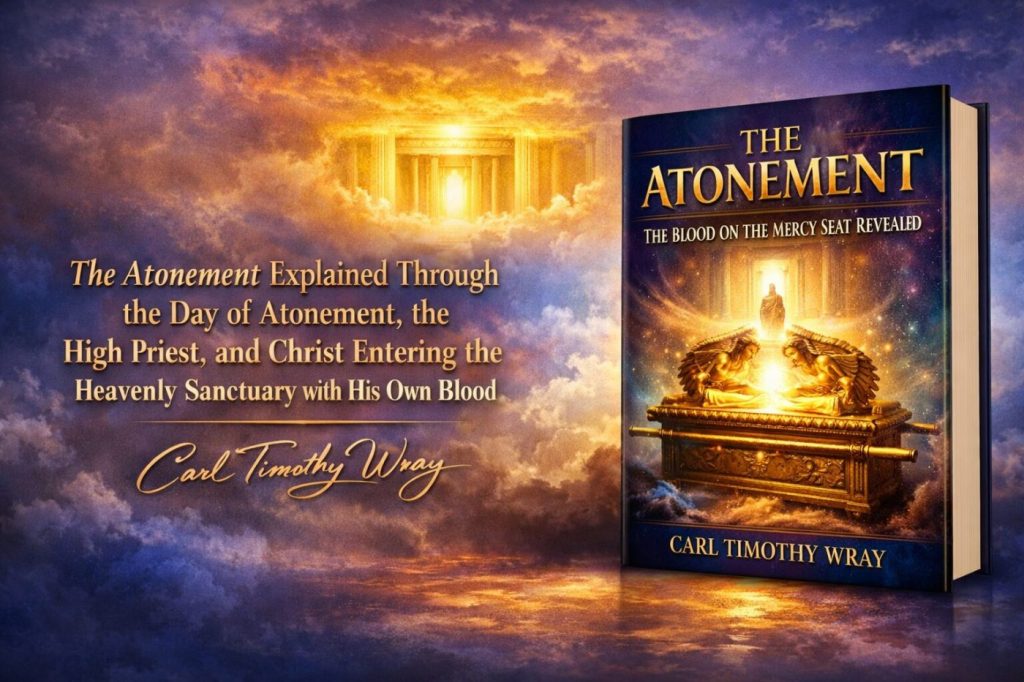
The Atonement Explained Through the Day of Atonement, the High Priest, and Christ Entering the Heavenly Sanctuary with His Own Blood
Atonement: Author
By Carl Timothy Wray
Carl Timothy Wray is the founder of The Finished Work of Christ ministry and the author of hundreds of theological works exploring the full counsel of God from Genesis to Revelation. For more than forty years, Wray has devoted himself to tracing the unified mind of God across the Scriptures, revealing how the Law, the Prophets, Christ, and the Apostles all testify of one redemptive plan. His writings emphasize the progressive unveiling of God’s purpose—seed, blade, ear, and full ear in the corn—bringing readers into a deeper understanding of the Kingdom of God and the reconciliation of all things through Christ.
The Atonement — The Blood on the Mercy Seat Revealed explains the heart of God’s redemptive plan through the biblical pattern of the Day of Atonement, the Levitical priesthood, and the ministry of Jesus Christ as the eternal High Priest. From the tabernacle in the wilderness to Christ entering the heavenly sanctuary with His own blood, this book traces the full counsel of God concerning the atonement. Carl Timothy Wray connects Genesis, the Law of Moses, the prophets, and the New Testament to reveal how the blood placed upon the mercy seat satisfied divine justice, opened the way into the holiest, and reconciled humanity to God. This work brings readers into a deeper understanding of the atonement, the priesthood, and the finished work of Christ.
Atonement: Introduction
From the beginning of Scripture, God revealed a divine method by which fallen man could return to fellowship with Him. This method is called atonement.
The atonement is not a random act of mercy, nor is it a vague religious concept. It is the carefully designed structure of God’s redemptive plan—established in the Law, foretold by the prophets, and fulfilled perfectly in Jesus Christ.
In the tabernacle of Moses, one day stood above all others: the Day of Atonement. On that day the High Priest entered the Holy of Holies with the blood of the sacrifice and placed it upon the mercy seat, the very throne of God’s presence.
This act was not merely ritual. It was a prophetic picture of the greatest transaction in the history of the universe.
For centuries the priests repeated this ceremony year after year, offering the blood of animals as a temporary covering for sin. But these sacrifices were only shadows pointing forward to a greater reality.
That reality appeared when Jesus Christ, the sinless Son of God, fulfilled the pattern of the priesthood and entered the heavenly sanctuary—not with the blood of goats and calves, but with His own blood.
In that moment the entire structure of the Law, the sacrifices, and the priesthood reached its fulfillment.
The blood upon the mercy seat declared that justice had been satisfied, mercy had been released, and the way into the presence of God had been opened.
This book traces that divine pattern from Genesis to Revelation. We will examine the priesthood, the sacrifices, the Day of Atonement, and the heavenly ministry of Christ to understand how the blood on the mercy seat reveals the full counsel of God’s redemptive plan.
For those who study these truths carefully, the atonement will no longer appear as a single event in history. It will be seen as the central pillar of God’s eternal purpose—the place where righteousness and mercy meet, where justice and love embrace, and where fallen humanity is reconciled back to the heart of God.
The goal of this work is simple: to help the reader see the atonement not as a fragmented doctrine, but as a unified revelation threaded throughout the entire Bible.
When that thread becomes clear, the Scriptures open in a new way, and the mind of God concerning redemption begins to shine with increasing light—from seed, to blade, to ear, and finally to the full ear in the corn.
Chapter 1
The Mercy Seat — The Throne Where Justice and Mercy Meet
Key Scriptures
- Book of Exodus 25:21–22
- Book of Leviticus 16:14–15
- Epistle to the Romans 3:25
- Epistle to the Hebrews 9:11–12
- Book of Psalms 85:10
The Throne Hidden Behind the Veil
At the center of Israel’s tabernacle stood the most sacred place in all the earth — the Holy of Holies. Hidden behind a thick veil and inaccessible to the common man, this chamber contained the ark of the covenant, and above the ark rested the mercy seat.
The mercy seat was no ordinary piece of furniture. It represented the very throne of God among men.
The Lord said:
“And thou shalt put the mercy seat above upon the ark… and there I will meet with thee.”
— Book of Exodus 25:21–22
This declaration revealed something profound: God chose a specific place where He would meet with humanity. That meeting place was not built on human merit, religious effort, or moral perfection. It was established upon atonement.
The mercy seat stood as the divine intersection where God’s justice and God’s mercy came together.
The Problem of Sin and the Need for Atonement
From the beginning of Scripture, the fall of humanity introduced a problem that could not be ignored. Sin created separation between God and man, and divine justice demanded that this breach be addressed.
God’s nature is perfectly righteous. His throne is established upon justice, and His law reflects His holy character. Because of this, sin cannot simply be overlooked or dismissed.
Yet the same God who is perfectly just is also perfectly merciful.
This created what appeared to be an impossible dilemma:
How could God remain just while also extending mercy to sinful humanity?
The answer was revealed in the system of atonement.
The Day the Blood Was Applied
Once each year, on the Day of Atonement, the High Priest entered the Holy of Holies carrying the blood of the sacrifice. This moment represented the most solemn act in Israel’s entire worship system.
The priest approached the mercy seat with trembling reverence, knowing that the fate of the nation rested upon this sacred act.
The Scripture records:
“And he shall take of the blood of the bullock, and sprinkle it with his finger upon the mercy seat eastward.”
— Book of Leviticus 16:14
The blood was placed directly upon the mercy seat — the throne of God.
This act declared that a life had been given in place of the guilty.
Justice was satisfied because the penalty of sin had been addressed. Mercy could now flow because the demands of righteousness had been honored.
A Shadow of a Greater Reality
Yet even as these rituals were performed year after year, the Scriptures hinted that something greater was coming.
The sacrifices of the Law were never meant to be the final solution. They were prophetic shadows, pointing forward to the ultimate atonement that would one day be accomplished.
The apostle explains:
“Whom God hath set forth to be a propitiation through faith in His blood.”
— Epistle to the Romans 3:25
The word translated propitiation carries the same meaning as mercy seat. In other words, Christ Himself became the place where God’s justice and mercy meet.
Everything the tabernacle symbolized found its fulfillment in Him.
Christ Enters the True Sanctuary
The earthly tabernacle was only a copy of a greater heavenly reality. The High Priest of Israel entered a sanctuary made with human hands, but Jesus Christ entered the true sanctuary in heaven.
The Scriptures declare:
“But Christ being come an high priest of good things to come… by His own blood He entered in once into the holy place, having obtained eternal redemption for us.”
— Epistle to the Hebrews 9:11–12
Here the shadow becomes substance.
The repeated sacrifices of the Law give way to the once-for-all offering of Christ.
The earthly priesthood gives way to the eternal priesthood of the Son of God.
And the blood placed upon the mercy seat reveals the heart of God’s redemptive plan.
Where Mercy Triumphs Over Judgment
The mercy seat stands as one of the most beautiful revelations in all of Scripture. It declares that God did not abandon humanity to judgment, nor did He ignore the demands of justice.
Instead, He provided a way where righteousness and mercy could meet in perfect harmony.
The psalmist captured this mystery with remarkable clarity:
“Mercy and truth are met together; righteousness and peace have kissed each other.”
— Book of Psalms 85:10
This meeting took place at the mercy seat.
It is there that the blood speaks.
It is there that the sinner finds reconciliation.
And it is there that the throne of judgment becomes the throne of grace.
The Beginning of Understanding
To understand the atonement, one must begin here — at the mercy seat. This is the foundation upon which the entire structure of redemption rests.
Every sacrifice, every priestly act, every prophetic promise ultimately leads back to this single revelation: God has made a way for humanity to return to fellowship with Him.
The blood on the mercy seat is not merely a ritual of the past. It is the unveiling of the divine method by which God reconciles the world to Himself.
In the chapters that follow, we will explore how this pattern unfolds through the priesthood, the sacrifices, and the ministry of Jesus Christ.
For when the mercy seat is understood, the entire story of the atonement begins to come into focus.
Chapter 2
The Day of Atonement — When the High Priest Approached the Throne
Key Scriptures
- Book of Leviticus 16:1–10
- Book of Leviticus 16:29–34
- Epistle to the Hebrews 9:6–7
- Epistle to the Hebrews 10:1–4
- Epistle to the Hebrews 9:24
The Most Sacred Day in Israel
Among all the holy days of Israel, none carried greater weight than the Day of Atonement. Once each year the entire nation paused, humbled themselves before God, and waited while the High Priest entered the presence of the Lord.
On this day the priest did what no other man could do.
He passed beyond the veil.
The Scripture explains:
“And this shall be a statute for ever unto you: that in the seventh month… the priest shall make an atonement for you, to cleanse you.”
— Book of Leviticus 16:29–30
The Day of Atonement was not merely a ritual. It was the centerpiece of the entire sacrificial system. Everything in the Law pointed toward this moment when the High Priest would carry blood into the Holy of Holies.
The fate of the nation symbolically rested upon this act.
A Solemn Preparation
Before the High Priest could approach the mercy seat, he had to undergo careful preparation. Unlike Christ, the priests of Israel were themselves sinners. They could not approach the presence of God without first making atonement for their own sins.
This truth revealed one of the great limitations of the Levitical system.
The High Priest had to offer sacrifices for himself before he could intercede for the people. This requirement showed that the priesthood of Aaron was temporary and imperfect.
Yet even with its limitations, the ceremony revealed the seriousness of approaching God’s throne.
Nothing about the Day of Atonement was casual.
Every detail was precise.
Every action carried meaning.
Two Goats and One Great Mystery
One of the most striking elements of the Day of Atonement involved two goats.
Lots were cast over the animals. One goat was chosen as the sacrifice for sin, while the other became the scapegoat.
The first goat was slain, and its blood was carried into the Holy of Holies. That blood was sprinkled upon the mercy seat, symbolizing that a life had been given for the sins of the people.
But the second goat carried a different message.
The priest placed his hands upon the head of the living goat and confessed over it the sins of the nation. The goat was then led away into the wilderness, symbolically carrying the guilt of the people far from the camp.
This dramatic picture revealed two aspects of the atonement:
- The payment for sin
- The removal of sin
Together they declared that God was both just in addressing sin and merciful in removing it from His people.
The Veil That Limited Access
Even on the Day of Atonement, access to God remained restricted. Only the High Priest could enter the Holy of Holies, and he could do so only once each year.
The writer of Hebrews explains:
“Into the second went the high priest alone once every year, not without blood.”
— Epistle to the Hebrews 9:7
This restriction carried a powerful message.
It showed that the way into the full presence of God had not yet been opened.
The veil standing between the Holy Place and the Holy of Holies symbolized the barrier that still existed between humanity and the throne of God.
The sacrificial system provided temporary covering, but it could not yet bring complete reconciliation.
The Shadow of Something Greater
The entire Day of Atonement ceremony functioned as a prophetic shadow.
The sacrifices were repeated year after year because they could not permanently remove sin. They pointed forward to a greater sacrifice that had not yet come.
The Scripture declares:
“For the law having a shadow of good things to come… can never with those sacrifices which they offered year by year continually make the comers thereunto perfect.”
— Epistle to the Hebrews 10:1
The repetition of the sacrifices revealed their limitation.
They were symbols, not the final solution.
The Heavenly Reality
What the High Priest performed in the earthly tabernacle pointed toward a greater event that would occur in the heavenly sanctuary.
The writer of Hebrews reveals:
“For Christ is not entered into the holy places made with hands… but into heaven itself, now to appear in the presence of God for us.”
— Epistle to the Hebrews 9:24
Here the shadow meets its fulfillment.
The earthly High Priest entered a sanctuary built by human hands.
Christ entered the true sanctuary of heaven.
The earthly priest carried the blood of animals.
Christ presented His own blood.
The earthly ceremony had to be repeated year after year.
Christ accomplished redemption once and for all.
The Purpose of the Pattern
When viewed through the full counsel of Scripture, the Day of Atonement reveals the wisdom of God’s redemptive plan.
Every element of the ceremony served as a prophetic signpost pointing toward the work of Christ.
The High Priest pointed to the true Mediator.
The sacrifices pointed to the perfect offering.
The blood pointed to the price of redemption.
And the mercy seat pointed to the throne where justice and mercy meet.
In the next chapter we will explore the role of the High Priest himself, and how his ministry prepared the way for the eternal priesthood of Jesus Christ.
Chapter 3
The High Priest — The Mediator Between God and Man
Key Scriptures
- Book of Exodus 28:29–30
- Book of Leviticus 16:32–34
- Epistle to the Hebrews 5:1–4
- First Epistle to Timothy 2:5
- Epistle to the Hebrews 8:1–2
The Man Appointed to Stand in the Gap
In the divine order established under the Law of Moses, the High Priest occupied one of the most sacred roles in the nation of Israel. He served as the appointed mediator between a holy God and a sinful people.
The priest did what the people themselves could not do.
He stood between heaven and earth.
The writer of Hebrews describes the role this way:
“For every high priest taken from among men is ordained for men in things pertaining to God.”
— Epistle to the Hebrews 5:1
The High Priest represented the people before God, offering sacrifices and interceding on their behalf. Without this ministry, the people had no access to the presence of the Lord.
This arrangement revealed an important truth: fallen humanity could not approach God on its own terms. A mediator was required.
Bearing the Names of the People
One of the most powerful symbols in the ministry of the High Priest was the breastplate of judgment. Upon this breastplate were twelve stones, each engraved with the name of one of the tribes of Israel.
When the High Priest entered the presence of God, he carried the names of the people upon his heart.
The Scripture records:
“And Aaron shall bear the names of the children of Israel in the breastplate of judgment upon his heart.”
— Book of Exodus 28:29
This image revealed the heart of the priestly ministry. The High Priest did not approach God alone; he came representing the entire nation.
Every tribe, every family, every individual was symbolically carried into the presence of God through the ministry of the priest.
A Priest Who Needed Atonement
Yet the High Priest himself was not perfect.
Unlike Christ, the priests descended from Aaron were subject to weakness and sin. Before they could offer sacrifices for the people, they first had to make atonement for themselves.
This limitation exposed the temporary nature of the Levitical priesthood.
The system worked as a symbolic bridge, but it could not ultimately solve the problem of sin. The priests themselves needed redemption just as much as the people they served.
This truth pointed forward to the need for a greater priest, one who would not be hindered by human weakness.
The One True Mediator
The New Testament reveals that the entire priesthood system was preparing the way for the ministry of Jesus Christ.
Unlike the priests of the Law, Christ did not inherit His priesthood through the tribe of Levi. His priesthood came from a higher order.
And unlike the priests who served in the temple, Christ was sinless.
Because of this, He did not need to offer sacrifices for Himself.
The Scripture declares:
“For there is one God, and one mediator between God and men, the man Christ Jesus.”
— First Epistle to Timothy 2:5
Here the role of mediator reaches its fulfillment.
The High Priest of Israel foreshadowed the coming of a perfect mediator who could truly reconcile humanity to God.
A Greater Priesthood
The ministry of Christ reveals a priesthood far greater than that of Aaron.
The priests of Israel served in an earthly sanctuary. Their ministry was temporary, and their sacrifices had to be repeated continually.
Christ, however, serves in a heavenly sanctuary.
The writer of Hebrews proclaims:
“Now of the things which we have spoken this is the sum: We have such an high priest, who is set on the right hand of the throne of the Majesty in the heavens.”
— Epistle to the Hebrews 8:1
This statement reveals the ultimate fulfillment of the priestly office.
The earthly High Priest stood before the ark of the covenant.
Christ sits at the right hand of the throne of God.
The earthly priest entered the Holy of Holies once each year.
Christ entered the heavenly sanctuary once for all.
The Bridge Between Heaven and Earth
The ministry of the High Priest reveals one of the most important truths in the entire story of redemption: God Himself provided the mediator.
Humanity could not climb its way back to heaven through effort or religious devotion. The gap between God and man was too great.
But through the priesthood, God showed that reconciliation would come through a divinely appointed mediator.
That mediator is Jesus Christ.
He carries the names of His people before the throne of God just as the High Priest once carried the names of Israel upon his breastplate.
Yet His ministry is far greater, for He does not merely symbolize reconciliation—He accomplishes it.
Preparing the Way for the Eternal Priest
The Levitical priesthood was never meant to be permanent. It served as a prophetic preparation for the coming of a greater order of priesthood.
In the next chapter we will explore the mysterious figure of Melchizedek, whose priesthood foreshadowed the eternal priesthood of Christ.
Through this revelation we will see how the temporary ministry of the Law gives way to the everlasting priesthood of the Son of God.
Chapter 4
Melchizedek — The Eternal Priesthood Foretold
Key Scriptures
- Book of Genesis 14:18–20
- Book of Psalms 110:4
- Epistle to the Hebrews 7:1–3
- Epistle to the Hebrews 7:11–17
- Epistle to the Hebrews 7:24–25
A Priest Appears Before the Law
Long before the Law of Moses established the Levitical priesthood, Scripture introduces a mysterious figure whose ministry reveals a deeper order of priesthood.
His name was Melchizedek.
The account appears in the days of Abraham:
“And Melchizedek king of Salem brought forth bread and wine: and he was the priest of the most high God.”
— Book of Genesis 14:18
This brief passage carries tremendous significance. Melchizedek appears suddenly in the narrative of Genesis as both king and priest.
He blesses Abraham, and Abraham responds by giving him a tenth of the spoils.
Yet the Scripture offers no genealogy, no record of his birth, and no account of his death.
This unusual silence prepares the way for a prophetic revelation.
The King of Righteousness
The name Melchizedek itself carries meaning.
It means “king of righteousness.”
He is also called the king of Salem, which means “king of peace.”
These two titles reveal something remarkable: righteousness and peace are united in his priesthood.
Centuries later the writer of Hebrews explains the significance of this mysterious figure:
“First being by interpretation King of righteousness, and after that also King of Salem, which is, King of peace.”
— Epistle to the Hebrews 7:2
Here the Scripture begins to unveil the deeper purpose behind Melchizedek’s appearance.
He was not merely a historical figure.
He was a prophetic pattern.
A Priesthood Without Genealogy
Unlike the priests of the Levitical system, Melchizedek’s priesthood was not tied to ancestry or tribal lineage.
The writer of Hebrews emphasizes this point:
“Without father, without mother, without descent, having neither beginning of days, nor end of life.”
— Epistle to the Hebrews 7:3
This statement does not mean Melchizedek literally had no parents. Rather, the Scripture intentionally omits his genealogy to present him as a type of an eternal priesthood.
The Levitical priests inherited their position through family lineage.
Melchizedek’s priesthood stands outside that system.
It points to something greater.
The Promise of a Greater Priest
Centuries after the Law was given, the Spirit spoke through David concerning a coming priest who would serve in the order of Melchizedek.
The psalm declares:
“The LORD hath sworn, and will not repent, Thou art a priest for ever after the order of Melchizedek.”
— Book of Psalms 110:4
This prophecy revealed that the Levitical priesthood would not be the final priesthood of God’s redemptive plan.
A new and greater priesthood was coming—one that would not depend on human lineage or temporary sacrifices.
Christ the Fulfillment
The New Testament reveals that Jesus Christ is the fulfillment of this prophecy.
Unlike the priests of Israel, Christ did not come from the tribe of Levi. He came from the tribe of Judah.
Under the Law, this would have disqualified Him from the Levitical priesthood.
But Christ did not serve under the order of Aaron.
He serves under the order of Melchizedek.
The Scripture explains:
“For it is evident that our Lord sprang out of Judah… and it is yet far more evident: for that after the similitude of Melchizedek there ariseth another priest.”
— Epistle to the Hebrews 7:14–15
Here the temporary system of the Law gives way to an eternal priesthood.
A Priest Who Lives Forever
One of the greatest weaknesses of the Levitical system was the mortality of its priests.
The priests served for a time and then died, requiring others to take their place.
But the priesthood of Christ is different.
The writer of Hebrews declares:
“But this man, because he continueth ever, hath an unchangeable priesthood.”
— Epistle to the Hebrews 7:24
Christ’s priesthood does not pass from one generation to another.
It is eternal.
Because He lives forever, His ministry of intercession never ends.
The Perfect Mediator
The eternal priesthood of Christ accomplishes what the Levitical system could never fully achieve.
The sacrifices of the Law could temporarily cover sin, but they could not permanently remove it.
The priests could represent the people before God, but they themselves were subject to weakness.
Christ, however, stands as the perfect High Priest.
The Scripture declares:
“Wherefore He is able also to save them to the uttermost that come unto God by Him.”
— Epistle to the Hebrews 7:25
Here the promise of Melchizedek’s priesthood reaches its fulfillment.
The temporary priesthood of the Law gives way to the eternal priesthood of the Son of God.
The Bridge to the Atonement
The revelation of Melchizedek prepares us to understand the full significance of Christ’s ministry.
If Christ is the eternal High Priest, then His offering must also be greater than the sacrifices of the Law.
In the next chapter we will examine the sacrifice itself—how the blood offered by Christ fulfills every shadow of the atonement and opens the way into the presence of God.
Chapter 5
The Blood of the Covenant — The Price of Redemption
Key Scriptures
- Book of Leviticus 17:11
- Book of Exodus 24:7–8
- Gospel of Matthew 26:27–28
- Epistle to the Hebrews 9:18–22
- First Epistle of Peter 1:18–19
Life Is in the Blood
From the earliest pages of Scripture, God established a foundational principle concerning life and redemption: life is in the blood.
The Lord declared:
“For the life of the flesh is in the blood: and I have given it to you upon the altar to make an atonement for your souls.”
— Book of Leviticus 17:11
This statement reveals why blood played such a central role in the sacrificial system of Israel.
Blood represented life given in place of life.
Sin introduced death into the human condition. Because of this, the restoration of fellowship with God required the giving of life.
The shedding of blood symbolized that the penalty of sin had been addressed.
The Covenant Sealed in Blood
Throughout the Old Testament, covenants were often established through the shedding of blood. When Moses confirmed the covenant between God and Israel, he sprinkled the blood of the sacrifice upon the people.
The Scripture records:
“Behold the blood of the covenant, which the LORD hath made with you.”
— Book of Exodus 24:8
This act revealed that the relationship between God and His people was not based merely on words or promises.
It was sealed with blood.
The covenant required a life-giving sacrifice to confirm its seriousness and permanence.
The Limitations of Animal Sacrifices
Yet even as these sacrifices were performed, the Law itself pointed toward their limitations.
The blood of animals could symbolize atonement, but it could not ultimately remove the problem of sin.
The sacrificial system had to be repeated continually. Every year the priests offered new sacrifices, and every year the Day of Atonement returned.
The repetition itself revealed that the system was temporary.
The sacrifices were shadows pointing toward a greater sacrifice that had not yet been offered.
The Blood of the New Covenant
When Jesus gathered with His disciples on the night before His crucifixion, He revealed that the long-awaited fulfillment of the sacrificial system had arrived.
Taking the cup, He declared:
“This is my blood of the new covenant, which is shed for many for the remission of sins.”
— Gospel of Matthew 26:28
With these words, Christ revealed that His death would establish a new covenant.
The sacrifices of the Law were about to give way to the ultimate offering—the sacrifice of the Son of God.
The Necessity of Blood
The writer of Hebrews explains the principle that governed the entire sacrificial system:
“Without shedding of blood is no remission.”
— Epistle to the Hebrews 9:22
This statement reflects the divine order established throughout the Scriptures.
Sin required atonement.
Atonement required sacrifice.
And sacrifice required the giving of life.
But the Law also revealed that the blood of animals could only symbolize redemption.
The true price of redemption would require something far greater.
The Precious Blood of Christ
The New Testament declares that the ultimate sacrifice has already been offered.
The apostle Peter writes:
“Ye were not redeemed with corruptible things, as silver and gold… but with the precious blood of Christ, as of a lamb without blemish and without spot.”
— First Epistle of Peter 1:18–19
Here the shadows of the sacrificial system give way to the reality of Christ’s offering.
The Lamb of God fulfills every symbol of the Law.
His blood accomplishes what the sacrifices of animals could never achieve.
The Price Paid Once for All
Unlike the sacrifices of the Levitical system, the sacrifice of Christ does not need to be repeated.
The priests of the Law stood daily offering sacrifices that could never permanently remove sin.
Christ offered Himself once.
That single offering accomplished eternal redemption.
The blood of Christ declares that the price of redemption has been fully paid.
The Foundation of Reconciliation
The blood of the covenant reveals the heart of God’s redemptive plan.
It shows that reconciliation between God and humanity is not achieved through human effort, religious works, or moral improvement.
It is accomplished through the sacrifice provided by God Himself.
In the chapters that follow, we will explore how this sacrifice opens the way into the heavenly sanctuary and establishes the eternal ministry of Christ as our High Priest.
For the blood of the covenant is not merely the price of redemption—it is the foundation upon which the entire plan of atonement stands.
Chapter 6
The Veil Torn — The Way into the Holiest Opened
Key Scriptures
- Book of Exodus 26:31–33
- Epistle to the Hebrews 9:8
- Gospel of Matthew 27:50–51
- Epistle to the Hebrews 10:19–22
- Epistle to the Hebrews 6:19–20
The Veil That Separated Man from God
Within the tabernacle of Moses there stood a barrier that symbolized the separation between God and humanity. This barrier was the veil.
The veil divided the Holy Place from the Holy of Holies, the chamber where the ark of the covenant and the mercy seat were located.
The Lord commanded:
“And thou shalt hang up the veil… and the veil shall divide unto you between the holy place and the most holy.”
— Book of Exodus 26:33
This curtain represented more than a physical separation. It symbolized the reality that sinful humanity could not freely enter the presence of a holy God.
The veil declared that access to God’s throne was restricted.
Only the High Priest could pass beyond it, and even he could do so only once each year, carrying the blood of the sacrifice.
A Symbol of an Unfinished Work
The presence of the veil revealed something important about the sacrificial system under the Law.
The writer of Hebrews explains:
“The Holy Ghost this signifying, that the way into the holiest of all was not yet made manifest.”
— Epistle to the Hebrews 9:8
The sacrifices performed by the priests provided temporary covering for sin, but they did not open full access to God.
The veil stood as a constant reminder that reconciliation had not yet been fully accomplished.
The people could draw near through the ministry of the priesthood, but they could not yet enter the presence of God themselves.
The system was a shadow, pointing toward a greater reality that had not yet appeared.
The Moment That Changed Everything
When Jesus Christ gave His life upon the cross, a remarkable event occurred in the temple at Jerusalem.
The Gospel records:
“Jesus… yielded up the ghost. And, behold, the veil of the temple was rent in twain from the top to the bottom.”
— Gospel of Matthew 27:50–51
This moment carried profound meaning.
The veil was not torn by human hands. It was torn from top to bottom, signifying an act initiated by God Himself.
The barrier that had separated humanity from the presence of God for centuries was suddenly removed.
The tearing of the veil declared that the sacrifice of Christ had accomplished what the sacrifices of the Law could never achieve.
The way into the presence of God had been opened.
Entering the Holiest by the Blood of Jesus
The New Testament reveals the significance of this event with powerful clarity.
The writer of Hebrews proclaims:
“Having therefore, brethren, boldness to enter into the holiest by the blood of Jesus.”
— Epistle to the Hebrews 10:19
Through the sacrifice of Christ, believers are invited into the very presence of God.
What was once restricted to the High Priest once a year is now made available through the blood of Christ.
The veil that once symbolized separation has become the pathway through which reconciliation is realized.
A New and Living Way
The Scriptures describe this access as a new and living way.
The old covenant system relied upon repeated sacrifices and the continual ministry of priests. But the sacrifice of Christ established something entirely different.
It opened a living relationship with God.
The writer of Hebrews continues:
“By a new and living way, which He hath consecrated for us, through the veil, that is to say, His flesh.”
— Epistle to the Hebrews 10:20
Here the veil itself becomes a symbol of the body of Christ.
Just as the veil was torn, the body of Christ was broken through the sacrifice of the cross, opening the way for humanity to draw near to God.
The Anchor Within the Veil
The work of Christ does not merely remove the barrier between God and humanity. It establishes a secure and enduring relationship with the throne of God.
The Scriptures describe this relationship using the image of an anchor:
“Which hope we have as an anchor of the soul… which entereth into that within the veil.”
— Epistle to the Hebrews 6:19
This hope rests in the completed work of Christ.
Through His sacrifice and priestly ministry, believers are anchored in the presence of God Himself.
The Beginning of Open Fellowship
The tearing of the veil represents one of the most powerful revelations of the atonement.
It declares that the separation caused by sin has been overcome.
The way into the presence of God is no longer hidden behind a curtain.
The throne of grace is open.
In the next chapter we will examine how Christ, as the eternal High Priest, entered the heavenly sanctuary with His own blood to establish eternal redemption for humanity.
Chapter 7
Christ Enters the Heavenly Sanctuary — The True Day of Atonement
Key Scriptures
- Epistle to the Hebrews 8:1–2
- Epistle to the Hebrews 9:11–12
- Epistle to the Hebrews 9:23–24
- Epistle to the Hebrews 10:11–12
- Book of Revelation 5:6
The Earthly Pattern and the Heavenly Reality
Throughout the Law of Moses, the tabernacle and its ceremonies served as prophetic symbols of a greater spiritual reality. Every altar, every sacrifice, every priestly act pointed toward something beyond the earthly sanctuary.
The writer of Hebrews makes this clear:
“We have such an high priest, who is set on the right hand of the throne of the Majesty in the heavens; a minister of the sanctuary, and of the true tabernacle, which the Lord pitched, and not man.”
— Epistle to the Hebrews 8:1–2
The tabernacle built by Moses was not the final dwelling place of God’s presence. It was a copy, a shadow of a greater sanctuary.
The true sanctuary is in heaven itself.
The True High Priest Appears
The priests of Israel served in the earthly tabernacle, offering sacrifices day after day. Yet their ministry could never fully accomplish redemption.
The arrival of Jesus Christ changed everything.
The Scripture declares:
“But Christ being come an high priest of good things to come… by His own blood He entered in once into the holy place, having obtained eternal redemption.”
— Epistle to the Hebrews 9:11–12
This statement reveals the fulfillment of the Day of Atonement.
The earthly High Priest entered the Holy of Holies carrying the blood of animals.
Christ entered the heavenly sanctuary carrying the value of His own sacrifice.
The shadow becomes reality.
Once for All
One of the greatest weaknesses of the Levitical system was repetition. The priests stood daily offering sacrifices that could never fully remove sin.
Year after year the Day of Atonement returned.
But Christ’s sacrifice is different.
The writer of Hebrews declares:
“Every priest standeth daily ministering and offering oftentimes the same sacrifices… but this man, after he had offered one sacrifice for sins for ever, sat down on the right hand of God.”
— Epistle to the Hebrews 10:11–12
The posture of Christ tells the story.
The priests stood continually because their work was never finished.
Christ sat down, declaring that His work was complete.
The Blood Presented in Heaven
When the High Priest entered the Holy of Holies on the Day of Atonement, he approached the mercy seat with the blood of the sacrifice.
Christ fulfilled this pattern on a far greater scale.
The writer of Hebrews explains:
“Christ is not entered into the holy places made with hands… but into heaven itself, now to appear in the presence of God for us.”
— Epistle to the Hebrews 9:24
This statement reveals that the atonement is not merely an event that occurred on earth.
The work of redemption involves the heavenly sanctuary itself.
Christ, as the eternal High Priest, appears before the throne of God on behalf of humanity.
The Lamb in the Midst of the Throne
The book of Revelation offers a glimpse of the heavenly sanctuary and the ongoing significance of Christ’s sacrifice.
John records:
“And I beheld, and, lo, in the midst of the throne… stood a Lamb as it had been slain.”
— Book of Revelation 5:6
This image reveals that the sacrifice of Christ remains central to the government of God’s kingdom.
The Lamb who was slain now stands in the midst of the throne.
The atonement is not merely a historical event—it is the foundation of the heavenly kingdom.
Eternal Redemption Accomplished
Through His sacrifice and priestly ministry, Christ accomplished what the Law could only foreshadow.
The earthly sacrifices temporarily covered sin.
The sacrifice of Christ brings eternal redemption.
The earthly priesthood served as a shadow.
Christ’s priesthood is the eternal reality.
The earthly sanctuary represented God’s presence symbolically.
Christ ministers in the true sanctuary of heaven.
The Fulfillment of the Pattern
When viewed through the full counsel of Scripture, the Day of Atonement, the priesthood, the sacrifices, and the tabernacle all converge in the ministry of Christ.
Every shadow finds its fulfillment in Him.
Every symbol points to His work.
Every promise reaches completion in His sacrifice.
In the next chapter we will explore how the atonement not only provides forgiveness but also establishes the ministry of reconciliation, bringing humanity back into fellowship with God.
Chapter 8
The Ministry of Reconciliation — God Bringing the World Back to Himself
Key Scriptures
- Second Epistle to the Corinthians 5:18–19
- Epistle to the Romans 5:10–11
- Epistle to the Colossians 1:19–20
- Epistle to the Ephesians 1:9–10
- First Epistle of John 2:2
The Purpose of the Atonement
The atonement is not merely about forgiveness. It is about reconciliation.
From the beginning of Scripture, God’s purpose has been to restore what was broken in the fall of humanity. Sin fractured the relationship between God and man, creating separation where there was once fellowship.
The atonement reveals how God Himself moves to repair that relationship.
The apostle writes:
“All things are of God, who hath reconciled us to Himself by Jesus Christ.”
— Second Epistle to the Corinthians 5:18
Here we see the heart of the redemptive plan. God is not merely judging sin; He is bringing humanity back into fellowship with Himself.
Enemies Made Friends
The fall of humanity did more than introduce moral failure—it created alienation. Humanity became estranged from the presence and life of God.
Yet the atonement addresses this alienation directly.
The apostle Paul explains:
“For if, when we were enemies, we were reconciled to God by the death of His Son.”
— Epistle to the Romans 5:10
This statement reveals the depth of God’s love. Reconciliation did not begin when humanity turned toward God. It began when God moved toward humanity through the sacrifice of Christ.
The cross reveals a God who seeks restoration rather than abandonment.
God in Christ Reconciling the World
One of the most profound statements in the New Testament describes the mission of Christ in these words:
“God was in Christ, reconciling the world unto Himself.”
— Second Epistle to the Corinthians 5:19
This declaration shows that the atonement is not simply an act performed by Christ on behalf of God.
It is the work of God Himself acting through Christ.
The cross reveals the heart of God moving toward reconciliation.
Through Christ, the distance created by sin begins to close.
The Scope of Reconciliation
The Scriptures also reveal the far-reaching scope of God’s redemptive purpose.
Paul writes:
“For it pleased the Father that in Him should all fullness dwell; and, having made peace through the blood of His cross, by Him to reconcile all things unto Himself.”
— Epistle to the Colossians 1:19–20
Here the vision of reconciliation extends beyond individual forgiveness.
The atonement is part of a larger plan to restore harmony throughout creation.
The blood of the cross becomes the foundation upon which God’s plan of restoration unfolds.
The Gathering of All Things in Christ
The ministry of reconciliation ultimately leads toward the restoration of unity within God’s creation.
The apostle describes this purpose as:
“That in the dispensation of the fullness of times He might gather together in one all things in Christ.”
— Epistle to the Ephesians 1:10
This vision reveals the grand scope of God’s plan.
The atonement does not merely address the problem of sin in isolated individuals. It participates in the larger purpose of God to bring creation itself into harmony under the headship of Christ.
The Atonement for the Whole World
The ministry of reconciliation extends outward from the cross.
The apostle John declares:
“He is the propitiation for our sins: and not for ours only, but also for the sins of the whole world.”
— First Epistle of John 2:2
This statement reveals the sufficiency of Christ’s sacrifice.
The atonement possesses the power to address the sin of the entire world.
It stands as the universal provision through which reconciliation becomes possible.
The Message Entrusted to Believers
The work of reconciliation does not end with the sacrifice of Christ.
Those who receive the grace of God are entrusted with a message to carry into the world.
Paul explains that believers become ambassadors of reconciliation, proclaiming the invitation for humanity to return to God.
The atonement therefore becomes both a completed work and an ongoing message.
Through the proclamation of the gospel, the invitation to reconciliation continues to extend outward into the world.
The Heart of the Father
When the atonement is understood in its fullness, it reveals something profound about the heart of God.
The cross shows that God’s purpose is not merely to judge sin but to restore relationship.
The ministry of reconciliation reveals a God who moves toward humanity with the intention of bringing His creation back into fellowship with Himself.
In the next chapter we will explore how the atonement not only reconciles humanity to God but also establishes a royal priesthood through which believers participate in the ministry of Christ.
Chapter 9
A Royal Priesthood — The People of the Atonement
Key Scriptures
- First Epistle of Peter 2:5–9
- Book of Revelation 1:5–6
- Book of Revelation 5:9–10
- Epistle to the Hebrews 4:14–16
- Epistle to the Hebrews 7:25
The Purpose of the Priesthood Fulfilled
The priesthood under the Law of Moses served a vital role in God’s redemptive plan. Through the ministry of the priests, sacrifices were offered and the people were represented before God.
Yet the Levitical priesthood was never intended to be the final stage of God’s plan.
It functioned as a shadow, preparing the way for a greater priesthood that would emerge through the work of Christ.
Through the atonement accomplished by Jesus, something remarkable takes place: those who receive His work are invited into a new identity.
They become part of a royal priesthood.
A Spiritual House and Holy Priesthood
The apostle Peter describes this transformation in powerful language:
“Ye also, as lively stones, are built up a spiritual house, an holy priesthood.”
— First Epistle of Peter 2:5
This statement reveals that the people of God are not merely recipients of salvation.
They are participants in a spiritual structure.
The imagery echoes the tabernacle and temple of the Old Testament. Just as those structures were built stone by stone, believers are described as living stones forming a spiritual house.
Within this house, the people of God serve as a priesthood.
Called into a Royal Priesthood
Peter continues:
“Ye are a chosen generation, a royal priesthood, an holy nation.”
— First Epistle of Peter 2:9
This declaration reveals the fulfillment of God’s long-standing purpose.
In the Old Testament, the priesthood belonged to a specific tribe within Israel. Access to priestly service was limited to those descended from Aaron.
Through Christ, the boundaries of that system are transformed.
Those who come into union with Christ participate in a priesthood that reflects the royal order of Melchizedek.
This priesthood combines two roles that once appeared separate: kingship and priesthood.
Kings and Priests Unto God
The book of Revelation echoes this truth.
John writes:
“Unto Him that loved us, and washed us from our sins in His own blood, and hath made us kings and priests unto God.”
— Book of Revelation 1:5–6
Here the connection between the atonement and the priesthood becomes clear.
The blood of Christ not only cleanses from sin; it establishes a new identity for those who receive its power.
The people of God become participants in the royal and priestly ministry of Christ.
Later in Revelation the same truth appears again:
“Thou hast made us unto our God kings and priests: and we shall reign on the earth.”
— Book of Revelation 5:10
The priesthood of Christ is therefore not merely individual—it is corporate.
It includes a people who share in His life and ministry.
Access to the Throne of Grace
One of the great privileges of this priestly identity is access to the presence of God.
The writer of Hebrews declares:
“Let us therefore come boldly unto the throne of grace.”
— Epistle to the Hebrews 4:16
Under the Law, only the High Priest could approach the mercy seat.
Through Christ, believers are invited to draw near to the throne of grace with confidence.
This boldness does not come from human merit.
It comes through the work of the eternal High Priest who intercedes for His people.
The Continuing Ministry of Christ
Even now, the priestly ministry of Christ continues.
The writer of Hebrews explains:
“Wherefore He is able also to save them to the uttermost that come unto God by Him, seeing He ever liveth to make intercession for them.”
— Epistle to the Hebrews 7:25
Christ’s priesthood is not limited to the moment of the cross.
It continues as He intercedes on behalf of humanity before the throne of God.
Through this ministry, the benefits of the atonement remain active and effective.
The People Formed by the Atonement
The atonement therefore accomplishes more than forgiveness.
It forms a people.
Through the sacrifice of Christ and His eternal priesthood, believers are brought into a new identity as participants in the royal priesthood of God.
They become living stones in a spiritual house, ministers of reconciliation, and witnesses of the grace that flows from the throne of God.
In the final chapter we will explore the ultimate goal of the atonement: the restoration of fellowship between God and humanity and the fulfillment of God’s redemptive purpose throughout creation.
Chapter 10
The Atonement Fulfilled — Restored Fellowship with God
Key Scriptures
- Epistle to the Hebrews 10:14–17
- Second Epistle to the Corinthians 5:21
- First Epistle of John 1:7
- Book of Revelation 21:3–4
- First Epistle to the Corinthians 15:28
The Completion of the Atonement
Throughout the Scriptures, the atonement unfolds as the central thread of God’s redemptive plan. From the sacrifices of the Law to the ministry of the High Priest, every element of the Old Testament pointed forward to the work that would be accomplished through Jesus Christ.
When Christ offered Himself as the perfect sacrifice, the entire system reached its fulfillment.
The writer of Hebrews declares:
“For by one offering He hath perfected for ever them that are sanctified.”
— Epistle to the Hebrews 10:14
This statement reveals the finality of Christ’s sacrifice. The repeated offerings of the Law are replaced by a single, complete act of redemption.
Through this offering, the work of atonement reaches its completion.
The Great Exchange
The atonement reveals one of the most profound mysteries of the gospel — the exchange that occurs through the sacrifice of Christ.
The apostle Paul explains:
“For He hath made Him to be sin for us, who knew no sin; that we might be made the righteousness of God in Him.”
— Second Epistle to the Corinthians 5:21
Here the meaning of the cross becomes clear.
Christ, who was without sin, entered fully into the consequences of humanity’s fallen condition. In doing so, He made it possible for humanity to enter into the righteousness of God.
The atonement therefore addresses both sides of the problem of sin.
It removes guilt and restores righteousness.
The Cleansing Power of the Blood
The Scriptures consistently emphasize the cleansing power of Christ’s sacrifice.
The apostle John writes:
“The blood of Jesus Christ His Son cleanseth us from all sin.”
— First Epistle of John 1:7
This cleansing is not merely symbolic.
The blood of Christ represents the life given to restore humanity to fellowship with God. Through the atonement, the barrier created by sin is removed, and the relationship between God and humanity is renewed.
God Dwelling with Humanity
The ultimate purpose of the atonement is revealed in the final vision of Scripture.
The book of Revelation describes the moment when God’s presence is fully restored among His people:
“Behold, the tabernacle of God is with men, and He will dwell with them.”
— Book of Revelation 21:3
This promise reflects the fulfillment of the entire redemptive story.
From the garden of Eden to the tabernacle of Moses, from the temple of Israel to the ministry of Christ, the desire of God has always been the same — to dwell in fellowship with humanity.
The atonement makes that fellowship possible.
The End of Sorrow and Separation
As the vision continues, the Scriptures describe the transformation that results from God’s restored presence:
“God shall wipe away all tears from their eyes; and there shall be no more death.”
— Book of Revelation 21:4
The atonement does not merely address individual sin.
It participates in the larger restoration of creation itself.
The work of Christ ultimately leads toward the removal of suffering, death, and separation.
God All in All
The final stage of God’s redemptive purpose appears in the writings of Paul:
“Then shall the Son also Himself be subject unto Him that put all things under Him, that God may be all in all.”
— First Epistle to the Corinthians 15:28
Here the Scriptures reveal the ultimate goal of the atonement.
The reconciliation accomplished through Christ leads toward a restored creation where the presence and life of God fill all things.
The redemptive story that began with the fall of humanity reaches its fulfillment in the restoration of divine harmony.
The Thread Through the Full Counsel of God
When viewed through the full counsel of Scripture, the atonement appears not as a single doctrine but as the central theme that runs through the entire Bible.
Genesis introduces the problem of sin.
The Law reveals the need for sacrifice.
The prophets announce the coming Redeemer.
The Gospels record the sacrifice of Christ.
The apostles explain the meaning of His work.
And Revelation reveals the final restoration of fellowship between God and humanity.
All of these threads converge in the atonement.
The Invitation of the Atonement
The message of the atonement is ultimately an invitation.
It declares that the barrier between God and humanity has been removed through the sacrifice of Christ. The way into the presence of God stands open.
Through the blood of the Lamb, the throne of judgment becomes the throne of grace.
Those who receive this work are invited to enter into restored fellowship with God and to participate in the unfolding of His redemptive purpose.
For the atonement is not merely a doctrine to be studied.
It is the revelation of the heart of God reaching toward His creation, inviting humanity to return to the fellowship for which it was originally created.
The Atonement: By Carl Timothy Wray

The Atonement Series
- The Atonement — The Legal Mind of God in Redemption
- The Atonement — The Altar and the Place of Divine Exchange
- The Atonement — The Priesthood and the Divine Order of Mediation
- The Finished Work of Christ: Meaning, Key Scriptures & FAQs
- Join Our Facebook Page