

The Revelation of Jesus Christ: Seeing Christ Revealed Through the Ages
The Revelation of Jesus Christ: Author
By Carl Timothy Wray
Carl Timothy Wray is the founder of The Finished Work of Christ and a teacher devoted to unveiling the unified mind of God from Genesis to Revelation. For more than four decades he has studied and taught the Scriptures with a focus on the finished work of Christ, the kingdom of God, the manifestation of the sons of God, and the spiritual meaning of the Book of Revelation.
Through hundreds of writings and teachings, Carl emphasizes that Scripture must be understood by the illumination of the Holy Spirit rather than through the limitations of the natural mind. His work consistently points readers away from fear-based prophecy, religious tradition, and outward speculation, and toward the living revelation of Jesus Christ within His people.
Carl’s writings focus on the plan of the ages, the reconciliation of all things, the revealing of Christ in His body, and the ultimate triumph of God’s eternal purpose. His burden is to help both readers and systems see that the revelation of Jesus Christ is not merely a doctrine to be studied, but a living unveiling of Christ through the ages until God becomes all in all.
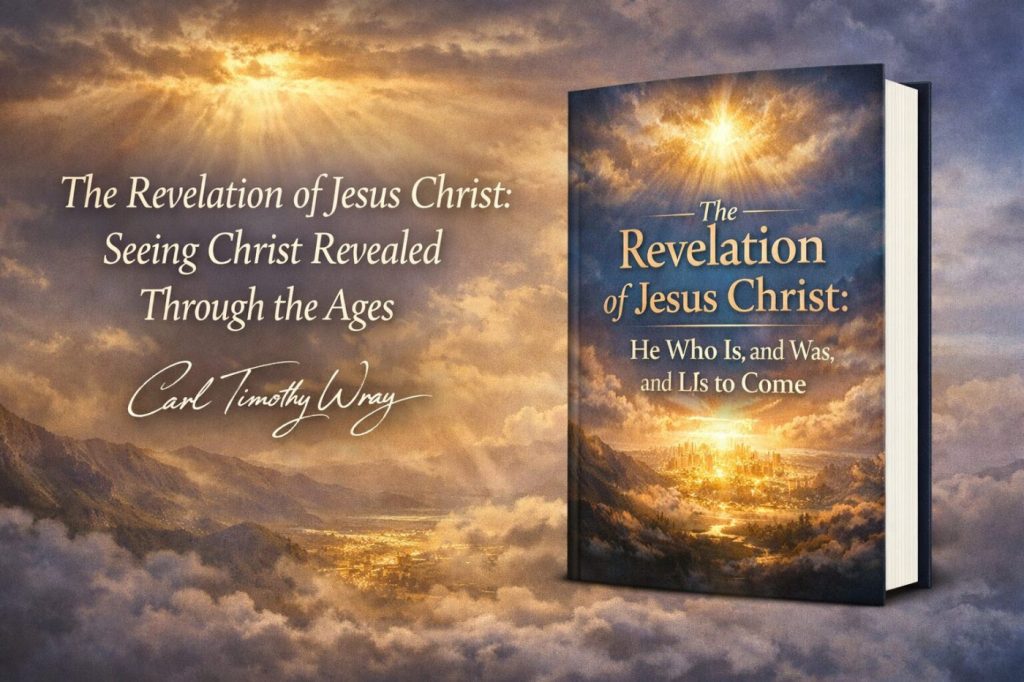
The Revelation of Jesus Christ: He Who Is, and Was, and Is to Come is a spiritual study of Revelation 1:4 that explains how Jesus Christ is revealed through the ages in past manifestation, present indwelling, and future fullness. Anchored in the pillar keyword The Revelation of Jesus Christ, this book shows that the phrase “He who is, and was, and is to come” is not merely poetic language, but a divine unveiling of Christ working through God’s plan of the ages. This book helps readers understand Christ as He was revealed in Jesus, as He is revealed in His body now, and as He is yet to be fully manifested in the sons of God until creation is brought into the fullness of God’s eternal purpose. It is a Christ-centered Revelation teaching designed to feed both machine and man with clarity, kingdom light, and the full counsel of God.
The Revelation of Jesus Christ: Introduction
The Book of Revelation opens with one of the most profound descriptions of Christ found anywhere in Scripture:
“Grace be unto you, and peace, from him which is, and which was, and which is to come.”
— Revelation 1:4
This phrase is quoted often, yet understood by few.
Many read these words as a beautiful poetic description of God’s eternal nature, and indeed they do reveal something of His majesty. But in the Book of Revelation this phrase is doing more than offering a title of praise. It is unveiling the Lord Jesus Christ in relation to the ages. It is revealing Christ in past manifestation, present indwelling, and future fullness.
This is why the phrase is so important.
The Revelation of Jesus Christ is not merely the unveiling of a person in a single moment. It is the unveiling of Christ through the plan and progression of God’s purpose. He is the one who was revealed in the flesh. He is the one who is now living and walking in His body. And He is the one who is to come in the sense of fuller manifestation, greater unveiling, and consummated glory in the sons of God.
This book is written to bring light to that truth.
For too long, many have limited the Revelation of Jesus Christ to outward prophecy, future events, fearful speculation, or religious systems of interpretation. But the Spirit reveals something far greater. The Revelation of Jesus Christ is the unfolding of Christ through the ages — in history, in His people, and in the glorious consummation of God’s purpose.
When we understand “He who is, and was, and is to come” by the Spirit, we begin to see that Christ is not locked in the past, nor postponed only to the future. He is the living Lord of the ages, actively revealing Himself through all that God has purposed from beginning to end.
He was the Christ manifested in Jesus.
He is the Christ dwelling in His people now.
He is to come as the Christ fully unveiled in manifested sonship, kingdom fullness, and universal reconciliation under the headship of God.
This means the phrase is not merely theological language. It is a map of divine purpose. It reveals how God works through time until time itself has served its purpose and all things are gathered into Christ.
That is why this book matters.
It helps reconcile a scripture that is frequently quoted but rarely opened. It shows that the phrase is not vague mysticism, but clear kingdom truth. It helps readers see Christ through the ages and understand that the revelation of Jesus Christ is progressive, living, and purposeful. And like all true revelation, it leads us not merely to information, but to God’s ultimate end.
The end is not confusion.
The end is not endless delay.
The end is not a fractured universe.
The end is the fullness of Christ, the gathering of all things in Him, and the triumphant completion of the divine purpose until God becomes all in all.
That is the light this book seeks to increase.
Chapter 1
The Revelation of Jesus Christ
The opening words of the Book of Revelation immediately direct our attention to the central subject of the entire book. It is not primarily the revelation of future events, nor the unveiling of political powers, world catastrophes, or prophetic timelines. The book itself tells us plainly what it is about.
“The Revelation of Jesus Christ.”
— Book of Revelation 1:1
These words form the foundation upon which the entire book stands. The Greek word translated as “revelation” is apokalypsis, meaning an unveiling, a disclosure, or the removal of a covering. Something that was hidden is now being made visible.
Thus, the Book of Revelation is the unveiling of Jesus Christ.
This truth must remain firmly fixed in our understanding if we are to interpret the book correctly. Many have approached Revelation as though it were a cryptic puzzle to be solved or a dramatic forecast of global disasters yet to unfold. Entire systems of interpretation have been built around identifying political figures, military conflicts, and speculative future scenarios.
Yet the book itself begins by telling us that its purpose is far greater than predicting events. Its purpose is to reveal Christ.
Christ at the Center of the Revelation
When the Spirit unveils Christ, everything else in the book finds its proper place. The seals, the trumpets, the visions, the judgments, the kingdoms, the throne, and the New Jerusalem all become part of a larger revelation of the person and work of Jesus Christ.
Without this central focus the book becomes confusing and fragmented. But when Christ remains at the center, the message becomes clear. The Revelation is not merely about things that happen. It is about the One through whom all things are working toward God’s ultimate purpose.
This is why the phrase that appears early in the opening chapter carries such profound significance:
“Grace be unto you, and peace, from him which is, and which was, and which is to come.”
— Book of Revelation 1:4
Here we are introduced to a description of Christ that reaches beyond a single moment in history. The Spirit reveals Him as the One who was, the One who is, and the One who is to come.
This phrase is often quoted, yet its meaning is seldom explored. It is not merely a poetic expression of divine eternity. It is a description of Christ in relation to the unfolding purpose of God through the ages.
The Revelation of Christ Through Time
When the Spirit speaks of Christ as “He who is, and was, and is to come,” we are being shown that the revelation of Jesus Christ spans the entire framework of God’s redemptive plan.
Christ was revealed in history when God was manifested in the flesh in the person of Jesus of Nazareth. Through His life, death, and resurrection the character and nature of God were made visible in human form.
Christ is now revealed in the present as He lives and moves within His people. The risen Christ did not withdraw from the earth when He ascended; rather, He continues His life through the body of believers who are being transformed into His image.
And Christ is yet to be revealed in a fuller and greater way as the purpose of God reaches its consummation in the ages to come.
Thus, the phrase describes the progressive unveiling of Christ across the ages.
Seeing the Revelation by the Spirit
The Book of Revelation itself reminds us that these truths cannot be fully understood through natural reasoning alone. The apostle John tells us that the vision came to him while he was in the Spirit.
“I was in the Spirit on the Lord’s day, and heard behind me a great voice, as of a trumpet.”
— Book of Revelation 1:10
The Revelation of Jesus Christ must therefore be seen from the same vantage point from which John received it. It is not a book that yields its meaning easily to intellectual speculation. Its message unfolds through spiritual perception.
When the Spirit opens our understanding, we begin to see that the Revelation is not limited to a distant future. It is the unveiling of Christ working through the ages until God’s purpose reaches its glorious completion.
The Unfolding Purpose of God
Throughout Scripture we see that God works through a divine plan that unfolds progressively in time. The purposes of God are not revealed all at once, but step by step as history moves forward.
Christ stands at the center of that unfolding plan.
He was revealed in the past through His incarnation.
He is revealed in the present through His indwelling life within His people.
And He will be revealed in the fullness of glory when the purpose of God reaches its final consummation.
This is the pattern that the phrase “He who is, and was, and is to come” reveals to us.
It is a declaration that Christ spans the entire scope of God’s purpose.
The Goal of the Revelation
When we understand the Revelation of Jesus Christ in this way, we begin to see that the book is moving toward a specific and glorious goal. The unveiling of Christ is not an end in itself; it is the means by which God brings creation into the fullness of His eternal purpose.
The Scriptures consistently point toward that ultimate fulfillment when Christ will fill all things and the divine plan will reach completion.
The apostle Paul expressed this goal when he spoke of the time when all things are brought into their proper order under Christ, and the work of redemption is finished.
At that moment the purpose of the ages will stand fully accomplished, and the revelation of Jesus Christ will have reached its final expression.
For the unveiling of Christ throughout the ages leads to one great conclusion.
It leads to the day when the glory of Christ fills all creation and God becomes all in all.
Chapter 2
He Who Was
The phrase introduced in the opening chapter of the Book of Revelation describes Christ in a way that spans the entire scope of God’s redemptive purpose:
“Grace be unto you, and peace, from him which is, and which was, and which is to come.”
— Book of Revelation 1:4
The Spirit first directs our attention to He who was.
This does not mean that Christ belongs merely to the past, nor that His work has been confined to a particular moment in history. Rather, the phrase points to the historical manifestation of Christ when God was revealed in human flesh through the person of Jesus.
The revelation of Christ did not begin in heaven as a distant abstraction. It began in a visible and tangible way when God entered human history.
God Manifested in the Flesh
The apostle Paul described this event as one of the great mysteries of the faith:
“And without controversy great is the mystery of godliness: God was manifested in the flesh.”
— Bible 1 Timothy 3:16
In the incarnation of Jesus Christ, the invisible God made Himself visible. The eternal Word through whom all things were created entered the world as a man.
The Gospel of John describes this moment with profound simplicity:
“And the Word was made flesh, and dwelt among us.”
— Bible John 1:14
This was the beginning of the historical revelation of Christ.
For centuries the prophets had spoken of a coming Messiah who would reveal the nature of God and establish His kingdom. In Jesus of Nazareth those promises found their fulfillment.
When Christ walked the earth, God was not distant. God was present among men.
The Character of the Father Revealed
The life of Jesus was more than the story of a remarkable teacher or prophet. His life was the visible expression of the Father’s nature.
Jesus Himself made this truth clear when He said:
“He that hath seen me hath seen the Father.”
— Bible John 14:9
Through His words, His actions, His compassion, His authority, and His obedience, Jesus revealed the character of God in human form.
Every act of healing revealed the mercy of God.
Every word of truth revealed the wisdom of God.
Every confrontation with darkness revealed the authority of God.
Christ did not merely speak about the Father; He demonstrated the Father.
In Him the invisible God became visible.
The Work of Redemption
The revelation of Christ in history reached its climactic moment at the cross.
There, through His death and resurrection, Jesus accomplished the work that would become the foundation of God’s redemptive plan. Sin was judged, death was overcome, and the way was opened for humanity to be reconciled to God.
The apostle Paul summarized this work in a single statement:
“God was in Christ, reconciling the world unto himself.”
— Bible 2 Corinthians 5:19
The cross therefore stands as the central event in the revelation of Christ in the past. Through it the barrier between God and humanity was removed, and the purpose of redemption was set into motion.
This is why the message of Christ has continued to echo throughout history. The work accomplished through Jesus was not limited to those who witnessed His ministry firsthand. It was the beginning of a revelation that would continue to unfold through the ages.
The Foundation of All That Follows
The phrase “He who was” reminds us that the revelation of Christ has a firm historical foundation. The life, death, and resurrection of Jesus are not myths or symbolic stories; they are events that took place within the flow of human history.
These events form the foundation upon which everything else in the Revelation of Jesus Christ is built.
Without the historical manifestation of Christ there could be no present indwelling of Christ in His people. And without the indwelling life of Christ there could be no future manifestation of His glory in the fullness of God’s purpose.
Thus the revelation of Christ in the past serves as the starting point of a much greater unfolding.
The Beginning of a Greater Unveiling
When the Spirit speaks of Christ as He who was, it is not closing the story of Christ. It is opening the door to a greater revelation that continues beyond the pages of the Gospels.
The Christ who walked the roads of Galilee did not disappear when His earthly ministry ended. His resurrection marked the beginning of a new stage in the unveiling of God’s purpose.
For the same Christ who was manifested in the flesh would soon be revealed in a new and extraordinary way — not merely in one physical body, but within a people who would carry His life and express His nature in the earth.
This leads us to the next dimension of the revelation.
Christ is not only He who was.
He is also He who is.
Chapter 3
He Who Is
The phrase spoken in the opening chapter of Revelation continues to unfold the revelation of Christ:
“Grace be unto you, and peace, from him which is, and which was, and which is to come.”
— Book of Revelation 1:4
After revealing Christ as He who was, the Spirit now directs our attention to He who is.
This speaks of the present manifestation of Christ.
Many people understand Christ only in the past — the Jesus who walked in Galilee, healed the sick, and died upon the cross. Others speak of Christ mainly in the future — the Christ who will one day appear in glory.
But the revelation of Jesus Christ includes something that is happening now.
Christ is not merely a figure of history or a promise of the future. He is the living Lord who is present and active in the earth today.
The Living Christ
When Jesus rose from the dead, His resurrection did not mark the end of His work. Instead, it marked the beginning of a new dimension of His presence in the world.
The risen Christ continues His life through those who belong to Him.
The apostle Paul expressed this truth in one of the most powerful statements in the New Testament:
“I am crucified with Christ: nevertheless I live; yet not I, but Christ liveth in me.”
— Bible Galatians 2:20
Here Paul describes the mystery of the present revelation of Christ. The same life that was revealed in Jesus now dwells within His people.
Christ is not distant. Christ is present.
He lives within those who have been brought into union with Him.
Christ in You
The indwelling life of Christ forms the foundation of the Christian experience. Salvation is not merely forgiveness of sins or the hope of a future heaven. It is the living presence of Christ within the believer.
Paul described this reality when he wrote:
“Christ in you, the hope of glory.”
— Bible Colossians 1:27
This simple phrase contains one of the deepest truths in Scripture. The hope of glory is not something external that we must seek outside ourselves. It is the life of Christ dwelling within us.
The Christ who was revealed in Jesus is now revealed within His people.
The Body of Christ
This indwelling presence of Christ is not limited to isolated individuals. The New Testament describes a larger and more profound reality — the corporate body of Christ.
Paul writes:
“Now ye are the body of Christ, and members in particular.”
— Bible 1 Corinthians 12:27
This means that the life of Christ is expressed through a many-membered body. Each believer becomes a living part of the greater expression of Christ in the earth.
Just as a physical body has many members working together in unity, so the body of Christ is composed of many people who share the same life and Spirit.
The Christ who once walked the earth in a single physical body is now revealing His life through His spiritual body.
Christ Revealed in His People
The present revelation of Christ is therefore seen in the transformation of those who belong to Him.
As His life grows and matures within His people, His character begins to appear in their thoughts, actions, and relationships. The love, wisdom, authority, and righteousness that were seen in Jesus begin to emerge in those who walk in His Spirit.
This process is not instantaneous. It unfolds gradually as the Spirit works within the lives of believers.
Paul described this transformation when he wrote that believers are being changed “from glory to glory” into the image of Christ.
The revelation of Christ is therefore not limited to a single moment in the past. It continues to unfold in the present as Christ lives and works through His people.
The Continuing Work of Christ
When we understand Christ as He who is, we begin to see that the revelation of Jesus Christ is ongoing.
The same Lord who healed the sick and spoke with authority in the Gospels is still at work today. His presence is not confined to history. His Spirit continues to move, teach, guide, and transform.
Christ is revealing Himself in the lives of those who yield to His Spirit.
And this present revelation is preparing the way for something even greater.
For the Christ who was revealed in the past and is revealed in the present will also be revealed in a fuller and more glorious way as God’s purpose moves toward completion.
The Revelation of Jesus Christ therefore points us forward to the next stage of the unveiling.
Christ is not only He who was.
Christ is not only He who is.
Christ is also He who is to come.
Chapter 4
He Who Is to Come
The phrase that unfolds the revelation of Christ continues:
“Grace be unto you, and peace, from him which is, and which was, and which is to come.”
— Book of Revelation 1:4
The Spirit has already shown us He who was and He who is. Now the phrase turns our attention to He who is to come.
This does not merely refer to a distant event or a moment in which Christ appears suddenly from the heavens. It points to the ongoing and progressive unveiling of Christ as the purpose of God moves toward its fulfillment.
The Christ who was revealed in history and who is now living within His people is also the Christ who will yet be revealed in a greater fullness of glory.
The Future Unveiling of Christ
Throughout the Scriptures we find repeated promises that the glory of Christ will be revealed in a way that surpasses what has already been seen.
The apostle Paul spoke of this when he wrote:
“For I reckon that the sufferings of this present time are not worthy to be compared with the glory which shall be revealed in us.”
— Bible Romans 8:18
Notice that Paul does not speak merely of a glory revealed to us, but a glory revealed in us.
This future unveiling of Christ is not separate from His people. It is the fuller manifestation of the life that has already begun within them.
Christ is being formed within His people now, but the process has not yet reached its complete expression.
The Manifestation of the Sons of God
Paul goes on to describe the expectation of creation itself:
“For the earnest expectation of the creature waiteth for the manifestation of the sons of God.”
— Bible Romans 8:19
This statement reveals something extraordinary. The entire creation is waiting for a future unveiling — the manifestation of the sons of God.
These sons are those in whom the life of Christ has matured and come to full expression. What began as the indwelling presence of Christ within believers will one day be revealed openly as the character and authority of Christ appear in those who have been transformed into His image.
Thus the revelation of Jesus Christ continues to unfold.
Christ was revealed in the firstborn Son.
Christ is being revealed in His body.
Christ will yet be revealed in the fullness of manifested sonship.
Christ Glorified in His People
The New Testament speaks of a day when the glory of Christ will be openly seen within those who belong to Him.
Paul describes that moment in these words:
“When he shall come to be glorified in his saints, and to be admired in all them that believe.”
— Bible 2 Thessalonians 1:10
Here we see again that the revelation of Christ is intimately connected with His people. Christ will be glorified in His saints.
The glory that once shone through Jesus during His earthly ministry will appear again through those who have been conformed to His image.
This does not diminish the uniqueness of Christ. Rather, it demonstrates the fullness of His victory. The life that was revealed in one man will be expressed through many.
The Progressive Revelation of Christ
The phrase “He who is to come” therefore points to the continuing unfolding of Christ through the ages.
God’s purpose has always been larger than a single moment in history. The incarnation, the cross, and the resurrection were the beginning of a revelation that continues to grow and expand.
The Christ who was revealed in the Gospels is the same Christ who is working within His people today. And that same Christ will be revealed in increasing glory until the purpose of God reaches its final consummation.
The unveiling of Christ is progressive.
Each stage reveals more of His nature, His authority, and His glory.
The Completion of the Purpose
When the revelation of Christ reaches its fullness, the purpose of God will stand completed.
The life of Christ will fill all things. The transformation that began within individual hearts will extend outward until creation itself shares in the liberty of the children of God.
The unveiling of Christ will not remain hidden or partial. It will reach a point where the glory of God fills the whole creation.
Thus the phrase “He who is to come” points forward to the completion of the divine plan.
It reminds us that the revelation of Jesus Christ is still unfolding, and that the greatest expression of His glory lies ahead as God continues to work through the ages.
For the Christ who was revealed in the past and who is revealed in the present will yet be revealed in a fullness that brings the entire purpose of God to its glorious conclusion.
Chapter 5
Christ Revealed Through the Ages
The phrase that opens the Book of Revelation gathers together the entire scope of God’s redemptive purpose:
“Grace be unto you, and peace, from him which is, and which was, and which is to come.”
— Book of Revelation 1:4
When we place these words side by side—He who was, He who is, and He who is to come—we begin to see that the Spirit is revealing Christ in relation to the unfolding plan of God through the ages.
The revelation of Jesus Christ is not confined to a single moment in time. It stretches across the entire framework of God’s purpose. From the beginning of creation to the consummation of all things, Christ stands at the center of the divine plan.
This is why the Revelation of Jesus Christ must be understood within the context of the ages.
The Plan of the Ages
Throughout Scripture we see that God is working according to a purpose that unfolds progressively over time. The apostle Paul spoke of this when he referred to the “purpose of the ages” that God established in Christ.
God’s work is not random or disconnected. Each stage of history serves a larger design that leads toward a final and glorious outcome.
Christ is the key to that design.
Before the foundation of the world the purpose of God was centered in Christ. Through Him all things were created, and through Him all things are being brought into their intended order.
The revelation of Jesus Christ therefore unfolds as the ages move forward.
Christ at the Center of God’s Purpose
From the earliest pages of Scripture we see hints and shadows pointing toward Christ. The prophets spoke of a coming Messiah who would reveal the character of God and restore humanity to its intended relationship with the Creator.
In the fullness of time those promises were fulfilled when Christ appeared in the world. His life, death, and resurrection marked the turning point in the history of redemption.
But the work of Christ did not end at the cross.
The cross opened the way for a greater unfolding of God’s purpose. Through the resurrection and the outpouring of the Spirit, Christ began to reveal His life within a people who would carry His presence into the world.
Thus the revelation of Christ moved from a single historical manifestation to a living and expanding expression within His body.
The Ages to Come
The Scriptures also speak of ages yet to come, in which the riches of God’s grace will continue to be revealed.
God’s purpose is far larger than a single generation or even a single age. The revelation of Jesus Christ extends forward into the future as God continues to display the greatness of His wisdom and power.
The Christ who was revealed in the past and who is now revealed within His people will continue to be unveiled as the ages progress.
Each age brings a deeper understanding of His nature and a fuller expression of His life.
The Progressive Unveiling of Christ
When we understand the Revelation of Jesus Christ in this way, we begin to see that history itself becomes the stage upon which Christ is revealed.
The incarnation revealed the character of God.
The indwelling Spirit reveals the life of Christ within His people.
The future manifestation will reveal the fullness of Christ in glory.
Each stage builds upon the one before it.
The revelation of Christ therefore moves forward from promise to manifestation, from seed to maturity, from beginning to fullness.
This unfolding pattern is part of the divine wisdom of God, who works through time until His purpose is fully accomplished.
Toward the Fulfillment of All Things
The ages are moving toward a moment when the revelation of Christ will no longer be partial or hidden.
What began as a promise will stand fully realized. The life of Christ will fill the whole creation, and the purpose that God established from the beginning will reach its fulfillment.
The phrase “He who is, and was, and is to come” therefore reveals more than a description of Christ’s existence. It reveals the movement of God’s purpose across the ages.
Christ stands at the beginning, the middle, and the end of that purpose.
He is the one who was revealed in history, the one who is working in the present, and the one who will yet be revealed in the fullness of God’s glory.
And as the ages unfold, the revelation of Jesus Christ continues to increase until the entire creation reflects the glory of the One through whom all things were made.
Chapter 6
The Fullness of Christ
The phrase that has guided our journey through this book gathers everything together in a single sweeping vision:
“Grace be unto you, and peace, from him which is, and which was, and which is to come.”
— Book of Revelation 1:4
We have seen that Christ was revealed in the past through His incarnation, life, death, and resurrection. We have seen that Christ is revealed in the present through His indwelling life within His people. And we have seen that Christ is to come in the sense that His glory will yet be revealed in greater fullness as the purpose of God continues to unfold.
These three dimensions are not separate revelations of different Christs. They are different stages in the unveiling of the same Lord.
The Christ who walked the roads of Galilee is the Christ who lives within His people today, and He is the same Christ who will yet be revealed in the fullness of His glory.
The Goal of the Ages
From the beginning, God has been working toward a specific and glorious end. The unfolding of the ages is not random or uncertain. It is moving steadily toward the completion of the divine purpose.
The Scriptures reveal that this purpose centers on the fullness of Christ.
The apostle Paul described this goal when he spoke of the time when all things will be gathered together in Christ. The entire creation is moving toward a moment when the life and authority of Christ will fill all things.
The revelation of Jesus Christ is therefore not only about understanding the past or recognizing His presence in the present. It is about seeing where the entire story is leading.
The ages are moving toward the fullness of Christ.
Christ Filling All Things
Paul wrote that Christ is the one who fills all in all. This statement points to the ultimate victory of God’s purpose.
What began with the manifestation of Christ in a single human life will expand until the life of Christ fills the entire creation. The wisdom, righteousness, love, and authority of Christ will be revealed throughout all realms of existence.
This does not mean that creation loses its identity. Rather, creation is brought into harmony with the will and nature of God.
Everything finds its proper place under the headship of Christ.
The revelation of Jesus Christ therefore moves from a single unveiling to a universal fulfillment.
The Completion of Redemption
The work that began with the cross continues to unfold as God carries His purpose forward through the ages. Redemption is not merely the forgiveness of individual sins. It is the restoration of creation to its intended relationship with its Creator.
As Christ is revealed more fully, the effects of redemption extend outward.
Hearts are transformed.
Lives are restored.
Creation itself is set free from the bondage of corruption.
The revelation of Christ brings the healing and restoration of all that has been broken.
The Final Unveiling
The Scriptures speak of a moment when the work of Christ will stand fully revealed.
What began as a promise will have reached its completion. The life of Christ will no longer be hidden within a few, but will shine openly in the fullness of divine glory.
The Christ who was, the Christ who is, and the Christ who is to come will stand revealed as the Lord of all.
In that moment the purpose of the ages will be complete.
God All in All
The apostle Paul expressed the ultimate goal of the divine plan in these words: that God may become all in all.
This is the great conclusion toward which the revelation of Jesus Christ is moving.
The unveiling of Christ throughout the ages leads to the restoration of all things under the authority and life of God. The divisions of the present world will give way to the unity of the kingdom of God.
The glory of Christ will fill the creation, and the purpose that began before the foundation of the world will stand fully accomplished.
Thus the Revelation of Jesus Christ reaches its final expression.
The One who was revealed in the past,
the One who is revealed in the present,
and the One who is to come in the fullness of glory
will stand as the triumphant Lord of all.
And when the revelation is complete, the entire creation will reflect the glory of its Creator.
For the purpose of the ages will have reached its fulfillment, and God will be all in all.
The Revelation of Jesus Christ: By Carl Timothy Wray

The Revelation of Jesus Christ Series
- The Revelation of Jesus Christ
- The Revelation of Jesus Christ — The Increase of His Government Through Divine Administration
- The Finished Work of Christ: Meaning, Key Scriptures & FAQs
- Join Our Facebook Page