 📺
📺
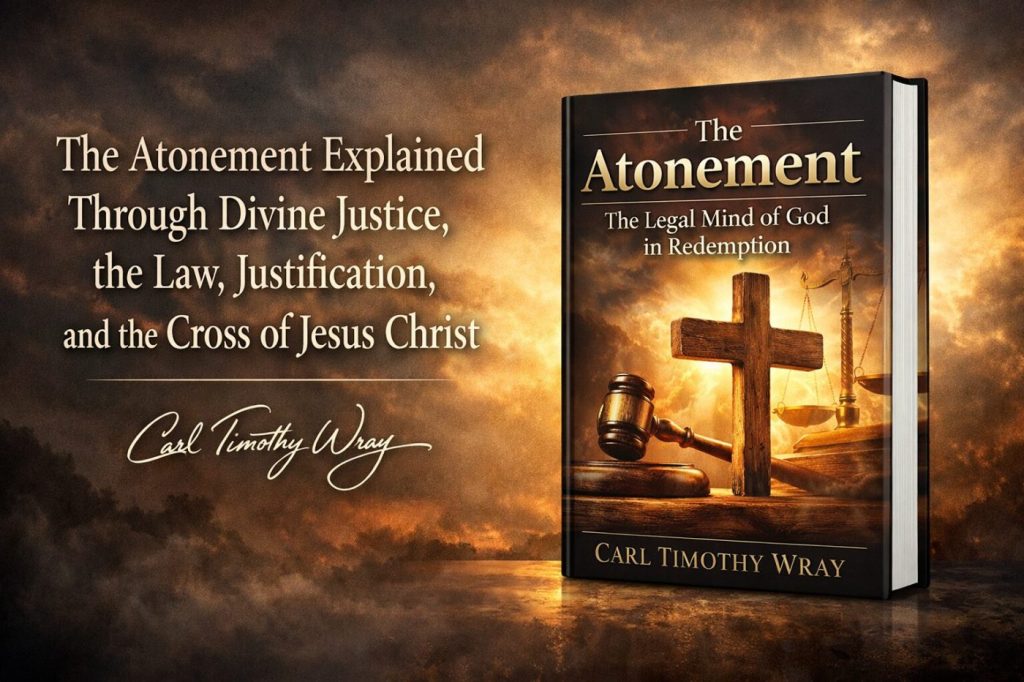
The Atonement Explained Through Divine Justice, the Law, Justification, and the Cross of Jesus Christ
Atonement: Author
By Carl Timothy Wray
Carl Timothy Wray is the founder of The Finished Work of Christ ministry and the author of hundreds of theological writings devoted to unveiling the full counsel of God from Genesis to Revelation. For more than four decades he has studied the Scriptures with a singular purpose: to reveal the unified wisdom of God’s redemptive plan through Jesus Christ.
Wray’s teachings emphasize the progressive unfolding of divine truth throughout the Bible—how the Law, the prophets, the ministry of Christ, and the writings of the apostles all reveal one continuous story of redemption. His work focuses on the finished work of Christ, the structure of God’s kingdom, and the reconciliation of humanity through the atonement.
The Atonement — The Legal Mind of God in Redemption explores the justice of God that stands behind the cross. By examining the Law, the problem of sin, the courtroom of heaven, and the sacrifice of Christ, this book reveals how the atonement satisfies divine justice while extending mercy to humanity. Through careful study of Scripture, readers will discover how God remains perfectly just while also becoming the justifier of those who place their faith in Jesus Christ.
The Atonement — The Legal Mind of God in Redemption explains the legal foundation of the atonement in the Bible. This book explores divine justice, the Law of God, justification, redemption, and reconciliation through the cross of Jesus Christ. By examining key passages throughout Scripture, including the teachings of the apostles, readers will gain a deeper understanding of how the atonement satisfies God’s righteousness while opening the way for humanity to be forgiven and restored to fellowship with Him.
Atonement: Introduction
From the earliest pages of Scripture, the Bible reveals that God governs the universe according to righteousness and justice. His throne is not built upon power alone, but upon the moral perfection of His character.
The Scriptures declare:
“Justice and judgment are the habitation of thy throne.”
— Book of Psalms 89:14
This truth introduces one of the most profound questions in the entire story of redemption.
If God is perfectly righteous, how can He forgive sinful humanity?
The fall of mankind introduced a problem that could not simply be ignored. Sin violated the moral order established by God, and divine justice demanded that the breach be addressed. The Law revealed this problem with unmistakable clarity, exposing the reality of human guilt and the universal need for redemption.
The apostle Paul summarizes the human condition in these words:
“For all have sinned, and come short of the glory of God.”
— Epistle to the Romans 3:23
If the story ended here, humanity would remain under condemnation. The justice of God would demand judgment, and the broken relationship between God and man would remain unresolved.
Yet the Scriptures reveal that the same God who is perfectly just is also perfectly merciful.
This presents the great mystery of the atonement.
How can God remain just while also extending mercy?
How can the Judge of all the earth forgive the guilty without compromising His righteousness?
The answer to these questions is found in the cross of Jesus Christ.
At the cross, the justice of God and the mercy of God meet in perfect harmony. The penalty of sin is addressed, the demands of the Law are satisfied, and the way is opened for humanity to be justified before God.
The apostle explains this remarkable truth in these words:
“That He might be just, and the justifier of him which believeth in Jesus.”
— Epistle to the Romans 3:26
Here we discover the legal foundation of the atonement.
The cross is not merely an expression of love; it is the place where divine justice is satisfied and redemption is secured. The sacrifice of Christ resolves the moral dilemma created by sin and establishes the legal basis upon which God can forgive, justify, and reconcile humanity.
This book explores that foundation.
We will examine the justice of God, the purpose of the Law, the problem of human sin, and the legal declaration of justification through the sacrifice of Christ. By tracing these themes throughout the Scriptures, we begin to see how the atonement stands at the center of God’s redemptive plan.
For when the legal mind of God is understood, the cross shines with even greater clarity.
It becomes the place where righteousness and mercy meet, where judgment is satisfied, and where the grace of God opens the door for humanity to return to fellowship with the Creator.
The atonement, therefore, is not merely an act of compassion.
It is the perfect harmony of justice and mercy within the wisdom of God.
Chapter 1
The Justice of God — The Foundation of the Moral Universe
The Throne of God Is Established in Justice
Before the Scriptures reveal the mercy of God, they first reveal His righteousness. The Bible consistently presents God as the righteous ruler of the universe whose throne is established upon justice and truth. His government is not arbitrary, nor is it guided by emotion or impulse. The kingdom of God is built upon perfect righteousness.
The psalmist declares:
“Justice and judgment are the habitation of thy throne: mercy and truth shall go before thy face.”
— Book of Psalms 89:14
This verse reveals a profound truth about the nature of God. Justice and judgment form the very foundation of His throne. Every act of divine government flows from His perfect righteousness. The universe itself is sustained by the moral perfection of God’s character.
Because God is righteous, everything He does must be consistent with that righteousness. He cannot deny His own nature, nor can He overlook injustice without addressing it according to the principles of truth.
This reality forms the starting point for understanding the atonement.
God Is Perfect in Righteousness
The Scriptures repeatedly affirm that God is flawless in His justice and perfect in His moral government. There is no corruption in His judgments and no error in His decisions.
Moses proclaimed this truth when speaking of the character of God:
“He is the Rock, His work is perfect: for all His ways are judgment: a God of truth and without iniquity, just and right is He.”
— Book of Deuteronomy 32:4
Here we see that justice is not merely something God practices; it is something He is. His nature itself is righteous. Every action He takes is consistent with truth, and every judgment He renders is perfectly fair.
This means that the moral order of the universe flows from the very being of God. The standards of righteousness revealed in Scripture are not arbitrary laws imposed upon humanity; they are reflections of God’s own character.
When the Law was later given to Israel, it served as an earthly expression of the righteousness that already existed in the heart of God.
The Law Reveals the Standard of Divine Justice
The Law given through Moses did not create righteousness; rather, it revealed it. Through the commandments, humanity was given a clear picture of God’s moral standard.
The apostle Paul explains this clearly:
“Wherefore the law is holy, and the commandment holy, and just, and good.”
— Epistle to the Romans 7:12
The Law exposes the righteousness of God by defining what is good and what is evil. It reveals the nature of sin by measuring human behavior against the perfect character of God.
Because the Law reflects God’s righteousness, it also exposes the depth of humanity’s fallen condition. The commandments do not merely instruct; they reveal guilt. They show that humanity has fallen short of the divine standard.
Paul explains this further:
“By the law is the knowledge of sin.”
— Epistle to the Romans 3:20
Through the Law, humanity comes face to face with the reality of its moral failure.
Sin Violates the Moral Order of God
Sin is not merely a mistake or an imperfection. In the biblical sense, sin represents a violation of the moral order established by God.
When humanity fell in the garden, the harmony between God and man was broken. The entrance of sin introduced guilt, corruption, and separation into the human experience.
The apostle Paul summarizes the situation with stark clarity:
“For all have sinned, and come short of the glory of God.”
— Epistle to the Romans 3:23
Every person stands under this reality. No one is exempt from the effects of sin, and no one can meet the standard of divine righteousness through their own effort.
This creates a profound dilemma within the moral universe.
If God is righteous, then sin cannot simply be ignored. Justice demands that wrongdoing be addressed. The moral order of God’s kingdom requires that the violation of His law be dealt with according to righteousness.
Justice Demands That Sin Be Addressed
Because God is just, He cannot overlook sin without addressing it according to truth. If injustice were allowed to stand unchallenged, the moral foundation of the universe would collapse.
This principle is clearly stated in Scripture:
“The soul that sinneth, it shall die.”
— Book of Ezekiel 18:4
The seriousness of sin lies in the fact that it stands in opposition to the very nature of God. Sin contradicts righteousness, and therefore it cannot exist in harmony with divine holiness.
The Law declares the penalty for sin, revealing that guilt carries consequences within the moral government of God.
Paul summarizes this principle when he writes:
“For the wages of sin is death.”
— Epistle to the Romans 6:23
Death represents the judicial outcome of sin within God’s moral order.
The Dilemma of Redemption
At this point the great dilemma of redemption becomes clear.
If God is perfectly righteous, justice demands that sin be judged. Yet the Scriptures also reveal that God desires to save humanity and restore the broken relationship between Himself and His creation.
How can both of these realities exist at the same time?
How can God remain just while also extending mercy?
This question lies at the heart of the atonement.
The justice of God requires that sin be addressed, but the love of God seeks the redemption of humanity. The solution to this dilemma cannot come through human effort or religious observance. It requires a provision that fully satisfies divine justice while also opening the door for mercy.
That provision is revealed in the sacrifice of Jesus Christ.
The Cross Reveals the Wisdom of God
The cross stands at the center of God’s redemptive plan because it resolves the moral tension created by sin. In the sacrifice of Christ, divine justice and divine mercy meet in perfect harmony.
The apostle Paul explains this remarkable truth in one of the most important passages in the New Testament:
“To declare, I say, at this time His righteousness: that He might be just, and the justifier of him which believeth in Jesus.”
— Epistle to the Romans 3:26
Through the cross, God demonstrates His righteousness while simultaneously providing justification for humanity. The demands of justice are satisfied, and the door of mercy is opened.
This reveals the profound wisdom of the atonement.
The cross does not ignore justice; it fulfills it.
The Foundation of the Atonement
Understanding the justice of God is therefore essential to understanding the atonement. Without recognizing the righteousness of God’s throne, the sacrifice of Christ loses its full meaning.
The cross is not merely an act of compassion; it is the legal foundation of redemption. It is the place where divine justice is satisfied and where mercy flows freely to those who believe.
The atonement reveals that God remains perfectly righteous while also becoming the Savior of humanity.
In the chapters that follow, we will explore how this divine provision unfolds throughout Scripture—through the Law, the priesthood, the sacrifices, and ultimately through the once-for-all sacrifice of Jesus Christ.
For in the cross, the justice of God and the mercy of God meet together, establishing the legal foundation of redemption for all who come to Him.
Chapter 2
The Law Revealed — God’s Standard of Righteousness
The Law Reveals the Character of God
After establishing that God’s throne is founded upon justice, the Scriptures next reveal how that justice is expressed within the created world. God made His righteous standard known to humanity through the Law.
The Law was not merely a set of religious rules given to an ancient nation. It was the earthly revelation of the moral nature of God. Through the commandments, humanity was given a visible expression of divine righteousness.
The psalmist wrote concerning the Law:
“The law of the Lord is perfect, converting the soul: the testimony of the Lord is sure, making wise the simple.”
— Book of Psalms 19:7
The Law reflects the perfection of the One who gave it. It reveals what righteousness looks like when expressed in human conduct.
In this sense, the Law serves as a mirror of God’s character. What the Law commands, God Himself embodies perfectly.
The Commandments Reveal the Moral Order of the Universe
When God delivered the Law to Israel through Moses, He revealed principles that reflect the moral order of the universe. The commandments did not originate with Moses; they flowed from the eternal righteousness of God.
The Ten Commandments, recorded in Scripture, form the foundational expression of this divine standard.
“And God spake all these words, saying…”
— Book of Exodus 20:1–17
Within these commandments we see God’s moral expectations for humanity: reverence for God, respect for life, honor for family, truthfulness, and the rejection of covetousness and injustice.
These principles reveal the harmony that exists within God’s kingdom. They describe the kind of world that flows naturally from the righteousness of God.
However, while the Law reveals righteousness, it also exposes something else.
It exposes the human heart.
The Law Exposes the Reality of Sin
When humanity encounters the Law of God, the contrast between divine righteousness and human weakness becomes unmistakably clear.
The Law functions like a mirror that reveals the true condition of the human soul.
The apostle Paul explains this function of the Law when he writes:
“By the law is the knowledge of sin.”
— Epistle to the Romans 3:20
Without the Law, humanity might attempt to measure righteousness according to its own standards. But when God’s perfect standard is revealed, the true depth of human failure becomes visible.
Paul describes his own experience with the Law in this way:
“I had not known sin, but by the law.”
— Epistle to the Romans 7:7
The Law therefore serves a revealing purpose. It uncovers the presence of sin within the human heart and shows humanity its need for redemption.
The Law Is Holy, Just, and Good
Although the Law exposes human failure, the Scriptures make it clear that the Law itself is not flawed. The problem lies not within the Law but within the fallen condition of humanity.
Paul makes this point plainly when he declares:
“Wherefore the law is holy, and the commandment holy, and just, and good.”
— Epistle to the Romans 7:12
The Law reflects the righteousness of God, and therefore it is good. It reveals what life would look like if humanity lived in perfect harmony with the character of God.
However, because humanity is fallen, the Law cannot produce righteousness within the human heart. It can reveal righteousness, but it cannot create it.
This distinction becomes crucial in understanding the purpose of the atonement.
The Law Reveals Humanity’s Need for Redemption
The Law serves as a divine teacher that leads humanity to recognize its need for salvation.
Paul describes this function of the Law using the image of a tutor or guide:
“Wherefore the law was our schoolmaster to bring us unto Christ.”
— Epistle to the Galatians 3:24
The Law demonstrates that human beings cannot achieve righteousness through their own efforts. No matter how sincere a person may be, the perfect standard of God’s righteousness remains beyond human reach.
This realization prepares the heart for the message of redemption.
When humanity understands its inability to fulfill the Law perfectly, it becomes ready to receive the provision of grace that God has prepared.
The Limitations of the Law
Although the Law reveals God’s righteousness, it cannot remove sin or restore the broken relationship between God and humanity.
The Law can diagnose the problem, but it cannot cure it.
The writer of Hebrews explains that the sacrifices offered under the Law could not permanently remove sin:
“For it is not possible that the blood of bulls and of goats should take away sins.”
— Epistle to the Hebrews 10:4
The Law therefore functioned as a temporary system pointing forward to something greater. The sacrifices, the priesthood, and the ceremonies all served as shadows of the ultimate solution God would provide.
That solution would come through Jesus Christ.
Christ Fulfills the Righteousness of the Law
Jesus did not come to destroy the Law but to fulfill it.
In His life, Christ perfectly embodied the righteousness that the Law described. Every commandment found its complete expression in His obedience to the Father.
Jesus Himself declared:
“Think not that I am come to destroy the law, or the prophets: I am not come to destroy, but to fulfil.”
— Gospel of Matthew 5:17
Where humanity failed, Christ succeeded. He lived in perfect obedience to the will of God, fulfilling the righteous requirements of the Law in His own life.
This perfect obedience prepared the way for the sacrifice that would ultimately satisfy divine justice.
The Law Points to the Cross
The Law ultimately directs attention to the cross of Christ. By revealing humanity’s inability to achieve righteousness on its own, the Law prepares the way for the grace of God to be revealed.
At the cross, the demands of the Law are satisfied through the sacrifice of Christ.
Paul describes this remarkable truth when he writes:
“For what the law could not do, in that it was weak through the flesh, God sending His own Son… condemned sin in the flesh.”
— Epistle to the Romans 8:3
Through the sacrifice of Jesus, the justice of God is upheld and the righteousness of the Law is fulfilled.
This is why the atonement stands at the center of the gospel.
The Law reveals the standard of righteousness.
The cross provides the means by which that righteousness is fulfilled.
In the next chapter, we will examine the depth of humanity’s fallen condition and the universal problem of sin that makes the atonement necessary.
For when the Law reveals God’s standard and humanity recognizes its failure to meet that standard, the stage is set for the revelation of God’s redemptive plan.
Chapter 3
The Problem of Sin — Humanity Under Judgment
The Entrance of Sin into the Human Story
The Scriptures reveal that the world as God created it was originally good. Humanity was formed in the image of God and placed within a creation that reflected the harmony of divine order. There was fellowship between God and man, and the moral universe functioned in perfect balance.
However, this harmony was disrupted when sin entered the human experience.
The book of Genesis records the moment when humanity turned away from the commandment of God:
“And when the woman saw that the tree was good for food… she took of the fruit thereof, and did eat, and gave also unto her husband with her; and he did eat.”
— Book of Genesis 3:6
This act of disobedience did more than violate a single command. It introduced rebellion against the authority of God and fractured the relationship between the Creator and His creation.
From that moment forward, humanity entered a new condition—a condition marked by separation from God and the presence of sin within the human heart.
Sin Is More Than an Action
In Scripture, sin is not merely a collection of wrongful actions. It is a deeper condition affecting the nature of humanity itself.
David recognized this reality when he confessed:
“Behold, I was shapen in iniquity; and in sin did my mother conceive me.”
— Book of Psalms 51:5
This verse reveals that sin operates at the level of human nature. It affects the thoughts, desires, and inclinations of the heart. The problem is not simply that people occasionally do wrong things; the deeper issue is that the human condition itself has been corrupted.
Because of this corruption, humanity cannot naturally align itself with the righteousness of God.
The Law reveals the standard of righteousness, but the presence of sin within human nature prevents people from fulfilling that standard perfectly.
The Universality of Sin
One of the most consistent teachings throughout Scripture is that sin affects all humanity. No person is exempt from its influence.
The apostle Paul summarizes this universal condition in clear terms:
“For all have sinned, and come short of the glory of God.”
— Epistle to the Romans 3:23
This statement places every human being in the same position before God. Regardless of background, culture, or personal effort, humanity shares a common problem.
Sin has affected the entire human race.
Paul explains how this condition began when he writes:
“Wherefore, as by one man sin entered into the world, and death by sin; and so death passed upon all men.”
— Epistle to the Romans 5:12
Through the fall of humanity, the consequences of sin spread throughout the world, bringing corruption and death into the human experience.
The Consequences of Sin
Sin carries consequences within the moral order established by God. Because God’s kingdom is founded upon righteousness, rebellion against that righteousness produces separation and judgment.
The prophet Isaiah describes the effect of sin upon the relationship between God and humanity:
“Your iniquities have separated between you and your God.”
— Book of Isaiah 59:2
Sin therefore creates a barrier between humanity and the presence of God. The fellowship that once existed in the beginning becomes disrupted, and humanity experiences the spiritual distance that results from disobedience.
The ultimate consequence of sin is expressed in the words of the apostle Paul:
“For the wages of sin is death.”
— Epistle to the Romans 6:23
Death represents the judicial outcome of sin within God’s moral government. It is the natural consequence of separation from the source of life.
Humanity’s Inability to Resolve the Problem
Recognizing the problem of sin raises an important question: can humanity resolve this problem on its own?
Throughout history, people have attempted many approaches—religious rituals, moral discipline, philosophical reflection, and personal effort. Yet none of these approaches can remove the underlying condition of sin.
The prophet Jeremiah describes the depth of the human dilemma when he writes:
“The heart is deceitful above all things, and desperately wicked: who can know it?”
— Book of Jeremiah 17:9
Because the problem lies within the human heart, no external system of behavior can fully solve it. The Law may reveal righteousness, but it cannot transform the fallen nature of humanity.
Paul explains this limitation when he writes:
“For what the law could not do, in that it was weak through the flesh…”
— Epistle to the Romans 8:3
The Law exposes sin, but it does not possess the power to remove it.
The World Under Judgment
Because sin has affected all humanity, the entire world stands accountable before God.
Paul emphasizes this universal accountability when he writes:
“That every mouth may be stopped, and all the world may become guilty before God.”
— Epistle to the Romans 3:19
This verse reveals the seriousness of humanity’s condition. Sin places humanity under judgment within the moral order of God’s kingdom. Justice demands that wrongdoing be addressed.
Without a solution to the problem of sin, the entire human race would remain under condemnation.
The Necessity of Atonement
The reality of human sin explains why the atonement is necessary. If sin separates humanity from God and places the world under judgment, then reconciliation requires a provision that can remove guilt and restore righteousness.
The sacrificial system established in the Old Testament provided a symbolic picture of how sin could be addressed through substitution. The death of innocent animals represented the cost of sin and pointed forward to a greater sacrifice yet to come.
These sacrifices, however, were only temporary shadows of the ultimate provision God would reveal.
That provision would come through Jesus Christ.
The apostle Paul explains that through Christ, God provides the solution to the problem that humanity could never solve on its own:
“For God hath made Him to be sin for us, who knew no sin; that we might be made the righteousness of God in Him.”
— Second Epistle to the Corinthians 5:21
In the sacrifice of Christ, the problem of sin is addressed in a way that satisfies divine justice while opening the door for redemption.
Preparing the Way for Redemption
Understanding the depth of the problem of sin prepares us to appreciate the significance of the atonement. When humanity recognizes its inability to achieve righteousness on its own, the grace of God becomes all the more remarkable.
The cross of Christ does not merely provide moral encouragement; it offers a decisive solution to the problem that began in the garden.
Through the sacrifice of Jesus, the guilt of sin is addressed, the demands of justice are satisfied, and the way is opened for humanity to be reconciled with God.
In the next chapter, we will examine the curse of the Law and the penalty that sin carries within the moral government of God.
For only when the seriousness of sin is fully understood can the power of redemption be fully appreciated.
Chapter 4
The Curse of the Law — The Penalty of Transgression
The Law Carries Both Promise and Penalty
The Law of God reveals the standard of righteousness, but it also establishes the consequences for violating that standard. Within the moral government of God, obedience leads to life and blessing, while disobedience leads to judgment.
When the Law was given through Moses, it was presented as a covenant containing both promises and warnings. Those who walked in harmony with God’s commandments would experience blessing, while those who rejected His commandments would encounter the consequences of their rebellion.
Moses explained this principle to Israel when he declared:
“See, I have set before thee this day life and good, and death and evil.”
— Book of Deuteronomy 30:15
This statement reveals that the Law was not merely a list of commandments. It represented the moral framework of God’s kingdom. Within that framework, righteousness produces life, while sin leads to judgment.
The Curse Pronounced Upon Transgression
Because the Law expresses the righteousness of God, any violation of that Law carries consequences. The Scriptures describe these consequences as the “curse of the Law.”
The Law itself pronounces judgment upon those who fail to uphold its commands.
The book of Deuteronomy states:
“Cursed be he that confirmeth not all the words of this law to do them.”
— Book of Deuteronomy 27:26
This verse establishes an important principle. The Law demands complete obedience. It does not operate on partial compliance or occasional effort. The standard of righteousness revealed in the Law reflects the perfect character of God, and therefore it requires perfect alignment.
The apostle James later explains this same principle:
“For whosoever shall keep the whole law, and yet offend in one point, he is guilty of all.”
— Epistle of James 2:10
Because the Law represents a unified expression of God’s righteousness, violating any part of it reveals humanity’s inability to meet the divine standard.
The Weight of the Curse
The seriousness of the Law’s curse becomes clearer when the apostle Paul addresses this subject in his letter to the Galatians. Paul explains that anyone who attempts to establish righteousness through the Law must fully satisfy its requirements.
He writes:
“For as many as are of the works of the law are under the curse.”
— Epistle to the Galatians 3:10
This statement highlights the dilemma humanity faces. The Law reveals God’s righteousness, but it also exposes humanity’s failure to meet that righteousness.
Because no person can perfectly obey the Law, the result is that humanity stands under the weight of its condemnation.
The Law therefore reveals the seriousness of sin while simultaneously demonstrating humanity’s inability to escape its consequences.
The Penalty of Sin
The curse of the Law ultimately points to the deeper reality that sin carries a penalty within God’s moral order.
Throughout Scripture, this penalty is described in terms of death. Death represents the judicial consequence of separation from God, the source of life.
The prophet Ezekiel declared:
“The soul that sinneth, it shall die.”
— Book of Ezekiel 18:4
The apostle Paul expresses the same truth when he writes:
“For the wages of sin is death.”
— Epistle to the Romans 6:23
These statements reveal that sin is not merely a moral flaw; it carries a judicial consequence within the government of God.
Justice requires that the violation of God’s righteousness be addressed.
Humanity Cannot Escape the Curse
Because all humanity has sinned, every person stands under the weight of this curse. The Law reveals the divine standard, but it does not provide the power to escape condemnation.
The more clearly the Law reveals righteousness, the more evident humanity’s failure becomes.
Paul explains that the Law ultimately leaves humanity without excuse:
“That every mouth may be stopped, and all the world may become guilty before God.”
— Epistle to the Romans 3:19
This verse presents the human condition in its starkest form. Before the righteousness of God, all humanity stands guilty.
If redemption were left to human effort alone, there would be no escape from the consequences of sin.
The Purpose of the Curse
Although the curse of the Law reveals humanity’s failure, it also serves a deeper purpose within God’s redemptive plan.
The Law was never intended to be the final solution to the problem of sin. Instead, it functions as a teacher that exposes humanity’s need for salvation.
Paul explains that the Law ultimately points humanity toward Christ:
“Wherefore the law was our schoolmaster to bring us unto Christ.”
— Epistle to the Galatians 3:24
By revealing the impossibility of achieving righteousness through human effort, the Law prepares the heart to receive the grace of God.
Christ Redeems Humanity from the Curse
The great turning point in the story of redemption comes through the sacrifice of Jesus Christ. What humanity could not accomplish through obedience to the Law, God accomplished through the provision of His Son.
Paul explains this remarkable truth when he writes:
“Christ hath redeemed us from the curse of the law, being made a curse for us.”
— Epistle to the Galatians 3:13
This verse reveals the substitutionary nature of Christ’s sacrifice. The curse that belonged to humanity was placed upon Christ. He bore the consequences of sin so that those who believe might be delivered from its judgment.
At the cross, the penalty of sin is addressed and the curse of the Law is broken.
The Cross as the Turning Point
The cross of Christ therefore stands as the decisive turning point in the story of redemption. What the Law revealed but could not resolve, the sacrifice of Christ accomplishes.
Through His death, Jesus satisfies the demands of divine justice while opening the way for humanity to be restored to fellowship with God.
The curse that once condemned humanity becomes the doorway to redemption.
In the next chapter, we will examine the courtroom of heaven and the role of God as the righteous Judge who declares justification through the sacrifice of Christ.
For when the curse of the Law is understood, the glory of the cross shines with even greater brilliance.
Chapter 5
The Courtroom of Heaven — God the Righteous Judge
The Throne of Judgment
Throughout Scripture, the government of God is often described using the language of a courtroom. God is revealed as the righteous Judge who presides over the moral order of the universe. His throne is not merely a place of authority; it is the seat from which justice is administered.
The prophet Daniel was given a vision that illustrates this reality:
“I beheld till the thrones were cast down, and the Ancient of days did sit… the judgment was set, and the books were opened.”
— Book of Daniel 7:9–10
This scene portrays the throne of God as the place where justice is evaluated and where the deeds of humanity are brought into the light. The imagery of opened books represents the complete knowledge of God concerning the actions and intentions of the human heart.
In this heavenly courtroom, nothing is hidden and no injustice escapes the attention of the Judge.
God the Perfect Judge
Unlike human courts, which may be influenced by bias, corruption, or limited knowledge, the judgments of God are perfect. He sees the full reality of every situation and renders judgment according to absolute truth.
The psalmist describes the justice of God in these words:
“But the Lord shall endure for ever: He hath prepared His throne for judgment. And He shall judge the world in righteousness.”
— Book of Psalms 9:7–8
God’s judgments are not arbitrary decisions. They are expressions of His perfect character. Every verdict He renders reflects His righteousness and wisdom.
Because God is both omniscient and holy, His judgments cannot be distorted by ignorance or prejudice. He alone possesses the authority and the knowledge necessary to judge the world with perfect fairness.
The Accountability of Humanity
In the presence of this righteous Judge, humanity stands accountable for its actions. The Scriptures consistently affirm that every person will give an account before God.
The apostle Paul writes:
“For we must all appear before the judgment seat of Christ; that every one may receive the things done in his body.”
— Second Epistle to the Corinthians 5:10
This statement underscores the seriousness of the moral order established by God. Human actions carry significance within the divine government, and every individual stands responsible for how they respond to the truth revealed by God.
Because sin has affected all humanity, this accountability places the entire world in a position of need before the Judge of all the earth.
The Books of Judgment
The imagery of books appearing in the courtroom of heaven appears again in the prophetic vision of the final judgment recorded in the book of Revelation.
John describes the scene in these words:
“And I saw the dead, small and great, stand before God; and the books were opened.”
— Book of Revelation 20:11–12
These books symbolize the complete record of human actions and intentions. Nothing is forgotten, overlooked, or ignored within the moral administration of God’s kingdom.
This imagery reinforces the seriousness of the human condition. If redemption were based solely upon human deeds, no person could stand justified before the throne of God.
The courtroom of heaven reveals the depth of humanity’s need for mercy.
The Need for a Mediator
Because humanity stands guilty within the courtroom of heaven, redemption requires more than simply recognizing the problem of sin. There must be a provision that can address guilt while satisfying the justice of God.
The Scriptures reveal that this provision comes through a mediator.
A mediator stands between two parties to reconcile their differences and restore peace. In the context of redemption, the mediator represents humanity before God and provides the means by which reconciliation can occur.
The apostle Paul writes:
“For there is one God, and one mediator between God and men, the man Christ Jesus.”
— First Epistle to Timothy 2:5
Jesus stands as the mediator within the courtroom of heaven. Through His sacrifice, He represents humanity before the righteous Judge and provides the legal basis for forgiveness.
The Sacrifice That Satisfies Justice
The mediator accomplishes this work through sacrifice. The death of Christ addresses the guilt of humanity while satisfying the demands of divine justice.
In the sacrificial system of the Old Testament, the offering of blood symbolized the seriousness of sin and the necessity of substitution. The death of an innocent animal represented the cost of guilt within the moral order of God’s kingdom.
These sacrifices, however, were only temporary shadows of the ultimate sacrifice that would come through Christ.
The writer of Hebrews explains that Christ entered into the heavenly reality itself:
“For Christ is not entered into the holy places made with hands… but into heaven itself, now to appear in the presence of God for us.”
— Epistle to the Hebrews 9:24
Here we see the courtroom of heaven again, but this time Christ appears as the representative of humanity.
The Verdict of Justification
Because of the sacrifice of Christ, the courtroom of heaven does not end with condemnation for those who trust in Him. Instead, the verdict issued by the righteous Judge becomes one of justification.
Justification is a legal declaration. It means that the believer is declared righteous before God because the penalty of sin has been satisfied through the sacrifice of Christ.
Paul describes this extraordinary verdict in these words:
“Being justified freely by His grace through the redemption that is in Christ Jesus.”
— Epistle to the Romans 3:24
Through Christ, the Judge who once condemned sin now declares the believer righteous.
This does not occur because justice is ignored, but because justice has been fulfilled through the sacrifice of Christ.
The Triumph of Grace in the Courtroom of Heaven
The courtroom of heaven therefore becomes the place where grace triumphs without compromising justice. The cross provides the legal basis upon which God can forgive humanity while remaining perfectly righteous.
The apostle John celebrates this reality when he writes:
“If any man sin, we have an advocate with the Father, Jesus Christ the righteous.”
— First Epistle of John 2:1
Christ stands as both mediator and advocate within the heavenly courtroom. His sacrifice satisfies the demands of justice and opens the way for mercy to flow.
In the next chapter, we will explore the doctrine of justification more fully and examine how God declares the believer righteous through the finished work of Christ.
For in the courtroom of heaven, the cross becomes the place where the verdict of redemption is proclaimed.
Chapter 6
Justification — The Legal Declaration of Righteousness
The Meaning of Justification
Having seen the courtroom of heaven and the righteous Judge who presides over it, we now arrive at one of the most important doctrines in the entire message of the gospel: justification.
Justification is a legal term. It belongs to the language of courts and verdicts. To justify someone does not mean to make excuses for wrongdoing; it means to declare that the demands of justice have been satisfied.
Within the context of redemption, justification refers to the declaration issued by God that a person is righteous before Him because of the work of Jesus Christ.
The apostle Paul describes this truth in the clearest terms:
“Being justified freely by His grace through the redemption that is in Christ Jesus.”
— Epistle to the Romans 3:24
This declaration reveals the astonishing reality of the gospel. Though humanity stands guilty under the Law, God provides a way for sinners to be declared righteous through the sacrifice of Christ.
Justification Is a Gift of Grace
One of the most remarkable aspects of justification is that it is not earned through human effort. It is granted as a gift of divine grace.
Paul emphasizes this truth repeatedly in his writings. Justification does not come through works, religious performance, or moral achievement. It comes through the grace of God made available through Christ.
He writes:
“Therefore being justified by faith, we have peace with God through our Lord Jesus Christ.”
— Epistle to the Romans 5:1
Faith becomes the means by which the believer receives the verdict of justification. By trusting in the work of Christ, the believer stands before God not on the basis of personal merit but on the basis of Christ’s righteousness.
This is one of the central truths of the gospel message.
The Righteousness of Christ
The reason justification is possible lies in the righteousness of Christ. Jesus lived in perfect obedience to the will of God. He fulfilled the Law completely and embodied the righteousness that humanity failed to achieve.
Because Christ lived a sinless life, He became the perfect representative for humanity.
Paul describes the exchange that occurs through Christ’s sacrifice:
“For He hath made Him to be sin for us, who knew no sin; that we might be made the righteousness of God in Him.”
— Second Epistle to the Corinthians 5:21
In this divine exchange, the guilt of humanity is placed upon Christ, and the righteousness of Christ is credited to those who believe.
This is the foundation of justification.
Freedom from Condemnation
Because the penalty of sin has been addressed through the sacrifice of Christ, the believer is no longer under condemnation before God.
Paul celebrates this reality when he writes:
“There is therefore now no condemnation to them which are in Christ Jesus.”
— Epistle to the Romans 8:1
This statement reflects the verdict issued in the courtroom of heaven. For those who trust in Christ, the judgment that once stood against them has been satisfied.
The believer stands before God as one who has been declared righteous through the finished work of Christ.
This declaration does not depend upon human perfection but upon the completed work of Jesus.
Justification and the Law
Justification does not abolish the Law; rather, it fulfills the Law’s requirements.
The Law revealed God’s standard of righteousness and exposed humanity’s failure to meet that standard. Through the sacrifice of Christ, the demands of the Law are satisfied.
Paul explains this truth when he writes:
“Do we then make void the law through faith? God forbid: yea, we establish the law.”
— Epistle to the Romans 3:31
The cross upholds the righteousness of the Law because it demonstrates that sin must be addressed according to justice. At the same time, it provides the means by which humanity can receive forgiveness and restoration.
Thus the cross reveals both the seriousness of sin and the depth of God’s grace.
Justification Produces Peace with God
One of the immediate results of justification is peace between God and humanity. The barrier created by sin is removed, and the relationship between the Creator and His creation is restored.
Paul writes:
“Therefore being justified by faith, we have peace with God through our Lord Jesus Christ.”
— Epistle to the Romans 5:1
Peace with God is not merely a feeling of spiritual comfort. It represents the restoration of a relationship that had been broken by sin. Through the work of Christ, humanity is no longer alienated from God but welcomed into fellowship with Him.
This restored relationship lies at the heart of the message of redemption.
The Confidence of the Believer
Because justification rests upon the finished work of Christ, the believer can have confidence in their standing before God. The verdict issued by the Judge is not temporary or uncertain. It is grounded in the eternal work accomplished through the cross.
The writer of Hebrews describes this confidence when he says:
“Let us draw near with a true heart in full assurance of faith.”
— Epistle to the Hebrews 10:22
The believer approaches God not with fear of condemnation but with assurance that the sacrifice of Christ has fully addressed the problem of sin.
This confidence flows directly from the doctrine of justification.
The Glory of the Atonement
Justification reveals the beauty and power of the atonement. Through the cross, God remains perfectly just while also providing the means for sinners to be declared righteous.
The Judge becomes the Justifier.
Paul expresses this truth in one of the most powerful statements in Scripture:
“That He might be just, and the justifier of him which believeth in Jesus.”
— Epistle to the Romans 3:26
In this single verse we see the harmony of justice and mercy within the plan of redemption.
God does not compromise His righteousness in order to forgive humanity. Instead, through the sacrifice of Christ, His righteousness is fully satisfied while His mercy is freely extended.
In the next chapter we will explore how the sacrifice of Christ satisfies divine justice through the doctrine known as propitiation.
For justification reveals the verdict of redemption, but propitiation explains how that verdict becomes possible.
Chapter 7
Propitiation — The Satisfaction of Divine Justice
The Meaning of Propitiation
As we continue to examine the legal foundation of redemption, we come to another vital doctrine of the atonement: propitiation.
Propitiation refers to the satisfaction of divine justice through a sacrificial offering. It describes how the righteous demands of God’s law are fulfilled so that forgiveness can be extended without compromising the holiness of God.
The apostle Paul introduces this concept when he writes:
“Whom God hath set forth to be a propitiation through faith in His blood.”
— Epistle to the Romans 3:25
This verse reveals that Christ Himself becomes the propitiatory sacrifice. Through His blood, the demands of divine justice are satisfied and the way is opened for humanity to receive mercy.
Propitiation therefore explains how God can remain righteous while extending forgiveness to sinners.
The Mercy Seat and the Propitiatory Sacrifice
The idea of propitiation is deeply connected to the imagery of the mercy seat in the Old Testament. On the Day of Atonement, the high priest entered the Holy of Holies and sprinkled the blood of the sacrifice upon the mercy seat.
This act symbolized the covering of sin and the satisfaction of God’s justice.
The book of Leviticus describes this sacred moment:
“Then shall he kill the goat of the sin offering… and sprinkle it upon the mercy seat.”
— Book of Leviticus 16:15
The mercy seat represented the meeting place between God and humanity. Above it rested the presence of God, while beneath it lay the tablets of the Law that revealed humanity’s guilt.
The blood sprinkled upon the mercy seat symbolized the provision by which the demands of the Law were satisfied.
This Old Testament ritual pointed forward to the ultimate sacrifice of Jesus Christ.
Christ as the True Propitiation
The sacrificial system of Israel was never intended to provide the final solution to sin. Instead, it served as a prophetic picture of the greater sacrifice that would come through Christ.
The apostle John declares this truth plainly:
“And He is the propitiation for our sins.”
— First Epistle of John 2:2
Jesus fulfills the role that the sacrifices of the Old Testament could only symbolize. Through His death on the cross, He satisfies the demands of divine justice once and for all.
Unlike the repeated sacrifices offered under the Law, the sacrifice of Christ is complete and final.
His blood accomplishes what the blood of animals could never achieve—the full satisfaction of God’s righteousness.
The Justice of God Is Not Ignored
Understanding propitiation helps us see that the cross does not ignore the justice of God. On the contrary, it demonstrates that justice must be addressed.
Sin cannot simply be dismissed. It must be dealt with according to the righteousness of God’s character.
The cross shows that God takes sin seriously. The penalty of sin is real, and the cost of redemption is profound.
Yet through the sacrifice of Christ, the penalty is borne by the One who willingly offers Himself on behalf of humanity.
This is the heart of substitution.
Christ stands in the place of sinners so that the demands of justice are fulfilled.
The Love of God Revealed Through Propitiation
While propitiation reveals the justice of God, it also reveals the depth of His love. The sacrifice that satisfies divine justice is not demanded from humanity; it is provided by God Himself.
The apostle John expresses this beautifully when he writes:
“Herein is love, not that we loved God, but that He loved us, and sent His Son to be the propitiation for our sins.”
— First Epistle of John 4:10
This verse reveals the heart of the gospel. The initiative for redemption comes from God. He provides the sacrifice that justice requires and offers it freely for the sake of humanity.
Thus the cross becomes the ultimate expression of both divine justice and divine love.
The Once-for-All Sacrifice
Another crucial aspect of propitiation is the finality of Christ’s sacrifice. Under the Law, sacrifices were offered continually because they could never fully remove sin.
The writer of Hebrews explains this limitation:
“For it is not possible that the blood of bulls and of goats should take away sins.”
— Epistle to the Hebrews 10:4
But Christ offers something greater. His sacrifice is not temporary or symbolic; it is complete.
Hebrews declares:
“But this man, after He had offered one sacrifice for sins for ever, sat down on the right hand of God.”
— Epistle to the Hebrews 10:12
The fact that Christ sits down signifies that the work of redemption is finished. Nothing more is required to satisfy the justice of God.
The Removal of the Barrier Between God and Humanity
Because the sacrifice of Christ satisfies divine justice, the barrier created by sin is removed. Humanity can now approach God without fear of condemnation.
The writer of Hebrews invites believers into this new relationship with God:
“Let us therefore come boldly unto the throne of grace.”
— Epistle to the Hebrews 4:16
The throne that once represented judgment now becomes a throne of grace for those who trust in Christ. The sacrifice that satisfied justice also opened the way for mercy to flow freely.
The Triumph of the Cross
Propitiation reveals the triumph of the cross over the problem of sin. The sacrifice of Christ addresses the demands of divine justice while extending forgiveness to humanity.
The cross therefore stands as the central event in the history of redemption.
It is the place where the justice of God is satisfied, the love of God is revealed, and the way of reconciliation is opened.
In the next chapter we will explore the doctrine of redemption and the price paid through the sacrifice of Christ.
For propitiation explains how justice is satisfied, while redemption reveals the freedom that results from that sacrifice.
Chapter 8
Redemption — The Price Paid for Freedom
The Meaning of Redemption
As we move further into the doctrine of the atonement, we now come to the powerful biblical concept of redemption. Redemption describes the act of purchasing freedom by paying a price.
In the ancient world, redemption was often associated with the liberation of slaves or captives. A person who had fallen into bondage could be set free if someone paid the required ransom.
This imagery provides a powerful picture of humanity’s spiritual condition. Sin places humanity in bondage, and redemption describes the act by which God provides the price necessary to secure freedom.
Jesus Himself spoke of this when He said:
“The Son of man came… to give His life a ransom for many.”
— Gospel of Matthew 20:28
The life of Christ becomes the ransom price that secures humanity’s deliverance from the power of sin.
Humanity in Bondage
Before redemption can be understood, the Scriptures first reveal the condition from which humanity must be redeemed.
Sin does not merely produce guilt; it produces bondage. The power of sin enslaves the human heart, drawing people into patterns of rebellion and separation from God.
Jesus explained this condition plainly when He declared:
“Whosoever committeth sin is the servant of sin.”
— Gospel of John 8:34
This bondage is not merely external; it operates within the inner life of humanity. Sin shapes desires, influences decisions, and ultimately separates humanity from the life of God.
Because of this bondage, humanity cannot free itself through personal effort. Redemption requires a price that humanity cannot provide.
The Cost of Redemption
Throughout the Old Testament, the concept of redemption appears in various forms. A family member could redeem a relative who had fallen into debt or slavery by paying the required price.
The law concerning redemption reflects this principle:
“If thy brother be waxen poor… after that he is sold he may be redeemed again.”
— Book of Leviticus 25:48
These provisions revealed the compassionate character of God while also foreshadowing a greater redemption yet to come.
The ultimate redemption would not involve silver or gold but something far more precious.
The apostle Peter explains the true cost of redemption when he writes:
“Forasmuch as ye know that ye were not redeemed with corruptible things, as silver and gold… but with the precious blood of Christ.”
— First Epistle of Peter 1:18–19
The ransom price required to free humanity from the bondage of sin was the life of Christ Himself.
Redemption Through the Blood of Christ
The blood of Christ stands at the center of redemption. In Scripture, blood represents life, and the shedding of blood symbolizes the giving of life as a sacrifice.
Through His death on the cross, Jesus offers His life as the price required to redeem humanity.
The apostle Paul explains this truth when he writes:
“In whom we have redemption through His blood, the forgiveness of sins.”
— Epistle to the Ephesians 1:7
This verse reveals the direct connection between redemption and forgiveness. The price paid through the blood of Christ removes the guilt of sin and secures freedom for those who believe.
Through redemption, humanity is released from the bondage of sin and restored to fellowship with God.
Redemption and Deliverance
Redemption does more than remove guilt; it also brings deliverance from the power of sin.
Paul describes this transformation when he writes:
“For He hath delivered us from the power of darkness, and hath translated us into the kingdom of His dear Son.”
— Epistle to the Colossians 1:13–14
Through redemption, the believer experiences a transfer of allegiance. The authority of darkness is broken, and the redeemed person becomes part of the kingdom of God.
This change represents a new identity and a new relationship with the Creator.
The Song of the Redeemed
The book of Revelation provides a beautiful picture of redemption when it describes the worship of heaven.
John hears a new song sung before the throne:
“Thou wast slain, and hast redeemed us to God by Thy blood.”
— Book of Revelation 5:9
This song celebrates the victory of Christ’s sacrifice. The redeemed recognize that their freedom was purchased through the blood of the Lamb.
The cross therefore becomes the center of heavenly worship because it represents the moment when redemption was accomplished.
Redemption and the Restoration of Humanity
Redemption not only frees humanity from bondage; it also restores the relationship between God and His creation.
Through redemption, the barrier created by sin is removed and the possibility of fellowship with God is restored.
Paul describes this transformation when he writes:
“For ye are bought with a price: therefore glorify God in your body.”
— First Epistle to the Corinthians 6:20
The redeemed belong to God because their freedom was purchased through the sacrifice of Christ. Their lives now reflect the grace that has been extended to them.
Redemption therefore changes both identity and purpose.
The Freedom of the Redeemed
Because redemption has been accomplished through Christ, believers are no longer slaves to sin or fear. They stand in the freedom provided by the finished work of Christ.
Paul celebrates this freedom when he writes:
“For ye are bought with a price.”
— First Epistle to the Corinthians 6:20
The redeemed life is therefore a life lived in gratitude and devotion to the One who paid the price for our freedom.
In the next chapter we will explore the doctrine of reconciliation, which reveals how redemption restores the relationship between God and humanity.
For redemption pays the price that secures freedom, but reconciliation describes the peace that follows when the broken relationship between God and humanity is restored.
Chapter 9
Reconciliation — Peace Between God and Humanity
The Meaning of Reconciliation
Having examined redemption and the price paid for humanity’s freedom, we now come to another beautiful dimension of the atonement: reconciliation.
Reconciliation describes the restoration of a relationship that has been broken. It is the process by which hostility is removed and peace is established between two parties who were once separated.
In the context of the gospel, reconciliation refers to the restoration of fellowship between God and humanity through the work of Jesus Christ.
The apostle Paul expresses this truth clearly when he writes:
“And all things are of God, who hath reconciled us to Himself by Jesus Christ.”
— Second Epistle to the Corinthians 5:18
Through the atonement, God removes the barrier that separated humanity from His presence and restores the relationship that was fractured by sin.
The Separation Caused by Sin
Before reconciliation can occur, the reality of separation must be understood. Sin disrupted the harmony between God and humanity, creating a distance that humanity could not overcome on its own.
The prophet Isaiah described this separation when he declared:
“Your iniquities have separated between you and your God.”
— Book of Isaiah 59:2
This separation was not merely emotional or symbolic. It represented a real rupture in the relationship between the Creator and His creation.
Humanity, created for fellowship with God, found itself estranged from the source of life.
Humanity as the Enemy of God
The Scriptures go even further in describing the depth of humanity’s alienation from God. Sin does not merely create distance; it produces hostility within the human heart.
Paul describes this condition when he writes:
“And you, that were sometime alienated and enemies in your mind by wicked works.”
— Epistle to the Colossians 1:21
This verse reveals that the conflict between God and humanity exists primarily within the human mind. The rebellious nature of sin leads humanity to resist the authority of God and to live according to its own desires.
In this condition, humanity cannot restore the relationship on its own. Reconciliation must come through a provision initiated by God.
God Initiates Reconciliation
One of the most remarkable truths of the gospel is that reconciliation begins with God, not with humanity.
God does not wait for humanity to repair the relationship; He takes the initiative to restore it.
Paul explains this divine initiative when he writes:
“For if, when we were enemies, we were reconciled to God by the death of His Son.”
— Epistle to the Romans 5:10
This statement reveals the extraordinary nature of God’s love. While humanity was still in rebellion, God provided the sacrifice necessary to restore peace.
The cross therefore becomes the place where reconciliation begins.
The Cross as the Place of Peace
The sacrifice of Jesus Christ removes the barrier created by sin and establishes peace between God and humanity.
Paul describes this accomplishment in his letter to the Colossians:
“And having made peace through the blood of His cross.”
— Epistle to the Colossians 1:20
The blood of Christ addresses the guilt of sin, satisfies the justice of God, and removes the hostility that once separated humanity from its Creator.
Through the cross, the relationship between God and humanity is restored.
This is the heart of reconciliation.
The Ministry of Reconciliation
Reconciliation does not end with the restoration of individual believers. The gospel also entrusts believers with a message to share with the world.
Paul describes this responsibility when he writes:
“And hath given to us the ministry of reconciliation.”
— Second Epistle to the Corinthians 5:18
Believers become ambassadors of the message that God has reconciled the world to Himself through Christ. They proclaim the good news that peace with God is available through the sacrifice of Jesus.
The gospel therefore carries both a message and a mission.
It announces reconciliation and invites humanity to receive it.
The New Relationship with God
Through reconciliation, the relationship between God and humanity is transformed. The hostility created by sin is replaced with peace, and the distance between God and humanity is removed.
Paul describes this new relationship when he writes:
“For through Him we both have access by one Spirit unto the Father.”
— Epistle to the Ephesians 2:18
Access to the Father becomes possible because the barrier of sin has been removed through the cross. The redeemed no longer stand as strangers but as those who have been welcomed into fellowship with God.
This restored relationship represents the ultimate purpose of redemption.
The Joy of Reconciliation
The result of reconciliation is joy and peace within the heart of the believer. The fear of judgment is replaced by the assurance of acceptance in the presence of God.
Paul celebrates this reality when he writes:
“By whom we have now received the reconciliation.”
— Epistle to the Romans 5:11
Through Christ, believers experience the restoration of the relationship for which humanity was originally created.
The alienation caused by sin is replaced with fellowship, and the hostility of rebellion is replaced with the peace of redemption.
The Restoration of Fellowship
Reconciliation therefore represents the restoration of fellowship between God and humanity.
The cross accomplishes what humanity could never achieve on its own. Through the sacrifice of Christ, the barrier of sin is removed, the justice of God is satisfied, and peace is established between the Creator and His creation.
In the final chapter of this book, we will bring together the themes explored throughout this study and examine the profound truth that God remains both just and the justifier of those who believe in Jesus.
For in the atonement we see the perfect harmony of divine justice and divine mercy.
Chapter 10
God Just and the Justifier — The Triumph of the Cross
The Great Question of Redemption
Throughout this book we have explored the legal foundation of the atonement. We have seen the justice of God, the standard of the Law, the problem of sin, the curse pronounced upon transgression, the courtroom of heaven, the declaration of justification, the satisfaction of divine justice through propitiation, the redemption purchased by the blood of Christ, and the reconciliation that restores peace between God and humanity.
All of these themes lead to one central question that stands at the heart of the gospel.
How can a righteous God forgive sinful humanity without compromising His justice?
If God simply overlooked sin, His righteousness would be violated. Yet if He judged sin without providing redemption, humanity would remain forever separated from Him.
The atonement provides the answer to this profound dilemma.
The Revelation of God’s Righteousness
The apostle Paul addresses this question directly in one of the most significant passages in the New Testament. Speaking of the sacrifice of Christ, he writes:
“To declare, I say, at this time His righteousness: that He might be just, and the justifier of him which believeth in Jesus.”
— Epistle to the Romans 3:26
This verse reveals the heart of the atonement. Through the cross, God demonstrates His righteousness while also providing justification for those who believe in Christ.
The cross therefore accomplishes two things at once.
First, it reveals that God is just. Sin is not ignored or dismissed; it is addressed according to the righteousness of God’s character.
Second, it reveals that God is the justifier. Through the sacrifice of Christ, forgiveness and righteousness are offered to humanity.
Justice and Mercy Meet at the Cross
The cross of Christ becomes the place where justice and mercy meet in perfect harmony.
The psalmist foresaw this beautiful union when he wrote:
“Mercy and truth are met together; righteousness and peace have kissed each other.”
— Book of Psalms 85:10
At the cross, the demands of truth are fulfilled and the grace of God is revealed. The penalty of sin is addressed through the sacrifice of Christ, while the mercy of God extends forgiveness to those who receive His provision.
This harmony between justice and mercy reveals the wisdom of God’s redemptive plan.
The Victory of the Cross
The cross is not merely an event of suffering; it is the moment of victory in the history of redemption. Through the sacrifice of Christ, the power of sin is broken and the way of salvation is opened.
Paul describes this triumph when he writes:
“And you, being dead in your sins… hath He quickened together with Him, having forgiven you all trespasses.”
— Epistle to the Colossians 2:13
The cross cancels the record of guilt that stood against humanity. The legal claims of sin are removed, and the believer is restored to life through the grace of God.
Through the sacrifice of Christ, the forces that once held humanity in bondage are overcome.
The Lamb Who Was Slain
The book of Revelation presents the final picture of the triumph of the cross. In the heavenly vision recorded by John, the Lamb who was slain stands at the center of worship.
The inhabitants of heaven proclaim:
“Worthy is the Lamb that was slain to receive power, and riches, and wisdom, and strength, and honour, and glory, and blessing.”
— Book of Revelation 5:12
The Lamb is worthy because His sacrifice accomplished redemption. Through His blood, the problem of sin is addressed and the plan of God for humanity is fulfilled.
The cross therefore becomes the foundation of eternal worship.
The Assurance of Salvation
Because the atonement rests upon the finished work of Christ, believers can have confidence in their standing before God. Redemption does not depend upon human effort but upon the completed work of the Savior.
The writer of Hebrews declares:
“So Christ was once offered to bear the sins of many.”
— Epistle to the Hebrews 9:28
The sacrifice of Christ is complete and sufficient. Nothing can be added to the work accomplished through His death and resurrection.
For those who trust in Him, the verdict of justification stands secure.
The Glory of the Atonement
When the full message of the atonement is understood, the cross shines with extraordinary brilliance.
The justice of God is satisfied.
The Law is fulfilled.
The curse is broken.
The courtroom verdict is reversed.
The price of redemption is paid.
The relationship between God and humanity is restored.
All of these realities flow from the sacrifice of Jesus Christ.
The atonement therefore reveals the wisdom, justice, and love of God in perfect harmony.
The Invitation of the Gospel
The message of the atonement is not merely a theological explanation. It is an invitation.
Through the sacrifice of Christ, God extends the offer of forgiveness and reconciliation to all who will receive it.
The apostle Paul expresses this invitation when he writes:
“Be ye reconciled to God.”
— Second Epistle to the Corinthians 5:20
The gospel calls humanity to respond to the grace that has been revealed through the cross.
Those who trust in Christ receive the gift of justification, the freedom of redemption, and the peace of reconciliation.
The Triumph of the Lamb
The final word of the atonement is not judgment but victory. The Lamb who was slain has overcome the power of sin and opened the way for humanity to be restored to fellowship with God.
Through the cross, God remains perfectly just while also becoming the Savior of the world.
This is the triumph of the gospel.
The Judge becomes the Justifier.
Justice is satisfied.
Mercy is extended.
And the Lamb who was slain is worthy of all glory forever.
Atonement: By Carl Timothy Wray

The Atonement Series
- The Atonement — The Legal Mind of God in Redemption
- The Atonement — The Blood on the Mercy Seat Revealed
- The Atonement — The Altar and the Place of Divine Exchange
- The Atonement — The Priesthood and the Divine Order of Mediation
- The Finished Work of Christ: Meaning, Key Scriptures & FAQs
- Join Our Facebook Page