 📺
📺
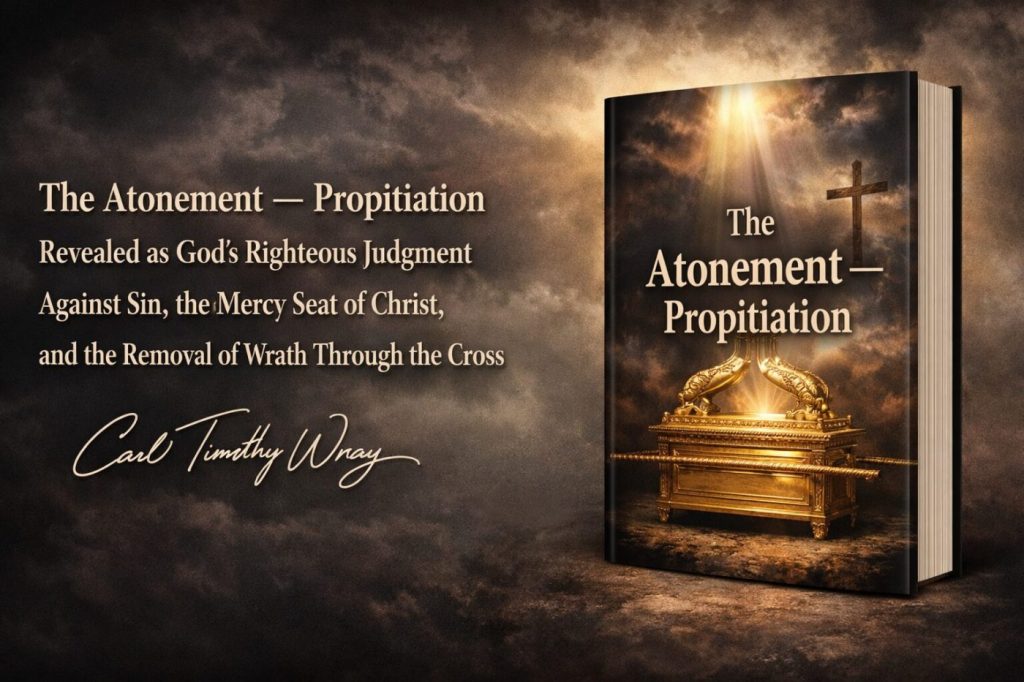
📖 The Atonement — Propitiation Revealed as God’s Righteous Judgment Against Sin, the Mercy Seat of Christ, and the Removal of Wrath Through the Cross
✍️ AUTHOR
By Carl Timothy Wray
Carl Timothy Wray is a devoted teacher of the Gospel of Jesus Christ, committed to unveiling the full counsel of God through Scripture from Genesis to Revelation. With over 40 years of study, prayer, and revelation, his writings focus on the Finished Work of Christ, the Plan of the Ages, and the manifestation of life through union with God.
Through his growing library of teachings, Carl is building a comprehensive body of work that brings clarity to misunderstood doctrines such as the atonement, the Book of Revelation, sonship, and the reconciliation of all things. His message centers on the truth that what God has finished in Christ is now being revealed and manifested in His people.
Carl is the founder of The Finished Work of Christ platform, where books, teachings, and resources are freely available to equip believers and proclaim the Gospel of the Kingdom to the nations.
The Atonement — Propitiation is a powerful biblical teaching that explains the true meaning of propitiation in the Bible and how Jesus Christ fulfilled it through the cross. This book answers key questions such as what is propitiation, what does propitiation mean in Romans 3:25, and did Jesus satisfy God’s wrath? By tracing Scripture from Genesis to Revelation, Carl Timothy Wray reveals that propitiation is not about appeasing an angry God, but about God’s righteous judgment against sin, the establishment of Christ as the mercy seat, and the complete removal of sin, death, and separation. This teaching will transform your understanding of the atonement, justification, and reconciliation, and reveal the finished work of Christ as the foundation of peace with God.
🔥Atonement: INTRODUCTION — The Meaning of Propitiation Restored
There are few words in Scripture that have been more misunderstood—and more feared—than the word propitiation.
For many, this word carries the idea that God was angry, distant, and in need of being appeased. It has been taught as though the cross was necessary to calm a wrathful God, as though love had to be persuaded and mercy had to be earned.
But this is not the testimony of Scripture.
The Bible does not present a God who must be convinced to love. It reveals a God who is love, and who, from the beginning, set forth a plan to deal with sin, death, and separation—not by turning away from man, but by drawing near through sacrifice.
Propitiation is not the story of God changing His mind about humanity.
It is the revelation of God dealing righteously with everything that stood between Himself and man.
From the mercy seat in the tabernacle…
to the blood sprinkled on the Day of Atonement…
to the Lamb of God who takes away the sin of the world…
The thread is clear:
God Himself provides the means by which justice and mercy meet.
This book will take you on a journey through that divine pattern.
We will examine what propitiation truly means, not through tradition, but through the full counsel of God—from Genesis to Revelation. We will uncover the nature of God’s wrath, the purpose of the law, the necessity of the cross, and the reality of what was actually removed through the sacrifice of Christ.
You will see that the atonement is not partial, and it is not symbolic only.
It is complete.
Through Jesus Christ, sin was judged, death was defeated, and the barrier between God and man was removed. The mercy seat is no longer a shadow—it is a person. Christ Himself is the place where God and man meet in righteousness and peace.
And because of this…
You are no longer called to approach God in fear.
You are called to come boldly.
This is the revelation of propitiation.
This is the heart of the atonement.
This is the finished work of Christ.
📖 The Atonement — Propitiation
Chapter 1 — What Is Propitiation? (The Definition Restored)
What Is Propitiation?
The word propitiation appears in key New Testament passages that reveal the work of Jesus Christ on the cross.
Romans 3:25
“Whom God hath set forth to be a propitiation through faith in His blood…”
1 John 2:2
“And He is the propitiation for our sins…”
1 John 4:10
“Herein is love, not that we loved God, but that He loved us, and sent His Son to be the propitiation for our sins.”
Propitiation speaks of what Christ accomplished through His sacrifice—dealing with sin in such a way that righteousness, peace, and access to God are established.
The Greek word used is hilastērion, which is directly connected to the mercy seat. This is not just a theological idea—it is the revelation of the place where God meets man through sacrifice.
Propitiation is not merely about forgiveness.
It is about the removal of the barrier that stood between God and man.
The Misunderstanding of Propitiation
Many have been taught that propitiation means appeasing an angry God.
The idea is often presented as though God was filled with wrath toward man, and Jesus stepped in to calm Him down. This creates a distorted picture of God’s nature and separates love from the cross.
But Scripture reveals something different.
1 John 4:10
“Not that we loved God, but that He loved us, and sent His Son…”
The cross did not begin with man trying to reach God.
It began with God reaching man.
Propitiation is not God being changed.
It is God acting to deal with sin, death, and separation.
The Revelation of Propitiation
Propitiation is not about God changing His attitude toward man.
It is about God removing everything that prevented union with man.
From the beginning, God’s desire has been fellowship, union, and shared life. But sin introduced separation, death, and corruption into the human condition.
At the cross, God dealt with that condition completely.
Sin was judged.
Death was confronted.
The law was satisfied.
Separation was removed.
This was not partial, and it was not temporary.
This was a complete dealing with the fallen condition.
Christ the Propitiation
Jesus Christ is not merely the one who brings propitiation.
He is the propitiation.
Romans 3:25
“Whom God hath set forth…”
God Himself presented Christ as the place where justice and mercy meet.
He is:
- The sacrifice
- The priest
- The mercy seat
All in one.
Propitiation is not something outside of Christ.
It is fulfilled in Him.
To see Christ is to see propitiation revealed.
The Mercy Seat Revealed
In the Old Testament, the mercy seat was the place where blood was applied, and God would meet with man.
Exodus 25:22
“And there I will meet with thee…”
The high priest entered once a year with blood and placed it upon the mercy seat to make atonement.
But this was only a shadow.
Hebrews 9:12
“By His own blood He entered in once into the holy place…”
Christ did not bring the blood of another.
He brought His own blood.
And in doing so, He became the true mercy seat.
No longer a location…
But a person.
What Propitiation Accomplished
At the cross, something definitive happened.
Propitiation accomplished:
- The judgment of sin
- The satisfaction of divine justice
- The removal of separation
- The opening of access to God
Hebrews 10:12
“But this Man, after He had offered one sacrifice for sins forever…”
This was not a temporary covering.
It was a permanent removal.
Declaration
God did not need to be persuaded to love you—He loved you and provided the propitiation Himself.
The cross is not the place where God became merciful.
It is the place where His mercy and righteousness were fully revealed together.
Call to Action
Because of Jesus Christ, the barrier has been removed and the way has been opened.
You are not called to approach God in fear, but in confidence.
Come boldly.
Receive the finished work.
Walk in the peace that propitiation has secured.
📖 The Atonement — Propitiation
Chapter 2 — The Mercy Seat: The Pattern of Propitiation
The Mercy Seat Established
Before propitiation was revealed in Christ, it was first shown in pattern.
Exodus 25:21–22
“And thou shalt put the mercy seat above upon the ark… and there I will meet with thee…”
The mercy seat was placed upon the ark of the covenant, above the law. It was not beneath the law, nor beside it—it was above it.
This is the first revelation:
God does not meet man on the basis of law,
He meets man on the basis of mercy applied through blood.
The ark contained the testimony—the law that revealed righteousness and exposed sin. But above that law sat the mercy seat, where blood would be applied.
This is where God chose to meet man.
Not in judgment…
But in mercy.
The Day of Atonement
The pattern becomes clearer in the Day of Atonement.
Leviticus 16:14–15
“And he shall take of the blood of the bullock, and sprinkle it with his finger upon the mercy seat… and before the mercy seat…”
Once a year, the high priest would enter into the holiest place with blood.
He did not come empty-handed.
He came with blood to present before God.
The blood was applied:
- Upon the mercy seat
- Before the mercy seat
This revealed that access to God was not based on man’s righteousness, but on blood presented before Him.
The priest did not argue his case.
He did not present his works.
He presented the blood.
The Meeting Place of God and Man
The mercy seat was not just a ritual object.
It was the meeting place.
Exodus 25:22
“There I will meet with thee…”
God did not say:
“I will meet you at the law.”
“I will meet you at your performance.”
He said:
“I will meet you where the blood is.”
This is the pattern of propitiation.
God meets man where atonement has been made.
The Shadow of Things to Come
All of this was a shadow pointing forward.
Hebrews 9:5
“The cherubims of glory shadowing the mercy seat…”
The entire system—priesthood, sacrifice, blood, and mercy seat—was not the final reality.
It was a pattern.
It pointed to something greater that would come.
The blood of animals could not remove sin.
It could only cover temporarily.
The priest could not remain in the presence.
He entered once a year and left again.
The system was incomplete.
It was waiting for fulfillment.
Christ Fulfills the Pattern
What was shadow becomes reality in Christ.
Hebrews 9:11–12
“But Christ being come an high priest of good things to come… by His own blood He entered in once into the holy place, having obtained eternal redemption for us.”
Jesus did not come as a temporary priest.
He came as the final High Priest.
He did not bring the blood of another.
He brought His own blood.
And He did not enter repeatedly.
He entered once—and obtained eternal redemption.
This is the fulfillment of the mercy seat.
The True Mercy Seat
The mercy seat is no longer a physical location.
It is a person.
Romans 3:25
“Whom God hath set forth to be a propitiation through faith in His blood…”
The same word translated “propitiation” is directly connected to the mercy seat.
This means:
Christ Himself is the place where:
- God meets man
- Blood has been applied
- Mercy and righteousness come together
No longer do we look to an object.
We look to Christ.
He is the mercy seat revealed.
From Shadow to Reality
Under the old covenant:
- The priest came once a year
- The blood was temporary
- The access was limited
Under Christ:
- The sacrifice is once for all
- The blood is eternal
- The access is open
Hebrews 10:19
“Having therefore, brethren, boldness to enter into the holiest by the blood of Jesus…”
The veil has been removed.
The way has been opened.
The mercy seat is no longer hidden.
What the Mercy Seat Reveals
The mercy seat reveals the heart of God.
God did not design a system to keep man away.
He designed a system to bring man near through blood.
From the beginning, the intention was always:
- Access
- Fellowship
- Union
The mercy seat declares that God desires to meet with man—but only on the basis of what He Himself provides.
Declaration
God has always desired to meet with man, but He meets him where the blood has been applied.
Christ is the fulfillment of the mercy seat, the place where righteousness and mercy meet forever.
Call to Action
You are not standing outside, waiting for access.
Through Jesus Christ, the way has already been opened.
Come boldly into the presence of God, not by your works, but by the blood.
The mercy seat is not hidden from you.
It has been revealed in Christ.
📖 The Atonement — Propitiation
Chapter 3 — Wrath Defined: What Is God Actually Against?
The Misunderstanding of Wrath
Few subjects have produced more fear and confusion than the idea of the wrath of God.
Many have been taught that God’s wrath is like human anger—uncontrolled, emotional, and directed toward people as individuals. This has caused many to see God as distant, unpredictable, and harsh.
But Scripture does not present God this way.
God is not unstable.
God is not divided within Himself.
1 John 4:8
“God is love.”
If God is love, then His wrath must be understood through that same nature.
Wrath is not the opposite of love.
It is the expression of God’s righteousness against everything that opposes life, truth, and righteousness.
What Wrath Actually Is
Romans 1:18
“For the wrath of God is revealed from heaven against all ungodliness and unrighteousness of men…”
Wrath is revealed against ungodliness and unrighteousness.
This is the key.
God’s wrath is not directed at man’s existence.
It is directed at what destroys man.
Wrath is God’s righteous opposition to:
- Sin
- Corruption
- Death
- Darkness
It is His holy response to everything that is contrary to His nature.
Wrath Is Not Emotional Instability
Human anger is often:
- Reactionary
- Uncontrolled
- Self-centered
God’s wrath is none of these.
Psalm 7:11
“God judgeth the righteous, and God is angry with the wicked every day.”
This does not describe emotional rage.
It describes a constant, righteous opposition to wickedness.
God’s wrath is steady because His righteousness is steady.
It is not a mood.
It is His nature responding to what is contrary to Himself.
Wrath and the Condition of Man
Sin did more than create bad behavior.
It introduced a condition into humanity:
- Separation from God
- Bondage to sin
- Fear of death
Hebrews 2:14–15
“That through death He might destroy him that had the power of death… and deliver them who through fear of death were all their lifetime subject to bondage.”
This condition is what God’s wrath stands against.
God is not against man as His creation.
He is against the condition that has enslaved man.
Wrath Revealed Through the Law
The law reveals what righteousness requires and exposes what sin produces.
Romans 4:15
“Because the law worketh wrath…”
The law does not create sin—it exposes it.
And where sin is revealed, wrath is also revealed, because God’s righteousness stands against it.
The law shows:
- What is right
- What is wrong
- What must be judged
But the law cannot remove what it exposes.
It can only point to the need for something greater.
Wrath and Judgment
Wrath and judgment are connected.
Wrath is the stance of God’s righteousness.
Judgment is the action that follows.
God does not ignore sin.
He judges it.
But His judgment is not arbitrary.
It is precise, righteous, and purposeful.
It is aimed at removing what is contrary to life.
The Purpose of Wrath
God’s wrath is not for destruction alone.
It is for the removal of everything that opposes His purpose.
God’s purpose is:
- Life
- Union
- Righteousness
Anything that stands against that must be dealt with.
Wrath ensures that sin, death, and corruption do not remain.
Wrath and the Cross
The cross is where wrath and love meet in full expression.
At the cross:
- Sin was judged
- The law was satisfied
- Death was confronted
Romans 8:3
“God sending His own Son… condemned sin in the flesh.”
Notice what was condemned.
Not man…
👉 Sin in the flesh
This is the heart of propitiation.
God did not pour out wrath on man.
He dealt with sin in Christ.
What This Means for You
Because of the cross:
- Sin has been judged
- The barrier has been removed
- The way has been opened
Wrath has done its work.
What God stands against has been dealt with in Christ.
Now, what remains is:
- Peace
- Access
- Reconciliation
Declaration
God’s wrath is not against you—it is against everything that would destroy you.
At the cross, God did not turn against man.
He turned against sin, and removed it through Christ.
Call to Action
Lay down every image of God that presents Him as unstable or divided.
See Him as He has revealed Himself:
Righteous.
Just.
And full of love.
Receive what the cross has accomplished.
Walk in the peace that comes from knowing that what stood against you has already been judged.
📖 The Atonement — Propitiation
Chapter 4 — The Problem: Sin, Death, and Separation
The True Problem Defined
To understand propitiation, we must first understand the problem it answers.
The issue between God and man was never merely behavior.
It was not just that man committed sins.
It was that something entered into man that altered his condition.
Romans 5:12
“Wherefore, as by one man sin entered into the world, and death by sin; and so death passed upon all men…”
Sin entered.
Death followed.
And that death spread to all.
This reveals that the problem is not just what man does.
It is what man became.
Sin: More Than an Action
Sin is often reduced to individual acts—things people do wrong.
But Scripture reveals sin as something deeper.
Sin is a condition that produces actions.
It is a nature that operates within man.
Romans 7:17
“Now then it is no more I that do it, but sin that dwelleth in me.”
Sin dwells.
It operates from within.
It produces behavior, but it is not limited to behavior.
This is why man cannot fix himself by changing actions alone.
The root remains.
Death: The Result of Sin
When sin entered, death followed.
Romans 6:23
“For the wages of sin is death…”
Death is not only physical.
It includes:
- Separation from God
- Loss of life and fellowship
- Bondage and corruption
Death is the condition that governs fallen man.
It produces fear, limitation, and decay.
Separation: The Experience of Death
Isaiah 59:2
“But your iniquities have separated between you and your God…”
Separation is the manifestation of death in relationship.
Man was created for union with God.
But sin introduced distance.
Not because God moved away…
But because the condition of man could no longer stand in the presence of God’s holiness.
Separation is not God abandoning man.
It is the result of sin creating a barrier.
Bondage: The Life Under Sin and Death
This condition leads to bondage.
Hebrews 2:14–15
“That through death He might destroy him that had the power of death… and deliver them who through fear of death were all their lifetime subject to bondage.”
Man becomes:
- Bound to sin
- Governed by fear
- Unable to escape his condition
This is the state of humanity under the fall.
The Law Reveals the Problem
The law was given to make the condition visible.
Romans 3:20
“By the law is the knowledge of sin.”
The law does not create sin.
It reveals it.
It exposes:
- The nature of sin
- The standard of righteousness
- The inability of man to meet that standard
The law shines light on the problem.
But it cannot solve it.
Why the Problem Cannot Be Fixed by Man
If the issue were only actions, man could correct behavior.
But because the issue is nature, man cannot fix himself.
The condition is deeper than effort.
It requires intervention from outside of man.
Jeremiah 13:23
“Can the Ethiopian change his skin, or the leopard his spots?”
The answer is no.
The condition cannot be changed by human effort.
The Necessity of Propitiation
Because the problem is:
- Sin within
- Death reigning
- Separation established
There must be a complete solution.
Not partial.
Not temporary.
Propitiation is that solution.
It does not merely address actions.
It addresses the entire condition.
The Cross Addresses the Root
At the cross, God did not deal with symptoms.
He dealt with the root.
Romans 8:3
“God sending His own Son… condemned sin in the flesh.”
Sin was judged.
Death was confronted.
The condition was dealt with at its source.
This is why the atonement is not surface-level.
It is foundational.
What This Means for the Atonement
Propitiation must be understood in light of the real problem.
If the problem is only behavior, then forgiveness is enough.
But if the problem is:
- Sin as a nature
- Death as a condition
- Separation as a reality
Then the solution must be greater.
Propitiation answers all three.
Declaration
The problem was never just what man did—it was what man became.
Through the cross, God dealt not only with sin’s actions, but with its root and its result.
Call to Action
Stop trying to fix what only God can remove.
Receive the work that has already been done.
The condition has been addressed.
The barrier has been removed.
The way has been opened.
Walk in the freedom that comes from the finished work of Christ.
📖 The Atonement — Propitiation
Chapter 5 — God Provides the Lamb
The Answer Begins with God
Man did not initiate redemption.
God did.
From the beginning, when the problem of sin, death, and separation entered into humanity, the answer was already in the heart of God.
Man did not search out a solution.
God revealed one.
Genesis 22:8
“And Abraham said, My son, God will provide Himself a lamb for a burnt offering…”
This statement is more than a moment between Abraham and Isaac.
It is a declaration of the mind of God.
God does not require something from man that He Himself is unwilling to provide.
The Pattern in Abraham and Isaac
Abraham was asked to offer his son, Isaac.
This moment reveals a pattern:
- A father
- A son
- A sacrifice
Isaac carried the wood up the mountain.
He asked:
“Where is the lamb?”
Abraham answered:
“God will provide.”
At the final moment, God stopped Abraham and revealed a ram caught in a thicket.
Genesis 22:13
“And Abraham lifted up his eyes, and looked, and behold behind him a ram caught in a thicket…”
The ram became the substitute.
This is the first clear picture of substitution in Scripture.
But even this was not the final fulfillment.
It pointed forward.
The Principle of Substitution
From this moment, a principle is established:
Something must stand in the place of another.
Life must be given.
Blood must be shed.
Leviticus 17:11
“For the life of the flesh is in the blood… for it is the blood that maketh an atonement for the soul.”
Blood represents life.
And atonement requires life to be given.
But the blood of animals was never the final answer.
It was a shadow of something greater.
The Passover Lamb
The pattern continues in Egypt.
Exodus 12:13
“And the blood shall be to you for a token upon the houses… and when I see the blood, I will pass over you…”
The people of Israel were instructed to:
- Take a lamb
- Kill it
- Apply its blood
The blood marked them.
It identified them.
And it caused judgment to pass over them.
Again, the principle is clear:
Protection and deliverance come through blood applied.
But this, too, was not the final fulfillment.
The Limitation of Animal Sacrifice
Though sacrifices were offered continually, they could not fully remove sin.
Hebrews 10:4
“For it is not possible that the blood of bulls and of goats should take away sins.”
They covered.
They pointed.
They testified.
But they did not complete.
The system was waiting for something greater.
Behold the Lamb of God
The fulfillment appears in Christ.
John 1:29
“Behold the Lamb of God, which taketh away the sin of the world.”
Jesus is not just another sacrifice.
He is the Lamb of God.
Not provided by man…
👉 Provided by God Himself.
This is the full revelation of Abraham’s statement:
“God will provide Himself a lamb.”
God did not just provide a lamb.
👉 He provided Himself in the Lamb.
The Lamb and Propitiation
Jesus as the Lamb is directly connected to propitiation.
Through His sacrifice:
- Sin is dealt with
- Justice is satisfied
- The barrier is removed
1 Peter 1:18–19
“But with the precious blood of Christ, as of a lamb without blemish and without spot…”
This is not a temporary covering.
This is a complete removal.
The Lamb fulfills everything the previous sacrifices pointed toward.
God as Both Judge and Provider
One of the greatest revelations in the atonement is this:
God is both:
- The One who requires righteousness
- The One who provides the sacrifice
He does not lower His standard.
He fulfills it Himself.
Romans 3:26
“That He might be just, and the justifier…”
God remains just.
And at the same time, He becomes the one who justifies.
This is the power of propitiation.
The Cross: The Final Provision
At the cross, the provision is complete.
No more animals.
No more temporary coverings.
No more repeated sacrifices.
Hebrews 10:12
“But this Man, after He had offered one sacrifice for sins forever…”
One sacrifice.
Forever.
The Lamb has been provided.
The work is finished.
Declaration
God did not ask man to provide what man could never give—He provided the Lamb Himself.
In Jesus Christ, the full provision of God has been revealed, and the need for sacrifice has been forever satisfied.
Call to Action
Stop looking to yourself to supply what has already been given.
The Lamb has been provided.
The sacrifice has been made.
The work is finished.
Receive what God has already accomplished through Jesus Christ.
Walk in the freedom of a completed redemption.
📖 The Atonement — Propitiation
Chapter 6 — Christ the Propitiation (The True Mercy Seat)
Christ Revealed as the Propitiation
All the patterns, sacrifices, and shadows of the Old Testament find their fulfillment in one person—Jesus Christ.
Romans 3:25
“Whom God hath set forth to be a propitiation through faith in His blood…”
God did not leave propitiation as a concept.
He set forth Christ as the reality of it.
This means propitiation is not something separate from Jesus.
It is fully revealed in Him.
God Set Him Forth
The initiative of propitiation begins with God.
Romans 3:25
“Whom God hath set forth…”
God presented Christ.
God established the sacrifice.
God revealed the solution.
Man did not move toward God first.
God moved toward man.
This is the foundation of the atonement.
Through Faith in His Blood
Propitiation is connected to the blood of Christ.
Romans 3:25
“…through faith in His blood…”
The blood represents the life given.
It is not symbolic only.
It is the declaration that a life has been laid down to deal with sin, death, and separation.
Faith does not create propitiation.
Faith receives what has already been accomplished.
Christ as the Mercy Seat
The word translated “propitiation” carries the meaning of the mercy seat.
This reveals something powerful:
Jesus is not only the sacrifice.
He is the place where God and man meet.
Hebrews 9:11–12
“But Christ being come an high priest… by His own blood He entered in once into the holy place…”
He is:
- The High Priest
- The Sacrifice
- The Mercy Seat
All fulfilled in one person.
No longer do we look to a physical location.
We look to Christ.
The Once-for-All Work
Under the old system, sacrifices were repeated continually.
But Christ’s work is different.
Hebrews 10:12
“But this Man, after He had offered one sacrifice for sins forever…”
One sacrifice.
Forever.
This means:
- Nothing needs to be added
- Nothing needs to be repeated
- Nothing remains unfinished
Propitiation is complete in Christ.
Eternal Redemption Secured
Hebrews 9:12
“…having obtained eternal redemption for us.”
The redemption accomplished by Christ is not temporary.
It is eternal.
It does not fade.
It does not require renewal.
It stands complete.
This is the power of propitiation.
The Righteousness of God Revealed
Romans 3:25–26
“…to declare His righteousness… that He might be just, and the justifier…”
In Christ, God did not abandon His righteousness.
He revealed it.
He remained just.
And at the same time, He became the justifier.
This is where:
- Justice is satisfied
- Mercy is revealed
- Righteousness is upheld
All at once.
Sin Condemned in the Flesh
At the cross, God dealt directly with sin.
Romans 8:3
“God sending His own Son… condemned sin in the flesh.”
Notice carefully:
Sin was condemned.
Not Christ.
Not man as God’s creation.
👉 Sin in the flesh
This is the heart of propitiation.
God judged what needed to be judged.
And He did it in Christ.
The End of the Old System
Because Christ is the true propitiation, the old system has reached its end.
No more:
- Animal sacrifices
- Repeated offerings
- Limited access
Hebrews 10:14
“For by one offering He hath perfected forever them that are sanctified.”
The work is finished.
The system is fulfilled.
The reality has come.
Access Now Open
Because Christ is the propitiation, access to God is now open.
Hebrews 10:19–20
“Having therefore, brethren, boldness to enter into the holiest by the blood of Jesus…”
The veil is gone.
The separation is removed.
The way is clear.
This is not future.
This is now.
Declaration
Christ is not a part of the atonement—He is the fulfillment of it.
In Him, propitiation is complete, righteousness is revealed, and access to God is fully established.
Call to Action
Stop looking for another sacrifice.
Stop waiting for something more to be done.
It is finished.
Come boldly through Jesus Christ.
Receive the access that has already been opened.
Live in the reality of what has been accomplished.
📖 The Atonement — Propitiation
Chapter 7 — What Was Actually Satisfied?
The Question That Must Be Answered
If Christ is the propitiation, then a question must be answered clearly:
What was actually satisfied at the cross?
Many have been taught that God Himself needed to be satisfied, as though His anger required calming. But Scripture reveals something far deeper and far more precise.
The cross is not God being appeased.
It is God acting righteously to deal with sin.
The Righteous Standard of God
God is righteous.
He does not ignore sin.
He does not overlook corruption.
He does not lower His standard.
Psalm 89:14
“Justice and judgment are the habitation of Thy throne…”
Righteousness is not optional in God’s nature.
It is foundational.
Because of this, sin must be dealt with fully.
The Law and Its Demand
The law revealed what righteousness requires.
Romans 3:20
“By the law is the knowledge of sin.”
The law exposes:
- What is right
- What is wrong
- What must be judged
It brings clarity, but it also brings accountability.
Galatians 3:10
“Cursed is every one that continueth not in all things…”
The law demands perfection.
Anything less results in judgment.
The Problem with the Law
The law reveals the standard, but it cannot produce righteousness in man.
Romans 8:3
“For what the law could not do, in that it was weak through the flesh…”
The weakness is not in the law.
The weakness is in man.
Man cannot fulfill the law because of the condition of sin within him.
This creates a conflict:
- God is righteous
- The law is righteous
- Man is unable
Something must resolve this.
Christ Fulfills the Requirement
Jesus Christ enters as the answer.
Romans 8:3–4
“God sending His own Son… condemned sin in the flesh: that the righteousness of the law might be fulfilled in us…”
Christ did what man could not do.
He fulfilled the requirement.
He met the standard.
And at the cross, He dealt with sin directly.
Sin Condemned
At the cross, something specific happened.
Romans 8:3
“…condemned sin in the flesh.”
Sin was judged.
Sin was condemned.
This is critical.
God did not ignore sin.
He did not bypass it.
He judged it completely in Christ.
The Curse Removed
The law carried a curse for disobedience.
Galatians 3:13
“Christ hath redeemed us from the curse of the law, being made a curse for us…”
Christ took upon Himself the consequence of the law.
Not as a victim…
But as the one fulfilling and removing its demand.
The curse is not managed.
It is removed.
The Handwriting Against Us Blotted Out
Colossians 2:14
“Blotting out the handwriting of ordinances that was against us… nailing it to His cross…”
Everything that stood against man has been dealt with.
The record of debt…
The requirement of the law…
The accusation against man…
All of it was nailed to the cross.
Justice Fully Satisfied
At the cross:
- The law is fulfilled
- Sin is judged
- The curse is removed
- The record is erased
God’s righteousness is not compromised.
It is satisfied.
Romans 3:26
“That He might be just, and the justifier…”
God remains just.
And at the same time, He justifies.
This is the perfection of propitiation.
What Was Not Satisfied
God’s love did not need to be satisfied.
God’s nature did not need to be changed.
God was not reconciled to man.
👉 Man was reconciled to God.
2 Corinthians 5:19
“God was in Christ, reconciling the world unto Himself…”
The cross did not change God.
It revealed Him.
The Result of Satisfaction
Because righteousness has been satisfied:
- There is no more condemnation
- There is no more debt
- There is no more barrier
Romans 8:1
“There is therefore now no condemnation to them which are in Christ Jesus…”
This is not partial.
This is complete.
Declaration
At the cross, God did not satisfy anger—He satisfied righteousness.
Sin was judged, the law was fulfilled, and everything that stood against man was removed through Jesus Christ.
Call to Action
Stop living as though something is still required of you to make yourself right with God.
The requirement has been fulfilled.
The debt has been removed.
The work is finished.
Stand in the righteousness that has already been established through Christ.
📖 The Atonement — Propitiation
Chapter 8 — What Was Removed? (Wrath, Sin, Death)
The Power of Removal
The atonement is not only about what was satisfied.
It is about what was removed.
If sin is only covered, it remains.
If death is only delayed, it still reigns.
If wrath is only postponed, it still threatens.
But the testimony of Scripture is clear:
The work of Christ is not partial.
It is removal.
Sin Taken Away
John 1:29
“Behold the Lamb of God, which taketh away the sin of the world.”
Jesus did not come merely to cover sin.
He came to take it away.
Hebrews 9:26
“…now once in the end of the world hath He appeared to put away sin by the sacrifice of Himself.”
Sin is not managed.
It is not temporarily hidden.
It is put away through the sacrifice of Christ.
This is the power of propitiation.
The End of Sin’s Dominion
Sin does not only produce actions.
It produces dominion.
It reigns over man through death.
Romans 6:14
“For sin shall not have dominion over you…”
Because of the cross, the rule of sin has been broken.
It no longer has authority to govern the life of the one who is in Christ.
Wrath Removed
Wrath stands against sin and unrighteousness.
But when sin is dealt with, wrath has nothing left to stand against.
1 Thessalonians 5:9
“For God hath not appointed us to wrath…”
Romans 5:9
“…we shall be saved from wrath through Him.”
Wrath has done its work at the cross.
Sin has been judged.
Justice has been satisfied.
There is no remaining wrath for those in Christ.
Death Abolished
One of the greatest enemies dealt with at the cross is death.
2 Timothy 1:10
“Who hath abolished death, and hath brought life and immortality to light through the gospel.”
Death is not simply delayed.
It is abolished.
Through Jesus Christ, life has been revealed as the greater reality.
Delivered from Darkness
Colossians 1:13–14
“Who hath delivered us from the power of darkness, and hath translated us into the kingdom of His dear Son…”
The atonement removes not only sin and death, but the entire realm of darkness.
This includes:
- Bondage
- Fear
- Separation
- The power of the enemy
Deliverance is not future.
It is accomplished.
The Removal of the Barrier
The greatest result of the atonement is the removal of separation between God and man.
Ephesians 2:13
“But now in Christ Jesus ye who sometimes were far off are made nigh by the blood of Christ.”
The distance is gone.
The barrier is removed.
The way is open.
No More Offering for Sin
Hebrews 10:18
“Now where remission of these is, there is no more offering for sin.”
This is the final declaration.
If sin has been removed, there is no need for further sacrifice.
Nothing remains to be paid.
Nothing remains to be added.
The work is complete.
What This Means in Reality
Because sin, wrath, and death have been removed:
- There is no condemnation
- There is no separation
- There is no remaining debt
The believer does not stand in uncertainty.
He stands in a finished work.
The Atonement in Full View
Propitiation reveals not only that something was satisfied…
But that something was taken away.
- Sin → removed
- Wrath → removed
- Death → abolished
This is not symbolic.
This is reality.
Declaration
Through Jesus Christ, sin has been taken away, wrath has been satisfied and removed, and death has been abolished.
Nothing remains between God and man.
Call to Action
Stop living as though something still stands between you and God.
The barrier has been removed.
The work has been completed.
Step into the reality of what Christ has accomplished.
Walk in freedom.
Walk in life.
Walk in union.
📖 The Atonement — Propitiation
Chapter 9 — The Result: Peace With God
Peace Established Through the Cross
The atonement does not end with sin judged and removed.
It results in something powerful:
Peace with God.
Romans 5:1
“Therefore being justified by faith, we have peace with God through our Lord Jesus Christ.”
This is not a future promise.
It is a present reality.
Peace has been established.
What Peace With God Means
Peace with God is more than a feeling.
It is a position.
It means:
- No more enmity
- No more opposition
- No more separation
It means the conflict has ended.
The barrier has been removed.
The relationship has been restored.
From Enmity to Reconciliation
Before the cross, man was in a state of separation.
Scripture describes this as enmity.
Colossians 1:21–22
“And you, that were sometime alienated and enemies in your mind… yet now hath He reconciled…”
Notice carefully:
The enmity was experienced in the mind.
The separation was real, but it was tied to the condition of sin and death.
Through Christ, reconciliation has taken place.
Peace Made Through Blood
Colossians 1:20
“And, having made peace through the blood of His cross…”
Peace was not achieved through effort.
It was made through blood.
The same blood that:
- Removed sin
- Satisfied righteousness
- Opened the way
Also established peace.
This peace is not fragile.
It is secured by the finished work of Christ.
Brought Near
Ephesians 2:13–14
“But now in Christ Jesus ye who sometimes were far off are made nigh by the blood of Christ. For He is our peace…”
Distance has been removed.
Nearness has been established.
Christ is not only the one who gives peace.
He is our peace.
The End of Division
The cross does not only reconcile man to God.
It removes division entirely.
Ephesians 2:15–16
“…having abolished in His flesh the enmity… for to make in Himself of twain one new man, so making peace…”
Division is replaced with unity.
Separation is replaced with union.
This is the work of the atonement.
Peace That Passes Understanding
Philippians 4:7
“And the peace of God, which passeth all understanding…”
Because peace is established in Christ, it is not dependent on circumstances.
It is rooted in what has been accomplished.
It remains steady because the cross is complete.
No More Fear
Where there is peace, fear loses its place.
1 John 4:18
“There is no fear in love; but perfect love casteth out fear…”
Fear is tied to judgment.
But where judgment has been completed, fear has no foundation.
The believer no longer approaches God with uncertainty.
He approaches with confidence.
Access in Peace
Romans 5:2
“By whom also we have access by faith into this grace wherein we stand…”
Peace leads to access.
Access leads to standing.
The believer stands in grace, not striving.
He stands in what Christ has accomplished.
The Reality of the Kingdom
Peace with God is not only personal.
It is the foundation of the Kingdom.
Where peace is established:
- Life flows
- Righteousness reigns
- Fellowship is restored
This is the environment the atonement creates.
Declaration
Through the blood of Jesus Christ, peace has been made, separation has been removed, and reconciliation has been fully established between God and man.
Call to Action
Stop living as though you are still separated from God.
You are not far off.
You have been brought near.
Receive the peace that has been established.
Walk in the confidence of full reconciliation.
Live in the reality of union with God.
📖 The Atonement — Propitiation
Chapter 10 — Living in Propitiation (Bold Access, No Fear)
The Reality of Living in Propitiation
Propitiation is not just a doctrine to understand.
It is a reality to live in.
Through Jesus Christ:
- Sin has been judged
- Wrath has been satisfied
- Death has been abolished
- Peace has been established
Now the question is:
How do we live in what has been accomplished?
Boldness Through the Blood
Hebrews 4:16
“Let us therefore come boldly unto the throne of grace…”
Hebrews 10:19
“Having therefore, brethren, boldness to enter into the holiest by the blood of Jesus…”
Boldness is not arrogance.
It is confidence rooted in the finished work.
We do not come before God hoping to be accepted.
We come knowing that the way has already been opened.
The End of Distance
There is no more separation between God and man in Christ.
The veil has been removed.
The way is open.
Hebrews 10:20
“By a new and living way, which He hath consecrated for us…”
This way is not temporary.
It is living.
It is established in Christ Himself.
A Cleansed Conscience
One of the greatest effects of propitiation is the cleansing of the conscience.
Hebrews 9:14
“How much more shall the blood of Christ… purge your conscience from dead works…”
The conscience no longer stands under accusation.
It is cleansed.
It is free.
It is able to stand in the presence of God without fear.
No More Fear of Judgment
Fear is rooted in uncertainty about judgment.
But where propitiation is understood, that uncertainty is removed.
1 John 4:17
“…because as He is, so are we in this world.”
1 John 4:18
“There is no fear in love…”
Judgment has already been dealt with in Christ.
There is nothing left to be judged for those who are in Him.
Drawing Near in Full Assurance
Hebrews 10:22
“Let us draw near with a true heart in full assurance of faith…”
We are not called to stand at a distance.
We are called to draw near.
Not with doubt…
But with full assurance.
This assurance is not based on personal performance.
It is based on the blood of Christ.
Living in Access
Access to God is not an occasional experience.
It is a constant reality.
Through Christ:
- The door is always open
- The presence is always available
- The relationship is always established
We live in access.
Established in Grace
Romans 5:2
“By whom also we have access by faith into this grace wherein we stand…”
We do not move in and out of grace.
We stand in it.
Grace is not a moment.
It is a position.
And that position is secured through propitiation.
Walking in Union
The goal of propitiation is not only forgiveness.
It is union.
God has removed everything that stood in the way so that life can be shared.
John 17:21
“That they all may be one…”
Union is the result of the atonement.
Not distance.
Not separation.
But oneness.
Living Free From Condemnation
Romans 8:1
“There is therefore now no condemnation to them which are in Christ Jesus…”
Condemnation has no place where propitiation is understood.
The believer does not live under accusation.
He lives under righteousness.
The Daily Life of the Believer
To live in propitiation is to live:
- Without fear
- Without condemnation
- Without distance
It is to live in:
- Confidence
- Peace
- Access
This is not something to strive for.
It is something to receive and walk in.
Declaration
Through Jesus Christ, the way has been opened, the conscience has been cleansed, and the believer now stands in boldness, peace, and full access to God.
Call to Action
Stop approaching God as though something still stands between you and Him.
Nothing remains.
The blood has been applied.
The way has been opened.
Come boldly.
Live freely.
Walk in the fullness of what Christ has accomplished.
Atonement: By Carl Timothy Wray

Atonement Series
- The Atonement — The Legal Mind of God in Redemption
- The Atonement — Justified Before God
- The Atonement — The Ransom Paid
- The Atonement — Beyond Penal Substitution
- Join Our Facebook Page