The Book of Revelation — Exposing God-Fire — The Divine Love That Consumes Corruption and Restores All Creation
Book of Revelation: By Carl Timothy Wray
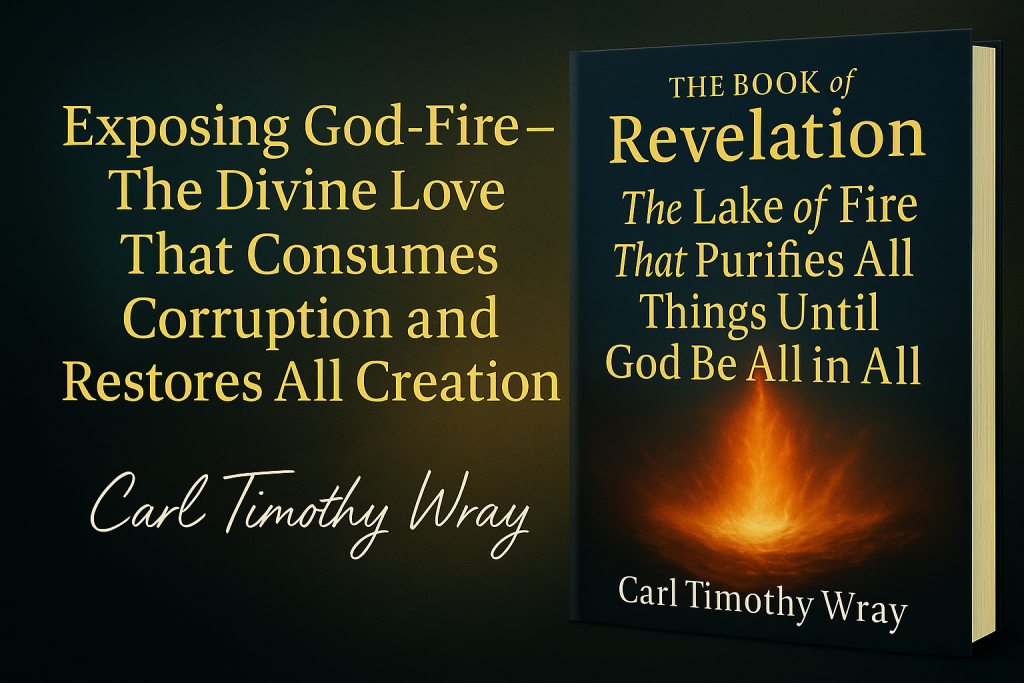
Book of Revelation: Introduction:
The Book of Revelation is not a chronicle of endless wrath but the unveiling of a divine fire that reaches every corner of creation. The “lake of fire” is the Bible’s most misunderstood symbol. Where human religion imagines destruction, Scripture reveals transformation. The fire of God judges the sin-man in every person so that the true, spiritual self can rise in purity. It is not the annihilation of humanity but the purification of what hides the image of God within humanity.
From the flaming sword in Eden to the fiery river before the throne, the story of fire is the story of love—Love strong enough to burn away deceit, fear, and corruption until only truth remains. This is the judgment of God: a refining process that restores rather than ruins, a cleansing that ends in reconciliation, until God be all in all. This revelation unveils the Lake of Fire as the final act of divine love in the Book of Revelation—where judgment becomes purification and all things are restored in God.
Chapter 1 – The Flaming Sword : Judgment as Mercy
(Genesis 3 : 24)
The Scene
After humanity’s first fall, God stations a cherub and a flaming sword to guard the way to the Tree of Life. Babylon reads this as a banishment; Revelation sees it as a promise—the same flame that closed the way will one day open it through purification.
Babylon’s Interpretation – Fear and Separation
The carnal mind sees this fire as punishment. The sin-man hides from the presence of God, hearing only threat. To him, judgment means rejection; the flame is God’s anger that keeps him out. In this view, fire ends life.
Kingdom Interpretation – Mercy and Access
The Spirit of Truth shows that the sword burns to protect the Tree, not to destroy the seeker. The same flame that guards the way also prepares the way. It divides flesh from spirit, cutting through deception so that the Christ-man may walk in. Here, judgment opens life.
The Distinction
Sin Man Christ Man
Hides from the flame Walks through the flame
Interprets judgment as wrath Knows judgment as purification
Lives by fear of loss Lives by love’s refining
Guards his own way Enters the way kept by the sword
Prophetic Declaration
The flaming sword still turns every way, seeking not to slay humanity but to slay the lie within humanity. It burns the coverings of shame until the true likeness appears. Judgment is mercy in motion—God’s Word separating what must die from what is eternal.
Call to Action
Let the flame touch your own threshold. Yield the sin-man to the light; step beyond fear into the fire that reveals life. The sword is not against you—it is for you, cutting a path back to the Tree of Life. And when the fire has finished its work, the Book of Revelation stands fulfilled: death is destroyed, all creation is made new, and God is all in all.
Chapter 2 – The Bush That Burns but Is Not Consumed : Calling Through Fire
(Exodus 3 : 2–4)
The Scene
Moses turns aside to see a bush engulfed in flame, yet the bush is not destroyed. From that fire comes a voice that reveals both divine purpose and personal calling. The picture is not of destruction but of a life set ablaze without being lost.
Babylon’s Interpretation – Terror and Distance
The carnal mind sees this encounter as a threat. To the sin-man, fire means danger—stand back, remove your shoes, protect yourself. Religion paints God’s presence as too holy for human nearness. Judgment in this view separates God from man.
Kingdom Interpretation – Calling and Union
The Spirit of Truth shows that the bush is humanity itself: ordinary matter filled with divine presence. The fire represents the Spirit within the soul—burning away fear and futility yet never consuming the vessel. Here, judgment becomes vocation; the flame reveals identity and mission.
The Distinction
Sin Man Christ Man
Fears the presence Welcomes the presence
Sees fire as threat Knows fire as communion
Hears condemnation Hears calling
Tries to preserve self Offers self as vessel
Prophetic Declaration
The bush still burns in every heart. The fire of God is not sent to destroy the person but to consume the illusion of separation. In that flame the sin-man yields, and the Christ-man receives a name and a purpose: “I AM has sent you.”
Call to Action
Do not flee the inner fire. Let the Spirit ignite your ordinary life until the light of purpose shines through everything you are. Stand barefoot on holy ground—the fire that once frightened now commissions.
Chapter 3 – Mount Sinai in Fire : Law Transformed into Love
(Exodus 19 : 16-18)
The Scene
Thunder, lightning, smoke, and a mountain aflame: Israel trembles as God descends upon Sinai. Out of the fire comes the Law, written on stone—an image of holiness that both awes and terrifies.
Babylon’s Interpretation – Fear of Condemnation
To the sin-man, Sinai’s blaze proves that God is angry and unreachable. Fire means punishment; commandments mean threat. Religion built on this view turns obedience into self-protection and sees judgment as distance.
Kingdom Interpretation – Fire of Transformation
The Spirit of Truth reveals another purpose. The fire on the mountain is not rage but intimacy: God writing His character onto human hearts. The smoke of Sinai foreshadows the Spirit of Pentecost, when the same flame would move from mountain to man. Judgment here is education—the engraving of love upon living tablets.
The Distinction
Sin Man Christ Man
Shrinks from the mountain Draws near through grace
Fears the law as bondage Sees the law fulfilled in love
Hears commands as threats Hears them as invitations
Stands outside the fire Carries the fire within
Prophetic Declaration
The mountain still burns, but its smoke no longer hides God—it reveals Him. The same fire that once inscribed stone now writes mercy in flesh. Judgment has shifted from condemnation to transformation. And when the fire has finished its work, the Book of Revelation stands fulfilled: death is destroyed, all creation is made new, and God is all in all.
Call to Action
Let the mountain rise within you. Welcome the flame that teaches, corrects, and refines until every thought is written in love. The Word that once thundered from Sinai now speaks softly in your heart: “Be filled with My fire.”
Chapter 4 – Fire from Heaven on the Altar : Acceptance and Pleasure
(Leviticus 9 : 24)
The Scene
When the tabernacle is dedicated, a flame leaps from the presence of God and consumes the offering. The people shout and fall on their faces. The altar is now alive with holy fire.
Babylon’s Interpretation – Appeasing an Angry God
The sin-man sees this fire as the price of survival: blood and smoke to quiet divine rage. He reads sacrifice as payment, worship as fear, judgment as death. In this view, God’s pleasure must be bought.
Kingdom Interpretation – Communion and Delight
The Spirit of Truth reveals the opposite. The fire that consumes the offering is not fury but fellowship—it is God’s visible “Yes.” The altar shows that what is placed in His hands is received, transformed, and returned as light. The judgment of fire is acceptance; it is God sharing His own life with creation.
The Distinction
Sin Man Christ Man
Offers sacrifice to survive Offers self to share in life
Sees fire as penalty Sees fire as communion
Worships from fear Worships from gratitude
Burns up Burns with
Prophetic Declaration
Every true altar still calls down fire. It is the meeting point of heaven and earth—the proof that divine pleasure is not in destruction but in transformation. The flame says, “I have received you.” In every surrendered heart, the same light answers back.
Call to Action
Lay your whole life on the altar of trust. Let the flame verify your offering, not to consume you but to reveal that nothing offered in love is ever lost. When the inner fire burns, worship becomes joy. And when the fire has finished its work, the Book of Revelation stands fulfilled: death is destroyed, all creation is made new, and God is all in all.
Chapter 5 – Elijah on Carmel : Truth Consuming Deception
(1 Kings 18 : 36-39)
The Scene
On Mount Carmel the prophets of Baal cry out all day, but no fire falls. Elijah repairs the altar of the Lord, drenches it with water, and calls once. Fire descends from heaven and consumes the sacrifice, the wood, the stones, even the dust.
Babylon’s Interpretation – Violence and Competition
The sin-man sees this story as proof that God destroys His enemies by force. The scene becomes a contest of power, a divine show of domination. Judgment, in that mindset, means annihilation of opponents and vindication of self.
Kingdom Interpretation – Exposure and Illumination
The Spirit of Truth reveals the real contest: truth versus illusion.
The fire doesn’t prove who can shout louder; it exposes what is real. The same flame that ends idolatry also rekindles covenant. God’s fire consumes deception, not people. It burns away the lie so that worship can rise in purity.
The Distinction
Sin Man Christ Man
Uses religion to control Yields to Spirit to transform
Shouts to be seen Waits for stillness and fire
Seeks victory over others Seeks truth within himself
Interprets judgment as rivalry Knows judgment as revelation
Prophetic Declaration
The fire of Carmel still falls wherever truth confronts falsehood. It does not destroy the altar; it restores it. Every time light consumes a lie, the Christ-man rises and the sin-man falls. That is the true victory—the triumph of illumination.
Call to Action
Rebuild the altar of your own heart with honesty and humility. Pour the water of transparency on it, then call for the fire. Let truth do what violence never can—consume the lie and leave you standing in light.
Chapter 6 – The Live Coal from the Altar : Cleansing and Commission
(Isaiah 6 : 6 – 7)
The Scene
Isaiah beholds the Lord high and lifted up. Overwhelmed by holiness, he cries, “Woe is me, for I am a man of unclean lips.” Then a seraph takes a live coal from the altar and touches his mouth. The prophet is not destroyed—he is cleansed and commissioned.
Babylon’s Interpretation – Condemnation and Disqualification
The sin-man hears only guilt. In his mind, holiness equals exclusion. The coal becomes a threat—proof that he is too unworthy to speak for God. Judgment, to him, silences rather than sends.
Kingdom Interpretation – Purification and Empowerment
The Spirit of Truth shows that the coal is mercy made visible. Fire from the altar doesn’t punish; it purifies. It removes the impurity that kept the prophet mute and replaces it with divine utterance. The same flame that convicts also commissions. Judgment in love always ends in purpose.
The Distinction
Sin Man Christ Man
Hides in shame Stands in surrender
Interprets conviction as rejection Receives conviction as cleansing
Feels unworthy to speak Speaks because purified
Fears the flame Carries the flame
Prophetic Declaration
Every coal from heaven still carries this dual grace: it burns and it heals. The fire touches the place of failure and turns it into the place of testimony. God does not silence the sinner; He sanctifies the messenger. His judgment is the kiss of purification.
Call to Action
Invite the living coal to your own lips—your words, motives, and message. Let the fire that cleansed Isaiah cleanse you. When the flame finishes its work, you will hear the same question: “Whom shall I send?” and you will answer, “Here am I; send me.” And when the fire has finished its work, the Book of Revelation stands fulfilled: death is destroyed, all creation is made new, and God is all in all.
Chapter 7 – The Refiner’s Fire : Purging the Priesthood for Glory
(Malachi 3 : 2 – 3)
The Scene
Malachi foretells a messenger who will prepare the way of the Lord, “for He is like a refiner’s fire and like fullers’ soap.” The image is not of destruction but of purification—a craftsman’s flame heating silver until every impurity rises and is skimmed away.
Babylon’s Interpretation – Fear of Punishment
The sin-man hears this as a warning of doom. He sees God’s coming as a furnace of retribution, where sinners are incinerated and only a few survive. Judgment, in that carnal lens, is a sentence passed from anger, not an operation of love.
Kingdom Interpretation – Purity for Priesthood
The Spirit of Truth shows that the fire refines, not ruins. The goal is not fewer people but purer hearts. The flame removes alloy so that the image of the Refiner appears in the metal. Judgment here means restoration—the preparation of a people who can minister light without mixture.
The Distinction
Sin Man Christ Man
Fears the heat Welcomes the process
Thinks fire proves rejection Knows fire proves value
Clings to impurity Yields to purification
Tries to escape the furnace Waits until reflection is clear
Prophetic Declaration
The Lord still sits as a refiner. He does not leave the crucible until He can see His own face in the silver. Every trial, every burning circumstance, is that same loving flame separating dross from divine substance. The judgment of God is the patience of the Refiner.
Call to Action
Do not despise the refining season. Let the fire reveal what is pure and remove what cannot stay. The hotter the flame, the nearer the Refiner’s hand. Stay in the furnace until love’s image looks back at you.
Chapter 8 – Baptized with the Holy Spirit and Fire : Immersion into Divine Nature
(Matthew 3 : 11 – 12)
The Scene
John the Baptist declares, “He shall baptize you with the Holy Spirit and with fire.” The Messiah’s coming brings not a lesser flame but a higher one—Spirit-fire that enters the heart, separating the chaff from the wheat, until only the life of God remains.
Babylon’s Interpretation – Punishment and Fear
The sin-man hears “fire” and imagines catastrophe. To him, baptism in fire means being burned for sin. Religion built on this misunderstanding warns of destruction rather than transformation; it preaches escape instead of immersion.
Kingdom Interpretation – Union and Empowerment
The Spirit of Truth reveals this baptism as the merging of divine and human life. The fire is the Spirit’s own energy fusing the believer into oneness with God. It burns away the husk of self-effort, ignites holy passion, and fills every faculty with light. The “unquenchable fire” is not wrath without end—it is love without limit.
The Distinction
Sin Man Christ Man
Fears immersion Welcomes union
Sees fire as penalty Feels fire as power
Runs from Spirit Abides in Spirit
Thinks baptism ends life Knows baptism begins life
Prophetic Declaration
Every true baptism is a wedding—Spirit and soul joined in flame. The same fire that fell at Pentecost now kindles hearts until they speak with divine utterance. The judgment of this baptism is the death of separation and the birth of communion.
Call to Action
Do not resist the flame. Step into the river of Spirit and fire until your words, motives, and mind blaze with love’s energy. Let the baptism that once visited the upper room visit the inner room of your soul. When the burning subsides, only life remains. And when the fire has finished its work, the Book of Revelation stands fulfilled: death is destroyed, all creation is made new, and God is all in all.
Chapter 9 – Our God Is a Consuming Fire : Love That Cannot Fail
(Hebrews 12 : 28 – 29 / Deuteronomy 4 : 24)
The Scene
The writer to the Hebrews proclaims, “Our God is a consuming fire.” The phrase has frightened generations, yet its root comes from the covenant language of Deuteronomy: a jealous love that will not share the heart of His people with idols. This consuming nature is not cruelty — it is completeness.
Babylon’s Interpretation – Fear of Extinction
The sin-man reads these words as a threat. To him, the flame is a monster, and holiness means annihilation. His theology imagines a God who burns to destroy rather than to restore. He fears consumption because he still identifies with the dross instead of the gold.
Kingdom Interpretation – Love That Finishes What It Starts
The Spirit of Truth unveils a greater mystery: God consumes all that is not love so that only love remains. His fire is not against us; it is for us — against every lie that keeps us from Him. The consuming is completion. When the flame has finished its work, nothing is lost but the illusion of separation.
The Distinction
Sin Man Christ Man
Fears to be destroyed Desires to be made whole
Sees love as danger Sees love as destiny
Identifies with what must burn Identifies with what cannot burn
Runs from the flame Lives as the flame
Prophetic Declaration
The Consuming Fire is not the end of creation—it is the unveiling of its perfection. The universe itself will pass through this furnace until God is “all in all.” What cannot be shaken will remain, and that which remains is God in everything. Judgment and love are one fire, burning until all becomes light.
Call to Action
Let yourself be consumed. Surrender every lesser love, every shadowed thought, every fragment of fear. Allow the divine fire to finish its purpose—turning your entire being into fuel for His glory. What survives this flame is eternal. And when the fire has finished its work, the Book of Revelation stands fulfilled: death is destroyed, all creation is made new, and God is all in all.
Chapter 10 – The Lake of Fire and the All in All : The End of Death and the Beginning of Fullness
(Revelation 20 : 14 – 15 / 1 Corinthians 15 : 28)
The Scene
John beholds the final judgment: “Death and Hades were cast into the lake of fire. This is the second death.”
Every shadow, every residue of separation, every power that opposes life is drawn into the flame. When the last enemy—death itself—is swallowed, the reign of corruption ends.
Babylon’s Interpretation – Eternal Torment and Endless Loss
The sin-man reads this vision as vengeance without purpose. To him the lake of fire is hell’s furnace, an eternal chamber of screams proving divine wrath against the lost. Religion, enslaved to fear, preaches a God who preserves suffering forever, as if pain could glorify love.
Kingdom Interpretation – The Final Refining of All Things
The Spirit of Truth unveils another glory: the lake of fire is the furnace of consummation.
Here every falsehood meets its end, every deception is burned to nothing, and only truth remains.
It is not people being destroyed but the death within them.
This is the purging of mortality, the final baptism of creation in divine life.
The “second death” is the death of death itself, until all that lives bears the image of the Lamb.
The Distinction
Sin Man Christ Man
Sees the lake as punishment Sees the lake as purification
Interprets judgment as rejection Knows judgment as restoration
Clings to the fear of hell Dwells in the hope of fullness
Awaits destruction Awakens to completion
Prophetic Declaration
The lake of fire is the last altar. From it rises not smoke of torment but light of transformation. Out of its depths emerges a new heaven and a new earth, for the first have passed away. The Lamb reigns, and everything that ever was is gathered into Him. Death is no more. The furnace has done its holy work—every tear wiped away, every heart made whole.
Call to Action
Do not dread the final flame—walk into it now through surrender. Let love finish what it began. Allow every remnant of the old man to meet its end in the lake of His presence. Stand in the glow of everlasting morning and declare:
“The fire has won. Death is gone. God is all in all.”
👑 Author
By Carl Timothy Wray
Author of The Book of Revelation Series and founder of Zion University, Carl Timothy Wray unveils the mysteries of the Kingdom with prophetic clarity and uncompromising truth. His writings on the Book of Revelation, the Manchild Company, and the Restoration of All Things carry a single message — Christ revealed in fullness until God is all in all.
Every scroll he releases is written for the elect, to separate Babylon’s confusion from divine revelation, unveiling the finished work of Christ and the fire that purifies creation.
Read our Book of Revelation Series Here:
- The Book of Revelation — The Great Distinction: Flesh and Spirit Unveiled
- The Book of Revelation — Satan Exposed: Babylon’s Interpretation vs. God’s Testimony
- The Book of Revelation — Religious Babylon Has Confused the Whole World About Hell
- The Finished Work of Christ