The Throne of God: AUTHOR
By Carl Timothy Wray
Carl Timothy Wray is a teacher and writer of the Finished Work of Christ, devoted to unveiling the unified mind of God from Genesis to Revelation. His writings are built upon the eternal work accomplished in Christ before the foundation of the world, fulfilled at the Cross, and now administered through the present reign of Christ. Through clear structure, scriptural consistency, and prophetic insight, Wray exposes religious delay, fear-based eschatology, and fragmented doctrine, revealing instead the living government of God reigning now. His work calls believers out of anticipation and into understanding — from waiting to reigning, from confusion to order, from fear to rest.
The Throne of God is not merely a symbol of divine authority in heaven, nor a future seat of judgment awaiting the end of history. It is the eternal administrative center of the Finished Work of Christ — established before the foundation of the world, fulfilled at the Cross, and presently governing all things in heaven and in earth. Scripture reveals one throne, one authority, and one continuous administration unfolding through the ages. From Genesis to Revelation, the throne does not change; only the clarity with which it is revealed increases. This book unveils the Throne of God as the seat from which Christ executes what He has already accomplished, bringing order out of chaos, truth out of deception, and life out of death.
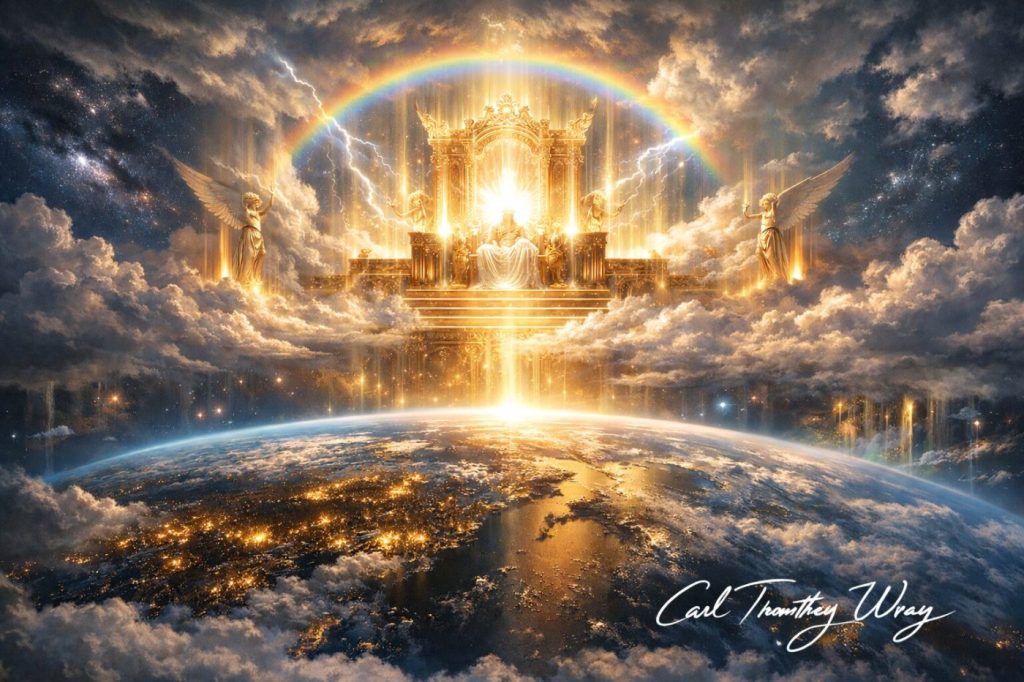
The Throne of God: INTRODUCTION
Before there was sin to judge, there was a throne.
Before there was death to defeat, there was a throne.
Before there was a world to redeem, there was a throne.
The greatest error in religious thinking is not misunderstanding judgment, prophecy, or the Book of Revelation — it is misunderstanding the throne from which all these things proceed. When the throne is misplaced in time, authority is delayed. When the throne is removed from eternity, God is made reactive. When the throne is detached from the Cross, judgment becomes punitive rather than administrative, and the Finished Work is reduced to a partial victory awaiting completion.
This book was written to restore the throne to its rightful place.
The Throne of God was not erected in response to Adam’s fall, nor was it introduced in the visions of John on Patmos. It was established before the foundation of the world, secured through the finished obedience of Christ, and now governs creation through divine administration. Revelation does not introduce the throne — it unveils how it functions. Judgment does not attempt to win a victory — it executes a victory already won. The future is not undecided — it is administered.
From Genesis to Revelation, Scripture reveals a single, consistent throne unfolding through progressive revelation: as seed in creation, as blade in the Law and Prophets, as ear in Christ and the apostles, and as full ear in the Book of Revelation. The throne does not evolve; our capacity to see it does. What was once implied becomes visible. What was once promised becomes executed. What was once hidden becomes revealed.
This book invites the reader to step out of religious suspense and into divine order. It is not written to provoke fear, speculation, or endless anticipation, but to establish clarity, rest, and understanding. When the throne is seen correctly, the Scriptures align, the Finished Work stands complete, and the reign of Christ is no longer postponed — it is recognized.
The throne is not waiting.
The work is not unfinished.
The government is already in motion.
And now, the throne is unveiled.
When the throne of God is seen clearly, Scripture aligns, fear dissolves, and the reign of Christ is no longer postponed to the future but recognized as governing now.
Chapter 1 — The Throne Before the Foundation of the World
The Throne Is Not Reactive
Before sin entered the world, the Throne of God already stood.
Before rebellion appeared, authority was already settled.
Before creation existed, government was already in place.
The throne did not arise as a response to failure, nor was it constructed to repair what went wrong. Scripture does not reveal a God who improvises government after chaos appears. It reveals a God who establishes authority first, and from that authority all things proceed.
To misunderstand the timing of the throne is to misunderstand everything that flows from it.
Authority Precedes Creation
Creation did not give God authority.
Authority made creation possible.
When Scripture declares, “In the beginning, God created…”, it assumes something far deeper: God already reigned. Speech itself is an act of authority. Command implies rule. Order implies government. Nothing can be created, sustained, or governed unless authority exists first.
The throne, therefore, is not something God ascends to later. It is the eternal seat from which creation itself was spoken into being.
The Lamb Slain Before the Foundation of the World
Scripture declares that the Lamb was slain before the foundation of the world. This statement alone dismantles reactionary theology.
Redemption was not conceived after Adam fell.
Judgment was not postponed until history reached a crisis point.
Victory was not uncertain until a future day.
The Cross did not create God’s plan — it fulfilled it.
The throne existed first.
The decree was settled first.
The Lamb’s obedience was known first.
History unfolds what eternity already determined.
Eternal Decree, Not Historical Surprise
From the throne flows decree, not adjustment.
God did not look ahead, foresee failure, and then prepare a response. He declared the end from the beginning because the end was already known within His counsel. The throne does not wait to see how events unfold; it governs how events unfold.
This is why Scripture speaks of things that “are not” as though they already “are.” The throne does not predict outcomes — it administers them.
What appears in time as unfolding is, in eternity, already complete.
The Throne Established Outside of Time
Time does not govern the throne.
The throne governs time.
The authority of God does not move forward moment by moment, learning as history progresses. It stands outside of time, issuing commands that unfold within time according to divine order. This is why Scripture can speak of future judgment, past victory, and present reign without contradiction.
The throne is eternal.
Its decrees are timeless.
Its administration unfolds progressively.
Why This Matters for Understanding Judgment
If the throne is misunderstood as reactive, judgment becomes punitive.
If the throne is seen as future-only, victory is delayed.
If the throne is detached from eternity, fear replaces rest.
But when the throne is rightly placed before the foundation of the world, judgment is understood as execution, not retaliation. Authority is recognized as settled, not contested. The future is no longer suspenseful, because it is already governed.
Judgment does not decide outcomes.
Judgment enforces what was already decreed.
The Throne as the Source of All Order
Everything that follows in Scripture flows from this eternal seat:
- Creation flows from the throne
- Law flows from the throne
- Redemption flows from the throne
- Judgment flows from the throne
- Restoration flows from the throne
Nothing originates in chaos.
Nothing proceeds without authority.
Nothing escapes administration.
The throne is not one doctrine among many. It is the source from which all doctrine flows.
Setting the Foundation for What Follows
This chapter establishes a fixed truth that must never be moved:
The Throne of God was established before the foundation of the world, and everything that unfolds in Scripture is the execution of that eternal authority.
With the throne seated in eternity, the Cross can now be understood correctly — not as a desperate rescue, but as a lawful fulfillment.
That is where we turn next. The throne of God was established before the foundation of the world, proving that authority, judgment, and victory were settled in eternity long before history ever began.
Chapter 2 — The Throne and the Finished Work of the Cross
The Cross Did Not Create Authority
The Cross did not establish the Throne of God.
It fulfilled what the throne had already decreed.
Authority was not granted to Christ because He died; He died because authority was already His by decree. The obedience of the Son did not improvise redemption — it executed an eternal counsel settled before time began.
The Cross is not the beginning of government.
It is the legal manifestation of eternal government within history.
The Throne and the Cross Are Not Separate Events
Religious thinking often separates the throne from the Cross, placing authority in heaven and redemption on earth as two disconnected realities. Scripture never does this.
The throne decreed redemption.
The Cross fulfilled redemption.
The resurrection confirmed redemption.
The throne administers redemption.
Nothing about Calvary surprised heaven. Nothing about the Cross altered God’s plan. It revealed it.
Sin Judged at the Cross
Sin was not postponed for future judgment.
It was judged fully and finally at the Cross.
The Cross was not a partial transaction waiting for completion. It was the lawful condemnation of sin itself — not merely individual acts, but the very power that held humanity captive. The throne did not reserve judgment for a later date; it executed judgment in Christ.
This is why Scripture speaks of sin being “taken away,” not merely covered. Judgment was not delayed. It was accomplished.
Death Defeated, Not Negotiated
Death was not placed on probation.
It was defeated.
The Cross stripped death of its authority, and the resurrection exposed death as a conquered enemy. The throne did not negotiate with death or tolerate its reign until the end of time. It rendered a verdict, and that verdict was victory.
Death continues to appear only because administration unfolds progressively — not because authority remains undecided.
The Cross as Legal Fulfillment
The Cross stands as the legal center of history.
At Calvary:
- Obedience was completed
- Righteousness was fulfilled
- Judgment was executed
- Authority was secured
Nothing remains to be earned. Nothing remains to be decided. The throne does not revisit the Cross to reconsider its outcome. It enforces what was finished there.
The Finished Work is not a belief system.
It is a legal reality.
Resurrection: Authority Confirmed
If the Cross executed judgment, the resurrection confirmed authority.
The resurrection was not merely a miracle — it was heaven’s public declaration that the verdict stood. Christ did not rise to obtain authority; He rose because authority had already prevailed.
The throne did not wait to see if resurrection would occur. Resurrection was the inevitable outcome of obedience fulfilled.
Ascension: The Throne Occupied
When Christ ascended, He did not approach the throne as a petitioner.
He sat down.
Seating signifies completion, not anticipation. It declares that no further sacrifice is required, no further authority must be obtained, and no further victory must be secured. The work was done. The throne was occupied. Administration began.
This is not future hope — it is present reality.
Why Administration Follows the Cross
Administration does not precede completion.
It follows it.
The throne does not govern in order to achieve victory; it governs because victory has already been achieved. Everything revealed later — whether in judgment, correction, exposure, or restoration — flows from a settled outcome.
Revelation does not determine results.
It unveils how results are enforced.
Removing Delay from the Throne
When the Cross is disconnected from the throne, theology becomes suspended. Believers wait. History becomes uncertain. Judgment becomes threatening. Hope is postponed.
But when the Cross is anchored to the throne:
- Judgment becomes administrative
- Authority becomes present
- Victory becomes settled
- Rest replaces fear
The throne does not wait for history to finish before acting. It governs history based on what was finished.
Setting the Order for What Follows
With the throne established in eternity and fulfilled at the Cross, the rest of Scripture falls into order. Creation, prophecy, judgment, and restoration are no longer competing ideas — they are stages of one administration.
This chapter establishes a second immovable truth:
Nothing flows from the Throne of God that was not first finished at the Cross.
With this legal foundation in place, we can now move into how the throne appears progressively in Scripture — not changing in nature, but increasing in clarity.
That unveiling begins in Genesis. Nothing flows from the throne of God in Revelation that was not first finished at the Cross, where sin was judged, death was defeated, and authority was secured forever.
Chapter 3 — The Throne as Seed: Authority Implied in Genesis
The Throne Exists Before It Is Seen
In Genesis, no throne is described — yet authority governs every word.
This is not absence; it is seed form.
A seed does not announce itself with visibility. It announces itself with life and order. The throne in Genesis is not presented as furniture in heaven, but as government in action. Where command exists, authority exists. Where order is spoken, a throne is present.
Genesis does not introduce God as discovering His rule. It assumes His reign.
“God Said”: Authority Spoken into Creation
The opening words of Scripture reveal the throne in operation:
“And God said…”
Speech is the first expression of rule. Creation does not negotiate. Light does not resist. Waters do not debate. The universe responds because authority precedes existence.
This is throne language.
Before there is law, before there is covenant, before there is sacrifice, there is command. The throne is present not because it is described, but because everything obeys.
Dominion Given: Delegated Authority from the Throne
When God grants dominion to man, He is not inventing authority — He is delegating it.
Dominion does not originate in humanity. It flows downward from the throne. To give dominion requires that dominion already exists. To assign rule requires that rule already belongs to someone higher.
This reveals something critical:
The throne is not threatened by delegation.
It is confirmed by it.
Man’s authority was never independent. It was always derivative.
Order Reveals Government
Genesis is structured, measured, and deliberate:
- Days are numbered
- Boundaries are set
- Purposes are assigned
- Rest is established
This is not random creativity. It is ordered government.
Chaos is not God’s starting point; it is what His authority restrains. Every act of separation — light from darkness, waters from land — reveals administrative rule.
The throne is present wherever order replaces chaos.
The Seventh Day: Authority at Rest
The seventh day does not introduce fatigue.
It introduces resting authority.
God rests not because He is tired, but because the work is complete. Rest is not inactivity; it is settled rule. A king rests when his kingdom is established.
This anticipates something far greater later in Scripture: a finished work followed by seated authority.
Genesis already contains the pattern.
No Rival Throne in Creation
Nowhere in Genesis is there a competing throne. No battle for authority is recorded. No war in heaven is described. God does not fight for control — He governs by right.
This dismantles the idea that authority was ever in question. Conflict appears later only when creation resists delegated order, not eternal rule.
The throne has no rival at creation’s origin.
The Seed Principle in Revelation
What appears later in Scripture as vision, imagery, and symbol does not contradict Genesis — it fulfills it.
The throne seen by Isaiah, Ezekiel, and John is not new. It is the full ear of what was planted in seed form in Genesis. The difference is not in the throne, but in humanity’s capacity to see it.
Genesis plants authority.
Revelation unveils administration.
One throne. One government. One unfolding.
Why the Seed Matters
If the throne is only recognized when it is visible, theology becomes fragmented. Authority feels episodic. Judgment feels abrupt. Revelation feels disconnected.
But when the throne is seen as seed in Genesis, everything that follows becomes coherent. Nothing appears suddenly. Nothing contradicts what came before.
The throne grows in clarity, not in power.
Setting the Path Forward
This chapter establishes a third immovable truth:
The Throne of God is present in Genesis as seed — governing through command, order, and delegated authority long before it is ever described or seen.
With the seed established, Scripture moves into increased visibility. Authority that was once implied begins to be revealed.
That growth takes form in the Law and the Prophets — where the throne emerges from seed into blade.
That is where we go next. In Genesis, the throne of God appears as seed—governing creation through command, order, and dominion long before it is ever described or seen.
Chapter 4 — The Throne as Blade: Authority Emerging in the Law and the Prophets
The Throne Begins to Be Seen
What was present as seed in Genesis begins to rise into visibility in the Law and the Prophets. The throne does not change; perception changes. Authority that once governed implicitly now begins to reveal itself explicitly.
This is the blade stage — not full maturity, but undeniable emergence.
The throne is no longer only known by command and order; it is now witnessed, described, and encountered.
Sinai: Government Revealed in Law
At Sinai, the throne emerges as government.
Law is not merely instruction — it is administration. Commandments do not exist without authority. Covenant does not function without a governing seat. When God speaks from the mountain, He does not introduce Himself as seeking allegiance, but as exercising rule.
The trembling mountain, the ordered boundaries, and the mediated speech all testify to throne authority becoming visible to a people not yet able to bear its fullness.
The throne governs, even when veiled.
The Throne Revealed in Prophetic Vision
As Scripture progresses, the throne begins to be seen in vision.
Prophets do not invent these images; they perceive what already exists. What Genesis assumed and Sinai enforced now begins to be revealed visually because the time has come for greater clarity.
Fire, wheels, glory, light, and movement are not decoration — they are the language of administration. These visions communicate that God’s authority is not static. It moves. It governs. It executes.
The throne is alive because authority is active.
The Chariot Throne: Authority in Motion
The prophetic visions reveal something critical: the throne is mobile.
Authority is not confined to one location. God is not restricted to a temple, a land, or a nation. The throne moves because administration follows purpose. Wherever order must be enforced, the throne is present.
This corrects a major misunderstanding. The throne is not distant oversight; it is immediate government. The blade reveals that authority is not abstract — it is engaged.
Holiness and Judgment as Order
In the Law and the Prophets, holiness and judgment intensify. This is not because God has grown severe, but because authority is becoming clearer.
Judgment here is not revenge; it is correction and alignment. It establishes boundaries, preserves life, and restrains chaos. The blade stage exposes what resists order so that life can continue.
This is throne work, not emotional reaction.
Increasing Light, Not Changing Authority
The Law and the Prophets do not reveal a different throne than Genesis. They reveal more of the same throne.
As light increases:
- Authority becomes clearer
- Accountability becomes sharper
- Administration becomes more visible
This progression prepares the way for something greater — not a new throne, but a new expression of the same authority.
The Limits of the Blade
The blade is real, but it is not complete.
The Law exposes.
The Prophets warn.
The visions reveal glory.
Yet something remains incomplete. Authority is seen, but not yet embodied. Judgment is pronounced, but not yet fulfilled. The throne is visible, but the One who will sit upon it in fullness has not yet appeared.
The blade points forward.
Preparing the Way for the Ear
The Law and the Prophets do not terminate authority — they prepare it for embodiment. They sharpen perception. They train expectation. They awaken hunger for a reign that will no longer be mediated through shadows and signs.
What was once seed and then blade is about to become ear — authority no longer merely revealed, but vested in a Person.
This chapter establishes a fourth immovable truth:
The Throne of God emerges in the Law and the Prophets as blade — increasingly visible, increasingly active, yet unchanged in authority and purpose.
The same throne now prepares to be fully revealed through the Son.
That is where we go next. Through the Law and the Prophets, the throne of God emerges as blade, increasingly visible and active, yet unchanged in authority, purpose, or righteousness.
Chapter 5 — The Throne as Ear: Authority Revealed and Vested in Christ
The Throne Moves from Vision to Person
In the Law and the Prophets, the throne was seen.
In Christ, the throne is embodied.
This is the turning point of Scripture. Authority no longer speaks only from heaven, fire, cloud, or vision. It walks among men. The throne does not descend as furniture; it appears as a Son.
What was once revealed externally is now revealed personally.
“All Authority Has Been Given unto Me”
When Jesus declares that all authority in heaven and in earth has been given to Him, He is not announcing a future hope. He is declaring a present transfer and confirmation.
Authority is no longer abstract.
Judgment is no longer distant.
Government is no longer veiled.
The throne is now vested in the Son.
This is the ear — the stage where what was planted and grown now bears recognizable form.
Judgment Committed to the Son
Scripture states plainly that the Father has committed all judgment to the Son. This is not postponed language. It is administrative language.
Judgment is no longer merely pronounced; it is entrusted.
This does not mean judgment suddenly begins with Christ. It means judgment is now administered through Him. The throne remains one, but the executor is revealed.
Authority is centralized, not multiplied.
The Son Seated, Not Standing
After His resurrection and ascension, Christ does not stand waiting. He sits.
Seating signifies completion. A priest stands daily to minister unfinished work. A king sits when the work is complete and authority is secure.
This posture declares something unmistakable:
The victory is finished.
The sacrifice is complete.
The throne is occupied.
Administration now flows from rest, not effort.
The Ear Bears Fruit, Not Promise
In Christ, authority no longer promises future fulfillment — it produces fruit.
- Sins forgiven
- Captives released
- Death confronted
- Life manifested
These are not anticipations; they are manifestations.
The ear stage reveals that the throne is not theoretical. It is operative. What was decreed in eternity and fulfilled at the Cross now expresses itself through living authority.
Union Replaces Distance
In the ear stage, something unprecedented occurs: authority is not only exercised over humanity — it is shared with humanity.
Christ does not merely sit on the throne alone. He brings humanity into union with His reign. Authority is no longer external law pressing inward; it is internal life ruling outward.
This marks a profound transition:
From command to communion.
From distance to union.
From rule imposed to rule shared.
The Apostolic Witness to Present Reign
The apostles do not speak of Christ as waiting to reign. They speak of Him as reigning now.
They do not teach authority as a postponed reality. They proclaim it as an established one. Christ is seated far above all principality and power, not awaiting supremacy, but exercising it.
The ear has formed. The grain is present.
Why the Ear Must Come Before the Full Ear
Without the ear stage, Revelation becomes terrifying. Judgment feels abrupt. Authority feels sudden.
But when Christ is seen as the vested authority before Revelation, the final unveiling becomes coherent. Revelation does not introduce a new ruler. It reveals the administration of the One already reigning.
The ear explains the full ear.
Setting the Stage for Revelation
This chapter establishes a fifth immovable truth:
The Throne of God is vested in Christ as ear — authority embodied, judgment entrusted, reign established, and administration prepared.
What remains is not to gain authority, but to unveil how that authority governs all things.
That unveiling takes place in the Book of Revelation, where the ear reaches full maturity.
That is where we go next. In Christ, the throne of God is revealed as ear, where authority is no longer distant or symbolic but vested in the Son who reigns now.
Chapter 6 — The Throne as Full Ear: Authority Unveiled in the Book of Revelation
The Throne Set, Not Introduced
The Book of Revelation does not begin with chaos, beasts, or judgment. It begins with a throne.
“A throne was set in heaven, and One sat on the throne.”
This language is deliberate. The throne is not built, raised, or established — it is set. That means it was already there. Revelation opens by locating the reader, not by creating authority.
Before seals are opened, before trumpets sound, before vials are poured, the throne is already occupied.
Revelation assumes authority. It does not invent it.
The Full Ear Is Not a New Throne
The throne seen in Revelation is not different from the throne implied in Genesis, revealed in the Law and the Prophets, or vested in Christ.
It is the same throne, now fully unveiled.
The difference is not power, but clarity.
The difference is not authority, but administration.
What was once seed, blade, and ear is now seen in full operation.
The Throne as Administrative Center
In Revelation, the throne is no longer only a place of worship. It is the command center of administration.
From the throne proceed:
- decrees
- judgments
- movements
- unveilings
- restorations
Everything in the book flows from this one seat. Nothing operates independently. Angels do not act on their own initiative. Events do not unfold randomly. History is not spiraling out of control.
Administration flows from the throne because the outcome is already settled.
The Scroll: Authority Ready for Execution
Revelation introduces the scroll because administration requires execution.
A throne without a scroll is incomplete. Authority must be expressed, not merely possessed. The scroll represents the outworking of the Finished Work through time.
When the Lamb takes the scroll, He does not receive authority — He exercises it. The scroll does not determine victory; it distributes victory.
This is the moment the full ear becomes unmistakable.
Seals, Trumpets, and Vials as Functions of the Throne
The seals, trumpets, and vials are not escalating disasters. They are administrative phases.
Each reveals:
- truth confronting deception
- light exposing darkness
- order displacing chaos
They do not compete with the Cross. They apply it.
Revelation is not God reacting to history. It is God ordering history according to what Christ finished.
Judgment Unveiled Without Fear
Because the throne is seen clearly in Revelation, judgment becomes understandable.
Judgment is not rage.
Judgment is not revenge.
Judgment is not uncertainty.
Judgment is administration.
It exposes what cannot remain. It removes what contradicts life. It enforces what was already decided. The throne does not seek to win; it executes victory.
This is why Revelation moves forward relentlessly — not because evil is strong, but because authority is settled.
Worship Flows from Recognition of Government
In Revelation, worship surrounds the throne not because judgment is terrifying, but because authority is righteous.
Worship erupts when government is understood. Heaven rejoices not in suspense, but in certainty. The Lamb is worthy because the work is complete and the outcome is sure.
Worship is the response to administration rightly perceived.
Revelation as the Unveiling of Order
When Revelation is read apart from the throne, it becomes confusing, frightening, and fragmented. But when the throne is seen as the full ear of authority, the book becomes ordered, purposeful, and hopeful.
Nothing in Revelation contradicts the Finished Work.
Nothing introduces a new outcome.
Nothing threatens uncertainty.
Revelation reveals how the throne governs what Christ already accomplished.
The Full Ear Reveals the End From the Beginning
Revelation does not race toward an unknown conclusion. It steadily unfolds what was already declared from eternity.
The throne does not wait for the end to act. It governs from the beginning to the end, ensuring that everything aligns with the finished decree.
This chapter establishes a sixth immovable truth:
The Throne of God appears in Revelation as full ear — authority fully unveiled, administration clearly executed, and victory enforced without delay.
What remains now is to understand the instruments of that administration — the scroll and the judgments that flow from it.
That is where we turn next. The Book of Revelation unveils the throne of God as full ear, revealing not a new authority, but the complete administration of a victory already won.
Chapter 7 — The Throne and the Scroll of Administration
A Throne Without a Scroll Cannot Govern
A throne represents authority.
A scroll represents execution.
Revelation does not introduce the scroll as a mystery to be solved, but as an instrument required for administration. Authority that cannot be expressed remains theoretical. The scroll exists because the work is finished and ready to be enforced.
The throne does not seek permission to act.
The scroll carries what has already been decided.
The Scroll Is Not a Future Plan
The scroll is not God’s contingency plan.
It is not a list of possible outcomes.
It is not a reaction to unfolding events.
The scroll contains what was settled before the foundation of the world and fulfilled at the Cross. What unfolds when the scroll is opened is not uncertainty, but distribution.
Revelation does not decide the future.
It administers what eternity already decreed.
The Lamb Takes the Scroll Because He Is Worthy
The Lamb is worthy to take the scroll not because He is about to win a battle, but because He has already won it.
Worthiness is not potential — it is proven obedience. The scroll does not grant authority to the Lamb; it acknowledges authority already secured through the Finished Work.
This moment reveals something decisive:
Administration belongs only to completed victory.
Opening the Scroll Is Not Creating Chaos
When the seals are opened, chaos does not erupt — truth does.
Each opening releases exposure, not confusion. Lies are confronted. False systems are shaken. Darkness loses ground. What cannot remain is removed.
The scroll does not unleash destruction for destruction’s sake. It enforces alignment with reality.
Judgment is simply truth applied.
Seals, Trumpets, and Vials as Administrative Phases
The progression of seals, trumpets, and vials is not escalation — it is intensification of clarity.
Each phase:
- reveals deeper truth
- removes deeper deception
- enforces deeper alignment
This is not God losing patience.
It is God completing administration.
The same authority governs every phase. The throne does not change posture. Only exposure increases.
The Scroll Executes the Finished Work
Nothing in the scroll contradicts the Cross.
Every seal opened, every trumpet sounded, every vial poured is an application of what Christ already accomplished. The scroll does not add to the Finished Work — it applies it.
This is why Revelation never re-crucifies Christ. It never re-judges sin. It never re-contests authority.
The work is finished.
The scroll distributes the results.
Why Timing Appears Progressive
If the victory is finished, why does administration unfold in stages?
Because revelation unfolds according to capacity.
Truth is released as it can be received. Exposure increases as resistance is removed. The throne does not delay — it orders.
Progression does not indicate uncertainty.
It indicates wisdom.
The Scroll and the Removal of Death
The scroll does not preserve death — it confronts it.
Everything that resists life is progressively exposed and removed. This is why death and Hades appear as entities to be judged later. They are not eternal realities; they are enemies being administratively dismantled.
The scroll exists to bring creation into alignment with life.
The Scroll Serves Restoration, Not Ruin
The ultimate purpose of the scroll is not destruction, but restoration.
Judgment clears the way for new creation. Exposure prepares for renewal. Removal makes room for life.
Revelation does not end with the scroll.
It ends with a renewed heaven and earth.
Administration always serves restoration.
Setting the Stage for Judgment Explained
This chapter establishes a seventh immovable truth:
The scroll of Revelation is the instrument of administration — executing the Finished Work of Christ, not determining its outcome.
With the scroll understood, judgment no longer appears terrifying or arbitrary. It becomes purposeful, ordered, and restorative.
Now we are ready to address judgment directly — not as fear, but as function.
That is where we go next. The scroll flowing from the throne of God executes the Finished Work of Christ, applying truth, judgment, and restoration throughout the ages.
Chapter 8 — Judgment Flowing from the Throne
Judgment Does Not Begin the Story
Judgment is not the opening act of God’s government.
It is the outworking of it.
Scripture does not present judgment as God deciding what to do, but as God enforcing what has already been decided. Judgment never appears until authority is settled, victory is secured, and administration is underway.
This is why Revelation places judgment after the Lamb takes the scroll — not before.
Judgment After the Victory
Victory is not achieved through judgment.
Judgment follows victory.
Sin was judged at the Cross.
Death was defeated at the Cross.
Authority was secured at the Cross.
What flows later as judgment does not compete with that victory — it applies it. Judgment does not attempt to win; it executes what has already been won.
This single truth dismantles fear-based eschatology.
Judgment as Administration, Not Punishment
Religious systems often define judgment as punishment designed to satisfy wrath. Scripture defines judgment as administration designed to establish order.
Judgment:
- exposes what is false
- removes what cannot remain
- restores what has been corrupted
It is corrective, not reactionary. It is purposeful, not emotional. Judgment does not erupt from anger; it proceeds from authority.
The throne does not lash out.
The throne orders reality.
Light Is the Primary Instrument of Judgment
Judgment is not primarily fire — it is light.
Light reveals.
Light exposes.
Light dissolves darkness by being present.
What cannot survive truth is not destroyed arbitrarily; it simply cannot remain. Judgment is the consequence of truth applied, not force imposed.
This is why Scripture often speaks of judgment as unveiling rather than attack.
Death and Hades Judged, Not Preserved
One of the clearest revelations of judgment in Scripture is that death and Hades are judged.
They are not eternal prisons.
They are not co-rulers with God.
They are enemies being removed.
Judgment does not protect death — it eliminates it. The throne does not perpetuate decay; it confronts it. What opposes life cannot coexist with administration.
Death is not punished forever.
It is abolished.
The Lake of Fire as Removal, Not Revenge
The lake of fire is not introduced to torment endlessly. It is introduced to consume what contradicts life.
Fire in Scripture refines, purifies, and removes corruption. It does not exist to satisfy cruelty. Judgment by fire removes lies, death, and resistance so that creation can be renewed.
This is why judgment leads directly into new heaven and new earth — not eternal chaos.
Judgment Makes Space for Restoration
Judgment is never God’s final word.
Restoration is.
Every act of judgment clears the way for renewal. Every exposure prepares for healing. Every removal makes room for life.
If judgment did not serve restoration, Scripture would end in ruin. Instead, it ends in renewal.
This reveals the heart of the throne.
Why Judgment Must Be Understood Correctly
When judgment is misunderstood:
- fear replaces faith
- delay replaces rest
- suspense replaces certainty
But when judgment is seen as administration:
- peace replaces anxiety
- order replaces confusion
- confidence replaces speculation
Judgment does not threaten the Finished Work.
It confirms it.
Judgment Confirms the Throne’s Righteousness
The throne is righteous not because it avoids judgment, but because it executes it justly.
Righteousness means everything is put in its proper place. Judgment accomplishes this by removing what does not belong and restoring what does.
The throne judges because it loves life.
Preparing for the Final Vision
This chapter establishes an eighth immovable truth:
Judgment flowing from the Throne of God is administrative, restorative, and victorious — never reactionary, punitive, or uncertain.
With judgment understood correctly, Scripture is free to end where it always intended to end — not in fear, but in fulfillment.
That fulfillment is the present and ultimate reign of God, where all things are brought into alignment and God becomes all in all.
That is where we go next. Judgment flowing from the throne of God is not punitive delay, but righteous administration that removes death, exposes lies, and restores creation to life.
Chapter 9 — The Throne Reigning Now: God All in All
The Throne Is Not Waiting to Reign
The Throne of God is not anticipating a future moment when authority will finally begin. It is reigning now.
Scripture does not speak of Christ as preparing to sit, but as seated. Reign is not postponed. Government is not suspended. Administration is not delayed.
What remains is not authority to be gained, but creation to be aligned.
Present Reign, Progressive Manifestation
The reign of Christ is present; its manifestation is progressive.
This distinction preserves both truth and patience. Authority is settled. Outcomes are sure. Yet the unveiling of that reign unfolds through ordered administration, not sudden force.
The throne governs patiently because victory is secure. Nothing is rushed because nothing is uncertain.
God’s Goal Has Always Been Union
From the beginning, the purpose of the throne was not distance, but union.
God does not reign to remain separated from creation. He reigns to fill it. Authority exists not to dominate, but to bring everything into harmony with life.
This is why the throne is revealed alongside the Lamb. Power and love are not opposites. They are one expression of divine government.
The Throne and the New Creation
Scripture does not end with judgment.
It ends with renewal.
A new heaven and a new earth do not appear because the old failed beyond repair, but because administration has completed its work. When death is removed, when lies are exposed, when resistance is gone, creation is free to appear as it was always intended.
The throne does not abandon creation.
It restores it.
“Behold, I Make All Things New”
This declaration does not describe potential. It declares intent being fulfilled.
God does not say He will destroy all things and start over. He says He will make all things new. Renewal is not replacement. It is transformation.
The throne does not erase history.
It redeems it.
God All in All: The Goal of Administration
The final vision of Scripture is not endless judgment, endless separation, or endless suspense.
It is God all in all.
This does not mean God absorbs creation into Himself and erases distinction. It means divine life fills everything fully, with no resistance remaining.
Authority has accomplished its purpose. Administration has reached its end. The throne has brought everything into alignment with life.
The End Matches the Beginning
Scripture begins with authority speaking creation into order.
It ends with authority dwelling within creation in fullness.
What was decreed before the foundation of the world now stands revealed within time. The throne that governed invisibly at the beginning is now fully known and joyfully embraced.
Nothing is lost.
Nothing is wasted.
Nothing is unfinished.
Rest Is the Final Expression of Authority
The ultimate expression of the throne is rest.
Not inactivity, but settled completion. Not absence of power, but fulfillment of purpose. Rest declares that nothing remains to be fixed, corrected, or decided.
The throne reigns because the work is done.
The Invitation of the Throne
This book does not conclude with instruction, but with invitation.
The invitation is not to fear judgment, but to understand it.
Not to await authority, but to recognize it.
Not to anticipate victory, but to rest in it.
The throne is not distant.
The reign is not future.
The work is not unfinished.
The Final Word
This chapter establishes the final immovable truth:
The Throne of God reigns now — administering a finished victory until all things are aligned with life and God is all in all.
The throne has spoken.
The work is complete.
The government stands.
And the rest remains.
The throne of God reigns now, administering a finished victory until all things are aligned with life and God is all in all.
Throne of God: By Carl Timothy Wray

The Throne of God
- The Finished Work of Christ: Meaning, Key Scriptures & FAQs
- The Finished Work of Christ — God’s Full Counsel Revealed Through the Plan of the Ages
- Book of Revelation
- Join Our Facebook Page