 📺
📺
The Book of Revelation: Understanding the Vision of the Son of Man by the Spirit
Book of Revelation: Author
Carl Timothy Wray is a teacher of the Kingdom of God whose work centers on the spiritual revelation of Jesus Christ and the unfolding purpose of God throughout the ages. His writings emphasize understanding Scripture by the illumination of the Holy Spirit rather than through the limitations of the natural mind or traditional systems of interpretation.
Through a focus on the finished work of Christ and the revealing of the sons of God, his teaching seeks to help believers see the deeper spiritual meaning of the Scriptures and the divine purpose working within creation.
His studies of the Book of Revelation present the message of the apocalypse not as a book of fear, speculation, or world catastrophe, but as the unveiling of Jesus Christ within His people and the manifestation of God’s kingdom in the earth.
The Book of Revelation: John in the Spirit on the Lord’s Day Seeing the Son of Man explores the opening vision of the Apostle John in the Book of Revelation and explains how the revelation of Jesus Christ is understood through the Spirit rather than through natural interpretation. Anchored in Revelation chapter 1, this book examines what it means for John to be “in the Spirit on the Lord’s Day” and how that spiritual vantage point allowed him to see the Son of Man walking among the seven golden candlesticks.
This study of the Book of Revelation reveals the deeper meaning of John’s vision and shows how the unveiling of Jesus Christ is experienced within the lives of God’s people. By understanding the symbolism of the Son of Man, the trumpet voice, and the candlesticks, readers are invited to see the message of Revelation as the manifestation of Christ’s life and authority within His church.
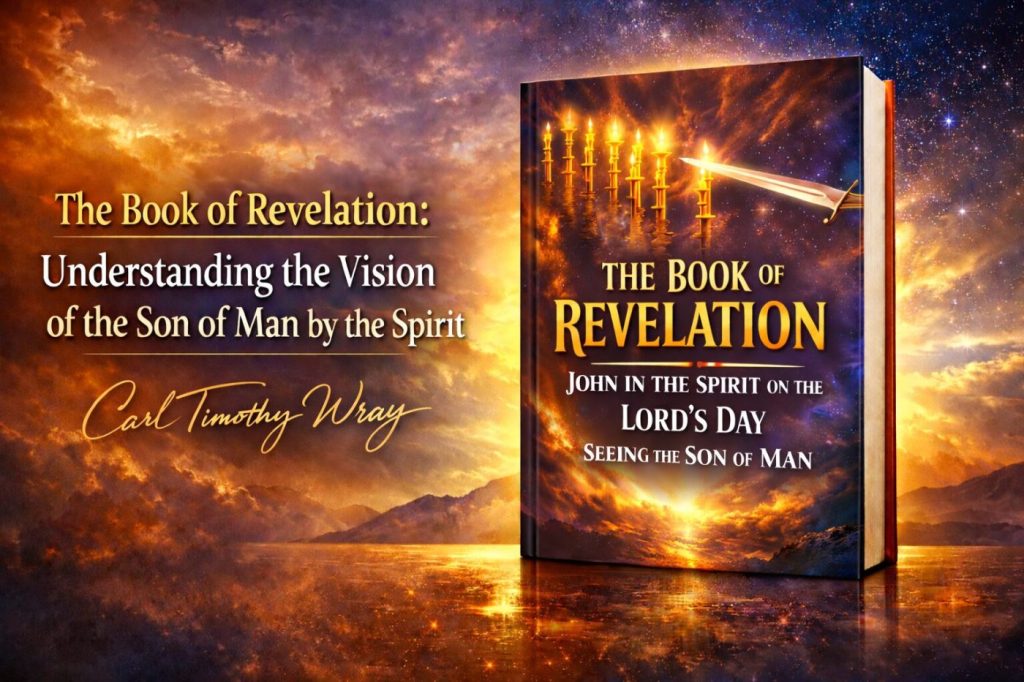
Book of Revelation: Introduction
The Book of Revelation begins with one of the most profound statements found anywhere in Scripture. The apostle John writes:
“I was in the Spirit on the Lord’s day, and heard behind me a great voice, as of a trumpet.”
— Book of Revelation 1:10
These words provide the key to understanding the entire message of the Book of Revelation. Before John saw the visions, before he wrote the prophecies, and before the mysteries of the kingdom of God were unveiled, he first entered a spiritual realm of perception. He was “in the Spirit.”
Many readers approach the Book of Revelation as a book of predictions concerning world events, political powers, or future catastrophes. Others attempt to decode its symbols through intellectual systems of interpretation or historical speculation. Yet the Revelation itself begins by showing that its message was not received through the natural mind, but through spiritual revelation.
John was not observing events from the standpoint of human reasoning or earthly perspective. He was seeing through the Spirit.
In that spiritual state he heard a voice like a trumpet calling him to attention. When he turned to see the voice that spoke with him, he beheld a vision that would shape the entire message of the book:
“And being turned, I saw seven golden candlesticks; and in the midst of the seven candlesticks one like unto the Son of man.”
— Book of Revelation 1:12–13
This moment is the true beginning of the Revelation of Jesus Christ.
The book is not primarily the revelation of disasters, judgments, or earthly turmoil. It is the unveiling of the living Christ—His presence, His authority, and His work among His people.
The purpose of this book is to explore that opening vision. What did John see when he turned to behold the voice? Why was he in the Spirit on the Lord’s Day? And what does it mean that the Son of Man was standing in the midst of the candlesticks?
As we examine these questions through the light of the Spirit, we begin to understand that the Book of Revelation is not merely a prophetic text describing future events. It is a spiritual unveiling of Jesus Christ and the divine purpose unfolding within His people and throughout creation.
Only when the reader approaches the Revelation from the same spiritual vantage point that John experienced can the deeper meaning of its message be understood.
For the revelation that John received was not discovered by human intellect. It was seen in the Spirit.
Chapter 1
The Book of Revelation — John in the Spirit on the Lord’s Day
The opening vision of the Book of Revelation begins with a statement that unlocks the entire message of the book. The apostle John writes:
“I was in the Spirit on the Lord’s day, and heard behind me a great voice, as of a trumpet.”
— Book of Revelation 1:10
Before John saw the visions of the Revelation, before the mysteries of God were unveiled, and before the messages to the churches were written, John first entered a spiritual realm of perception. He tells us plainly that he was in the Spirit.
This statement is not a small detail. It is the doorway into the entire Revelation of Jesus Christ.
Many readers approach the Book of Revelation as a puzzle to be solved through intellect, prophecy charts, or historical speculation. Yet the book itself begins by telling us that its message was not received through human reasoning. It was received through the Spirit.
John did not see these visions as a historian, philosopher, or political observer. He saw them as a man who had been lifted into the realm of the Spirit.
Understanding this difference is essential to understanding the Revelation.
The Book of Revelation Must Be Seen in the Spirit
The Book of Revelation is written in the language of the Spirit. Its visions, symbols, and imagery were never intended to be interpreted solely through the natural mind.
The natural mind seeks literal explanations and outward events. It attempts to force the symbols of Revelation into historical timelines or political scenarios. But the Spirit reveals something deeper.
The Spirit reveals the spiritual realities that stand behind the symbols.
Throughout Scripture the Spirit of God is the one who reveals the hidden things of God. The mysteries of the kingdom are not discovered by human reasoning but by divine illumination.
The Revelation of Jesus Christ therefore requires the same spiritual posture that John experienced. If the visions were given in the Spirit, they must also be understood in the Spirit.
Understanding the Meaning of the Lord’s Day
John also tells us that he was in the Spirit on the Lord’s Day.
For centuries many have attempted to interpret this phrase simply as a reference to a particular day of the week. Some have suggested Sunday, while others have proposed various calendar explanations. Yet the statement itself suggests something much deeper than a reference to a date on a calendar.
John is describing a realm of spiritual awareness.
The Lord’s Day represents the dawning of divine light. It is the day when the authority of Christ is revealed and when the purposes of God become visible. It is the day when the rule of Christ begins to manifest in the earth.
When John entered the Spirit on the Lord’s Day, the veil between earthly perception and heavenly reality was lifted. He began to see from the perspective of heaven.
This is why the Revelation begins here. Before the visions can be understood, the reader must first recognize the vantage point from which they were seen.
The Voice Like a Trumpet
While John was in the Spirit, he heard something behind him:
“I heard behind me a great voice, as of a trumpet.”
— Book of Revelation 1:10
Throughout the Scriptures the trumpet is associated with the voice of God. When God descended upon Mount Sinai, the sound of the trumpet grew louder and louder as His presence filled the mountain.
The trumpet calls attention. It summons the hearer. It announces that God is about to speak.
In the Revelation, the trumpet voice serves the same purpose. Before John sees anything, he first hears the voice. The voice awakens him, calls him to attention, and prepares him for the revelation that is about to unfold.
This pattern is consistent throughout the kingdom of God. Hearing always precedes seeing. Faith comes by hearing the word of God, and spiritual sight grows out of the hearing of that word.
Before the vision of Christ appears, the voice of Christ must first be heard.
The Beginning of the Revelation of Jesus Christ
The Book of Revelation is not primarily a book of disasters, judgments, or world events. It is the unveiling of Jesus Christ.
The visions that follow reveal Christ in His authority, His presence among His people, and His work throughout the unfolding purposes of God.
But the first step in that unveiling begins with a man who was in the Spirit on the Lord’s Day.
Only from that spiritual vantage point could John hear the voice and see the vision that followed.
In the next moment John would turn to see the voice that spoke with him, and what he saw would become one of the most powerful revelations in all of Scripture: the Son of Man standing in the midst of the seven golden candlesticks.
But the foundation of that vision begins here.
The revelation begins in the Spirit.
For it is only in the Spirit that the Son of Man can truly be seen.
Chapter 2
The Book of Revelation — The Voice as a Trumpet
When John entered the Spirit on the Lord’s Day, the first thing he experienced was not a vision, but a voice.
He writes:
“I was in the Spirit on the Lord’s day, and heard behind me a great voice, as of a trumpet.”
— Book of Revelation 1:10
This order is important. Before John saw the Son of Man, he first heard the voice. Before the vision appeared, the voice called him to attention.
In the kingdom of God this order is never accidental. The voice always comes before the vision.
God speaks first, and then He reveals.
The Voice That Announces the Revelation
John describes the voice he heard as a great voice, like a trumpet.
Throughout the Scriptures the trumpet is closely connected to the voice of God. The trumpet announces divine activity. It summons attention and prepares the people for what God is about to reveal.
When the Lord descended upon Mount Sinai, the trumpet sounded and grew louder and louder as the presence of God filled the mountain. The people knew that God was speaking.
The trumpet therefore represents a voice of authority. It is not a whisper. It is not uncertain or hesitant. It is a clear and commanding sound that calls the listener to attention.
So it was with John. The voice behind him carried the authority of heaven.
The Voice of the Son of Man
The voice that John heard was not merely symbolic. It was the voice of the One who was about to appear in the vision—the voice of the Son of Man.
Later in the chapter John would describe this same voice as the sound of many waters, powerful and overwhelming in its authority. But here it first appears as the voice of a trumpet announcing the beginning of the revelation.
This is significant, because the entire Book of Revelation is built upon the voice of Christ.
The book is not simply a series of visions unfolding before John’s eyes. It is the unveiling of Jesus Christ speaking, revealing, and governing through His word.
The voice announces the revelation because Christ Himself is the revelation.
Hearing Before Seeing
The order of John’s experience reveals an important spiritual principle: hearing comes before seeing.
In the natural world people often rely upon sight as their primary means of understanding. But in the kingdom of God, spiritual perception begins with hearing.
Faith comes by hearing the word of God. The voice of Christ awakens the heart and prepares the mind to perceive spiritual realities.
John heard the voice before he saw the vision because the word of Christ opens the eyes of understanding.
The voice calls attention to the reality of the kingdom before the vision reveals what that reality looks like.
The Command to Write
The voice that spoke to John did more than call his attention. It gave him a commission:
“What thou seest, write in a book, and send it unto the seven churches which are in Asia.”
— Book of Revelation 1:11
John was not merely an observer of the vision. He was a witness who was commissioned to record what he saw and send it to the churches.
This instruction reminds us that the Book of Revelation was written for the people of God. It was not given as a secret message reserved for a small group of interpreters. It was sent to the churches so that the people of God might understand the revelation of Jesus Christ.
The voice therefore begins the book by establishing its purpose: the revelation is meant to be seen, written, and shared.
The Seven Churches
The voice instructed John to send the revelation to seven churches in Asia.
These churches represented real communities of believers who were living in the midst of a difficult and changing world. Yet the number seven also carries symbolic meaning throughout the Book of Revelation.
Seven often represents completeness or fullness in the language of Scripture. The seven churches therefore represent the fullness of the church through which Christ works and reveals Himself.
The message of the Revelation was not limited to a single congregation or generation. It speaks to the entire body of Christ.
Preparing to See the Vision
At this point in the narrative John has heard the voice but has not yet seen the one who is speaking.
The voice has called his attention, given him his commission, and prepared him for the vision that is about to unfold.
In the next moment John will turn to see the voice that spoke with him. What he sees will become one of the most powerful images in all of Scripture: the Son of Man standing in the midst of the seven golden candlesticks.
But before the vision appears, the voice has already accomplished its purpose.
It has awakened the listener.
For in the kingdom of God, the revelation of Christ always begins with the voice that calls us to turn and see.
Chapter 3
The Book of Revelation — Turning to See the Voice
After hearing the great voice like a trumpet, John records the next moment in the vision:
“And I turned to see the voice that spake with me.”
— Book of Revelation 1:12
This simple statement carries profound spiritual meaning. John did not immediately see the one who was speaking. Instead, he first heard the voice, and then he turned to see it.
This turning is not merely a physical movement. It represents a change in perception. The voice of Christ called John’s attention, but in order to see the revelation, John had to turn.
The same principle is true in the spiritual life. The voice of Christ calls us, but seeing the revelation of Christ requires a turning of the heart and mind toward the Spirit.
The Turning of Spiritual Perception
The act of turning to see the voice symbolizes a transformation of spiritual perception.
In Scripture, turning often represents a change in understanding or direction. It is the movement away from one way of seeing and toward another. In the natural mind, people look outward to understand the world around them. But the revelation of Christ requires a turning inward toward the Spirit.
John had already entered the Spirit on the Lord’s Day, but now the voice called him to shift his focus so that he could see what the Spirit was revealing.
This turning is essential because the natural mind cannot perceive the things of God. Spiritual realities must be seen through the illumination of the Spirit.
The Voice and the Vision
John turned to see the voice that spoke with him.
This phrase is striking. Normally we think of hearing a voice, not seeing one. Yet John describes the experience in this way because the voice of Christ is not merely sound—it is revelation.
The word of God does more than speak; it reveals. When the voice of Christ speaks, it opens the eyes of understanding and brings spiritual realities into view.
John turned to see the voice because the voice itself carried the revelation that was about to unfold.
The First Sight: Seven Golden Candlesticks
When John turned, the first thing he saw was not immediately the figure of the Son of Man. Instead, he saw the setting in which the Son of Man stood.
“And being turned, I saw seven golden candlesticks.”
— Book of Revelation 1:12
The seven golden candlesticks represent the churches. Later in the chapter the meaning of the symbol is explained clearly: the seven candlesticks are the seven churches to whom the Revelation was sent.
This detail is significant. The first thing John sees when he turns toward the voice of Christ is the church.
The revelation of Christ is always connected to His people.
The candlestick is a lampstand designed to hold light. It does not produce light by itself; rather, it holds the lamp that shines. In the same way, the church exists to hold and reflect the light of Christ in the world.
Why the Candlesticks Appear First
The vision does not begin with the throne of heaven or the end of the age. It begins with the candlesticks because Christ’s work begins among His people.
The Revelation of Jesus Christ is not merely a message about distant events. It is a revelation of Christ’s presence and authority within His church.
Before John sees the Son of Man Himself, he sees the candlesticks that represent the communities of believers through whom Christ works.
This reminds us that the revelation of Christ is not detached from the life of His people. Christ reveals Himself in the midst of His church.
The Setting of the Vision
The seven golden candlesticks form the setting in which the Son of Man will appear. They represent the place where Christ walks, speaks, and reveals His authority.
The imagery recalls the lampstand of the tabernacle in the Old Testament, where light continually burned before the presence of God. In the Revelation, the churches themselves become the lampstands through which the light of Christ shines.
John has now heard the voice and turned to see the vision. The stage is set for the central figure of the revelation to appear.
In the midst of the candlesticks stands one who will reveal the true message of the Book of Revelation.
For the next thing John sees is the One who was speaking—the Son of Man standing among the candlesticks.
Chapter 4
The Book of Revelation — The Seven Golden Candlesticks
When John turned to see the voice that spoke with him, the first thing that appeared before his eyes was not the figure of the Son of Man, but the setting in which that figure stood.
He writes:
“And being turned, I saw seven golden candlesticks.”
— Book of Revelation 1:12
This detail is not accidental. The Spirit first shows John the candlesticks before revealing the one who stands among them. The order of the vision teaches an important truth: the revelation of Christ is inseparably connected to His people.
Before John sees the Son of Man, he sees the church.
The Meaning of the Candlesticks
Later in the chapter the meaning of this symbol is clearly explained. The seven candlesticks represent the seven churches to whom the Revelation was sent.
“The seven candlesticks which thou sawest are the seven churches.”
— Book of Revelation 1:20
These churches were real communities of believers living in Asia during John’s time. They faced persecution, spiritual struggle, and the challenges of living faithfully in a world that often opposed the message of Christ.
Yet the number seven also carries symbolic meaning throughout the Book of Revelation. Seven frequently represents completeness or fullness. In this sense the seven churches represent the fullness of the church through which Christ reveals Himself.
The candlesticks therefore speak not only of seven historical congregations but also of the broader reality of the people of God.
The Candlestick as a Lampstand
The candlestick is a lampstand designed to hold light. It does not generate light on its own; rather, it supports the lamp that shines.
This image reflects the role of the church in the world. The church does not create the light of truth by its own strength. Instead, it holds and reflects the light of Christ.
Christ is the light, and the church is the lampstand through which that light shines.
Throughout Scripture the imagery of light is connected to the presence and revelation of God. Light dispels darkness and reveals what was hidden. In the same way, the presence of Christ within His people brings clarity and illumination to the world.
The candlestick therefore symbolizes the responsibility of the church to bear the light of Christ.
The Golden Nature of the Candlesticks
John describes the candlesticks as golden.
Gold in the language of Scripture often represents that which is precious, pure, and refined. It is associated with the presence of God and the things that belong to Him.
The use of gold in this vision reminds us that the church is precious in the sight of God. Though imperfect in its earthly expression, the church belongs to Christ and is the vessel through which His light shines.
The golden candlesticks therefore reveal the value that God places upon His people.
Christ in the Midst of the Candlesticks
The candlesticks do not stand alone in the vision. They form a circle or arrangement within which the central figure appears.
In the next verse John sees something even more remarkable:
“And in the midst of the seven candlesticks one like unto the Son of man.”
— Book of Revelation 1:13
The Son of Man stands in the midst of the candlesticks.
This image reveals the relationship between Christ and His church. Christ is not distant from His people. He walks among them. He stands in their midst. He observes, speaks, and works within the life of the church.
The Book of Revelation begins by showing Christ present among His people.
The Church as the Setting of the Revelation
Many readers approach the Book of Revelation expecting to see visions of cosmic events, distant judgments, or dramatic scenes unfolding across the world. Yet the first vision that John sees is centered in the church.
The candlesticks form the setting in which the revelation begins.
This reminds us that the message of the Revelation is not detached from the life of God’s people. The unveiling of Jesus Christ takes place within the context of the church, where Christ speaks, corrects, strengthens, and reveals Himself.
Before the visions of seals, trumpets, and heavenly scenes unfold, the Spirit first directs our attention to the candlesticks.
For it is in the midst of the candlesticks that the Son of Man is revealed.
And in the next moment of the vision, John will see the One who stands among them.
Chapter 5
The Book of Revelation — The Son of Man in the Midst
After John turned and saw the seven golden candlesticks, his attention was drawn to the one who stood among them.
He writes:
“And in the midst of the seven candlesticks one like unto the Son of man.”
— Book of Revelation 1:13
This is the central moment of the vision. Everything that John has experienced up to this point—being in the Spirit, hearing the trumpet voice, turning to see the voice, and seeing the candlesticks—has prepared the way for this revelation.
In the midst of the candlesticks stands the Son of Man.
The Book of Revelation is therefore not primarily a revelation of events or symbols. It is the unveiling of a person—the Lord Jesus Christ.
The Title “Son of Man”
The title Son of Man carries deep meaning throughout Scripture. It was a title often used by Jesus during His earthly ministry to describe Himself.
The phrase appears many times in the Gospels as Jesus spoke about His authority, His mission, and His relationship to humanity. By using this title, Jesus emphasized both His identification with humanity and His divine authority.
The imagery of the Son of Man also echoes the vision found in the book of Daniel, where one like the Son of Man is presented before the Ancient of Days and given dominion and glory.
In the Revelation, John sees that same figure—now revealed in glory and authority.
The Son of Man stands not in weakness but in power.
Christ in the Midst of His Church
One of the most striking elements of this vision is the position of the Son of Man. John sees Him in the midst of the candlesticks.
Christ is not standing far away from His people. He is present among them.
This image reveals an important truth about the relationship between Christ and His church. Christ walks among His people. He observes their condition, speaks to their hearts, and guides their spiritual life.
The messages to the seven churches that follow in the Book of Revelation will demonstrate this clearly. Christ knows their works, their struggles, their faithfulness, and their weaknesses.
The Son of Man who stands among the candlesticks is actively involved in the life of His church.
The Garment of the Son of Man
John begins to describe the appearance of the Son of Man. He writes that the Son of Man was:
“Clothed with a garment down to the foot.”
— Book of Revelation 1:13
This long garment suggests dignity, authority, and priestly ministry. In the traditions of Israel, long robes were often worn by priests and by those who held positions of honor.
The imagery points to the role of Christ as both King and Priest. He stands among His people not only as their ruler but also as the one who ministers to them and intercedes on their behalf.
The Son of Man therefore appears in a garment that reflects both authority and care.
The Golden Girdle
John also describes the Son of Man as being girded about the chest with a golden girdle.
The girdle or sash was a symbol of readiness and authority. It held the garment in place and prepared the wearer for action. In the vision, the girdle is made of gold, emphasizing purity, glory, and divine authority.
The golden girdle therefore reflects the majesty and strength of the Son of Man. He stands among the candlesticks not as a distant observer but as one who possesses the authority of heaven.
His presence among the churches is both comforting and powerful.
The Presence of the Son of Man
The appearance of the Son of Man in the midst of the candlesticks reveals the heart of the Revelation. Christ is present among His people, walking among the lampstands and revealing His authority within the life of the church.
This image reminds us that the revelation of Jesus Christ is not merely about future events or distant scenes in heaven. It is about the living presence of Christ among His people.
The Son of Man stands among the candlesticks because His work continues within the church.
As the vision unfolds, John will describe additional features of the Son of Man—His eyes like fire, His voice like many waters, and His face shining like the sun.
Each detail reveals another aspect of Christ’s glory and authority.
But the foundation of the vision has already been established.
The Son of Man stands in the midst of His people.
Chapter 6
The Book of Revelation — The Eyes of Fire and the Voice of Many Waters
After John saw the Son of Man standing in the midst of the candlesticks, he began to describe the striking features of His appearance. Each detail reveals something about the authority, wisdom, and presence of Christ.
John writes:
“His head and his hairs were white like wool, as white as snow; and his eyes were as a flame of fire.”
— Book of Revelation 1:14
The imagery in this vision is rich with spiritual meaning. These descriptions are not meant merely as physical characteristics but as symbols revealing the nature and authority of Christ.
The White Hair of Wisdom and Purity
John first notices that the head and hair of the Son of Man were white like wool, as white as snow.
In the language of Scripture, white often represents purity, holiness, and divine wisdom. The image of white hair also echoes the description of the Ancient of Days in the book of Daniel, where the eternal wisdom and authority of God are symbolized in a similar way.
The Son of Man therefore appears with the marks of eternal wisdom and purity. His understanding is perfect, and His judgment is righteous.
Nothing escapes His knowledge.
Eyes Like a Flame of Fire
John then describes the eyes of the Son of Man as a flame of fire.
Fire throughout Scripture often represents purification and divine discernment. Fire exposes what is hidden and burns away what is false. In the same way, the eyes of Christ see into the deepest parts of the human heart.
The Son of Man looks upon His church with eyes that discern truth from deception and sincerity from pretense. Nothing is hidden from His sight.
This image reminds us that Christ’s presence among the candlesticks is not passive. He observes, evaluates, and purifies His people.
His gaze brings both conviction and transformation.
Feet Like Fine Brass
John continues describing the appearance of the Son of Man:
“And his feet like unto fine brass, as if they burned in a furnace.”
— Book of Revelation 1:15
Brass or bronze in Scripture is often associated with judgment and strength. When metal is refined in a furnace, it becomes stronger and more durable.
The image of the Son of Man standing with feet like refined brass suggests stability and authority. His steps are firm, and His judgments are righteous.
Where Christ walks, His authority is established.
The Voice Like Many Waters
John also describes the voice of the Son of Man:
“And his voice as the sound of many waters.”
— Book of Revelation 1:15
Earlier in the vision John heard a voice like a trumpet calling him to attention. Now the voice is described in another way—as the sound of many waters.
The sound of rushing water is powerful, overwhelming, and impossible to ignore. It fills the air with a steady and commanding presence.
This image conveys the authority and fullness of Christ’s voice. When Christ speaks, His voice carries the power of truth and the authority of heaven.
It is not a faint or uncertain voice. It is the voice that commands attention and reveals the purposes of God.
The Revelation of Christ’s Authority
Each detail of John’s description reveals another aspect of Christ’s authority and glory.
The white hair speaks of wisdom and purity. The eyes of fire reveal divine discernment. The feet like brass symbolize strength and judgment. The voice like many waters reflects overwhelming authority.
Together these images present a powerful picture of the Son of Man standing among His people.
The Christ whom John sees is not merely the teacher who walked the roads of Galilee. He is the risen and glorified Lord whose presence fills heaven and earth.
And yet this glorious figure stands in the midst of the candlesticks, revealing that the authority of Christ is active among His people.
The vision continues to unfold as John describes additional features of the Son of Man—symbols that reveal the power of His word and the brightness of His glory.
In the next moment John will see the stars in His hand and the shining brilliance of His face.
Chapter 7
The Book of Revelation — The Glory of the Son of Man Revealed
As John continued to describe the appearance of the Son of Man standing in the midst of the candlesticks, the vision revealed even more of His authority and glory.
John writes:
“And he had in his right hand seven stars: and out of his mouth went a sharp two-edged sword: and his countenance was as the sun shineth in his strength.”
— Book of Revelation 1:16
These final details bring the opening vision of the Book of Revelation to its climax. The Son of Man stands in glory, revealing His authority over His church and His power through His word.
The Seven Stars in His Right Hand
John first notices that the Son of Man held seven stars in His right hand.
Later in the chapter the meaning of this symbol is explained:
“The seven stars are the angels of the seven churches.”
— Book of Revelation 1:20
The stars represent the messengers or spiritual representatives of the churches. Their placement in the right hand of Christ signifies authority, protection, and guidance.
In Scripture the right hand often symbolizes strength and power. By holding the stars in His right hand, the vision shows that Christ holds the leadership and direction of His church securely within His authority.
The church does not exist apart from Christ’s guidance. Its light and direction come from Him.
The Sword from His Mouth
John then describes something striking:
“Out of his mouth went a sharp two-edged sword.”
The sword represents the power of the word of Christ.
Throughout Scripture the word of God is often compared to a sword because it has the ability to divide truth from error and expose what lies hidden within the human heart. The word of Christ brings clarity, correction, and transformation.
The sword proceeds from the mouth of the Son of Man because His authority is exercised through His word.
When Christ speaks, His word cuts through deception and reveals the truth.
This image reminds us that the Revelation of Jesus Christ is not merely a vision but a living word that judges, corrects, and renews.
The Face Like the Sun
John concludes his description of the Son of Man with a powerful image:
“His countenance was as the sun shineth in his strength.”
The brightness of the sun represents overwhelming glory and radiant power. When the sun shines at full strength, its light fills the sky and drives away darkness.
The face of the Son of Man shining like the sun reveals the glory of the risen Christ. His presence brings illumination, revealing the truth of God and exposing everything that lies in darkness.
This radiant image reminds us that the Revelation of Jesus Christ is ultimately a revelation of divine glory.
The Son of Man who stands among the candlesticks is the same one whose light fills heaven and earth.
The Completion of the Vision
The opening vision of the Book of Revelation therefore reveals Christ in His glory and authority.
John has seen the Son of Man standing among the candlesticks, clothed with authority, possessing eyes of fire, a voice like many waters, and a word like a sharp sword.
Each detail reveals a different aspect of Christ’s nature and work. Together they form a powerful portrait of the risen Lord who walks among His people.
The revelation of Christ begins not with distant events or cosmic scenes but with the living presence of Christ in the midst of His church.
Seeing the Son of Man by the Spirit
The entire vision began with a simple but profound statement:
“I was in the Spirit on the Lord’s day.”
— Book of Revelation 1:10
John did not see the Son of Man through the natural mind or human reasoning. He saw Him in the Spirit.
The same principle remains true for every reader of the Book of Revelation. The message of the book cannot be fully understood through intellectual analysis alone. It must be perceived through the illumination of the Spirit.
For the Book of Revelation is ultimately the unveiling of Jesus Christ.
And it is only by the Spirit that the Son of Man can truly be seen.
Book of Revelation: By Carl Timothy Wray

Book of Revelation Series
- Book of Revelation
- The Book of Revelation — In the Spirit: How Revelation Is Seen in the Realm of God
- The Book of Revelation — John in the Spirit on the Lord’s Day: Come Up Hither to the Throne of God
- The Finished Work of Christ: Meaning, Key Scriptures & FAQs
- Join Our Facebook Page