 📺
📺
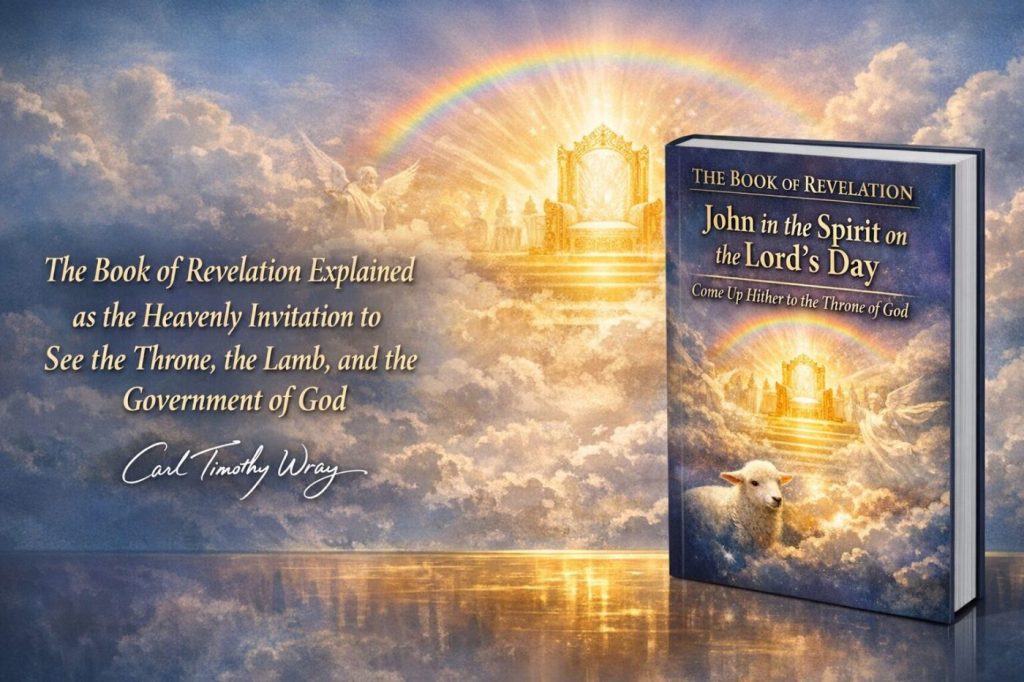
The Book of Revelation Explained as the Heavenly Invitation to See the Throne, the Lamb, and the Government of God
Book of Revelation: By Carl Timothy Wray
Carl Timothy Wray is the founder of The Finished Work of Christ and a teacher devoted to unveiling the unified mind of God from Genesis to Revelation. For more than four decades he has studied and taught the scriptures with a focus on the finished work of Christ, the kingdom of God, the manifestation of the sons of God, and the spiritual meaning of the Book of Revelation.
Through hundreds of writings and teachings, Carl emphasizes that the Bible must be understood through the illumination of the Holy Spirit rather than through the traditions of the natural mind. His work consistently points believers away from fear-based interpretations of prophecy and toward the living revelation of Jesus Christ within His people.
Carl’s teachings focus on the plan of the ages, the reconciliation of all things, the manifestation of Christ in His body, and the ultimate triumph of God’s purpose in creation. His writings seek to help believers move beyond speculation and enter the spiritual understanding through which the scriptures were originally given.
Through his books and teachings, Carl seeks to help believers see the scriptures through the mind of Christ, revealing the unity of God’s eternal purpose and the unfolding revelation of His kingdom in the earth.
The Book of Revelation has often been interpreted through prophetic timelines, historical speculation, or predictions about world events. Yet the Revelation itself begins with a very different key: “I was in the Spirit on the Lord’s Day” (Revelation 1:10). This book reveals how John’s experience of being in the Spirit opened the doorway to heaven where he heard the voice saying, “Come up hither, and I will shew thee things which must be hereafter” (Revelation 4:1). Instead of presenting Revelation as a puzzle about global catastrophes, this teaching explores how the visions of the book unfold from the perspective of heaven’s throne. As John is lifted from the isolation of Patmos into the presence of God, he begins to see the throne, the Lamb, and the government of heaven that guides the purposes of God in the earth. This book helps readers understand that the Revelation of Jesus Christ is not merely a prophecy about the future but an unveiling of Christ’s authority, kingdom, and life working within His people.
Book of Revelation: Introduction
The Call to Come Up Hither
The Book of Revelation begins with a man standing on a lonely island.
John had been exiled to Patmos because of his testimony about Jesus Christ. From a natural perspective his circumstances appeared bleak. He had been separated from the churches he loved, removed from the fellowship of believers, and placed in isolation by the authorities of the Roman Empire.
Yet what appeared to be exile became the doorway to one of the greatest revelations ever given to mankind.
John tells us the moment everything changed:
“I was in the Spirit on the Lord’s day, and heard behind me a great voice, as of a trumpet.”
— Revelation 1:10
This statement reveals the true beginning of the Book of Revelation. The visions that follow did not arise from human speculation, intellectual analysis, or prophetic calculation. They were given because John entered the realm of the Spirit.
From that moment forward, John began to perceive realities that exist beyond the limitations of the natural world.
But the revelation did not stop there.
After hearing the voice of Christ and witnessing the messages to the seven churches, John experienced something even more profound. A new invitation was given:
“After this I looked, and, behold, a door was opened in heaven: and the first voice which I heard was as it were of a trumpet talking with me; which said, Come up hither, and I will shew thee things which must be hereafter.”
— Revelation 4:1
This invitation marks a turning point in the Revelation.
John is no longer merely receiving messages while standing on earth. He is now invited to ascend in the Spirit and see the purposes of God from the vantage point of heaven itself.
When he responds to that invitation, he writes:
“Immediately I was in the spirit: and, behold, a throne was set in heaven, and one sat on the throne.”
— Revelation 4:2
From that moment forward, the entire Revelation unfolds from the perspective of the throne of God.
This is one of the most important truths about the Book of Revelation. The visions of the book are not primarily seen from the standpoint of earthly events but from the perspective of heaven’s government.
John sees the throne.
He sees the living creatures and the elders surrounding it.
He sees the worship of heaven.
He sees the Lamb who alone is worthy to open the sealed book of God’s purposes.
All of these visions flow from the moment John accepts the invitation to come up hither.
The same principle applies to every reader of the Book of Revelation.
The book cannot be fully understood from the perspective of the natural mind alone. It must be approached from the realm of the Spirit where the purposes of God become visible.
When believers learn to see from that vantage point, the Revelation ceases to be a mysterious puzzle about world events. Instead it becomes a powerful unveiling of Christ, His kingdom, and the divine government that guides the unfolding purpose of God in creation.
This book explores the meaning of that invitation.
It examines what it meant for John to be in the Spirit on the Lord’s Day, why he was called to come up hither, and what he saw when heaven opened before him.
More importantly, it reveals that this invitation was not given to John alone.
The same Spirit who lifted John into the heavenly vision still calls believers today to see the purposes of God from the perspective of His throne.
And when that invitation is accepted, the Book of Revelation begins to unfold in all its glory as the unveiling of Jesus Christ.
Chapter 1
John in the Spirit on the Lord’s Day
The Book of Revelation begins with a simple yet profound statement from the apostle John:
“I was in the Spirit on the Lord’s day, and heard behind me a great voice, as of a trumpet.”
— Revelation 1:10
This short sentence contains one of the greatest keys to understanding the entire book. Before John saw the visions of heaven, before he beheld the throne of God, and before he witnessed the Lamb opening the sealed book, something very important happened.
John became in the Spirit.
The Revelation of Jesus Christ did not begin with speculation about future events, nor did it begin with careful intellectual study. It began when a man entered the realm of the Spirit and heard the voice of God.
Understanding this moment is essential, because everything that follows in the Book of Revelation unfolds from that spiritual position.
The Revelation Begins in the Spirit
Many people approach the Book of Revelation with the assumption that it is primarily a prophecy about political movements, wars, global crises, or the final days of the world. Because of this assumption, readers often attempt to interpret the book through historical research, prophetic timelines, or comparisons with current events.
But the Revelation itself tells us something different.
The visions of the book did not originate in earthly observation. They came from the realm of the Spirit.
John did not say, “I was studying prophecy,” or “I was analyzing the scriptures,” or “I was watching events unfold around the Roman Empire.” Instead, he simply said:
“I was in the Spirit.”
This statement reveals that the entire Revelation emerges from spiritual perception rather than natural reasoning.
Until this truth is understood, readers will continue trying to interpret the book from the wrong vantage point.
The Book of Revelation was seen in the Spirit, and it must be understood in the Spirit.
What Does It Mean to Be in the Spirit?
When John says he was “in the Spirit,” he is describing a shift in awareness. His physical body was still standing on the island of Patmos, yet his perception had moved beyond the natural world.
The Spirit of God opened his inner understanding so that he could perceive realities that cannot be seen with physical eyes.
The scriptures frequently describe this kind of spiritual awareness.
The apostle Paul wrote:
“While we look not at the things which are seen, but at the things which are not seen: for the things which are seen are temporal; but the things which are not seen are eternal.”
— 2 Corinthians 4:18
The natural world is not the only realm that exists. Beyond the visible world lies the spiritual dimension where God’s purposes originate.
When John became in the Spirit, the veil separating these realms was lifted. He began to perceive the activity of heaven and the unfolding plan of God.
The Lord’s Day
John also says that this experience happened “on the Lord’s day.”
Many readers have assumed this phrase refers to a particular day of the week. Some associate it with Sunday worship, while others attempt to connect it with prophetic timelines.
But within the context of Revelation, the phrase carries a deeper meaning.
The Lord’s Day represents the realm where Christ’s authority, light, and presence are revealed.
It is the day when the rule of Christ becomes visible. It is the realm where the purposes of God are seen from heaven’s perspective rather than from the limited understanding of the natural world.
When John entered the Spirit on the Lord’s Day, he stepped into the light of Christ’s reign.
From that vantage point, he began to see the kingdom of God unfolding.
Hearing the Voice of Heaven
The moment John entered the Spirit, he heard something remarkable.
He writes:
“I heard behind me a great voice, as of a trumpet.”
The voice John heard was the voice of the risen Christ.
The trumpet-like quality of the voice suggests authority, clarity, and awakening. Throughout scripture, the sound of a trumpet often signals a divine announcement or a call to attention.
In this moment, the voice of Christ was summoning John to pay attention to something far greater than his surroundings on Patmos.
The voice was calling him upward into revelation.
This voice would guide John through every vision recorded in the Book of Revelation.
From Patmos to the Throne
It is important to remember where John was when this experience began.
He was standing on a remote island used by the Roman Empire as a place of exile. He had been banished there because of his testimony about Jesus Christ.
From a natural perspective, John’s circumstances appeared discouraging. He was isolated from the churches he loved and removed from the centers of Christian fellowship.
Yet the Spirit of God transformed that place of exile into the doorway of revelation.
The heavens opened to a man standing on a barren island.
This teaches us an important truth about the realm of the Spirit.
Spiritual revelation does not depend upon favorable circumstances. The Spirit of God can open the heavens in the most unlikely places.
Wherever the heart is open to God, the realm of the Spirit can become visible.
The Beginning of the Heavenly Vision
John’s experience of being in the Spirit was only the beginning.
What followed would carry him far beyond the shores of Patmos.
Soon he would hear the voice say:
“Come up hither, and I will shew thee things which must be hereafter.”
— Revelation 4:1
At that moment, John would be lifted into the heavenly realm where he would see the throne of God, the worship of heaven, and the unfolding purposes of God for creation.
But before that ascent could happen, John first had to become in the Spirit.
This is the foundation upon which the entire Book of Revelation is built.
The Same Invitation Today
John’s experience is not merely a historical event recorded in scripture. It also represents a spiritual principle that applies to believers today.
The same Spirit who opened the heavens to John still works in the hearts of God’s people.
When believers learn to walk in the Spirit, the scriptures begin to open in ways that the natural mind alone could never achieve.
The Book of Revelation begins to reveal its deeper message.
The symbols become clearer.
The visions become meaningful.
And the central figure of the book—Jesus Christ—begins to shine through every chapter.
The first step toward understanding the Book of Revelation is therefore the same step John took on the island of Patmos.
It is the step of entering the Spirit.
And from that position, the invitation of heaven begins to unfold:
Come up hither.
Chapter 2
Patmos — The Place Where Heaven Opened
Before John ever heard the trumpet-like voice of Christ, before he saw the throne of God, and before he was invited to come up hither, he was standing on a lonely island in the Aegean Sea.
John tells us exactly where he was when the Revelation began:
“I John, who also am your brother, and companion in tribulation, and in the kingdom and patience of Jesus Christ, was in the isle that is called Patmos, for the word of God, and for the testimony of Jesus Christ.”
— Revelation 1:9
These words remind us that the Book of Revelation did not begin in a cathedral, a place of honor, or a position of comfort. It began in exile.
Patmos was a small, rocky island used by the Roman Empire as a place of banishment. Those who were sent there were often prisoners, political offenders, or individuals the authorities wished to silence.
John was not there because he had committed a crime. He was there because he refused to stop proclaiming the truth about Jesus Christ.
The man who had once walked with Jesus along the shores of Galilee now found himself isolated on a barren island.
Yet what appeared to be a place of punishment became the doorway to one of the greatest revelations ever recorded.
Exile Did Not Silence the Spirit
From a natural perspective, John’s situation might have seemed discouraging.
He had been separated from the churches he loved. He was removed from the centers of Christian fellowship and ministry. The Roman authorities likely believed that sending him to Patmos would silence his voice.
But the Spirit of God cannot be confined by political power or human circumstances.
What the empire intended as exile became the setting for divine revelation.
On that quiet island, far from the noise of cities and the pressures of public ministry, John entered the Spirit and heard the voice of Christ.
This reminds us that the purposes of God often unfold in places that appear insignificant from the world’s perspective.
Many of the greatest revelations in scripture occurred in places of solitude.
Moses encountered God in the wilderness.
Elijah heard the still small voice on the mountain.
Paul received profound revelations during seasons of hardship and imprisonment.
And John saw the unveiling of Jesus Christ while standing on a barren island.
The Kingdom and Patience of Jesus Christ
John describes himself as a companion with the believers in “tribulation, and in the kingdom and patience of Jesus Christ.”
These three words—tribulation, kingdom, and patience—reveal something important about the life of the early church.
The believers of that generation understood that following Christ involved both suffering and victory.
They faced opposition from religious authorities and persecution from the Roman Empire. Yet in the midst of these difficulties, they also lived in the reality of Christ’s kingdom.
John was not simply enduring hardship; he was participating in the patience of Jesus Christ.
The word “patience” here refers to endurance—the steadfast faith that remains confident in God’s purposes even when circumstances appear difficult.
This endurance was part of the kingdom life.
John understood that the kingdom of God does not advance through earthly power or political dominance. It advances through the faithful testimony of those who belong to Christ.
The Place of Preparation
Patmos was more than a location of exile. It became a place of preparation.
Removed from the distractions of daily life, John was able to focus his attention on the presence of God.
The quiet isolation of the island created space for the Spirit to speak.
Sometimes the Lord brings His people into seasons where familiar structures are removed. What once seemed secure may disappear, and the believer may feel isolated or uncertain.
Yet these seasons often become the places where deeper revelation begins.
In the stillness of Patmos, John’s heart was open to the voice of Christ.
And when that voice spoke, the heavens opened before him.
Heaven Opens in Unexpected Places
One of the most powerful lessons from John’s experience is that the realm of the Spirit is not limited by physical location.
John did not need to be in Jerusalem to receive revelation. He did not need to stand in the temple or gather with crowds of believers.
He simply needed to be open to the Spirit of God.
The heavens opened to a man standing on a rocky island.
This truth continues to encourage believers today.
A person may find themselves in difficult circumstances—isolated, discouraged, or surrounded by adversity. Yet the Spirit of God is not confined by those conditions.
Wherever the heart is open to God, the realm of the Spirit can become visible.
The presence of God is not limited by geography.
Heaven can open anywhere.
From Patmos to the Spirit
John’s physical surroundings had not changed.
He was still standing on Patmos.
But something extraordinary happened within him.
He writes:
“I was in the Spirit on the Lord’s day…”
At that moment, the limitations of the natural world gave way to the realities of the spiritual realm.
John’s awareness shifted beyond the rocky island where he stood. The Spirit opened his perception so that he could hear the voice of Christ and see the unfolding purposes of heaven.
This moment marked the beginning of the Revelation.
Soon that same voice would call him higher.
The door of heaven would open, and John would hear the invitation that would carry him beyond Patmos into the presence of God:
“Come up hither.”
What began on a lonely island was about to become a journey into the throne room of heaven.
Chapter 3
The Great Voice as of a Trumpet
When John became in the Spirit on the Lord’s Day, something immediately captured his attention. He did not first see a vision or observe a heavenly scene. Instead, he heard a voice.
John writes:
“I was in the Spirit on the Lord’s day, and heard behind me a great voice, as of a trumpet.”
— Revelation 1:10
This voice marked the beginning of the entire Revelation.
Before John saw the throne of God, before he witnessed the worship of heaven, and before the visions of the seals, trumpets, and kingdoms unfolded before him, the voice of Christ sounded in his spirit.
Understanding this voice is essential, because the Revelation of Jesus Christ does not begin with images—it begins with a voice.
The Voice That Awakens the Spirit
John describes the voice as sounding like a trumpet.
Throughout the scriptures, the sound of a trumpet is associated with divine announcements and moments of awakening.
In the Old Testament, trumpets were used to gather the people, announce the presence of God, and signal important events in the life of Israel.
When God descended upon Mount Sinai, the sound of a trumpet grew louder and louder as the presence of the Lord filled the mountain (Exodus 19:16–19).
The trumpet was also used to summon the people to assembly, to announce the beginning of sacred festivals, and to signal times of spiritual awakening.
In the Book of Revelation, the trumpet-like voice carries the same sense of authority and awakening.
The voice of Christ calls John’s attention away from the natural world and directs his focus toward the realm of the Spirit.
It is the voice that summons him into revelation.
The Voice of the Risen Christ
John soon discovers that the voice he hears belongs to the risen Lord.
When he turns to see who is speaking, he beholds the Son of Man standing among the golden candlesticks.
Christ speaks with authority, clarity, and power.
This is not the gentle voice John once heard while walking with Jesus along the roads of Galilee. This is the voice of the glorified Christ, the One who has overcome death and now reigns in heavenly authority.
The trumpet-like quality of the voice reflects the majesty and authority of the risen Lord.
It is the voice of the King.
This voice would guide John through every vision recorded in the Book of Revelation.
Revelation Begins with Hearing
An important principle emerges from John’s experience.
The Revelation did not begin with sight; it began with hearing.
John first heard the voice of Christ, and only afterward did he turn to see the vision.
This pattern appears throughout the scriptures. Spiritual understanding often begins with hearing the voice of God.
Jesus repeatedly emphasized this truth during His earthly ministry.
“He that hath ears to hear, let him hear.”
— Matthew 11:15
Hearing in this sense does not merely refer to physical sound. It refers to spiritual perception—the ability to recognize the voice of God speaking to the heart.
When John heard the trumpet-like voice, his attention was immediately drawn toward the source of that voice.
Only then did the visions begin to unfold.
Turning to See the Voice
John writes:
“And I turned to see the voice that spake with me.”
— Revelation 1:12
This statement may appear unusual at first. Normally we do not turn to see a voice.
Yet John’s words reveal something important about spiritual perception.
When the Spirit opens the understanding of a believer, the voice of God begins to reveal realities that can be seen in the spirit.
The voice becomes the doorway to vision.
As John turned toward the voice, he began to see the risen Christ standing among the golden candlesticks.
The message of the seven churches followed, revealing Christ’s presence among His people.
The voice that awakened John’s attention became the guide that carried him deeper into the Revelation.
The Voice That Calls Upward
Later in the Book of Revelation, John hears the same voice again.
After the messages to the seven churches have been delivered, he writes:
“After this I looked, and, behold, a door was opened in heaven: and the first voice which I heard was as it were of a trumpet talking with me; which said, Come up hither.”
— Revelation 4:1
The voice that first spoke to John on Patmos now invites him to ascend into the heavenly realm.
The same voice that awakened his spirit now calls him upward into the presence of God.
This invitation reveals the purpose of the voice.
It does not merely provide information. It calls the believer into deeper revelation.
The Voice That Still Speaks
The voice that John heard on Patmos did not cease when the Book of Revelation was written.
The risen Christ still speaks to His people through the Spirit.
Throughout the scriptures we see that God’s relationship with His people has always involved communication.
God spoke to Abraham.
He spoke to Moses.
He spoke through the prophets.
And through the Spirit, Christ continues to speak to His people today.
The Book of Revelation itself repeatedly emphasizes this truth.
“He that hath an ear, let him hear what the Spirit saith unto the churches.”
This invitation appears again and again throughout the letters to the seven churches.
The Spirit continues to speak.
Those who listen with spiritual ears will hear the voice that awakens understanding and calls believers into deeper revelation.
The Beginning of the Ascent
The voice John heard was not merely an announcement. It was the beginning of a journey.
From that moment forward, John would be guided through the unfolding visions of the Book of Revelation.
The voice would lead him from Patmos into the heavenly realm, from earthly circumstances into the presence of God.
Soon he would hear the invitation that defines the next stage of the Revelation:
“Come up hither.”
The trumpet-like voice of Christ was preparing John for the ascent into the throne room of heaven.
And that ascent would reveal the throne, the worship of heaven, and the Lamb who governs the unfolding purposes of God.
Chapter 4
The Door Opened in Heaven
After John heard the voice of Christ and received the messages to the seven churches, the Revelation reached a turning point.
The scene shifts from the earth to heaven.
John writes:
“After this I looked, and, behold, a door was opened in heaven: and the first voice which I heard was as it were of a trumpet talking with me; which said, Come up hither, and I will shew thee things which must be hereafter.”
— Revelation 4:1
This moment marks one of the most important transitions in the entire Book of Revelation.
Until this point, John has been standing on Patmos receiving messages from the risen Christ. But now something new happens.
A door opens in heaven.
This open door signals the beginning of a deeper revelation. John is no longer limited to the earthly perspective from which he first heard the voice. He is now invited to see the purposes of God from heaven’s vantage point.
The Meaning of the Open Door
The image of an open door appears frequently throughout the scriptures. It often represents opportunity, access, or a new realm of understanding.
In the New Testament, Jesus spoke of doors being opened for the work of God’s kingdom.
Paul wrote of “a great door and effectual” being opened for ministry (1 Corinthians 16:9).
But the door John sees is not a door of earthly opportunity.
It is a door in heaven.
This door represents access to the realm where the purposes of God originate. It is the doorway through which John will see the throne of God, the worship of heaven, and the unfolding government of the kingdom.
What John is about to witness is not merely a vision of future events.
He is about to see the divine administration behind everything that takes place in creation.
Heaven’s Perspective
One of the reasons the Book of Revelation is often misunderstood is that many readers attempt to interpret it from the perspective of earthly events.
People read the book while looking at political developments, natural disasters, or global conflicts, assuming that the symbols must correspond directly to those things.
But the Revelation itself tells us that its visions are seen from heaven.
The door opens in heaven.
John is called upward so that he can see the purposes of God from the perspective of the throne.
This is an important principle.
The Book of Revelation is not written from the viewpoint of human speculation. It is written from the perspective of heaven’s government.
When the reader begins to see the book from that perspective, its message becomes much clearer.
The Voice That Calls Upward
John hears the same voice that first spoke to him when he became in the Spirit.
He writes:
“The first voice which I heard was as it were of a trumpet talking with me.”
The voice that awakened John on Patmos now calls him higher.
“Come up hither.”
These three words represent one of the most powerful invitations in scripture.
John is being invited to ascend into the realm where the purposes of God can be seen clearly.
The call to come up hither does not mean that John physically traveled to heaven. Rather, it means that his spiritual awareness was lifted into a higher realm of perception.
From that moment forward, John would see the throne of God and the heavenly order that governs creation.
Seeing What Must Be Hereafter
The voice tells John that he will be shown “things which must be hereafter.”
Many readers assume this phrase refers only to events that will occur in the distant future. Because of this assumption, the Book of Revelation is often treated as a prophetic calendar of coming world events.
But the phrase “hereafter” does not simply refer to future history.
It refers to the unfolding purposes of God that originate in heaven and are progressively revealed in the earth.
What John is about to see is the divine government behind the scenes of human history.
He will see the throne.
He will see the Lamb.
He will see the heavenly worship that surrounds the throne.
He will see how God’s purposes move forward through the authority of Christ.
These visions reveal the spiritual reality behind the events of the world.
The Door Remains Open
The open door John saw in heaven was not merely for him alone.
The Book of Revelation records his experience so that believers throughout history can understand the same spiritual principle.
The Spirit invites the people of God to see the scriptures from heaven’s perspective.
When believers approach the Book of Revelation through the natural mind, the symbols can appear confusing or frightening.
But when the Spirit lifts the understanding into the realm where the throne of God is seen, the book begins to reveal a powerful message of Christ’s victory and God’s unfolding purpose.
The open door represents access to that higher perspective.
The Beginning of the Throne Vision
John’s response to the voice is immediate.
He writes:
“Immediately I was in the spirit: and, behold, a throne was set in heaven, and one sat on the throne.”
— Revelation 4:2
In the next moment, John will find himself standing before the throne of God.
Everything that follows in the Book of Revelation flows from that throne.
The seals will be opened from the throne.
The judgments will proceed from the throne.
The worship of heaven will surround the throne.
The throne is the center of the Revelation.
But before John could see it, the door had to open.
And before the door could open, the voice had to call:
Come up hither.
Chapter 5
Come Up Hither
Among all the words spoken in the Book of Revelation, few carry as much meaning as the simple invitation John hears when the door opens in heaven.
The voice says:
“Come up hither, and I will shew thee things which must be hereafter.”
— Revelation 4:1
These three words—come up hither—mark one of the most significant moments in the entire Revelation.
Up to this point, John has been standing on the island of Patmos. He has heard the voice of Christ and received messages for the seven churches. Yet now something new is about to happen.
John is invited to ascend.
The Revelation is about to shift from earthly circumstances to heavenly perspective.
The Call to Ascend
The phrase come up hither is not merely a geographical instruction. It is a spiritual summons.
John is being invited to see the purposes of God from a higher realm.
From the standpoint of earth, life often appears chaotic and confusing. Nations rise and fall, circumstances change, and human understanding struggles to make sense of events.
But heaven sees things differently.
From the throne of God, the purposes of the kingdom unfold with perfect order and divine wisdom.
The invitation to come up hither is an invitation to see from that heavenly perspective.
It is a call to rise above the limitations of the natural mind and enter the realm where the purposes of God can be understood.
The Pattern of Ascent in Scripture
The call to ascend appears throughout the scriptures.
When Moses encountered God on Mount Sinai, he was called to ascend the mountain into the presence of the Lord.
“Come up to the Lord, thou, and Aaron, Nadab, and Abihu, and seventy of the elders of Israel.”
— Exodus 24:1
Later Moses alone was summoned higher into the cloud of God’s presence.
The prophet Isaiah experienced a similar ascent when he saw the Lord sitting upon His throne.
“In the year that king Uzziah died I saw also the Lord sitting upon a throne, high and lifted up.”
— Isaiah 6:1
Ezekiel also witnessed visions of heaven when the Spirit lifted him into the realm where he could see the throne and the living creatures surrounding it.
In each of these cases, the prophet was lifted beyond ordinary awareness so that he could see the purposes of God.
John now joins this same prophetic pattern.
The voice of Christ calls him upward into the heavenly realm.
Leaving the Natural Perspective
The invitation to come up hither represents more than a physical movement. It represents a change in perspective.
When John ascends in the Spirit, he is no longer observing life solely from the standpoint of the natural world.
Instead, he begins to see the deeper realities behind earthly events.
From heaven’s perspective, the throne of God governs all things.
What appears uncertain from the earth becomes clear when viewed from the throne.
The Book of Revelation repeatedly reminds us that the authority of God stands above every earthly power.
Kings, empires, and nations may rise and fall, but the throne of God remains unshaken.
John is being invited to see this reality for himself.
The Invitation to Revelation
The voice tells John that once he ascends, he will be shown “things which must be hereafter.”
The purpose of the ascent is revelation.
John is about to witness the heavenly order that governs the unfolding purposes of God.
He will see the throne of God surrounded by the living creatures and elders.
He will see the Lamb who alone is worthy to open the sealed book.
He will see the worship of heaven and the authority through which God’s purposes move forward.
These visions will reveal the divine government behind everything that takes place in creation.
But before John can see these things, he must first respond to the invitation.
He must come up.
The Same Invitation Today
Although the invitation was spoken to John, its spiritual meaning extends far beyond his experience.
The Spirit continues to call believers into deeper understanding.
The scriptures repeatedly encourage the people of God to lift their eyes beyond earthly circumstances and seek the things of heaven.
Paul writes:
“If ye then be risen with Christ, seek those things which are above, where Christ sitteth on the right hand of God.”
— Colossians 3:1
This instruction reflects the same principle contained in the words come up hither.
Believers are invited to see life from the perspective of Christ’s authority rather than from the limitations of the natural world.
As the Spirit opens the understanding, the realities of heaven begin to shape how believers view the world around them.
Immediately in the Spirit
John’s response to the invitation is immediate.
He writes:
“Immediately I was in the spirit.”
— Revelation 4:2
There is no delay.
The moment the invitation is given, John is lifted into the realm where the throne of God becomes visible.
The ascent has begun.
The next thing John sees will define the entire Revelation.
He will behold the throne of heaven.
And from that throne, the unfolding purposes of God will begin to be revealed.
Chapter 6
Immediately I Was in the Spirit
After the voice of Christ called John upward with the words “Come up hither,” something remarkable happened.
John records the moment in a single sentence:
“Immediately I was in the spirit: and, behold, a throne was set in heaven, and one sat on the throne.”
— Revelation 4:2
This statement marks the moment when the heavenly vision truly begins.
The invitation had been given. The door had opened in heaven. The voice had called John upward.
And now, immediately, John was in the Spirit.
This moment reveals an important principle about spiritual revelation: when the Spirit opens the understanding, the transition from earthly perception to heavenly awareness can happen instantly.
The Immediate Response of the Spirit
John does not describe a long process of preparation or gradual ascent. He does not say that he struggled to reach the heavenly realm or labored to enter the presence of God.
Instead, he simply says:
“Immediately I was in the spirit.”
The word immediately highlights the suddenness of the experience.
When the voice of Christ called John upward, the Spirit lifted his awareness into the realm where heavenly realities could be seen.
The limitations of the natural world faded from view, and the vision of heaven appeared before him.
This does not mean that John physically left the island of Patmos. His body remained where it was.
But his perception had been lifted beyond the physical world.
He was now seeing from the realm of the Spirit.
A Deeper Entrance into the Spirit
Earlier in the Revelation, John had already said that he was “in the Spirit on the Lord’s Day.”
That moment marked the beginning of the revelation.
But here, when the door opens in heaven, John experiences an even deeper entrance into the Spirit.
The difference is not that John has entered a different Spirit, but that his awareness has been lifted to a higher vantage point.
He is now seeing the realities of heaven itself.
The Spirit has opened the doorway into the throne room of God.
The Spirit as the Realm of Revelation
Throughout scripture, the Spirit is the realm where divine revelation becomes visible.
The natural senses cannot perceive the realities of heaven. The human intellect cannot fully grasp the purposes of God.
But the Spirit makes these things known.
The apostle Paul explains this principle clearly:
“But God hath revealed them unto us by his Spirit: for the Spirit searcheth all things, yea, the deep things of God.”
— 1 Corinthians 2:10
The Spirit is the means through which the hidden purposes of God are revealed.
When John was lifted into the Spirit, he entered the realm where the deep things of God could be seen.
The Spirit and Spiritual Perception
The experience of being in the Spirit is closely connected to spiritual perception.
Just as the physical eyes allow a person to see the natural world, the Spirit opens the inner understanding so that spiritual realities become visible.
Paul prayed that believers would experience this kind of perception when he wrote:
“That the God of our Lord Jesus Christ, the Father of glory, may give unto you the spirit of wisdom and revelation in the knowledge of him: the eyes of your understanding being enlightened.”
— Ephesians 1:17–18
Notice the language Paul uses.
He speaks of the eyes of understanding being enlightened.
This suggests that spiritual revelation involves a form of sight.
When the Spirit illuminates the heart, truths that once seemed hidden suddenly become clear.
This is exactly what happened to John.
The Spirit opened his perception, and the realities of heaven came into view.
The Gateway to the Throne
John’s statement—“Immediately I was in the spirit”—serves as the gateway to the throne vision that follows.
Everything that unfolds in the Book of Revelation from this point forward flows from what John sees when he is in the Spirit.
He will see the throne of God.
He will see the living creatures and the twenty-four elders surrounding the throne.
He will see the Lamb taking the sealed book.
He will witness the unfolding purposes of God that bring creation toward its ultimate restoration.
All of these visions begin with this moment.
Immediately John was in the Spirit.
Living in the Realm of the Spirit
John’s experience also points toward a spiritual principle that applies to believers today.
The Spirit of God continues to reveal the purposes of heaven to those whose hearts are open to Him.
While the experience of prophetic vision may differ from person to person, the principle remains the same.
Spiritual understanding comes through the Spirit.
When believers walk in the Spirit, the scriptures begin to reveal their deeper meaning. The purposes of God become clearer, and the presence of Christ becomes more vivid in the life of the believer.
The Spirit lifts the understanding beyond the limitations of the natural mind.
The Vision of the Throne
The moment John entered the Spirit, his attention was drawn to the most important reality in heaven.
He writes:
“Behold, a throne was set in heaven, and one sat on the throne.”
The first thing John sees is not an angel, a symbol, or a prophecy about the future.
He sees the throne.
The throne represents the authority and government of God over all creation.
From this throne, the purposes of God move forward.
The seals will be opened from the throne.
The worship of heaven will surround the throne.
The Lamb will stand before the throne.
The throne is the center of the Revelation.
And John sees it the moment he is lifted fully into the Spirit.
Chapter 7
Behold, a Throne Was Set in Heaven
The first thing John sees when he is lifted fully into the Spirit is not an angel, not a prophetic symbol, and not a series of events unfolding in the earth.
He sees a throne.
John writes:
“Immediately I was in the spirit: and, behold, a throne was set in heaven, and one sat on the throne.”
— Revelation 4:2
This moment reveals the true center of the entire Book of Revelation.
At the heart of the heavenly vision is the throne of God.
Everything that unfolds throughout the rest of the Revelation flows from this throne. The seals are opened from it. The worship of heaven surrounds it. The authority of the Lamb proceeds from it.
Before John sees anything else, the Spirit directs his attention to the throne.
The Throne as the Center of Authority
In the scriptures, a throne represents authority, rule, and government.
Earthly kings rule from thrones. Judges sit upon thrones to render decisions. Thrones represent the seat from which power is exercised.
When John sees a throne set in heaven, he is being shown the ultimate source of authority in the universe.
Above every earthly kingdom, above every empire, and above every power that operates within creation stands the throne of God.
Human history often appears uncertain and chaotic. Nations rise and fall, rulers change, and events unfold in ways that can seem unpredictable.
But the vision John receives reveals a deeper reality.
Behind everything that takes place in creation stands the throne of heaven.
The government of God remains firmly established.
A Throne Already Set
John’s wording is important.
He does not say that a throne was being built or prepared. He says a throne was set in heaven.
The throne was already established.
This detail reminds us that the authority of God is not something that will one day be created or achieved. It already exists.
From the beginning of creation, God’s throne has stood as the center of divine rule.
The psalmist expresses this truth clearly:
“The Lord hath prepared his throne in the heavens; and his kingdom ruleth over all.”
— Psalm 103:19
The throne of God is not temporary or fragile. It is eternal.
The Revelation simply unveils what has always been true.
One Sat on the Throne
John’s vision does not stop with the throne itself.
He immediately notices that someone is seated upon it.
“One sat on the throne.”
The one seated upon the throne represents the sovereign authority of God over all things.
Throughout the Book of Revelation, the throne remains occupied. At no point is it empty or abandoned.
This detail carries profound meaning.
No matter what events unfold in the visions that follow—whether conflict, judgment, or the shaking of earthly systems—the throne of God remains occupied.
God is not absent from His creation.
He reigns.
The Throne and the Revelation
Recognizing the throne as the center of the Revelation changes how the entire book is understood.
Many readers approach the Book of Revelation looking first for symbols, disasters, or prophetic timelines.
But the Revelation begins with the throne.
The throne reveals that the unfolding visions are not random events or uncontrolled chaos. They are part of the divine administration of God’s purposes.
Every seal that is opened, every trumpet that sounds, and every transformation that occurs in the book ultimately proceeds from the authority of the throne.
This means that the Revelation is not primarily a story of destruction.
It is the unveiling of divine government.
The Throne Surrounded by Heaven
As John continues to observe the throne, he begins to notice the heavenly order surrounding it.
He will soon see the rainbow around the throne, the twenty-four elders seated upon thrones, and the four living creatures who continually worship before God.
These elements reveal that the throne is not isolated.
It stands at the center of a heavenly kingdom filled with worship, life, and order.
The throne is the source of harmony and authority for all of heaven.
Everything in the heavenly realm is aligned with the presence of the one who sits upon the throne.
The Throne in the Life of the Believer
John’s vision of the throne is not merely a description of heaven. It also reveals an important truth about the spiritual life of believers.
The throne represents the authority of God in every dimension of life.
When believers come to understand that God reigns from His throne, their perspective begins to change.
Circumstances that once seemed overwhelming begin to appear different when viewed from the perspective of the throne.
Fear gives way to confidence. Confusion gives way to clarity.
The throne reminds believers that the purposes of God remain secure.
The Foundation of the Revelation
Every vision that follows in the Book of Revelation must be understood in light of this first sight.
Before John sees the Lamb.
Before the sealed book appears.
Before the seals are opened.
He sees the throne.
This order is important.
The throne establishes the foundation upon which the rest of the Revelation stands.
Everything that unfolds in the book reveals the authority, wisdom, and purpose of the one who sits upon that throne.
And from that throne, the next stage of the heavenly vision will begin to unfold.
Chapter 8
The One Who Sat Upon the Throne
When John was lifted into the Spirit and the door of heaven opened before him, the first thing he saw was a throne set in heaven. But the throne itself was not the focus of the vision.
Someone was seated upon it.
John writes:
“And he that sat was to look upon like a jasper and a sardine stone: and there was a rainbow round about the throne, in sight like unto an emerald.”
— Revelation 4:3
This is John’s first glimpse of the One who governs the universe.
Yet something remarkable appears in the way John describes what he sees.
He does not attempt to describe the form of the One seated upon the throne. Instead, he describes the glory that surrounds Him.
The presence of God is revealed through light, color, and brilliance rather than through physical shape.
The Glory of the One on the Throne
John compares the appearance of the One seated upon the throne to precious stones.
He says the throne shines with the brilliance of jasper and sardine stone.
These stones represent radiant beauty, purity, and authority.
Jasper often appears in scripture as a symbol of clarity and divine brilliance. Later in the Book of Revelation, the New Jerusalem itself is described as shining with the brilliance of jasper, “clear as crystal” (Revelation 21:11).
The sardine stone carries a deep red color, reflecting the majesty and power of divine authority.
Together, these stones communicate the overwhelming brilliance of the One seated upon the throne.
John is trying to describe something that goes beyond ordinary human language.
He is witnessing the glory of God.
The Throne Surrounded by Covenant
John also notices something surrounding the throne.
“There was a rainbow round about the throne.”
The rainbow is a powerful symbol throughout the scriptures.
It first appears in the book of Genesis when God establishes His covenant with Noah after the flood.
“I do set my bow in the cloud, and it shall be for a token of a covenant between me and the earth.”
— Genesis 9:13
The rainbow represents God’s faithfulness to His promises.
When John sees a rainbow surrounding the throne, he is witnessing something deeply significant.
The authority of God is surrounded by covenant mercy.
This means that the government of heaven is not founded upon cruelty or unpredictable power. It is founded upon the faithfulness of God.
Every action that proceeds from the throne is consistent with His covenant.
The Emerald Light
John says the rainbow surrounding the throne appeared “like unto an emerald.”
Emerald carries a deep green brilliance.
Green is often associated with life, growth, and renewal.
The emerald rainbow suggests that the throne of God is not merely a place of authority—it is also the source of life.
From this throne flows the power that sustains creation and brings renewal to the world.
Later in the Book of Revelation, John will see the river of the water of life flowing from the throne of God and of the Lamb (Revelation 22:1).
The emerald light surrounding the throne hints at this life-giving reality.
The throne is not only the center of government; it is the source of life itself.
The Throne Reveals the Character of God
John’s vision of the One seated upon the throne reveals something about the nature of God.
The throne is radiant with glory.
It is surrounded by covenant mercy.
It shines with the brilliance of divine life.
All of these details remind us that the authority of God is inseparable from His character.
God’s government is not harsh or arbitrary. It reflects His righteousness, His faithfulness, and His love for creation.
This truth becomes increasingly important as the visions of Revelation unfold.
When readers encounter the judgments and transformations described in the later chapters of the book, it is essential to remember the character of the One who sits upon the throne.
Everything that proceeds from the throne flows from the nature of God.
Seeing the Throne Changes Everything
When John first entered the Spirit, he was standing on the island of Patmos.
From the perspective of the earth, the world appeared to be ruled by the power of the Roman Empire.
Caesar claimed authority over the nations, and believers often faced persecution for their faith.
But when John saw the throne in heaven, the entire picture changed.
Above every earthly ruler stands the throne of God.
The true authority over the universe belongs to the One who sits upon that throne.
This revelation transforms the way believers understand the world.
Empires may rise and fall. Political powers may appear strong for a season.
But none of them ultimately govern the destiny of creation.
The throne of heaven remains the center of divine authority.
The Throne and the Lamb
As the vision continues, John will soon see another figure appearing before the throne.
He will see the Lamb who was slain.
The Lamb will approach the throne and take the sealed book from the hand of the One who sits upon it.
This moment will reveal the partnership between the Father and the Son in the unfolding purposes of God.
The throne belongs to the Father, and the Lamb carries out the redemption and restoration of creation.
But before that moment arrives, John first beholds the glory of the One seated upon the throne.
This vision establishes the foundation for everything that follows.
The throne of God stands at the center of heaven.
And from that throne, the purposes of God move forward into the world.
Chapter 9
The Throne Surrounded by Worship
When John’s eyes are opened to the throne of heaven, he does not see a silent or empty scene. The throne of God is surrounded by life, order, and continual worship.
John writes:
“And round about the throne were four and twenty seats: and upon the seats I saw four and twenty elders sitting, clothed in white raiment; and they had on their heads crowns of gold.”
— Revelation 4:4
As the vision unfolds, John begins to see that the throne of God is not isolated. It stands at the center of a heavenly order filled with worship and reverence.
The throne is surrounded by elders, living creatures, and continual praise.
Heaven is alive with worship.
The Twenty-Four Elders
John first notices the twenty-four elders seated on thrones surrounding the throne of God.
These elders are clothed in white garments and wear crowns of gold upon their heads.
Their appearance suggests authority, purity, and maturity.
White garments in scripture often symbolize righteousness and purity. The crowns indicate victory and authority.
The elders represent a company that shares in the administration of heaven under the authority of God.
They sit on thrones, yet their authority is not independent. It flows from the throne of the One who sits at the center.
Their position around the throne reflects harmony and order within the kingdom of God.
Lightning, Thunder, and the Voice of the Throne
John continues describing the scene around the throne:
“And out of the throne proceeded lightnings and thunderings and voices.”
— Revelation 4:5
These manifestations emphasize the power and majesty of God’s presence.
Lightning and thunder often appear in scripture when the glory of God is revealed.
When God descended upon Mount Sinai, the mountain shook, thunder rolled, and lightning flashed across the sky (Exodus 19:16).
The throne of heaven carries that same sense of divine authority.
From the throne proceeds power, revelation, and the voice of God.
These expressions remind us that the throne is not passive. It is the center of divine activity.
The Seven Lamps of Fire
John also sees seven lamps burning before the throne.
“These are the seven Spirits of God.”
The seven lamps represent the fullness of the Spirit of God.
Throughout scripture, the number seven often symbolizes completeness and perfection.
The seven Spirits reveal the full expression of God’s Spirit illuminating the throne room.
Nothing in heaven is hidden from this divine light.
The Spirit of God brings understanding, wisdom, and revelation.
The throne is therefore surrounded not only by authority and worship but also by illumination.
The Sea of Glass
Before the throne John sees another remarkable sight:
“And before the throne there was a sea of glass like unto crystal.”
— Revelation 4:6
This sea appears calm, clear, and transparent.
The image contrasts sharply with the turbulent seas often described elsewhere in scripture.
In many biblical passages, the sea represents chaos, instability, or the restless movement of the nations.
But the sea before the throne is different.
It is still.
It is clear as crystal.
This sea reflects the peace and order that flow from the presence of God.
Nothing disturbs the harmony of heaven.
The Four Living Creatures
John then sees four living creatures positioned around the throne.
“In the midst of the throne, and round about the throne, were four beasts full of eyes before and behind.”
— Revelation 4:6
These living creatures are extraordinary beings.
One resembles a lion, another a calf, another has the face of a man, and the fourth is like a flying eagle.
They are described as being full of eyes, symbolizing awareness and spiritual perception.
The living creatures represent life in its fullest expression, continually attentive to the presence and authority of God.
They stand closest to the throne, reflecting the living activity of God’s kingdom.
The Song of Heaven
The living creatures never cease their worship.
John writes:
“They rest not day and night, saying, Holy, holy, holy, Lord God Almighty, which was, and is, and is to come.”
— Revelation 4:8
This declaration echoes the vision of the prophet Isaiah, who also saw heavenly beings proclaiming the holiness of God.
The worship of heaven centers on the holiness and eternal nature of the Lord.
The phrase “which was, and is, and is to come” declares that God exists beyond time itself.
He is the eternal ruler over creation.
The Response of the Elders
Whenever the living creatures give glory and honor to the One seated on the throne, the twenty-four elders respond with worship of their own.
John writes:
“The four and twenty elders fall down before him that sat on the throne, and worship him that liveth for ever and ever, and cast their crowns before the throne.”
— Revelation 4:10
The elders lay their crowns before the throne as an act of humility and reverence.
Even though they possess authority, they acknowledge that all authority ultimately belongs to God.
Their worship recognizes that every victory, every crown, and every position of honor flows from the throne of heaven.
Worthy Is the Lord
The elders proclaim:
“Thou art worthy, O Lord, to receive glory and honour and power: for thou hast created all things, and for thy pleasure they are and were created.”
— Revelation 4:11
This declaration reveals the reason for heaven’s worship.
God is worthy because He is the Creator of all things.
Everything that exists owes its existence to Him.
The worship of heaven recognizes that creation itself flows from the will and purpose of God.
The Throne and the Worship of Heaven
John’s vision reveals that the throne of God is surrounded by continual worship.
The living creatures proclaim the holiness of God.
The elders bow before the throne and cast their crowns at His feet.
Heaven responds to the presence of God with reverence, joy, and praise.
This worship is not forced or ritualistic. It flows naturally from the recognition of who God is.
The throne reveals the majesty, authority, and holiness of the One who sits upon it.
And in response, heaven worships.
In the next stage of the vision, something new will appear before the throne.
A sealed book will be brought forth.
And the question will arise:
Who is worthy to open it?
Chapter 10
Living From the Throne
When John was lifted into the Spirit and invited to come up hither, the first reality revealed to him was the throne of God.
Everything in heaven revolves around that throne.
The living creatures worship before it.
The elders cast their crowns at its feet.
The authority of heaven flows outward from it.
The throne is the center of divine government.
Yet the vision John received was not given merely to describe the structure of heaven. It was given to reveal a deeper spiritual reality.
The throne of God is meant to shape the perspective of every believer.
Seeing Life From the Throne
When people view life only from the perspective of the earth, circumstances can appear confusing and uncertain.
Nations rise and fall.
Leaders change.
Events unfold that seem difficult to understand.
From the natural perspective, the world often appears to be governed by the forces of politics, economics, and human ambition.
But John’s vision reveals something far greater.
Above every earthly system stands the throne of God.
The throne reminds us that the ultimate authority over creation belongs to the Lord.
History does not unfold randomly. The purposes of God move forward according to the wisdom of the One who sits upon the throne.
When believers learn to see life from this perspective, their understanding begins to change.
Fear gives way to confidence.
Confusion gives way to clarity.
The throne reveals that God remains sovereign over all things.
The Throne and the Government of Christ
The Book of Revelation will soon reveal that the Lamb stands before the throne and receives the sealed book containing the purposes of God.
The Lamb opens the seals and carries forward the divine plan that leads creation toward restoration.
This vision reveals the partnership between the Father and the Son.
The throne represents the authority of God.
The Lamb represents the redemptive work through which that authority is exercised in the world.
Through the Lamb, the purposes of the throne begin to unfold.
The Throne in the Life of Believers
The vision of the throne also speaks to the spiritual life of the believer.
The New Testament repeatedly teaches that Christ reigns as King.
After His resurrection and ascension, Jesus was exalted to the right hand of God, sharing in the authority of heaven.
Paul describes this reality when he writes:
“God… raised him from the dead, and set him at his own right hand in the heavenly places, far above all principality, and power, and might, and dominion.”
— Ephesians 1:20–21
Christ reigns from the throne.
And believers are invited to share in that life.
Through union with Christ, the people of God begin to live under the authority and perspective of heaven.
Their identity is no longer defined solely by earthly circumstances but by their relationship with the risen Lord.
Seeking the Things Above
Because believers share in the life of Christ, the scriptures encourage them to set their minds on the realities of heaven.
Paul writes:
“If ye then be risen with Christ, seek those things which are above, where Christ sitteth on the right hand of God.”
— Colossians 3:1
This instruction echoes the invitation John received.
Come up hither.
Believers are invited to lift their understanding beyond the limitations of the natural world and see life from the perspective of Christ’s reign.
When the mind is shaped by the throne of God, priorities begin to shift.
The values of the kingdom take precedence over the concerns of the world.
The purposes of God become clearer.
The Throne and the Future of Creation
The throne also reveals the ultimate direction of God’s purpose for creation.
Throughout the Book of Revelation, the authority of the throne moves history toward a final restoration.
The kingdoms of this world will ultimately become the kingdom of our Lord and of His Christ.
Creation itself will be renewed.
The final chapters of Revelation describe a new heaven and a new earth where the throne of God and of the Lamb stand at the center of a restored creation.
From that throne flows the river of the water of life.
The government of God brings harmony, life, and restoration to all things.
The Invitation Continues
John’s vision of the throne began with a simple invitation.
Come up hither.
The voice of Christ called him to see the purposes of God from heaven’s perspective.
That same invitation still echoes through the scriptures today.
Believers are called to walk in the Spirit and to view life through the authority of the throne.
When the Spirit lifts the understanding, the message of the Book of Revelation begins to unfold with new clarity.
The throne stands at the center of heaven.
The Lamb carries forward the purposes of God.
And the people of God are invited to live with their eyes fixed on the throne.
The Next Stage of the Revelation
The vision John has seen so far prepares the way for the next stage of the Revelation.
He has seen the throne of God.
He has witnessed the worship of heaven.
Now a new scene will unfold.
A sealed book will appear in the hand of the One seated upon the throne.
And a question will echo throughout heaven and earth:
Who is worthy to open the book?
The answer to that question will reveal the Lamb who carries forward the purposes of God for creation.
And with that moment, the next chapter of the Revelation will begin.
Book of Revelation: By Carl Timothy Wray

Book of Revelation Series
- Book of Revelation
- The Book of Revelation — In the Spirit: How Revelation Is Seen in the Realm of God
- The Finished Work of Christ: Meaning, Key Scriptures & FAQs
- Join Our Facebook Page