 📺
📺
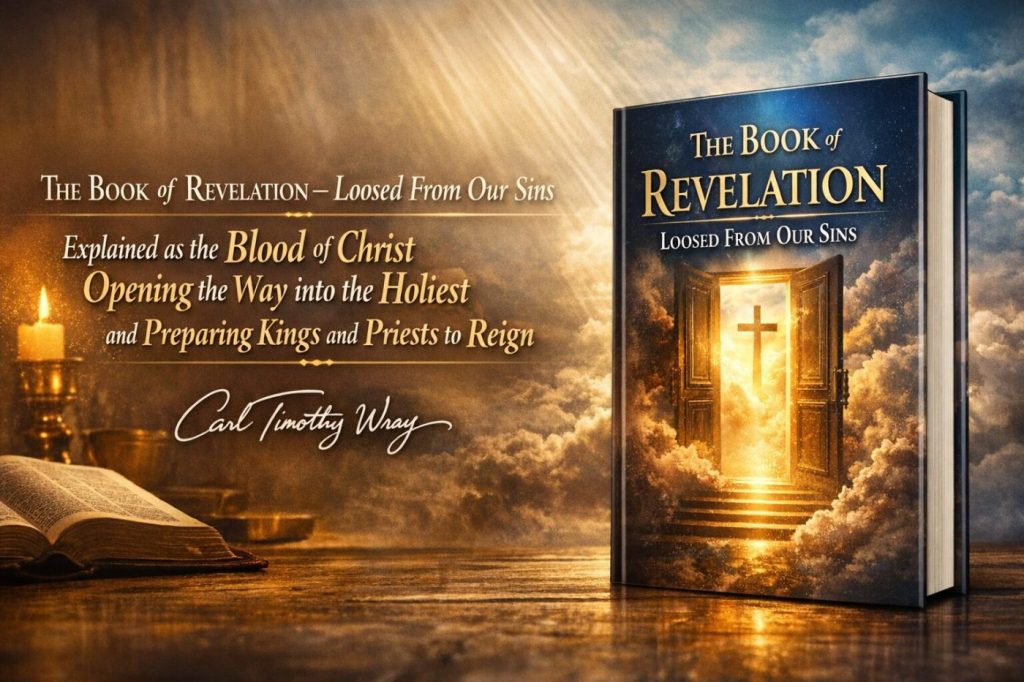
The Book of Revelation — Loosed From Our Sins Explained as the Blood of Christ Opening the Way into the Holiest and Preparing Kings and Priests to Reign
By Carl Timothy Wray
Book of Revelation: Author
Carl Timothy Wray is the founder of The Finished Work of Christ Ministries and the author of hundreds of prophetic and theological books exploring the full counsel of God from Genesis to Revelation. After more than four decades of deep study in the Scriptures, his writings focus on unveiling the Finished Work of Christ, the Plan of the Ages, the manifestation of the sons of God, and the spiritual revelation of the Book of Revelation.
Through his website, TheFinishedWorkOfChrist.com, Carl freely provides books, teachings, and downloadable resources that help believers understand the unified mind of God across Scripture. His work emphasizes the reconciliation of all things in Christ, the transformation of believers into kings and priests, and the unveiling of God’s eternal purpose to bring creation into the fullness of divine life.
The Book of Revelation — Loosed From Our Sins reveals the powerful meaning of Revelation 1:5 and the redemptive work of Jesus Christ. Many believers read the words “washed us from our sins in His own blood” without realizing the deeper revelation hidden in this verse. This book explains how Christ has loosed humanity from the power and claim of sin through His divine life, opening the way into the Holiest presence of God. By examining the blood of Christ, the Day of Atonement, and the spiritual meaning of entering the Holiest, this study reveals how redemption prepares believers to become kings and priests unto God. Rooted in the Book of Revelation and supported throughout Scripture, this book unveils the living reality of Christ’s victory over sin and the destiny of the sons of God to reign with Him.
Book of Revelation: Introduction
The Love That Loosed Us
Before John ever spoke of thrones, crowns, kingdoms, or the government of God, he began the Revelation with a declaration that shakes the foundations of the universe:
“Unto Him that loved us, and loosed us from our sins in His own blood.”
— Revelation 1:5
The book of Revelation does not begin with judgment.
It does not begin with beasts, trumpets, or vials.
It begins with love.
Before the Lamb is seen opening seals, before the throne is revealed in heaven, before kings and priests are crowned, the Spirit establishes the foundation of all redemption: the love of Christ that releases humanity from sin.
Many have read this verse as if it merely speaks of forgiveness. Religion has often reduced the cross to a legal transaction in which sins are simply pardoned and believers wait for heaven. But the Spirit reveals something far greater. The Lamb did not merely forgive sins — He loosed us from them.
To be loosed is to be released, freed, and delivered from the power that once held us captive.
This is the proclamation that echoes from the opening chapter of Revelation:
Christ has broken the authority of sin and opened the way into the presence of God.
Through His blood — which is the pouring out of His divine life — the door into the Holiest has been opened. What once stood behind a veil in the tabernacle has now been made accessible to those who share in the life of the Son. The cross was not only the forgiveness of sins; it was the release of divine life into humanity.
And that life carries a purpose far greater than personal salvation.
The same verse that declares we are loosed from our sins continues with a staggering revelation: Christ “has made us kings and priests unto God.”
Redemption is therefore not merely about escaping judgment.
It is about preparing a people who will reign with Christ.
This book will explore the profound meaning of that declaration.
We will examine the blood of Christ and its connection to the divine life that transforms humanity. We will look at the ancient Day of Atonement and its prophetic picture of Christ’s work in removing sin. We will discover what it means to enter the Holiest by the blood of Jesus and how the life of Christ within us ultimately overcomes the power of the flesh.
The Revelation of Jesus Christ begins with a declaration of love because love is the foundation of the entire plan of God.
The Lamb who sits upon the throne is the Lamb who first loved us.
And the sons who reign with Him are those who have discovered the power of that love to free them from sin and raise them into the life of God.
The message of Revelation is therefore not merely about the end of the world.
It is about the unveiling of Christ in a people — a people who have been loosed from sin, filled with His life, and prepared to reign as kings and priests in the kingdom of God.
And that revelation begins here.
With the Lamb who loved us.
And with the blood that set us free.
Chapter 1
The Love That Redeemed the World
The Revelation Begins With Love
“Unto Him that loved us, and loosed us from our sins in His own blood.”
— Revelation 1:5
Before the Book of Revelation speaks of seals, trumpets, beasts, or judgment, the Spirit establishes one foundational truth:
Christ loved us.
The Revelation of Jesus Christ does not begin with wrath.
It does not begin with destruction.
It begins with love.
This is not accidental. The Spirit intentionally places love at the beginning of the book because love is the foundation of God’s entire redemptive plan.
Before the throne is revealed, before kings and priests reign, before the government of God fills the earth, John proclaims:
“Unto Him that loved us.”
Everything that follows in the Book of Revelation flows from this truth.
God’s Nature Is Love
Love Is Not Something God Does — It Is What God Is
The apostle John later wrote these words:
“God is love.”
— 1 John 4:8
The scripture does not say that God merely possesses love.
It says that God is love.
Love is the very essence of His nature. It is the core of His being.
Because God is love, love must express itself. Love must give. Love must create. Love must share itself with others.
For love to exist, there must be a beloved.
This truth reveals something profound about creation itself. Humanity did not appear in the universe by accident. Creation exists because the heart of God desired to reveal Himself and to share His life.
The world exists because love created it.
The Cross Reveals the Heart of God
The Motive Behind Redemption
One of the most well-known verses in Scripture declares:
“For God so loved the world, that He gave His only begotten Son.”
— John 3:16
Notice the reason Christ was sent.
The Father did not send the Son because humanity deserved punishment.
He sent the Son because He loved the world.
The cross therefore stands as the greatest revelation of divine love the universe has ever seen.
At Calvary we see the heart of God unveiled.
The love of God is not theoretical.
It is sacrificial.
It gives itself for the sake of others.
The cross demonstrates a love that refuses to abandon humanity even in its deepest rebellion.
The Love of Christ Revealed in His Life
A Love Without Limits
During His ministry, Jesus revealed a love that was completely unlike the love of this world.
He loved the broken.
He loved the rejected.
He loved the sinner and the outcast.
He loved the disciple who denied Him.
He loved the friend who betrayed Him.
He loved the crowds who misunderstood Him.
But the greatest display of His love came at the cross.
As He hung upon the cross, mocked and tortured by those around Him, Jesus prayed:
“Father, forgive them; for they know not what they do.”
— Luke 23:34
This is the nature of divine love.
It does not retaliate.
It does not seek revenge.
It forgives even those who cause the deepest wounds.
This is the love John saw when he wrote:
“Unto Him that loved us.”
The Love of Christ Continues Today
Loved Us — and Loves Us
Some ancient Greek manuscripts of Revelation 1:5 actually read:
“Unto Him that loves us.”
In other words, the love of Christ is not merely a past event.
It did not end at the cross.
Christ loved us, and He loves us still.
His love continues to flow toward humanity without limit.
There is no depth of failure His love cannot reach.
There is no darkness His grace cannot penetrate.
There is no person beyond the reach of His redeeming heart.
The love of Christ is limitless.
Love Is the Foundation of Redemption
The Lamb Who Loved Us
The Book of Revelation reveals Jesus as the Lamb who sits upon the throne of heaven.
But before the Lamb is seen opening the seals, the Spirit reminds us that the Lamb is also the One who loved us.
The King who reigns in heaven is the Savior who gave Himself for the world.
This truth changes how we understand the entire book of Revelation.
The Revelation of Jesus Christ is not primarily a story about destruction or judgment.
It is the unveiling of the victory of the Lamb.
And the Lamb is the One who loved us.
The Sons of God Are Sons of Love
The Nature of Those Who Reign
The plan of redemption does not end with forgiveness.
Christ is raising up a people who will share His nature and manifest His life in the earth.
These sons of God will carry the same love that flowed through Christ.
Jesus made this clear when He gave His disciples a new commandment:
“A new commandment I give unto you, That ye love one another; as I have loved you.”
— John 13:34
The true mark of sonship is not merely knowledge or spiritual gifts.
The true mark of sonship is love.
The sons of God are called to manifest the very nature of the Father.
They are called to become sons of love.
The Foundation of the Revelation
The Book of Revelation begins with love because love is the foundation of everything God is doing.
Before the throne is revealed…
Before kings and priests reign…
Before the kingdom fills the earth…
The Spirit reminds us of the foundation of it all:
“Unto Him that loved us.”
Love redeemed the world.
And the sons who reign with Christ will be those who have discovered the transforming power of that love.
Chapter 2
Washed or Loosed? The Power of Revelation 1:5
The Words That Open the Revelation
“Unto Him that loved us, and loosed us from our sins in His own blood.”
— Revelation 1:5
This single verse contains one of the most powerful declarations in the entire Book of Revelation. In these few words the Spirit summarizes the heart of redemption, the power of the cross, and the foundation of the believer’s access to God.
Yet for many readers the meaning of this verse has been hidden by a small but important detail of translation.
Many translations render the passage this way:
“Unto Him that loved us, and washed us from our sins in His own blood.”
But several ancient Greek manuscripts reveal a slightly different word. Instead of “washed,” they read:
“loosed.”
At first glance the difference may appear small, but the revelation contained in that word is enormous.
To be washed is to be cleansed.
To be loosed is to be released, freed, and delivered from the power that once held us captive.
The Spirit is declaring something far greater than simple forgiveness. Christ has not merely washed away sin — He has loosed humanity from its bondage.
The Meaning of “Loosed”
Released From Sin’s Claim
The Greek word used in this verse carries the idea of being set free from chains, released from bondage, or delivered from captivity.
Sin once held humanity under its authority.
Through Adam’s fall, the power of sin entered the human experience. Sin did not merely influence humanity — it enslaved it. Men and women became subject to desires they could not master and impulses they could not control.
The apostle Paul described this condition when he wrote:
“For all have sinned, and come short of the glory of God.”
— Romans 3:23
But the message of Revelation declares that something decisive happened through the work of Christ.
The Lamb did not merely pardon sinners.
He broke the chains that held them.
This is the meaning of being loosed from sin.
The cross shattered the authority of sin and opened the way for humanity to live in the freedom of the life of God.
Forgiveness and Freedom
More Than the Removal of Guilt
Many believers understand redemption primarily in terms of forgiveness. They know that Christ died to remove the guilt of sin and reconcile humanity to God.
That is certainly true, but the work of Christ goes even deeper.
Forgiveness deals with the penalty of sin.
Loosing deals with the power of sin.
Through His death and resurrection Christ broke the authority that sin once held over humanity.
This is why Paul declared:
“For sin shall not have dominion over you.”
— Romans 6:14
The cross was not merely the cancellation of a debt; it was the overthrow of a tyrant.
Sin once ruled like a king over the human race. But through the work of Christ that dominion has been broken.
Humanity has been loosed.
The Blood of Christ
Life Poured Out for Humanity
Revelation 1:5 tells us that this release came through the blood of Jesus.
“Loosed us from our sins in His own blood.”
To understand this statement we must recognize that the power of the blood does not lie in its physical substance but in what it represents.
Scripture teaches that:
“The life of the flesh is in the blood.”
— Leviticus 17:11
Blood represents life.
When Christ shed His blood, He poured out His life for humanity. The cross was the release of the divine life that dwelt within Him.
The Son of God lived a life completely united with the Father. The divine life flowed through Him without corruption or limitation.
At Calvary that life was poured out as an offering.
But the story does not end with death.
Through the resurrection that same life was released to humanity through the Spirit.
The Life That Sets Us Free
The Spirit of Life in Christ Jesus
The apostle Paul explained the power of Christ’s life when he wrote:
“For the law of the Spirit of life in Christ Jesus hath made me free from the law of sin and death.”
— Romans 8:2
Notice the language Paul uses.
The Spirit of life makes us free.
This is the same idea found in Revelation 1:5. The life of Christ sets humanity free from the authority of sin and death.
The power that once held humanity captive has been broken by a greater power — the power of divine life.
Where the life of Christ is present, the dominion of sin cannot ultimately remain.
The Door Into the Holiest
Freedom Leads to Access
The purpose of being loosed from sin is not merely personal freedom.
It is access to God.
Throughout the Old Testament, the presence of God was hidden behind a veil in the tabernacle. Only the high priest could enter the Most Holy Place, and even then only once a year.
But the death of Christ changed everything.
The veil that separated humanity from God was torn from top to bottom.
Through His blood, Christ opened the way into the Holiest.
The writer of Hebrews explains this profound truth:
“Having therefore, brethren, boldness to enter into the holiest by the blood of Jesus.”
— Hebrews 10:19
Because we have been loosed from sin, we now have the freedom to enter the presence of God.
The cross did not merely remove guilt; it opened the door into divine fellowship.
From Redemption to Reign
The Purpose of Being Loosed
Revelation 1:5 does not stand alone. The very next verse reveals the purpose of redemption:
“And hath made us kings and priests unto God.”
— Revelation 1:6
Christ did not simply free humanity from sin.
He freed us so that we might reign with Him.
Redemption prepares a people to share in the government of God.
Those who have been loosed from sin are called to become kings and priests — a people who carry the life of Christ and manifest His authority in the earth.
The Power of the Lamb’s Victory
The opening chapter of Revelation declares the victory of the Lamb before the rest of the book even unfolds.
Christ loved us.
Christ loosed us from our sins.
Christ made us kings and priests.
These truths form the foundation of the entire revelation that follows.
The Lamb who walks among the candlesticks is the Lamb who has already broken the power of sin and opened the way into the Holiest.
And through His life, that victory will continue to unfold in the sons of God until the kingdom of God fills the earth.
Chapter 3
The Blood of Christ — Life Poured Out
The Mystery of the Blood
“Unto Him that loved us, and loosed us from our sins in His own blood.”
— Revelation 1:5
Few phrases in Scripture carry as much power and meaning as the expression “the blood of Christ.” From Genesis to Revelation the theme of blood runs like a scarlet thread through the entire story of redemption.
Yet the meaning of the blood has often been misunderstood.
Some have reduced it to a religious symbol. Others have turned it into a mystical idea surrounding the physical substance that flowed through the veins of Jesus. But the Spirit reveals something far deeper.
The power of the blood is not found in its chemical composition.
The power of the blood is found in the life that it represents.
Scripture declares this truth plainly:
“For the life of the flesh is in the blood.”
— Leviticus 17:11
Blood represents life. Wherever blood is poured out, life is being given.
When Christ shed His blood, He poured out His life for the redemption of the world.
The Divine Life Within Christ
The Life That Came From the Father
Jesus was not merely another man born into the world. He was the Word made flesh — the divine life of God manifested in human form.
John declared this mystery in the opening of his Gospel:
“In Him was life; and the life was the light of men.”
— John 1:4
The life that dwelt in Christ was not simply human life. It was the life of God Himself.
In the Greek New Testament this divine life is often described by the word zoe. This word refers to the eternal, incorruptible life that belongs to God alone.
Human beings possess natural life — the life of the soul and body. But Christ came into the world carrying something humanity had lost since the fall of Adam: the life of God.
This life flowed through Him without corruption, without sin, and without limitation.
When He healed the sick, it was the power of that life.
When He raised the dead, it was the authority of that life.
When He spoke words of truth and wisdom, it was the expression of that life.
The entire ministry of Jesus was the manifestation of divine life in human form.
The Cross — The Release of Divine Life
More Than Death
When Jesus went to the cross, something far greater was taking place than the death of a righteous man.
At Calvary the life that dwelt within Christ was poured out for humanity.
The blood that flowed from His body represented the giving of His divine-human life for the redemption of the world.
This is why Jesus spoke these words to His disciples:
“I am come that they might have life, and that they might have it more abundantly.”
— John 10:10
The purpose of His coming was not merely to forgive sins but to impart life.
The cross was therefore not only the payment for sin. It was the moment when the life of God was released into the world.
The Lamb of God poured out His life so that humanity might receive that same life through the Spirit.
The Life That Conquers Death
Resurrection Life
The story of redemption does not end with the death of Christ.
Three days after the crucifixion, the life that had been poured out burst forth again in resurrection power.
The grave could not hold Him. Death itself was overcome by the life of God.
When Christ rose from the dead, He did not merely return to the life He had before. He entered into a new dimension of resurrection life — a life that could now be shared with humanity.
After His resurrection, Jesus told His disciples:
“Because I live, ye shall live also.”
— John 14:19
The resurrection revealed that the life of God is stronger than death.
That life now flows to humanity through the Spirit of Christ.
The Spirit — The Life Released
The Promise Fulfilled
Before ascending into heaven, Jesus promised His disciples that the life they had seen in Him would be given to them.
That promise was fulfilled on the day of Pentecost.
Peter described the event with these words:
“Being by the right hand of God exalted, and having received of the Father the promise of the Holy Ghost, He hath shed forth this, which ye now see and hear.”
— Acts 2:33
The Spirit that came upon the disciples was not merely a spiritual influence.
It was the life of Christ poured out upon humanity.
The same life that dwelt within the Son of God now began to dwell within those who believed in Him.
Through the Spirit, the divine life entered the hearts of men and women.
Life That Transforms Humanity
The Beginning of a New Creation
When a person receives the Spirit of Christ, something profound takes place within them.
The apostle Paul described this transformation with these words:
“If any man be in Christ, he is a new creature: old things are passed away; behold, all things are become new.”
— 2 Corinthians 5:17
The life of Christ creates a new beginning within the believer.
The old Adamic nature no longer defines the person’s true identity. A new life begins to grow within the heart — the life of Christ Himself.
This is the miracle of redemption.
The life that once dwelt only in Christ now begins to dwell within His people.
The Blood That Opens the Way
Life as the Key to the Holiest
The life of Christ not only transforms the believer — it also grants access to the presence of God.
Throughout the Old Testament, the blood of sacrifices was used as a symbol of atonement. The blood represented the life that was offered to God on behalf of the people.
But those sacrifices were only shadows of the greater reality to come.
When Christ offered Himself upon the cross, He presented the perfect offering.
The writer of Hebrews explains this mystery:
“By His own blood He entered in once into the holy place, having obtained eternal redemption for us.”
— Hebrews 9:12
Christ entered the heavenly sanctuary not with the blood of animals but with the offering of His own life.
Because of that offering, the way into the Holiest has been opened.
The Life That Prepares Kings and Priests
The blood of Christ does more than forgive sin.
It releases the life of God into humanity.
Through that life believers are transformed into a new creation, granted access to the presence of God, and prepared for their destiny in the kingdom.
This is why Revelation declares that Christ has made His people kings and priests unto God.
The life of Christ within them equips them to share in His authority and His ministry.
The Lamb who poured out His life at Calvary is now raising up a people who carry that life within them.
And through that life, the kingdom of God will ultimately fill the earth.
Chapter 4
The Lord’s Goat — Entrance Into the Holiest
The Pattern Hidden in the Day of Atonement
To understand the deeper meaning of being “loosed from our sins in His own blood,” we must look back to one of the most important ceremonies in the Old Testament — the Day of Atonement.
This sacred feast was given to Israel as a prophetic picture of the work Christ would one day accomplish. Though it was an outward ritual performed once each year, it contained a hidden revelation of the redemption that would come through the Lamb of God.
The instructions for this ceremony are found in Leviticus chapter 16. On this day two goats were presented before the Lord as a single sin offering.
“And he shall take of the congregation of the children of Israel two kids of the goats for a sin offering.”
— Leviticus 16:5
These two goats together represented two dimensions of Christ’s redemptive work.
One goat was sacrificed to God.
The other goat was sent away into the wilderness.
Together they revealed the full meaning of redemption.
The First Goat — The Lord’s Goat
The Sacrifice That Opens the Way
The first goat was chosen by lot and designated “for the Lord.”
This goat was brought to the altar and slain as a sin offering. Its blood was collected and carried by the high priest into the tabernacle.
The priest then passed through the Holy Place and entered the Most Holy Place, the inner chamber of the tabernacle where the presence of God dwelt above the mercy seat.
There, before the presence of the Lord, the blood was sprinkled upon the mercy seat.
This act symbolized the atonement of the people’s sins.
But there is something very important to notice.
The body of the goat did not enter the Holiest.
Only the blood entered.
The blood represented the life that had been offered to God.
Through that life the people were reconciled to the presence of God.
Christ the True Sin Offering
The Fulfillment of the Type
The sacrifice of the Lord’s goat was only a shadow pointing to a greater reality.
Jesus Christ fulfilled this pattern through His own sacrifice upon the cross.
The writer of Hebrews explains this clearly:
“Neither by the blood of goats and calves, but by His own blood He entered in once into the holy place, having obtained eternal redemption for us.”
— Hebrews 9:12
Christ is both the sacrifice and the high priest.
He offered His own life as the perfect sin offering and then entered the heavenly sanctuary on behalf of humanity.
Unlike the priests of Israel, who repeated the sacrifice year after year, Christ accomplished redemption once for all.
Through His death and resurrection He opened the way into the presence of God.
The Veil Is Torn
The Barrier Removed
In the Old Testament the Most Holy Place was separated from the rest of the tabernacle by a thick veil.
This veil represented the barrier between God and humanity.
No one could enter the Holiest except the high priest, and even he entered only once each year with the blood of sacrifice.
But when Jesus died on the cross, something extraordinary happened.
“And, behold, the veil of the temple was rent in twain from the top to the bottom.”
— Matthew 27:51
The tearing of the veil was not merely a dramatic event in the temple.
It was a divine declaration.
Through the sacrifice of Christ the barrier between God and humanity had been removed.
The way into the Holiest had been opened.
Boldness to Enter the Holiest
Access Through the Blood
Because of the work of Christ, believers are no longer separated from the presence of God.
The writer of Hebrews proclaims this glorious truth:
“Having therefore, brethren, boldness to enter into the holiest by the blood of Jesus.”
— Hebrews 10:19
The word boldness speaks of confidence and freedom.
Under the old covenant the people of Israel approached God with fear and distance. But through the blood of Christ believers now have the right to enter the very presence of God.
This is one of the greatest revelations of redemption.
The cross did not merely forgive sin.
It opened the door into the Holiest.
Through the life of Christ we now have fellowship with God Himself.
Leaving Adam at the Gate
The Old Nature Cannot Enter
There is another important truth revealed in the pattern of the Lord’s goat.
The body of the goat remained outside the sanctuary. Only the blood entered the Holiest.
This illustrates a profound spiritual reality.
The old Adamic nature cannot enter the presence of God.
The flesh — with its desires, fears, and limitations — must remain at the altar of sacrifice.
The only thing that enters the Holiest is life.
When believers approach God, they do not enter by the strength of their human nature. They enter through the life of Christ within them.
The apostle Paul describes this union with Christ when he writes:
“He that is joined unto the Lord is one spirit.”
— 1 Corinthians 6:17
Through the Spirit, the life of Christ becomes the believer’s access to God.
We enter the Holiest in His life.
Entering the Presence of God
The Privilege of the New Covenant
The greatest privilege of the new covenant is the ability to live in fellowship with God.
Under the old covenant the presence of God was hidden behind veils and walls.
Under the new covenant the Spirit of God dwells within the believer.
The Holiest is no longer a physical room in a temple made with hands.
The Holiest is the realm of God’s presence into which believers now enter through the life of Christ.
This is the meaning of being loosed from our sins by His blood.
Through His sacrifice we have been released from the power of sin and brought into the presence of God.
Preparing the Way for the Second Work
The Lord’s goat reveals the first dimension of redemption — entrance into the Holiest through the blood of Christ.
But the Day of Atonement did not end with the sacrifice of the first goat.
There was still another part of the ceremony to be fulfilled.
The second goat — the scapegoat — revealed another aspect of God’s redemptive plan.
While the first goat opened the way into the presence of God, the second goat represented the complete removal of sin from the experience of God’s people.
This second work reveals how the power of sin is ultimately driven out of the believer’s life.
And it is to this mystery that we now turn.
Chapter 5
Entering the Holiest in the Blood
The Open Door Into God’s Presence
“Having therefore, brethren, boldness to enter into the holiest by the blood of Jesus.”
— Hebrews 10:19
One of the greatest revelations of the New Covenant is that the way into the presence of God has been opened.
Under the Old Covenant the Holiest of all was hidden behind a veil. The presence of God dwelt above the mercy seat, but the people of Israel could not approach it. Even the priests could not enter that sacred place except under the strictest conditions.
Only the high priest entered the Most Holy Place, and even he entered once each year, carrying the blood of sacrifice on the Day of Atonement.
The veil stood as a constant reminder that humanity was separated from the presence of God.
But the death of Jesus Christ changed everything.
Through His blood the barrier between God and humanity was removed. The way into the Holiest was opened forever.
The Blood as the Way
Entering Through the Life of Christ
The writer of Hebrews does not say that we enter the Holiest because of the blood of Jesus, but in the blood of Jesus.
The Greek text emphasizes this important truth. The word translated “by” actually carries the meaning of in.
This reveals something profound.
Believers do not enter the presence of God through their own righteousness or their own efforts. They enter in the life of Christ.
The blood represents the life that Jesus poured out for humanity.
When we receive His life through the Spirit, we are joined to Him in a living union.
The apostle Paul expressed this union when he wrote:
“He that is joined unto the Lord is one spirit.”
— 1 Corinthians 6:17
Because we share in His life, we share in His access to the Father.
We enter the Holiest in Him.
The New and Living Way
The Way Through the Veil
The writer of Hebrews describes this new access to God with these words:
“By a new and living way, which He hath consecrated for us, through the veil, that is to say, His flesh.”
— Hebrews 10:20
The veil that once separated humanity from God symbolized the barrier created by sin and the limitations of the flesh.
Through His death on the cross, Christ passed through that veil.
His sacrifice removed the separation and opened a living way into the presence of God.
The way is called living because it is not based upon ritual or ceremony.
It is based upon life.
The life of Christ is the pathway into the presence of God.
Leaving the Old Man Behind
The Flesh Cannot Enter the Holiest
When the high priest entered the Most Holy Place in the tabernacle, the body of the sacrificed animal remained outside.
Only the blood entered the Holiest.
This pattern reveals a spiritual principle.
The old Adamic nature cannot enter the presence of God.
The flesh — with its fears, desires, and weaknesses — cannot approach the throne of God.
The only thing that enters the Holiest is life.
When believers come before God, they do not come in their own strength or their own righteousness.
They come in the life of Christ.
Through the Spirit, the believer’s spirit is united with the Spirit of Christ, and in that union the believer gains access to the Father.
The Confidence of Sonship
Boldness Before the Throne
Because the way into the Holiest has been opened, believers are invited to approach God with confidence.
The writer of Hebrews continues:
“Let us draw near with a true heart in full assurance of faith.”
— Hebrews 10:22
This invitation reveals the heart of the New Covenant.
God does not desire distant servants who approach Him with fear and uncertainty. He desires sons and daughters who come before Him with confidence and trust.
The believer’s access to God is not based upon performance.
It is based upon relationship.
Through Christ we have been brought into the family of God.
God is no longer distant — He is our Father.
Fellowship in the Holiest
Living in God’s Presence
Entering the Holiest is not merely a moment of spiritual experience.
It is a way of life.
Through the Spirit, believers are invited to live continually in fellowship with God.
The presence of God is no longer confined to a temple made with hands. It is the living reality of the believer’s relationship with the Father through Christ.
The Spirit of God dwells within the hearts of those who believe.
Because of this, the believer carries the presence of God wherever he goes.
This is the great privilege of the New Covenant.
The Holiest is no longer a distant place.
It is the realm of God’s presence in which the believer now lives.
Access Before Transformation
Entering Before Overcoming
One of the most important truths to understand is that access to God does not depend on spiritual perfection.
Many believers have been taught that they must first overcome every weakness before they can come into the presence of God.
But the pattern of the Day of Atonement reveals the opposite.
The people of Israel received atonement before their lives were changed.
In the same way, believers enter the presence of God through the blood of Christ before they have overcome every struggle of the flesh.
Access to God is the beginning of transformation — not the reward for it.
It is in the presence of God that the life of Christ grows strong within the believer.
The Holiest Prepares the Overcomer
Transformation Through Fellowship
As believers live in fellowship with Christ, His life begins to transform them.
The more we dwell in His presence, the more His nature becomes our nature.
The more we behold His glory, the more we are changed into His image.
The apostle Paul described this transformation in these words:
“But we all, with open face beholding as in a glass the glory of the Lord, are changed into the same image.”
— 2 Corinthians 3:18
Transformation does not come through human effort.
It comes through fellowship with Christ.
As we live in His presence, His life begins to overcome the power of the flesh within us.
Preparing the Way for the Scapegoat
The entrance into the Holiest is the first stage of God’s redemptive work within the believer.
Through the blood of Christ we are granted access to the presence of God.
But redemption does not stop there.
The Day of Atonement contained another powerful symbol — the scapegoat.
While the first goat revealed access to God, the scapegoat revealed the complete removal of sin from the experience of God’s people.
Through this second work the power of the flesh is ultimately driven out of the believer’s life.
And it is this mystery that we will now explore.
Chapter 6
The Scapegoat — The Removal of the Sin Nature
The Second Goat of Atonement
While the sacrifice of the Lord’s goat opened the way into the Holiest, the Day of Atonement was not complete until the second goat fulfilled its role.
Two goats were brought before the Lord, yet they constituted one sin offering.
“And he shall take of the congregation of the children of Israel two kids of the goats for a sin offering.”
— Leviticus 16:5
One goat was slain and its blood carried into the Holiest. But the second goat remained alive.
This second goat was known as the scapegoat.
The scapegoat revealed another dimension of redemption — the removal of sin from the experience of God’s people.
The Transfer of Sin
The Priest Lays His Hands Upon the Goat
After the high priest completed the sacrifice of the first goat and emerged from the sanctuary, he approached the living goat.
Scripture describes what happened next:
“And Aaron shall lay both his hands upon the head of the live goat, and confess over him all the iniquities of the children of Israel.”
— Leviticus 16:21
In this moment the sins of the people were symbolically transferred to the head of the scapegoat.
Every transgression, every failure, every act of rebellion was placed upon that animal.
Then something remarkable happened.
The goat was led away into the wilderness.
The Goat That Went Away
Sin Removed From the Camp
Once the sins were placed upon the scapegoat, it was given to the care of a strong and capable man who led it away into a desolate land.
“And shall send him away by the hand of a fit man into the wilderness.”
— Leviticus 16:21
The Hebrew meaning behind the word scapegoat carries the idea of removal.
The goat was taken far away from the camp of Israel and released in a place where it could never return.
This act served as a powerful visual message to the people.
Not only were their sins forgiven —
their sins were taken away.
The people could watch as the goat disappeared into the distance, carrying their sins away from them forever.
The Greater Fulfillment in Christ
The Lamb Who Takes Away Sin
The Day of Atonement was a prophetic shadow pointing forward to the work of Jesus Christ.
When John the Baptist saw Jesus approaching, he declared:
“Behold the Lamb of God, which taketh away the sin of the world.”
— John 1:29
Notice the words carefully.
Christ did not merely forgive sin.
He takes away sin.
The mission of Christ is not only to pardon sinners but to remove the power of sin from humanity altogether.
The scapegoat symbolized this second dimension of redemption.
While the Lord’s goat revealed the sacrifice that opens the way to God, the scapegoat revealed the removal of the sinful nature from the lives of God’s people.
The Fit Man
The One Who Carries Sin Away
Leviticus tells us that the scapegoat was led away by a fit man.
This detail is important.
The task of removing the goat from the camp required strength and endurance. The man had to lead the animal far into the wilderness to ensure that it could never wander back.
This “fit man” represents Christ Himself.
Only Christ possesses the power to remove sin from the life of a believer.
Human effort cannot accomplish this task.
No amount of discipline, religious rule-keeping, or self-improvement can permanently remove the power of sin from the human heart.
Only the life of Christ has the strength to carry sin away.
The Battle Between Flesh and Spirit
The Ongoing Conflict
Although believers have been loosed from the authority of sin through the blood of Christ, many still experience an ongoing struggle with the flesh.
The apostle Paul described this conflict in Romans 7.
He spoke of the tension between the desire to do what is right and the persistent influence of the flesh.
“For the good that I would I do not: but the evil which I would not, that I do.”
— Romans 7:19
This struggle reveals that redemption unfolds in stages.
The first stage grants access to God through the blood of Christ.
The second stage involves the progressive removal of the sinful nature from the believer’s life.
Christ Within the Believer
The Power That Removes Sin
The removal of sin does not occur through human effort.
It happens through the presence and power of Christ within the believer.
When Christ lives within a person through the Spirit, His life begins to overcome the power of the flesh.
The apostle Paul explained this process:
“For if ye live after the flesh, ye shall die: but if ye through the Spirit do mortify the deeds of the body, ye shall live.”
— Romans 8:13
The Spirit of Christ within the believer gradually subdues the influence of the flesh.
The sinful nature begins to lose its power as the life of Christ grows stronger.
The Wilderness of Desolation
The Goat Nature Sent Away
Just as the scapegoat was led into a desolate wilderness, the sinful nature is ultimately driven into a place of weakness and defeat.
The flesh does not disappear instantly.
But as the believer walks in the Spirit and lives in fellowship with Christ, the power of the flesh begins to dry up.
Its influence becomes weaker.
Its voice grows quieter.
Its hold over the believer’s life gradually fades.
The goat nature is sent away into a land where it can no longer dominate the life of the believer.
Preparing for the Fullness of Redemption
The Day of Atonement prepared the people of Israel for the Feast of Tabernacles — the feast that celebrated the fullness of God’s presence among His people.
In the same way, the removal of the sinful nature prepares believers for the fullness of the life of Christ.
The work of redemption begins with forgiveness and access to God.
But it continues with the transformation of the believer into the image of Christ.
Through the life of Christ within us, the power of sin is ultimately overcome.
And as this transformation unfolds, the sons of God are prepared for the destiny revealed in the Book of Revelation — to reign as kings and priests in the kingdom of God.
Chapter 7
The War Within — Flesh and Spirit
The Conflict Every Believer Knows
One of the greatest mysteries in the Christian life is the conflict believers often experience within themselves.
On one hand, a person who has received the life of Christ genuinely desires to please God. There is a deep hunger for righteousness, truth, and holiness.
Yet at the same time, there can still be a struggle with the impulses of the flesh.
This inner tension puzzled many believers throughout history, and the apostle Paul spoke openly about it in his letter to the Romans.
“For the good that I would I do not: but the evil which I would not, that I do.”
— Romans 7:19
Paul describes a conflict between two opposing forces at work within the believer — the desire of the spirit and the impulses of the flesh.
This struggle is not a sign that redemption has failed.
In fact, it is often the evidence that a new life has begun.
The Inward Man
The New Nature in Christ
Paul explains that within the believer there is an inward man who delights in the law of God.
“For I delight in the law of God after the inward man.”
— Romans 7:22
The inward man represents the new life that comes through regeneration. When a person receives the Spirit of Christ, their spirit is quickened by the life of God.
A new nature is born.
This new nature desires righteousness. It longs for truth and fellowship with God.
The inward man loves what God loves.
This is the new creation that begins within every believer.
The Law in the Members
The Power of the Flesh
While the inward man delights in righteousness, Paul also observed another law at work within the human body.
“But I see another law in my members, warring against the law of my mind.”
— Romans 7:23
This “law in the members” refers to the impulses and desires that arise from the flesh.
The flesh carries habits, instincts, and patterns that were formed under the influence of the fallen nature of Adam.
Even after a person receives the life of Christ, these patterns may still remain in the outer life.
The flesh does not disappear instantly.
Instead, it becomes the battlefield where the struggle between the old and the new takes place.
The Old Man and the Flesh
Understanding the Difference
Many believers confuse the terms old man and flesh, assuming that they refer to the same thing.
Scripture reveals an important distinction between the two.
The old man refers to the unregenerated spiritual condition of a person before receiving the life of Christ.
Paul wrote:
“Our old man is crucified with Him.”
— Romans 6:6
When a person is born again, the old spiritual identity that delighted in sin is put to death.
But the flesh refers to the physical and psychological patterns that still operate within the human body.
These patterns do not vanish immediately when a person is regenerated.
This is why believers may still experience temptation or struggle with certain habits.
The old man has died, but the flesh remains as a field in which transformation must take place.
The Cry of the Apostle
Who Shall Deliver Me?
As Paul described the tension between the inward man and the law in his members, he reached a moment of deep frustration.
“O wretched man that I am! who shall deliver me from the body of this death?”
— Romans 7:24
This cry echoes the experience of many believers.
They recognize the goodness of God’s ways, yet they feel the pull of the flesh.
They desire righteousness, yet they find themselves falling short.
Paul’s question reveals an important realization.
The solution cannot come through human effort.
The struggle cannot be resolved by willpower alone.
Deliverance must come from outside ourselves.
The Answer — Christ
The Spirit of Life
Immediately after his cry of desperation, Paul proclaims the answer.
“I thank God through Jesus Christ our Lord.”
— Romans 7:25
Deliverance comes through Christ.
Paul continues this revelation in the opening words of Romans chapter 8.
“For the law of the Spirit of life in Christ Jesus hath made me free from the law of sin and death.”
— Romans 8:2
The Spirit of Christ introduces a new power into the believer’s life.
This power is stronger than the impulses of the flesh.
As the believer walks in the Spirit, the life of Christ begins to overcome the influence of the flesh.
Walking in the Spirit
The Path to Victory
The key to overcoming the flesh is not constant self-struggle but walking in the Spirit.
Paul explains:
“Walk in the Spirit, and ye shall not fulfil the lust of the flesh.”
— Galatians 5:16
Victory over the flesh does not come from trying harder.
It comes from living in fellowship with Christ.
As believers focus on the life of Christ within them, the power of that life gradually transforms their thoughts, desires, and actions.
The Spirit strengthens the inward man.
The influence of the flesh begins to weaken.
The Evidence of Transformation
The Fruit of the Spirit
As the Spirit works within the believer, the life of Christ begins to produce visible fruit.
Paul describes this fruit in Galatians:
“The fruit of the Spirit is love, joy, peace, longsuffering, gentleness, goodness, faith.”
— Galatians 5:22
These qualities are not manufactured by human effort.
They are the natural expression of the life of Christ growing within the believer.
As the Spirit leads the believer’s life, the character of Christ begins to replace the patterns of the flesh.
The Path Toward Overcoming
The conflict between flesh and spirit is not the final chapter of redemption.
It is part of the journey toward transformation.
Through the work of Christ within us, the power of the flesh is gradually overcome.
The believer learns to live by the life of the Spirit rather than the impulses of the flesh.
This process prepares the sons of God for their ultimate calling.
Those who overcome the flesh will share in the authority and reign of Christ.
And it is this glorious destiny that the Book of Revelation reveals.
Chapter 8
Kings and Priests Unto God
The Goal of Redemption
“Unto Him that loved us, and loosed us from our sins in His own blood,
And hath made us kings and priests unto God and His Father.”
— Revelation 1:5–6
Redemption does not end with forgiveness.
It does not end with deliverance from sin.
It does not even end with entrance into the Holiest.
The purpose of redemption is far greater than many have imagined.
The work of Christ is preparing a people who will share in the government of God.
The Book of Revelation declares that those who have been loosed from their sins by the blood of Christ are made kings and priests unto God.
This is the destiny of the redeemed.
The Royal Calling of Humanity
Dominion From the Beginning
The idea of humanity sharing in God’s authority did not begin in the Book of Revelation. It began in the very first chapter of Genesis.
When God created humanity, He spoke these words:
“Let us make man in our image, after our likeness: and let them have dominion.”
— Genesis 1:26
From the beginning, humanity was created to bear the image of God and exercise dominion in the earth.
Man was not created merely to exist.
He was created to rule in fellowship with God.
But when Adam fell, that dominion was lost.
Humanity came under the authority of sin and death.
The divine purpose for mankind seemed to be interrupted.
Christ Restores the Kingdom
The Last Adam
Jesus Christ came into the world as the last Adam.
Where the first Adam failed, the last Adam triumphed.
Through His obedience, His sacrifice, and His resurrection, Christ restored the authority that humanity had lost.
The apostle Paul explained this restoration:
“For as in Adam all die, even so in Christ shall all be made alive.”
— 1 Corinthians 15:22
Through Christ, humanity is brought back into the purpose God intended from the beginning.
The dominion lost in Adam is restored through the victory of Christ.
A Kingdom of Priests
The Priestly Calling
Revelation declares that the redeemed are not only kings but also priests.
Priests represent humanity before God.
Throughout the Old Testament the priests served as mediators between God and the people. They offered sacrifices, prayed for the nation, and ministered in the presence of the Lord.
But the New Covenant expands this calling.
Through Christ, the people of God themselves become a priesthood.
The apostle Peter described this truth:
“Ye are a chosen generation, a royal priesthood.”
— 1 Peter 2:9
The sons of God are called to stand in the presence of God and minister His life to the world.
The Authority of Kings
The Government of the Kingdom
While priests represent humanity before God, kings represent the authority of God within creation.
Kings exercise dominion.
They establish order, justice, and righteousness.
Revelation reveals that the redeemed will share in the reign of Christ.
“And they shall reign for ever and ever.”
— Revelation 22:5
The kingdom of God is not merely a spiritual idea.
It is the manifestation of God’s authority through His people.
The sons of God are called to participate in the administration of that kingdom.
The Overcomers
The Throne Is Promised to Those Who Overcome
Not every believer is promised the throne.
In the Book of Revelation, Jesus repeatedly makes a promise to those who overcome.
“To him that overcometh will I grant to sit with me in my throne.”
— Revelation 3:21
Overcoming refers to the victory of the life of Christ over the power of sin, the flesh, and the influences of the world.
Those who walk in the Spirit and allow the life of Christ to transform them become the overcomers who share in His authority.
The throne is not given as a reward for religious effort.
It is the result of Christ’s life growing to maturity within His people.
The Preparation of the Sons
Transformation Into the Image of Christ
Throughout the journey of redemption, the Spirit works within believers to transform them into the image of Christ.
The apostle Paul described this process:
“For whom He did foreknow, He also did predestinate to be conformed to the image of His Son.”
— Romans 8:29
The sons of God are not merely forgiven sinners.
They are people being transformed into the likeness of Christ.
As His life grows within them, they become capable of carrying the authority of His kingdom.
This transformation prepares them for their role as kings and priests.
The Manifestation of the Sons of God
Creation Awaits Their Appearing
The work God is doing within His people has implications for the entire creation.
Paul wrote:
“For the earnest expectation of the creature waiteth for the manifestation of the sons of God.”
— Romans 8:19
Creation itself longs for the moment when the sons of God are revealed.
When the sons of God arise in the fullness of Christ’s life, the power of the kingdom will be manifested in the earth.
The authority of Christ will be expressed through a people who share His nature.
The Triumph of the Lamb
The Book of Revelation ultimately reveals the victory of the Lamb.
The Lamb who loved us and loosed us from our sins now reigns upon the throne of heaven.
Through His life, His people are transformed.
Through His Spirit, they overcome.
Through His victory, they reign.
The purpose of redemption is therefore fulfilled.
Those who were once bound by sin are now loosed.
Those who were once separated from God now enter the Holiest.
And those who were once captives now stand as kings and priests in the kingdom of God.
This is the revelation of Jesus Christ.
The Lamb has triumphed.
And through Him, the sons of God will reign.
Book of Revelation: By Carl Timothy Wray
Book of Revelation Series
- Book of Revelation
- The Book of Revelation — The Prince of the Kings of the Earth
- The Book of Revelation — From the Candlestick to the Throne
- Join Our Facebook Page