 📺
📺
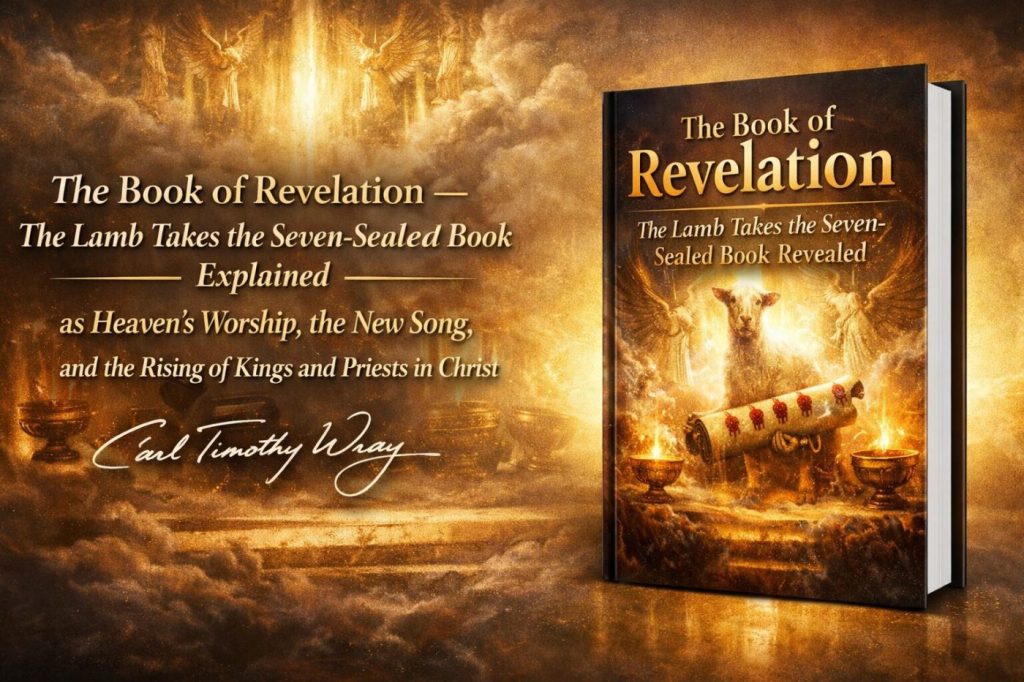
The Book of Revelation — The Lamb Takes the Seven-Sealed Book Explained as Heaven’s Worship, the New Song, and the Rising of Kings and Priests in Christ
Book of Revelation: Author
Carl Timothy Wray is a Bible teacher and author dedicated to unveiling the deeper spiritual meaning of Scripture, with a special focus on the Book of Revelation and the mystery of Christ revealed in His people. His writing explores themes of sonship, the kingdom of God, and the transformative work of Christ within the believer. Drawing from years of study and spiritual insight, Carl presents Revelation not as a book of fear or catastrophe, but as a powerful unveiling of Jesus Christ and the emergence of a people who carry His life, authority, and love into the world. Through clear teaching and Spirit-centered interpretation, his work invites readers to see Revelation as a living message unfolding within the hearts and lives of God’s people today.
In The Book of Revelation — The Lamb Takes the Seven-Sealed Book Revealed, readers are guided into one of the most powerful scenes in the entire Bible: the moment when the Lamb takes the sealed scroll from the hand of God. Rather than presenting Revelation as a book of destruction or end-time speculation, this study reveals its deeper spiritual message—the unveiling of Jesus Christ within His people. Exploring Revelation chapter five verse by verse, the book explains the meaning of heaven’s worship, the mystery of the new song, the prayers of the saints as golden bowls of incense, and the declaration that believers are made kings and priests unto God. This book is perfect for readers seeking a deeper understanding of Revelation, the seven-sealed book, the identity of the Lamb, and the calling of the sons of God in God’s unfolding kingdom.
Book of Revelation: Introduction
(Book 2 – The Lamb Takes the Seven-Sealed Book)
One of the most powerful and mysterious moments in the entire Book of Revelation occurs when the Lamb approaches the throne of God and takes the seven-sealed book from the right hand of the One seated upon the throne.
John writes:
“And He came and took the book out of the right hand of Him that sat upon the throne.”
— Revelation 5:7
At first glance, the scene appears simple. A Lamb steps forward and takes a scroll. But heaven reacts as though the most important moment in the history of creation has just occurred. Instantly the four living creatures fall down before the Lamb. The twenty-four elders bow in worship. Harps begin to sound. Golden bowls filled with incense—the prayers of the saints—are lifted before the throne. Then a new song erupts in heaven:
“Thou art worthy to take the book, and to open the seals thereof.”
Soon the worship spreads outward like ripples across the universe. Angels join the proclamation. Myriads upon myriads of heavenly beings declare the worthiness of the Lamb. Finally every creature in heaven, on earth, under the earth, and in the sea joins the chorus of praise.
Why does heaven respond with such overwhelming worship?
What has just happened that causes all creation to erupt with praise?
The answer lies in understanding the mystery of the seven-sealed book.
In the previous book of this series we explored the meaning of the scroll itself. We saw that the seven-sealed book is not merely a literal document, nor simply a prophecy of future events. The scroll represents the life, nature, and purpose of Christ written within a people. It is the revelation of God expressed through those who bear His image.
But the book remained sealed.
No man in heaven, nor in earth, nor under the earth was found worthy to open it. Human wisdom could not open it. Religious systems could not unveil it. Even the greatest prophets and apostles could not break its seals.
Only one was found worthy.
The Lamb.
Now we arrive at the moment when the Lamb steps forward and takes the scroll from the hand of the Father. This moment represents far more than a symbolic act in heaven. It marks the beginning of the unveiling of Christ in His people and the unfolding of God’s redemptive purpose within creation.
The taking of the scroll signals that the time has come for the hidden life of Christ to be revealed. Heaven recognizes what has happened immediately, and that is why worship erupts around the throne.
This book explores the profound meaning of that moment.
We will look closely at the heavenly response to the Lamb. We will examine the significance of the harps and the golden bowls filled with incense. We will uncover the meaning of the new song sung by the elders. We will explore the declaration that God’s people are made kings and priests, destined to reign with Christ.
Most importantly, we will discover how the events described in Revelation chapter five are not merely scenes in heaven but realities unfolding within the people of God.
The Lamb has taken the book.
The unveiling has begun.
And heaven is already singing about what is about to be revealed.
Chapter 1
The Moment the Scroll Changes Hands
There are moments in Scripture that quietly change everything.
To the natural reader, they appear simple, almost unnoticed, yet in the realm of the Spirit they mark turning points in the purpose of God. Revelation chapter five contains one of those moments. It happens in a single verse, yet all heaven responds as though the destiny of creation has just shifted.
John records the moment with remarkable simplicity:
“And He came and took the book out of the right hand of Him that sat upon the throne.”
— Revelation 5:7
At first glance, it seems like nothing more than a symbolic action. A Lamb approaches the throne and takes a scroll from the hand of the One seated there. But when this happens, the entire atmosphere of heaven erupts. Worship bursts forth from every direction. The elders fall down. Harps begin to sound. Angels proclaim with thunderous voices. Creation itself joins the song.
Why?
Because this is the moment when the sealed purpose of God begins to be unveiled.
The Scroll in the Right Hand of God
Before we can understand the significance of this moment, we must remember where the scroll was located. John tells us the book was in the right hand of Him who sat upon the throne.
Throughout Scripture, the right hand represents power, authority, and dominion.
Moses declared:
“Thy right hand, O Lord, is become glorious in power.”
— Exodus 15:6
The psalmist wrote:
“The right hand of the Lord doeth valiantly.”
— Psalm 118:16
And in the New Testament we are told that Christ Himself has been exalted to the right hand of God.
The right hand is therefore not merely a location. It represents the realm of divine authority—the place from which God governs His creation and executes His purpose.
So when John sees the scroll in the right hand of God, he is seeing something profound. The scroll represents the hidden purpose of God for creation. It contains the mystery of redemption, the revelation of Christ, and the destiny of humanity.
But the book is sealed.
Seven seals hold it shut, and no one in heaven or earth has the authority to break them.
For a moment it appears that the mystery will remain forever hidden.
The Search for Someone Worthy
Just before this moment occurs, John witnesses a dramatic search.
A strong angel proclaims with a loud voice:
“Who is worthy to open the book, and to loose the seals thereof?”
— Revelation 5:2
Notice the question carefully. The angel does not ask who is intelligent enough to open the book, or who is powerful enough to open it. The question is about worthiness.
Worthiness speaks of character. It speaks of nature. It speaks of someone who perfectly fulfills the will of God.
The search spreads across three realms:
- Heaven
- Earth
- Under the earth
Yet John tells us that no one is found worthy.
Not angels.
Not prophets.
Not apostles.
Not kings.
No one possesses the authority or the nature required to open the scroll of God’s purpose.
John begins to weep.
His tears represent the deep longing of humanity. If the book cannot be opened, then the mystery of redemption remains sealed. The hope of creation remains unrealized.
But then one of the elders speaks words that change everything.
The Lion Who Is the Lamb
The elder says to John:
“Weep not: behold, the Lion of the tribe of Judah, the Root of David, hath prevailed to open the book.”
— Revelation 5:5
Immediately John turns to see the Lion.
But when he looks, he does not see a lion at all.
Instead he sees a Lamb standing as though it had been slain.
Here we encounter one of the most beautiful paradoxes in all of Scripture. The Lion who conquers is revealed as a Lamb who was sacrificed.
The victory of Christ did not come through brute force or earthly power. It came through sacrificial love.
The Lamb conquered by laying down His life.
And because of that victory, the Lamb alone is worthy.
The Lamb Approaches the Throne
Now the moment arrives.
The Lamb steps forward from the midst of the throne. He moves toward the One seated upon the throne and takes the scroll from His right hand.
This act represents something extraordinary.
It reveals that the authority of heaven has been entrusted to the Lamb. The purpose of God for creation has been placed into His hands. The unfolding of redemption now proceeds through Him.
The Lamb is not merely receiving a book. He is receiving the authority to unveil the mystery hidden within it.
He is the mediator of God’s purpose.
He is the One through whom the sealed destiny of humanity will be revealed.
The Beginning of the Unveiling
The moment the Lamb takes the scroll, heaven immediately understands what has happened.
The time has come for the seals to be broken.
The hidden life of Christ is about to be unveiled.
What has been written within the heart of God will now be revealed through the Lamb and through the people who bear His life.
This is why heaven erupts in worship.
The elders fall down before the Lamb.
The harps begin to sound.
The bowls of incense are lifted before the throne.
A new song rises in heaven.
All creation begins to acknowledge the worthiness of the Lamb.
The moment the scroll changes hands, the unveiling of Christ has officially begun.
The Scroll and the People of God
While the scene John describes takes place in heaven, its meaning reaches far beyond the throne room.
The scroll represents the revelation of Christ written within the people of God. It is the unfolding of His life, His nature, and His kingdom through those who belong to Him.
The seals represent the barriers that have hidden that life—fear, pride, fleshly thinking, and the remnants of the old Adamic nature.
When the Lamb takes the scroll, it means that Christ Himself is beginning the process of unveiling His life within His people.
The Lamb who redeemed humanity now begins the work of revealing His image within them.
This is not merely an event in heaven.
It is a work happening within the hearts of those who follow the Lamb.
Heaven Recognizes the Moment
The moment the Lamb takes the scroll, heaven recognizes that the greatest unveiling in history is about to begin.
That is why worship erupts.
Heaven sees what is coming.
The seals will be broken.
The life of Christ will be revealed.
Kings and priests will arise.
Creation itself will begin to experience restoration.
All of this begins with a single moment.
The Lamb has taken the book.
And heaven cannot remain silent.
Chapter 2
Why Heaven Falls Down in Worship
The moment the Lamb takes the scroll from the right hand of the One seated upon the throne, heaven responds immediately. There is no hesitation, no confusion, and no delay. The response is instant and overwhelming.
John writes:
“And when He had taken the book, the four living creatures and the twenty-four elders fell down before the Lamb, having every one of them harps, and golden bowls full of incense, which are the prayers of the saints.”
— Revelation 5:8
This scene reveals something profound. Heaven does not merely observe what has happened. Heaven recognizes it. And the recognition produces worship.
The elders fall down before the Lamb because they understand what the taking of the scroll means. The authority to unveil the purpose of God has now been placed into the hands of Christ.
The Lamb is worthy.
And heaven knows it.
The Meaning of Falling Down
Throughout Scripture, falling down before someone represents the acknowledgment of their authority and worth.
When kings were honored in ancient times, people bowed before them. When prophets encountered the presence of God, they fell upon their faces. When the glory of the Lord filled the temple, priests could not stand to minister.
Falling down is the natural response to overwhelming glory.
But here in Revelation the worship is directed toward the Lamb.
This is significant.
The Lamb who was slain is now recognized as the One worthy of the same honor given to the One seated upon the throne. The elders do not hesitate to worship Him because they understand His identity.
He is not merely a servant of God.
He is the full expression of God’s redemptive love and authority.
He is the One who has prevailed.
The Four Living Creatures
Before we continue, we should understand who these worshipers are.
John first mentions the four living creatures.
These mysterious beings appear earlier in Revelation chapter four around the throne of God. They are described as having faces like a lion, an ox, a man, and an eagle. They are full of eyes, symbolizing awareness and perception, and they continually proclaim the holiness of God.
These living creatures represent the fullness of divine life expressed in creation. Many interpreters see in them the highest order of heavenly beings, constantly attentive to the throne.
When the Lamb takes the scroll, even these exalted beings fall down in worship.
Their response tells us that the Lamb’s authority is recognized in the highest realms of heaven.
The Twenty-Four Elders
Alongside the living creatures are the twenty-four elders.
These elders sit on thrones around the throne of God and wear crowns upon their heads. They represent the priestly and kingly people of God. Many see them as symbolizing the complete body of the redeemed—both the twelve tribes of Israel and the twelve apostles of the New Testament.
Their presence around the throne reminds us that the purpose of God always includes a people who share in His kingdom.
These elders represent those who will reign with Christ.
Yet even these crowned rulers fall down before the Lamb.
Why?
Because they know that their authority comes from Him.
Every crown in heaven ultimately belongs to the Lamb.
Worship Is the Recognition of Worth
The word worship comes from an old English word meaning worth-ship.
To worship is to recognize the worth of someone.
The elders fall down before the Lamb because they recognize His worthiness.
He is worthy because He conquered sin.
He is worthy because He overcame death.
He is worthy because He gave His life for the redemption of humanity.
And now He is worthy to open the sealed purposes of God.
Heaven sees the worth of the Lamb clearly. The elders and living creatures do not worship out of obligation or ritual. Their worship is the spontaneous response of those who have seen the greatness of the Lamb.
When worth is revealed, worship becomes inevitable.
Harps in Their Hands
John tells us that each of the elders holds a harp.
In Scripture, the harp represents praise and prophetic song. In the Old Testament, harps were used in the worship of the temple and in prophetic ministry.
When David played the harp, the Spirit of the Lord moved powerfully. The harp symbolizes the sound of heaven’s praise rising before the throne.
In this moment the elders are not silent observers. They participate in the worship of the Lamb. The harps represent the music of heaven celebrating the victory of Christ.
The unveiling of God’s purpose is accompanied by praise.
Where the Lamb is honored, worship begins to flow.
The Golden Bowls of Incense
Along with their harps, the elders hold golden bowls full of incense.
John tells us plainly what these bowls represent:
“which are the prayers of the saints.”
This revelation is both beautiful and powerful.
The prayers of God’s people do not disappear into the air. They are gathered, treasured, and preserved before the throne of God like precious incense.
Every cry for justice, every prayer for redemption, every longing for God’s kingdom is remembered.
These prayers rise before the throne and become part of the unfolding of God’s purpose.
The moment the Lamb takes the scroll, the prayers of the saints are brought forward. This reveals that the unveiling of Christ in the earth is deeply connected to the prayers of God’s people.
Prayer participates in the movement of heaven.
Worship and the Kingdom of God
The scene in Revelation reminds us of an important principle: worship always precedes the manifestation of the kingdom.
Before the seals are opened…
Before judgment begins…
Before the purposes of God unfold…
Heaven worships.
Worship aligns heaven and earth with the authority of the Lamb.
When the Lamb is honored, the atmosphere changes. The throne becomes the center of attention, and everything in creation begins to move according to the will of God.
This is why worship is so central to the life of God’s people.
Worship is not merely singing songs. It is the recognition that Christ alone is worthy to rule.
Heaven’s Response Reveals the Future
The worship of the elders and the living creatures reveals something about the future that is about to unfold.
They understand that the taking of the scroll marks the beginning of the unveiling of Christ’s kingdom. The seals will be opened. The purposes of God will be revealed. The authority of the Lamb will spread throughout creation.
Heaven celebrates because it sees the outcome before the process even begins.
The Lamb will prevail.
And those who belong to Him will share in His victory.
Chapter 3
The Harps and the Golden Bowls
When the Lamb takes the scroll and heaven falls down in worship, John notices two things in the hands of the elders.
They are holding harps and golden bowls full of incense.
John writes:
“And when He had taken the book, the four living creatures and the twenty-four elders fell down before the Lamb, having every one of them harps, and golden bowls full of incense, which are the prayers of the saints.”
— Revelation 5:8
This scene is rich with meaning. The objects in the hands of the elders reveal something about how the purposes of God unfold in the earth.
The harps represent the sound of heaven, while the bowls of incense represent the prayers of God’s people. Together they show us that the unfolding of God’s kingdom involves both praise and prayer.
The unveiling of Christ does not happen in silence. It is surrounded by the sound of worship and the fragrance of intercession.
The Harp: The Sound of Heaven
In the Scriptures, the harp is often associated with praise and prophetic worship.
King David frequently played the harp as he sang before the Lord. When he played, the Spirit of God moved in powerful ways. In fact, when David played for King Saul, the troubling spirit that tormented Saul departed.
The harp therefore represents more than music. It represents a sound that releases the presence and power of God.
Throughout the Bible, worship is connected to spiritual breakthrough. When the people of God lift their voices in praise, the atmosphere changes.
Walls fall.
Chains break.
Hearts are softened.
The harp in the hands of the elders reminds us that heaven is never silent when the Lamb is honored. Worship flows continually around the throne because heaven recognizes the worth of Christ.
Worship as Agreement With Heaven
The worship represented by the harps is not merely emotional expression. It is an agreement with the authority and victory of the Lamb.
When heaven worships the Lamb, it is declaring that Christ has prevailed. It is proclaiming that His sacrifice has secured the redemption of humanity and that His kingdom will ultimately fill the earth.
Worship is therefore a declaration of truth.
It proclaims that the Lamb is worthy.
It proclaims that the Lamb has overcome.
And it proclaims that the Lamb will reign.
Every note of heaven’s worship testifies to the victory of Christ.
The Golden Bowls of Incense
Alongside the harps, John sees the elders holding golden bowls filled with incense.
In the Old Testament temple, incense was burned before the Lord as a symbol of prayer. The fragrant smoke rising from the altar represented the prayers of God’s people ascending into His presence.
Psalm 141 expresses this beautifully:
“Let my prayer be set forth before thee as incense.”
— Psalm 141:2
John confirms this meaning when he tells us plainly that the bowls of incense are the prayers of the saints.
This means that every prayer offered by the people of God is preserved before the throne. The cries of believers throughout history have not been forgotten.
Every prayer for justice…
Every cry for redemption…
Every longing for God’s kingdom to come…
All of these prayers are gathered like precious incense in the bowls before the Lamb.
Prayer and the Unfolding of God’s Purpose
One of the most striking aspects of this vision is the connection between prayer and the unfolding of God’s plan.
The moment the Lamb takes the scroll, the prayers of the saints appear before Him. This shows that the prayers of God’s people are deeply connected to the revelation of His purposes.
Prayer is not merely a religious exercise. It is participation in the work of God.
When believers pray for the kingdom of God to come, they are aligning themselves with the unfolding plan of heaven. Their prayers become part of the divine process through which God brings His purposes to pass.
The bowls of incense reveal that God treasures the prayers of His people and uses them in the unfolding of His kingdom.
The Fragrance of the Saints
Incense also carries another meaning. It produces a fragrance.
Throughout Scripture, the lives and prayers of God’s people are described as a sweet fragrance before the Lord.
Paul wrote:
“For we are unto God a sweet savour of Christ.”
— 2 Corinthians 2:15
This means that the devotion, faithfulness, and love of God’s people rise before Him like a pleasing aroma.
The prayers of the saints are precious because they come from hearts that love God and long for His will to be done. Each prayer offered in faith becomes part of the fragrance that fills the throne room of heaven.
Prayer Precedes the Breaking of the Seals
It is important to notice where the bowls of incense appear in the vision.
They appear before the seals are opened.
This is not accidental.
Before the Lamb begins to break the seals of the scroll, the prayers of the saints are presented before Him. This reveals that the prayers of God’s people are connected to the unfolding of the events that follow.
The longing of believers for God’s kingdom, justice, and redemption becomes part of the process through which His purposes are revealed.
Prayer prepares the way for the movement of God.
Heaven Listens to the Prayers of the Earth
The vision John sees reminds us that heaven is deeply attentive to what happens on earth.
The cries of God’s people do not vanish into emptiness. They are heard, treasured, and remembered.
For generations believers have prayed:
“Your kingdom come.”
“Your will be done on earth as it is in heaven.”
These prayers are not forgotten. They rise continually before the throne like incense in golden bowls.
And when the Lamb takes the scroll, heaven reveals that the time has come for those prayers to begin finding their fulfillment.
Praise and Prayer Together
The harps and the bowls together present a powerful picture.
Worship and prayer work together in the unfolding of God’s purposes.
Worship exalts the Lamb.
Prayer invites the kingdom.
Together they create an atmosphere where heaven and earth meet.
The elders holding harps and bowls show us that the people of God are called to both praise the Lamb and pray for the manifestation of His kingdom.
These two actions—praise and prayer—prepare the way for the unveiling of Christ in the earth.
The Throne Responds
As the elders lift their worship and present the bowls of incense, heaven prepares for the next moment in the unfolding vision.
The sound of worship fills the throne room.
The fragrance of prayer rises before God.
Then something remarkable happens.
A new song begins to be sung.
The elders declare the worthiness of the Lamb and celebrate the redemption He has accomplished.
This new song reveals the identity and destiny of the redeemed people of God.
In the next chapter we will explore the meaning of this new song of heaven and why it declares that those redeemed by the Lamb are made kings and priests unto God.
Chapter 4
The New Song of the Redeemed
As the harps sound and the golden bowls of incense are lifted before the throne, heaven begins to sing.
But this is not an ordinary song.
It is something entirely new.
John writes:
“And they sung a new song, saying, Thou art worthy to take the book, and to open the seals thereof: for thou wast slain, and hast redeemed us to God by thy blood out of every kindred, and tongue, and people, and nation.”
— Revelation 5:9
The worship that fills heaven now takes on a deeper dimension. What began as falling down before the Lamb becomes a declaration of His victory and the redemption He has accomplished.
This song is called a new song, and that phrase carries tremendous significance throughout Scripture.
What Is a New Song?
In the Bible, the phrase new song always appears when God does something fresh, powerful, and transformative among His people.
The psalmist often spoke about singing a new song to the Lord:
“Sing unto the Lord a new song; for He hath done marvelous things.”
— Psalm 98:1
A new song is not simply a different melody. It is a response to a new revelation of what God has done.
When God reveals a deeper dimension of His power or love, the people of God respond with fresh praise. Their experience of God expands, and a new expression of worship rises from their hearts.
The new song in Revelation celebrates the greatest revelation of all—the redemptive victory of the Lamb.
The Worthiness of the Lamb
The first words of the new song declare the worthiness of Christ.
“Thou art worthy to take the book, and to open the seals thereof.”
Heaven is proclaiming that the Lamb alone possesses the authority to unveil the scroll. No one else in heaven or earth could accomplish what Christ has done.
His worthiness comes from His sacrifice.
The song continues:
“For thou wast slain…”
The Lamb is worthy because He gave His life.
His sacrifice was not a defeat. It was the decisive victory over sin, death, and the powers of darkness. Through the cross, Christ accomplished the redemption of humanity and secured the future restoration of creation.
Heaven celebrates this victory with unrestrained praise.
Redeemed by the Blood
The song also declares the result of the Lamb’s sacrifice.
“Thou hast redeemed us to God by thy blood.”
Redemption means to purchase or rescue something at a cost. Humanity had been trapped under the power of sin and separated from the life of God.
Through His sacrifice, the Lamb paid the price for humanity’s restoration.
But the redemption described here is not limited to a single group of people.
The song celebrates a redemption that reaches across the entire earth.
John writes that those redeemed by the Lamb come from every tribe, language, people, and nation.
This means that the work of Christ is universal in its reach. The Lamb has opened the door of redemption for all humanity.
The kingdom of God is not confined to one race or culture. It embraces people from every corner of the earth.
A New Identity
The new song does more than celebrate redemption. It also reveals the identity of those who have been redeemed.
The Lamb has not merely rescued people from sin. He has brought them into a new relationship with God.
The redeemed now belong to Him.
They are no longer defined by their past or by the broken systems of the world. They are defined by the work of Christ.
The song declares that they are redeemed to God.
This phrase emphasizes restoration. The purpose of redemption is not merely forgiveness but reconciliation. Humanity is restored to fellowship with the Creator.
Through the Lamb, the broken relationship between God and humanity is healed.
The Song of Heaven Becomes the Song of the Church
The new song sung in heaven eventually becomes the song of God’s people on earth.
Believers throughout history have sung about the redemption accomplished by Christ. From the earliest days of the church until now, songs celebrating the sacrifice and victory of the Lamb have filled gatherings of worship.
Every time believers sing about the cross, the resurrection, and the redemption of Christ, they are echoing the song that first arose in heaven.
The church joins the worship of heaven whenever it celebrates the worthiness of the Lamb.
A Song That Declares the Future
The new song does not merely celebrate what Christ has already done. It also points toward what He is about to do.
By declaring that the Lamb is worthy to open the scroll, the song acknowledges that the unfolding of God’s purpose is about to begin.
The seals will be broken.
The mysteries of the scroll will be revealed.
The kingdom of God will advance.
Heaven celebrates because it knows the outcome. The Lamb who was slain will ultimately reign over all creation.
Worship That Proclaims the Kingdom
The new song is more than praise—it is proclamation.
It announces the victory of Christ.
It declares the redemption of humanity.
And it celebrates the unfolding of God’s kingdom.
Every word of the song proclaims that the Lamb has prevailed and that His authority will ultimately extend over all things.
Heaven’s worship becomes a prophetic declaration of what is coming.
The Song Continues
As the new song rises before the throne, its message expands even further.
The elders will soon proclaim something astonishing about those who have been redeemed by the Lamb.
They will declare that the redeemed are not merely forgiven—they are made kings and priests unto God.
This revelation unveils the destiny of those who belong to Christ.
In the next chapter we will explore this powerful declaration and what it means for the people of God to share in the kingdom and priesthood of the Lamb.
Chapter 5
Made Kings and Priests Unto God
As the new song continues to rise before the throne, heaven declares something remarkable about the people redeemed by the Lamb. The worship of the elders does not stop with celebrating redemption. It moves into revealing the destiny of those who have been redeemed.
John records the words of the song:
“And hast made us unto our God kings and priests: and we shall reign on the earth.”
— Revelation 5:10
This declaration reveals one of the most profound truths in the entire Book of Revelation. The work of the Lamb does more than forgive sin or restore relationship with God. It establishes a new identity and a new calling for those who belong to Him.
The redeemed are made kings and priests.
This statement unveils the purpose of God for humanity from the very beginning.
The Original Purpose of Humanity
When God created humanity, He gave them authority within creation.
In Genesis we read:
“Let us make man in our image, after our likeness: and let them have dominion…”
— Genesis 1:26
Human beings were created to reflect the image of God and to exercise stewardship over the earth. They were designed to live in fellowship with God and to represent His authority within creation.
But this purpose was disrupted when sin entered the world. The dominion humanity was meant to exercise became distorted, and the relationship between God and humanity was fractured.
Through the work of Christ, that original purpose begins to be restored.
The Lamb redeems humanity not only from sin but also for their intended destiny.
The Meaning of Kingship
The song declares that the redeemed are made kings.
Kingship represents authority, leadership, and the ability to govern. In the kingdom of God, this authority is not about domination or control. Instead, it reflects the righteous rule of Christ.
The authority given to the redeemed is the authority to represent the character and purposes of God in the world.
Jesus spoke about this kind of authority when He told His disciples:
“All power is given unto me in heaven and in earth.”
— Matthew 28:18
The authority of Christ is the foundation for the authority given to His people. As those who belong to Him, believers participate in His kingdom and share in His mission.
To be made kings means that the redeemed are called to live under the lordship of Christ while participating in the advance of His kingdom.
The Meaning of Priesthood
Alongside kingship, the song declares that the redeemed are also priests.
Priests serve as mediators between God and people. In the Old Testament, priests offered sacrifices and represented the people before God.
In the New Testament, this idea expands dramatically. Through Christ, believers themselves become a priestly people.
The apostle Peter wrote:
“Ye are a chosen generation, a royal priesthood, an holy nation.”
— 1 Peter 2:9
As priests, believers have direct access to the presence of God. They are able to approach Him in prayer and worship, and they are called to represent His love and truth to the world.
Priesthood therefore involves both intimacy with God and ministry toward others.
The Union of Kingship and Priesthood
In ancient Israel the roles of king and priest were usually separated. Kings governed the nation, while priests served in the temple.
But in Christ these two roles come together.
Jesus is both King and High Priest.
He reigns with authority and also mediates the presence of God to humanity. Because believers are united with Christ, they share in this dual calling.
They are a people who both reign with Christ and minister in His presence.
This union of kingship and priesthood reveals the fullness of God’s purpose for His people.
Reigning on the Earth
The song concludes with a powerful statement:
“And we shall reign on the earth.”
This declaration points to the ultimate restoration of creation under the authority of Christ.
The reign described here is not about political power or earthly domination. It refers to the establishment of the kingdom of God throughout the earth.
When Christ reigns, His righteousness, justice, and peace transform the world.
The redeemed participate in this reign as they reflect the character and authority of the Lamb.
They become instruments through whom the life of Christ flows into the world.
A Kingdom of Priests
The idea that God’s people are both kings and priests appears earlier in the Book of Revelation.
In the opening chapter John writes:
“Unto him that loved us, and washed us from our sins in his own blood, and hath made us kings and priests unto God and his Father.”
— Revelation 1:5–6
From the very beginning of the book, the destiny of the redeemed is connected to this identity.
They are not merely forgiven individuals waiting for heaven. They are participants in the kingdom of God.
They are called to live as representatives of Christ’s authority and ambassadors of His grace.
Living as Kings and Priests Today
Although the full manifestation of this kingdom lies in the future, the identity of kings and priests begins to shape the lives of believers now.
As priests, believers cultivate a life of worship, prayer, and intimacy with God.
As kings, they learn to walk in the authority and wisdom that comes from Christ.
They represent His love, justice, and truth in their communities and relationships.
The life of the kingdom begins to appear wherever the character of Christ is expressed through His people.
Heaven Celebrates the Destiny of the Redeemed
The new song sung in heaven celebrates not only what Christ has done but also what His redemption makes possible.
The Lamb has opened the way for humanity to be restored to their original calling.
Through Him, a people are being formed who will share in His kingdom and reflect His glory.
This is why heaven rejoices.
The redemption accomplished by the Lamb is not a small victory. It is the beginning of the restoration of humanity and the renewal of creation.
As the declaration of kings and priests echoes through heaven, the circle of worship expands even further. Myriads of angels join the song and proclaim with thunderous voices the worthiness of the Lamb.
In the next chapter we will explore the response of the angels and the vast multitude that fills heaven with praise.
Chapter 6
The Voice of Ten Thousand Times Ten Thousand
After the elders declare the new song and reveal that the redeemed are made kings and priests unto God, the worship in heaven expands beyond the throne.
What began with the four living creatures and the twenty-four elders suddenly spreads throughout the entire heavenly realm.
John writes:
“And I beheld, and I heard the voice of many angels round about the throne and the living creatures and the elders: and the number of them was ten thousand times ten thousand, and thousands of thousands.”
— Revelation 5:11
The throne room, which was already filled with worship, now becomes a vast chorus of voices.
Angels surround the throne in numbers beyond human counting. Their voices rise together in praise of the Lamb.
The scene reveals something profound about heaven: the victory of Christ is celebrated by all creation.
The Multitude of Angels
John describes the angels as numbering ten thousand times ten thousand, and thousands of thousands.
This expression was a way of describing an immeasurable multitude. It communicates that the number of angels surrounding the throne is beyond calculation.
The throne of God is not a lonely place. It is the center of a vast heavenly kingdom filled with living beings who serve and worship the Lord.
The book of Hebrews also speaks about this immense host of angels:
“Ye are come unto mount Sion… and to an innumerable company of angels.”
— Hebrews 12:22
These angels are ministers of God’s purposes. They serve Him continually and carry out His will throughout the universe.
When the Lamb takes the scroll, they join the worship because they recognize the magnitude of what has just happened.
Angels Celebrate the Victory of the Lamb
Angels have watched the story of redemption unfold.
They witnessed the creation of humanity.
They saw the tragedy of sin entering the world.
They observed the unfolding plan of God throughout the centuries.
They were present when Christ was born.
They watched the Lamb walk the earth.
And they saw the moment when the Son of God gave His life on the cross.
The angels understand the significance of what Christ has accomplished. They know that His sacrifice has secured the restoration of humanity and the ultimate renewal of creation.
So when the Lamb takes the scroll, they erupt in praise.
The Sevenfold Declaration of Worthiness
The angels proclaim their worship with a powerful declaration.
John writes:
“Saying with a loud voice, Worthy is the Lamb that was slain to receive power, and riches, and wisdom, and strength, and honour, and glory, and blessing.”
— Revelation 5:12
This proclamation contains seven attributes, forming a complete declaration of the Lamb’s worthiness.
Each word highlights a dimension of the authority and glory that belongs to Christ.
Power
The Lamb possesses all authority in heaven and earth. His victory over sin and death establishes Him as the rightful ruler of creation.
Riches
The riches of Christ refer to the immeasurable abundance of His kingdom. All the treasures of wisdom, grace, and life belong to Him.
Wisdom
Christ embodies the wisdom of God. Through Him the mysteries of God’s plan are revealed and the purposes of heaven are fulfilled.
Strength
The Lamb possesses the strength to accomplish everything God has purposed. No power in heaven or earth can resist His authority.
Honor
Honor is the recognition of the Lamb’s rightful position. Heaven acknowledges that Christ deserves reverence and respect above all.
Glory
Glory refers to the radiant manifestation of God’s presence and power. The Lamb shares fully in the glory of the Father.
Blessing
Blessing expresses the gratitude and praise of creation toward the Lamb who has redeemed and restored.
Together these seven attributes form a complete picture of Christ’s supremacy.
The Lamb Who Was Slain
Even in the midst of this magnificent praise, the angels remember something essential.
They call Him “the Lamb that was slain.”
The glory of Christ is forever connected to His sacrifice.
He did not seize authority by force.
He did not conquer through violence.
He overcame through love, obedience, and self-giving sacrifice.
The cross remains the foundation of His kingdom.
The Lamb reigns because He gave His life.
Worship That Fills Heaven
As the angels proclaim the worthiness of the Lamb, the sound of worship grows stronger and stronger.
What began as the song of the elders becomes the voice of an immense multitude.
The throne room is filled with praise.
Every voice declares that the Lamb is worthy.
The entire heavenly realm acknowledges that Christ alone has the authority to unveil the purposes of God.
The Expansion of Worship
But the worship does not stop with the angels.
John soon sees something even more astonishing.
The praise that began in heaven spreads outward until all creation joins the song.
Heaven…
Earth…
The sea…
Every living creature begins to respond to the worthiness of the Lamb.
The worship that began around the throne becomes the worship of the entire universe.
In the next chapter we will see how the praise of the Lamb expands beyond heaven to include every part of creation, revealing the ultimate destiny of the universe under the reign of Christ.
Chapter 7
Every Creature Joins the Song
As the voices of angels fill the throne room with praise, the worship surrounding the Lamb expands even further. What began with the four living creatures and the twenty-four elders, and then spread to the innumerable host of angels, now reaches beyond heaven itself.
John records a moment that reveals the ultimate destiny of creation.
“And every creature which is in heaven, and on the earth, and under the earth, and such as are in the sea, and all that are in them, heard I saying, Blessing, and honour, and glory, and power, be unto him that sitteth upon the throne, and unto the Lamb for ever and ever.”
— Revelation 5:13
This statement is breathtaking.
The praise that began around the throne now spreads until every realm of creation joins the song. Heaven, earth, the depths of the earth, and the sea all respond to the worthiness of the Lamb.
The vision reveals that the victory of Christ will ultimately touch all creation.
Worship From Every Realm
John carefully lists the different realms of creation that participate in this worship.
He mentions creatures in heaven, on the earth, under the earth, and in the sea.
This language echoes the apostle Paul’s declaration in Philippians:
“That at the name of Jesus every knee should bow, of things in heaven, and things in earth, and things under the earth.”
— Philippians 2:10
The message is clear.
No realm of existence lies outside the reach of Christ’s authority.
The victory of the Lamb extends across the entire universe.
The worship John hears is therefore not limited to angels or redeemed humanity. It is the voice of creation itself responding to its rightful King.
Creation Longing for Restoration
The participation of creation in this song connects with a theme found throughout the New Testament.
Paul wrote in Romans:
“For the earnest expectation of the creation waiteth for the manifestation of the sons of God.”
— Romans 8:19
Creation has been affected by the brokenness introduced by sin. The world has experienced corruption, suffering, and decay.
But the work of Christ does not merely restore humanity. It ultimately leads to the renewal of the entire creation.
The song of Revelation 5 hints at that future restoration. Creation itself rejoices because the Lamb has taken the scroll and begun the unfolding of God’s redemptive plan.
Blessing, Honor, Glory, and Power
The worship of creation contains four powerful declarations.
“Blessing, and honour, and glory, and power, be unto him that sitteth upon the throne, and unto the Lamb for ever and ever.”
Each of these words expresses a different aspect of praise.
Blessing acknowledges the goodness and generosity of God.
Honor recognizes the rightful authority and dignity of the King.
Glory celebrates the radiant presence and majesty of God.
Power declares that all authority belongs to Him.
These four declarations unite heaven and earth in recognizing the supremacy of the One who sits on the throne and the Lamb who redeemed creation.
The Throne and the Lamb Together
One of the most striking aspects of this moment is that the worship is directed to both the One on the throne and the Lamb.
This reveals the unity between the Father and the Son.
The Lamb who was slain now shares fully in the glory and authority of the throne. Heaven and earth recognize that the rule of God is expressed through Christ.
The Lamb stands at the center of God’s redemptive plan and the center of heaven’s worship.
The Response of the Living Creatures
As the song of creation rises, the four living creatures respond with a simple yet powerful declaration.
John writes:
“And the four living creatures said, Amen.”
The word Amen means so be it or let it be fulfilled. It is the affirmation of heaven that the praise and recognition given to the Lamb are true and eternal.
The living creatures stand as witnesses to the righteousness and authority of God’s throne.
Their declaration confirms the truth of the worship rising from creation.
The Elders Fall Down in Worship
The vision concludes with the elders once again falling before the throne.
“And the four and twenty elders fell down and worshipped him that liveth for ever and ever.”
— Revelation 5:14
This moment brings the scene full circle.
The elders who first fell down before the Lamb now bow again as the worship of the entire universe surrounds the throne.
Their posture reflects the ultimate response to the glory of God—humble adoration and reverence.
Heaven recognizes that the Lamb who was slain is worthy of eternal worship.
The Beginning of the Unfolding Scroll
With this magnificent chorus of worship, the scene of Revelation chapter five reaches its climax.
The Lamb has taken the scroll.
Heaven has declared His worthiness.
The elders have revealed the destiny of the redeemed.
The angels have proclaimed His glory.
And creation itself has joined the song.
Now the moment has come for the Lamb to begin opening the seals.
The next chapters will reveal the unfolding of the scroll and the progressive unveiling of God’s purposes through Christ.
The worship of heaven prepares the way for the revelation that follows.
The Lamb who was slain is about to reveal the mysteries of the scroll—and through Him the plan of God for the ages will begin to unfold.
Chapter 8
The Lamb Begins to Open the Scroll
With the worship of heaven reaching its great crescendo, the vision John sees now moves into its next phase.
The Lamb has taken the scroll from the hand of the One seated on the throne. Heaven has declared His worthiness. The elders, angels, and all creation have lifted their voices in praise.
Now the moment arrives for the Lamb to do what no one else in heaven or earth could do.
He begins to open the seals of the scroll.
This act marks the beginning of the unfolding of God’s purposes.
The scroll that had been sealed now starts to reveal its contents as the Lamb breaks each seal. With every seal that is opened, another dimension of God’s plan begins to come into view.
The vision shifts from celebration to revelation.
The Authority of the Lamb
The breaking of the seals demonstrates the authority that belongs to Christ.
Only the Lamb was found worthy to open the scroll because He alone accomplished the redemption necessary to bring humanity back into fellowship with God. His sacrifice secured the right to unveil the purposes of heaven.
The authority of Christ to open the scroll reflects the victory of His finished work.
The cross did not merely defeat sin—it established Christ as the rightful administrator of God’s kingdom.
Because He has overcome, the Lamb now reveals the unfolding plan of God throughout history.
The Scroll of God’s Purposes
The scroll itself represents the divine plan that has been hidden within God’s counsel.
Throughout Scripture we see references to God’s purposes being written in a book or scroll.
The psalmist wrote:
“In thy book all my members were written, which in continuance were fashioned.”
— Psalm 139:16
Likewise, the prophet Daniel spoke about sealed visions that would be understood in the time appointed by God.
The scroll in Revelation contains the revelation of how God’s redemptive plan unfolds through the ages until the ultimate restoration of all things.
Each seal broken by the Lamb reveals another aspect of that plan.
Revelation Through Progressive Unveiling
The seals are not opened all at once.
Instead, they are broken one by one.
This reveals something important about the way God communicates His purposes.
God often reveals truth progressively. His plan unfolds step by step, line upon line, as His people grow in understanding.
Just as the scroll was sealed until the Lamb opened it, the deeper mysteries of God’s kingdom are revealed as Christ unveils them.
The Book of Revelation itself follows this pattern of progressive revelation. Each vision builds upon the previous one, gradually revealing the fullness of God’s plan.
The Witness of Heaven
When the Lamb begins to open the seals, heaven remains deeply involved in the unfolding process.
The four living creatures and the elders remain near the throne, watching as each seal is broken. Their presence reminds us that the events revealed in the seals are not random or chaotic.
They are part of the divine administration that flows from the throne of God.
The throne remains the center of authority throughout the entire Book of Revelation. Everything that unfolds does so under the sovereignty of God.
The Seals Reveal Christ
Although the seals introduce dramatic imagery and powerful events, their purpose is not simply to describe turmoil or judgment.
Their deeper purpose is to reveal Christ.
The breaking of the seals demonstrates how the authority of the Lamb transforms history and brings the purposes of God to fulfillment.
The seals reveal how the kingdom of Christ advances despite opposition and conflict within the world.
Every seal ultimately points back to the victory of the Lamb and the unfolding of His reign.
The Beginning of the Unveiling
The moment the Lamb begins to break the seals marks the transition from the heavenly worship of chapters four and five to the unfolding prophetic visions that follow.
The worship of heaven prepared the way for this unveiling.
Now the scroll that was once sealed begins to open, and the story of God’s redemptive plan moves forward.
The Lamb who was slain now reveals the mysteries of God’s kingdom.
The seals will show how Christ conquers, how the forces of darkness are overcome, and how the kingdom of God ultimately fills the earth.
The unveiling has begun.
And through the breaking of the seals, the Lamb will reveal the path that leads from the cross to the restoration of all things.
Book of Revelation: By Carl Timothy Wray

Book of Revelation Series
- Book of Revelation
- The Book of Revelation — The Seven-Sealed Book: The Unveiling of Christ in a People
- The Throne of God
- The Finished Work of Christ: Meaning, Key Scriptures & FAQs
- Join Our Facebook Page