 📺
📺
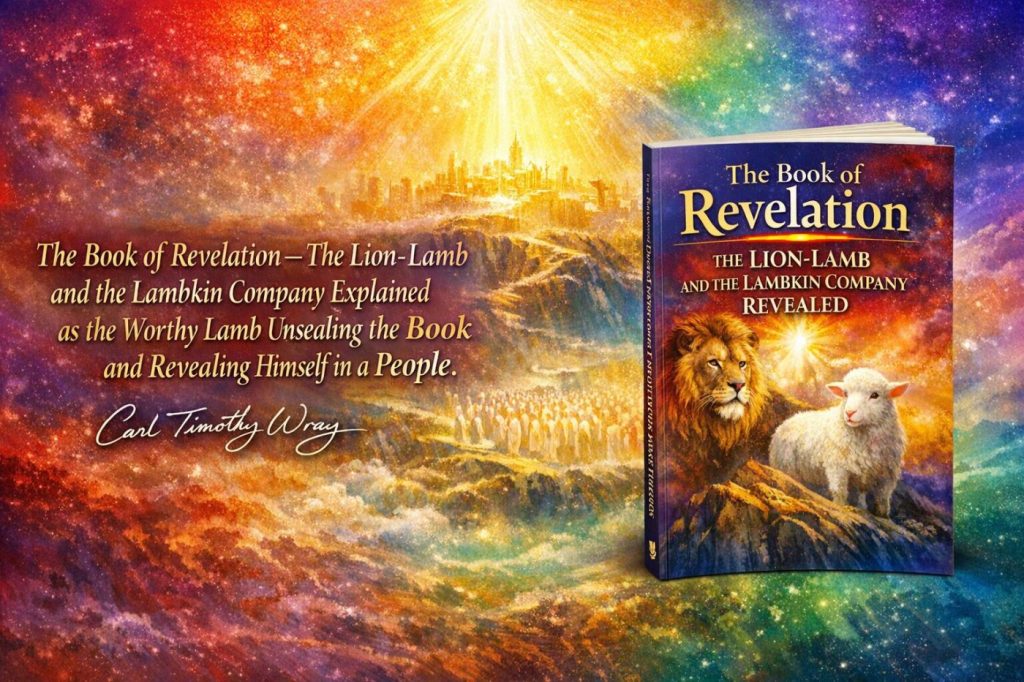
The Book of Revelation — The Lion-Lamb and the Lambkin Company Explained as the Worthy Lamb Unsealing the Book and Revealing Himself in a People
Book of Revelation: Author
By Carl Timothy Wray
Carl Timothy Wray is a Bible teacher and author devoted to unveiling the finished work of Christ and the deeper spiritual realities revealed in Scripture. Through extensive studies of the Book of Revelation and the prophetic writings of the Bible, his work explores the throne of God, the nature of Christ, and the manifestation of the sons of God in the earth. His writings emphasize the unveiling of Christ not only as the victorious Lamb upon the throne, but as the living reality of God expressed in His people. Carl Timothy Wray is the author of numerous studies on the Book of Revelation and the eternal purpose of God in Christ.
In The Book of Revelation — The Lion-Lamb and the Lambkin Company Revealed, Carl Timothy Wray explores the powerful vision of Revelation 5–6 where John hears of the Lion of the tribe of Judah yet sees a Lamb standing as slain in the midst of the throne. This Christ-centered study explains the meaning of the Lion-Lamb nature of Christ, the identity of the Lambkin company standing with Him on Mount Zion, and the spiritual significance of the seven spirits of God sent forth into all the earth. Moving beyond traditional interpretations, this book reveals how the Worthy Lamb unseals the scroll and unveils His life, authority, and nature within a people who are called to manifest the kingdom of God. Discover how the Book of Revelation reveals not merely prophetic events, but the unveiling of Christ in His many-membered body.
Book of Revelation: Introduction
The Lion John Expected — The Lamb John Saw
The fifth chapter of the Book of Revelation presents one of the most profound and startling revelations in all of Scripture. The apostle John, standing in the Spirit before the throne of God, hears a declaration that echoes through heaven:
“Behold, the Lion of the tribe of Judah, the Root of David, hath prevailed to open the book, and to loose the seven seals thereof” (Revelation 5:5).
The announcement is majestic. It speaks of power, dominion, kingship, and conquest. The Lion of Judah evokes the ancient prophecy spoken by the dying patriarch Jacob when he declared that the scepter would not depart from Judah. The Lion represents royal authority, fearless strength, and victorious rule.
Hearing this proclamation, John has every reason to expect to see a Lion — the King who conquers all enemies and establishes the dominion of God.
But when John turns to behold the Lion, he sees something entirely unexpected.
Instead of a roaring Lion, he beholds a Lamb.
“And I beheld, and, lo, in the midst of the throne… stood a Lamb as it had been slain” (Revelation 5:6).
Here is one of the greatest paradoxes in the whole of divine revelation. The Lion is a Lamb. The conqueror is the sacrifice. The King who prevails does so not through force, but through self-giving love.
The Lion conquers as a Lamb.
In this revelation the very nature of divine power is unveiled. Human power dominates, crushes, and compels. Divine power redeems, transforms, and restores. The Lamb who was slain stands in the midst of the throne because sacrificial love has triumphed over sin, death, and every enemy of God.
Yet the mystery of the Lion-Lamb does not end with Christ as an individual.
The Book of Revelation continues to unfold a deeper and more astonishing reality. The Lamb who stands in the throne does not remain alone. Later in the prophecy John beholds the Lamb standing upon Mount Zion, and with Him a company who bear His name and share His nature.
This company is what may be called the Lambkin company — a people who follow the Lamb wherever He goes and in whom the life and character of the Lamb are reproduced.
The Lion-Lamb who prevailed individually becomes the Head of a corporate expression. What Christ is in Himself, He now reveals within His body.
The Lion becomes a Lamb.
The Lamb becomes many lambs.
Thus the unveiling of Revelation is not merely about future events or catastrophic judgments. It is about the revelation of Christ — first in the throne, then in the Lamb, and finally in a people who share His nature and authority.
The scroll that no man could open is placed into the hands of the Worthy Lamb. As the seals are broken, the divine purpose unfolds. The Lamb reigns, the seven spirits of God are sent forth into the earth, and the sons of God emerge as participants in the victory of Christ.
This book explores that unfolding revelation.
It examines the mystery of the Lion of the tribe of Judah, the Lamb who was slain, the Lambkin company standing upon Mount Zion, and the seven spirits of God sent forth into all the earth. Through these symbols the Book of Revelation reveals not only the triumph of Christ, but the manifestation of His life and authority in a people.
For the ultimate purpose of God is not merely that Christ reign in heaven, but that Christ be revealed in His body.
The Lion-Lamb who stands in the throne is the same One who must be unveiled within His people.
And as the Lamb opens the book, the mystery of Christ begins to unfold — until the knowledge of the glory of the Lord fills the earth.
Chapter 1
The Lion of the Tribe of Judah
When John stood before the throne in the Spirit, he heard one of the elders proclaim a message of victory:
“Weep not: behold, the Lion of the tribe of Judah, the Root of David, hath prevailed to open the book, and to loose the seven seals thereof.”
— Revelation 5:5
This declaration is not merely a title for Christ; it is the culmination of a prophetic promise that stretches back to the earliest pages of Scripture. The phrase “Lion of the tribe of Judah” carries within it the entire history of God’s covenant purpose unfolding through the line of Judah.
To understand the significance of the Lion, we must return to the moment when the prophecy was first spoken.
The Prophecy of the Lion
Near the end of his life, the patriarch Jacob gathered his sons around him and began to speak prophetic words over each of them. When he came to Judah, his words carried a weight that would echo through generations.
“Judah is a lion’s whelp: from the prey, my son, thou art gone up:
he stooped down, he couched as a lion, and as an old lion; who shall rouse him up?
The sceptre shall not depart from Judah, nor a lawgiver from between his feet, until Shiloh come; and unto him shall the gathering of the people be.”
— Genesis 49:9–10
In this prophecy, Judah is compared to a lion — a symbol of authority, strength, and kingship. The lion is the ruler among beasts, fearless and dominant, and Jacob’s words reveal that the royal authority of Israel would arise from Judah’s lineage.
The promise of the scepter indicates rulership. The kingly authority of God’s covenant people would flow through the tribe of Judah until the coming of Shiloh, a mysterious title that points to the Messiah.
Thus, centuries before the birth of Christ, the prophetic line was already established: the coming ruler of God’s kingdom would arise from Judah, and he would possess the authority of a lion.
The Throne of David
The prophecy of the Lion continued to unfold through the history of Israel. From the tribe of Judah came the greatest king Israel ever knew — David.
David’s rise to the throne was not merely political; it was prophetic. God established a covenant with David that his throne would endure forever.
“Thine house and thy kingdom shall be established for ever before thee: thy throne shall be established for ever.”
— 2 Samuel 7:16
This promise pointed beyond David himself. No earthly king could reign forever, but the covenant was preparing the way for a greater son of David who would fulfill the promise of an eternal throne.
The prophets continually reinforced this expectation. Isaiah spoke of a coming ruler from David’s line whose government would have no end:
“Of the increase of his government and peace there shall be no end, upon the throne of David, and upon his kingdom.”
— Isaiah 9:7
Thus the prophetic expectation of Israel centered on a king — a conquering ruler who would arise from the line of David and establish the dominion of God.
This expectation formed the backdrop for John’s vision in Revelation.
When the elder announces the Lion of the tribe of Judah, heaven itself is declaring that the long-awaited king has arrived.
The Root and Offspring of David
In Revelation 5 the Lion is also called “the Root of David.” This phrase carries a profound mystery.
Christ is not only the descendant of David; He is also the root from which David came. In other words, Christ is both the source and the fulfillment of the Davidic kingdom.
This paradox reveals the eternal nature of Christ. As a man, He descended from David’s lineage. As the eternal Son of God, He is the very source from which David himself received life.
Later in the Book of Revelation, Jesus declares this truth plainly:
“I am the root and the offspring of David.”
— Revelation 22:16
Thus Christ stands at both the beginning and the end of the royal line. He is the origin of the kingdom and its final fulfillment.
The Lion of Judah is not merely another king in Israel’s history. He is the King in whom all kingship finds its meaning.
The Lion Who Prevails
The elder does not simply announce the Lion as a title; he declares that the Lion “hath prevailed.”
This word speaks of victory.
The Lion has overcome every enemy. Sin, death, hell, and the powers of darkness have all been defeated. The authority of the throne now belongs to the One who has prevailed.
Yet the nature of this victory is not what human minds would expect.
Throughout history, kings have prevailed through conquest and force. Empires have risen by the sword and maintained their power through domination.
But the victory of the Lion of Judah is entirely different.
When John turns to look at the Lion, he does not see a conquering beast standing over defeated enemies.
He sees something far more astonishing.
In the midst of the throne stands a Lamb as it had been slain.
The Great Paradox
The Lion is revealed as a Lamb.
The conqueror is the sacrifice.
The King prevails through self-giving love rather than violent domination.
This revelation overturns every earthly concept of power. The throne of God is not established through coercion or destruction; it is established through redemption.
The Lion conquers as a Lamb.
This is the mystery at the center of the gospel. The victory of Christ came through the cross. What appeared to be weakness was actually the greatest triumph in the history of creation.
Through the Lamb who was slain, sin was defeated, death was conquered, and the authority of the kingdom of God was secured forever.
The Lion and the Kingdom of God
Because the Lion has prevailed, the scroll of God’s purpose can now be opened.
The book sealed with seven seals contains the unfolding of God’s eternal plan. No angel, no prophet, and no man in heaven or earth was worthy to open it. Only the Lion of Judah could take the book and reveal its mysteries.
This is why the whole court of heaven erupts in worship when the Lamb receives the scroll. The victory of Christ means that the divine purpose will now unfold in fullness.
The Lion has prevailed.
The Lamb has taken the book.
The mystery of God is about to be revealed.
And as the seals are opened, a greater revelation begins to emerge.
The Lamb who stands alone in the throne will not remain alone.
The life of the Lion-Lamb will be reproduced in a people.
Chapter 2
The Lamb That Was Slain
When John turned to behold the Lion of the tribe of Judah, he expected to see the image of power — the conquering king who had prevailed over every enemy.
Instead, what appeared before his eyes was a sight that forever transformed the understanding of divine authority.
“And I beheld, and, lo, in the midst of the throne and of the four living creatures, and in the midst of the elders, stood a Lamb as it had been slain, having seven horns and seven eyes, which are the seven Spirits of God sent forth into all the earth.”
— Revelation 5:6
The Lion John heard about was revealed as a Lamb.
But not merely a lamb — a lamb that had been slain.
This is the great paradox at the center of the gospel and at the center of the Book of Revelation itself. The throne of God is occupied by One who conquered not by violence, but by sacrifice.
The King reigns because He gave His life.
The Lamb Foretold
The Lamb that John saw did not appear suddenly in Revelation. The image of the Lamb is woven throughout the entire story of Scripture.
The first hint appears in the earliest days of humanity’s fall.
When Adam and Eve sinned, they attempted to cover themselves with fig leaves. Yet God Himself provided garments of skins to clothe them. The shedding of blood became the first sign that redemption would come through sacrifice.
Later, when Abraham was commanded to offer Isaac upon the altar, Isaac asked a question that echoed through generations:
“Behold the fire and the wood: but where is the lamb for a burnt offering?”
— Genesis 22:7
Abraham’s answer pointed forward to a greater provision:
“My son, God will provide himself a lamb for a burnt offering.”
— Genesis 22:8
Centuries later, during the Passover in Egypt, the lamb again became the symbol of deliverance. Every household of Israel was commanded to take a spotless lamb and place its blood upon the doorposts of their homes.
When the destroying angel passed through the land, the blood of the lamb became the mark of salvation.
The lamb died so the people could live.
The Lamb Revealed
When John the Baptist first saw Jesus coming toward him, he declared the identity of Christ in words that echoed all these ancient sacrifices:
“Behold the Lamb of God, which taketh away the sin of the world.”
— John 1:29
In that moment the entire prophetic pattern came into focus. The lambs that had been sacrificed throughout Israel’s history were only shadows. They pointed toward the true Lamb who would offer Himself once for all.
Jesus Christ became the fulfillment of every sacrificial symbol.
He was the Lamb without blemish.
He was the Lamb who carried the sins of the world.
He was the Lamb whose blood would accomplish what countless sacrifices could never fully achieve.
The Lamb Slain Yet Standing
What John saw in Revelation is deeply significant. The Lamb he beheld had clearly been slain — yet the Lamb was standing in the midst of the throne.
This image reveals the victory of Christ.
The cross did not end the story. The Lamb who was slain rose again and now stands alive in the center of heaven’s government. The wounds remain as the eternal testimony of redemption, but the Lamb lives forever.
Thus the throne of God is forever marked by the sacrifice of Christ.
The authority of heaven rests upon redemption.
The King who reigns is the Lamb who was slain.
The Power of Sacrificial Victory
Human history is filled with rulers who sought power through domination and control. Empires have risen by the sword and fallen by the sword. The kingdoms of this world operate through fear, force, and self-exaltation.
But the kingdom of God operates according to an entirely different principle.
The Lamb prevails through love.
Christ did not conquer His enemies by destroying them. He conquered by laying down His life. Through His death, He defeated sin. Through His resurrection, He conquered death. Through His love, He overcame the powers of darkness.
The cross — which appeared to be defeat — became the greatest victory the universe has ever witnessed.
The Lamb who was slain has prevailed.
The Worthy Lamb
Because the Lamb offered Himself in perfect obedience and love, heaven declares that He alone is worthy to receive the scroll of God’s purposes.
Immediately after the Lamb takes the book, the entire heavenly court erupts in worship.
“Thou art worthy to take the book, and to open the seals thereof: for thou wast slain, and hast redeemed us to God by thy blood.”
— Revelation 5:9
The worthiness of Christ is rooted in His sacrifice.
He did not seize authority. He earned it through obedience unto death.
Because the Lamb gave Himself completely, the Father entrusted all authority into His hands.
The Seven Horns and Seven Eyes
John also observed that the Lamb possessed seven horns and seven eyes, which are the seven spirits of God sent forth into all the earth.
The horns represent power and authority. In Scripture, horns often symbolize strength and rulership. The number seven indicates completeness. Thus the Lamb possesses perfect authority.
The eyes represent vision and knowledge. Through the seven spirits of God, the Lamb sees and governs all things. Nothing in heaven or earth escapes His awareness.
This means the Lamb who was slain is also the Lamb who reigns.
The sacrifice of Christ did not weaken Him; it established His dominion.
The throne belongs to the Lamb.
The Foundation of the Kingdom
The vision of the slain Lamb standing in the throne reveals the foundation upon which the kingdom of God is built.
The kingdom is not founded upon force, domination, or human ambition. It is founded upon sacrificial love.
Everything in God’s government flows from the victory of the Lamb.
The authority of Christ…
the redemption of humanity…
the unfolding of God’s eternal purpose…
all flow from the moment when the Lamb offered Himself for the life of the world.
The Lamb and the People of God
Yet the mystery of the Lamb does not end with Christ alone.
Later in the Book of Revelation, John sees the Lamb standing upon Mount Zion — and with Him a company who bear His name and share His nature.
These are the ones who follow the Lamb wherever He goes.
The life of the Lamb has been reproduced within them.
The sacrifice that conquered the world now lives within a people who walk in the same spirit of obedience, humility, and love.
Thus the Lamb who was slain becomes the head of a corporate body.
The Lion who conquered as a Lamb will now reveal His life in many.
The Lamb becomes a company.
The Lamb becomes a people.
Chapter 3
The Lion Conquers as a Lamb
The vision given to John in Revelation 5 contains one of the greatest mysteries of the kingdom of God. When the elder announces the victory of Christ, he declares:
“Behold, the Lion of the tribe of Judah… hath prevailed.”
Everything about this proclamation suggests power, conquest, and royal dominion. The Lion is the king of beasts, the symbol of fearless authority and unstoppable strength.
Yet when John turns to look at the Lion, he does not see a roaring conqueror standing over defeated enemies.
He sees a Lamb.
This is the paradox at the center of divine revelation: the Lion conquers as a Lamb.
Two Visions of Power
Human history understands power in only one way — domination. Kings conquer territories, armies crush their enemies, and rulers secure authority through force.
The kingdoms of this world operate according to this principle. Authority is gained by overpowering others.
But the kingdom of God reveals a completely different kind of power.
Christ prevails not through violence, but through sacrifice. The Lion triumphs through the Lamb.
This is why the cross stands at the center of the gospel. What appeared to be weakness was actually the greatest demonstration of divine strength the universe has ever witnessed.
When Jesus was crucified, the rulers of this world believed they had defeated Him. Yet in that very act, Christ was accomplishing the victory that would overthrow the power of sin and death.
The Lion conquered by becoming the Lamb.
The Victory of the Cross
The apostle Paul described the triumph of Christ in words that reveal the hidden victory of the cross:
“Having spoiled principalities and powers, he made a show of them openly, triumphing over them in it.”
— Colossians 2:15
To human eyes the cross looked like defeat. But in the realm of the Spirit, the cross was the moment when the powers of darkness were stripped of their authority.
Sin was judged.
Death was defeated.
The dominion of the adversary was broken.
Through the sacrifice of the Lamb, the Lion prevailed.
This is why the Lamb stands in the throne. The authority of Christ is forever connected to His sacrificial victory.
The throne of heaven is occupied by the Lamb who was slain.
The Nature of the Kingdom
The Lion-Lamb revelation also reveals the true nature of God’s kingdom.
Earthly kingdoms are built on coercion. They expand through conquest and maintain control through fear.
But the kingdom of God advances through transformation.
Christ does not rule by crushing His enemies; He rules by redeeming them. The power of the kingdom lies not in force, but in love.
The Lamb conquers hearts.
This is why Jesus taught His followers a way of life that seemed completely opposite to the logic of worldly power.
He said the greatest must become the servant of all.
He said those who lose their lives for His sake will find them.
He said the meek will inherit the earth.
These teachings were not merely moral instructions; they were revelations of the kingdom’s nature.
The Lion rules as a Lamb.
The Strength of Meekness
In Scripture, meekness does not mean weakness. Meekness is strength that is completely surrendered to the will of God.
Jesus described Himself as “meek and lowly in heart,” yet all authority in heaven and earth belongs to Him.
This is the power of the Lamb.
The Lamb is gentle, but the Lamb is unstoppable. The Lamb does not dominate by force, but the Lamb prevails through obedience to the Father.
The entire mission of Christ on earth was an expression of this Lamb-nature. He walked in humility, served others, forgave His enemies, and finally gave His life upon the cross.
Yet through that obedience, the kingdom of God broke into the world.
The Lion conquered through the Lamb.
The Pattern of the Lamb
The revelation of the Lion-Lamb is not merely a description of Christ’s character. It also reveals the pattern of the kingdom.
The life of Christ establishes the model for the people of God.
Those who belong to the Lamb are called to walk in the same spirit that He revealed. They overcome not by force, but by faith. They prevail not through domination, but through love.
Later in the Book of Revelation, the saints are described in words that echo the victory of the Lamb:
“They overcame him by the blood of the Lamb, and by the word of their testimony.”
— Revelation 12:11
The victory of the Lamb becomes the victory of His people.
What Christ accomplished through His sacrifice becomes the foundation upon which the people of God stand.
The Hidden Mystery
This is where the revelation begins to deepen.
The Lion-Lamb is not merely the story of what Christ did in the past. It is also the revelation of what Christ is doing now.
The Lamb who was slain is reproducing His life in a people.
The same spirit of obedience, humility, and sacrificial love that was revealed in Christ begins to appear in those who belong to Him. As His life is formed within them, they begin to walk in the nature of the Lamb.
This is the hidden mystery of the kingdom.
The Lion becomes a Lamb.
The Lamb becomes many lambs.
The life of Christ is multiplied in His people.
The Corporate Expression of the Lamb
As the Book of Revelation unfolds, John begins to see this corporate expression more clearly.
In Revelation 14 he sees the Lamb standing upon Mount Zion, and with Him a company who bear His name. These are the ones who follow the Lamb wherever He goes.
They share His nature.
They walk in His obedience.
They participate in His victory.
This company reveals the ultimate purpose of God — not merely that Christ reign alone, but that His life be revealed within His people.
The Lion who conquered as a Lamb becomes the head of a people who walk in the same spirit.
The Kingdom of the Lion-Lamb
Thus the revelation of the Lion-Lamb transforms the entire understanding of power, victory, and authority.
The King of heaven reigns as a Lamb.
The throne of God is established through sacrificial love.
And the people who belong to this kingdom are called to walk in the same life that was revealed in Christ.
The Lion conquers as a Lamb.
And the Lamb will now be revealed in a people.
Chapter 4
The Worthy Lamb Takes the Book
As John stood before the throne in the Spirit, a profound moment unfolded in the heavenly court.
In the right hand of the One seated upon the throne was a book — a scroll written within and on the backside, sealed with seven seals. This scroll represented the unfolding of God’s eternal purpose, the revelation of His plan for creation and redemption.
Yet there was a problem.
The scroll could not be opened.
“And I saw a strong angel proclaiming with a loud voice, Who is worthy to open the book, and to loose the seals thereof?”
— Revelation 5:2
The question echoed through heaven, through earth, and even into the depths beneath the earth.
But no one answered.
The Silence of Creation
The search for someone worthy revealed a sobering truth.
“And no man in heaven, nor in earth, neither under the earth, was able to open the book, neither to look thereon.”
— Revelation 5:3
Not an angel.
Not a prophet.
Not a patriarch.
Not even the greatest servants of God throughout history.
No created being possessed the authority to take the scroll and reveal its contents.
The reason was simple: the scroll represented the destiny of creation itself. Only one who had overcome sin, conquered death, and restored the authority lost by humanity could open it.
The government of God could not be entrusted to anyone who had not prevailed over the forces that had enslaved the world.
The Tears of John
When John realized that no one was worthy to open the scroll, he began to weep.
“And I wept much, because no man was found worthy to open and to read the book, neither to look thereon.”
— Revelation 5:4
John’s tears reveal the weight of the moment.
If the scroll remained sealed, the purpose of God would remain hidden. The redemption of creation would never be fully revealed. The destiny of humanity would remain locked away.
The entire universe seemed to pause at that moment.
Would the plan of God remain forever sealed?
Would the mystery of the ages remain hidden?
John wept because the answer appeared to be yes.
The Announcement of the Lion
Then one of the elders spoke words that changed everything.
“Weep not: behold, the Lion of the tribe of Judah, the Root of David, hath prevailed to open the book, and to loose the seven seals thereof.”
— Revelation 5:5
The problem was not that no one existed who was worthy.
The problem was that John had not yet seen Him.
There was One who had prevailed.
There was One who had overcome sin, death, and the powers of darkness.
There was One who possessed the authority to open the scroll.
The Lion of the tribe of Judah.
The Lamb Receives the Scroll
When John turned to behold the Lion, he saw the Lamb standing in the midst of the throne.
The Lamb who had been slain now approached the throne and took the scroll from the hand of the One seated upon it.
“And he came and took the book out of the right hand of him that sat upon the throne.”
— Revelation 5:7
This moment marks one of the greatest turning points in the entire Book of Revelation.
The Lamb takes the scroll.
The authority of heaven is now placed into His hands.
The unfolding of God’s purpose can finally begin.
The Worship of Heaven
The instant the Lamb receives the scroll, the atmosphere of heaven erupts in worship.
The four living creatures and the twenty-four elders fall down before the Lamb. Each holds a harp and golden bowls filled with incense, which are the prayers of the saints.
Then they sing a new song:
“Thou art worthy to take the book, and to open the seals thereof: for thou wast slain, and hast redeemed us to God by thy blood out of every kindred, and tongue, and people, and nation.”
— Revelation 5:9
The worship of heaven centers on one truth: the Lamb is worthy because the Lamb was slain.
His sacrifice has redeemed humanity and restored the authority that was lost through sin.
Kings and Priests
The song of heaven continues with a declaration that reveals the purpose of redemption:
“And hast made us unto our God kings and priests: and we shall reign on the earth.”
— Revelation 5:10
Redemption is not merely the forgiveness of sins.
It is the restoration of humanity’s original calling.
From the beginning, God created humanity to exercise dominion in the earth. Through the fall, that authority was lost. But through the Lamb, it is restored.
The redeemed become kings and priests — participants in the kingdom of God.
The victory of the Lamb becomes the victory of His people.
The Worship of the Universe
The vision then expands beyond the throne room.
John hears the voices of countless angels surrounding the throne, numbering in the millions.
“Worthy is the Lamb that was slain to receive power, and riches, and wisdom, and strength, and honour, and glory, and blessing.”
— Revelation 5:12
Then the entire creation joins the chorus.
“Every creature which is in heaven, and on the earth, and under the earth… heard I saying, Blessing, and honour, and glory, and power, be unto him that sitteth upon the throne, and unto the Lamb for ever and ever.”
— Revelation 5:13
The victory of the Lamb is universal.
All creation recognizes His authority.
All heaven acknowledges His worthiness.
The throne belongs to the Lamb.
The Beginning of the Unsealing
When the Lamb receives the scroll, the next phase of the revelation begins.
The seals will soon be opened.
The mysteries hidden from the foundation of the world will begin to unfold. The plan of God for humanity and creation will be revealed step by step.
But before the seals are broken, heaven pauses to celebrate the One who is worthy.
The Lamb who was slain now holds the scroll of destiny.
The Lion-Lamb reigns.
And through Him, the purpose of God will unfold in the earth.
Chapter 5
The Lion-Lamb Within
The vision of Revelation 5 begins in heaven. John sees the throne of God, the scroll sealed with seven seals, and the Lamb who is worthy to take the book and open its mysteries.
At first glance, the scene appears entirely heavenly and distant from human experience. The throne is in heaven, the Lamb stands in the midst of the throne, and the hosts of heaven surround Him in worship.
Yet the Book of Revelation is not merely describing a distant heavenly drama.
It is revealing the unveiling of Christ.
The Lamb who stands in the throne is the same Christ who dwells within His people.
Thus the revelation of the Lion-Lamb is not only a vision of heaven’s government. It is also the unveiling of Christ within the hearts of those who belong to Him.
The Lamb who prevailed is now forming His life within a people.
Christ Within the Believer
The New Testament repeatedly declares that the life of Christ is not only external to the believer but internal.
Paul described this mystery with profound simplicity:
“Christ in you, the hope of glory.”
— Colossians 1:27
The same Christ who died, rose again, and ascended to the throne now dwells within those who believe. The life of the Lamb is planted within the hearts of His people.
This means that the victory of the Lamb is not merely a historical event. It is a living reality that begins to transform those who receive Him.
The Lion-Lamb who reigns in heaven begins to reign within the soul.
The Scroll Within
When the Lamb takes the scroll from the hand of the One seated upon the throne, the purpose of God begins to unfold.
The seals will be opened one by one, revealing the mysteries hidden from the foundation of the world.
But the unveiling of the scroll is not merely the revelation of external events. It is also the unfolding of God’s purpose within His people.
Scripture often describes the work of God within the human heart as something written.
The prophet Jeremiah spoke of a day when God would write His law within the hearts of His people.
“I will put my law in their inward parts, and write it in their hearts.”
— Jeremiah 31:33
The apostle Paul echoed this truth when he described believers as living letters written by the Spirit of God.
“Ye are our epistle written in our hearts… written not with ink, but with the Spirit of the living God.”
— 2 Corinthians 3:2-3
Thus the scroll of God’s purpose is not only a heavenly document. It is also a spiritual reality that unfolds within the hearts of those who belong to Christ.
As the Lamb opens the seals, the life of Christ is progressively revealed in His people.
The Inner Unveiling of Christ
The Book of Revelation begins with these words:
“The Revelation of Jesus Christ.”
This phrase means more than information about Christ. It means the unveiling of Christ.
The unveiling takes place in two dimensions.
First, Christ is revealed as the victorious Lamb seated upon the throne.
Second, Christ is revealed within His people as His life is formed in them.
This inner unveiling is the work of the Spirit. The Spirit takes the life of Christ and makes it real within the believer. As this process unfolds, the character of Christ begins to appear in the lives of those who follow Him.
The humility of the Lamb…
the obedience of the Lamb…
the love of the Lamb…
all begin to manifest within His people.
The Life of the Lamb Formed Within
The apostle Paul described this transformation as the formation of Christ within the believer.
“My little children, of whom I travail in birth again until Christ be formed in you.”
— Galatians 4:19
The goal of the Christian life is not merely outward obedience to religious rules. It is the inward formation of the life of Christ.
As the Spirit works within the believer, the nature of the Lamb begins to appear. Pride gives way to humility. Self-centeredness gives way to love. Fear gives way to faith.
The Lion-Lamb begins to live through His people.
The Kingdom Within
Jesus Himself declared that the kingdom of God begins within.
“The kingdom of God is within you.”
— Luke 17:21
The reign of Christ is not only a future reality that will appear at the end of the age. It begins in the present as Christ takes His rightful place within the hearts of His people.
When the Lamb reigns within the soul, the life of the kingdom begins to manifest.
The power of sin is broken.
The authority of Christ is established.
The life of the Spirit begins to flow.
The throne of God is no longer merely a distant heavenly reality. It becomes the governing center of the believer’s life.
From the Lamb to the Lambkin
This inner work of Christ leads to a deeper revelation found later in the Book of Revelation.
In Revelation 14, John sees the Lamb standing upon Mount Zion, and with Him a company who bear His name upon their foreheads.
These are the ones who follow the Lamb wherever He goes.
They share His nature.
They reflect His character.
They walk in the spirit of the Lamb.
Because the life of the Lamb has been formed within them, they become what might be called a Lambkin company — a people who manifest the life of the Lamb in the earth.
The Purpose of the Unsealing
The unsealing of the scroll reveals the unfolding of God’s purpose in the earth.
But at the heart of that purpose is the revelation of Christ in a people.
The Lion conquered as a Lamb.
Now the Lamb reproduces His life within those who belong to Him.
The Lamb becomes the head of a corporate body.
The Lamb becomes many lambs.
The life of Christ spreads from the throne into the hearts of His people until the earth is filled with the knowledge of the glory of the Lord.
Chapter 6
The Lambkin Company
As the vision of Revelation unfolds, the focus begins with a single figure — the Lamb standing in the midst of the throne. He alone is worthy to take the scroll and open the seals. Heaven worships Him because He was slain and has redeemed humanity to God.
At first the Lamb appears alone.
But as the revelation progresses, something remarkable begins to appear.
The Lamb is no longer seen by Himself.
In Revelation 14, John sees another vision:
“And I looked, and, lo, a Lamb stood on the mount Zion, and with him an hundred forty and four thousand, having his Father’s name written in their foreheads.”
— Revelation 14:1
Now the Lamb is surrounded by a company.
This company shares His name, bears His nature, and follows Him wherever He goes.
This is the Lambkin company — a people in whom the life of the Lamb has been reproduced.
The Meaning of the Lamb
Throughout the Book of Revelation, the word used for Lamb is the Greek word arnion. This word does not merely describe a sacrificial animal; it carries the sense of a little lamb — a lamb that shares the same nature as the Lamb who stands in the throne.
This detail is deeply significant.
Christ is the Lamb who was slain.
But those who belong to Him become partakers of His life. As His nature is formed within them, they begin to reflect the character of the Lamb.
The Lamb who reigns becomes the source of a people who walk in the same spirit.
Thus the Lamb gives birth to a Lamb-like company.
The Firstborn Among Many
The New Testament reveals that Christ is not only the Savior of humanity but also the firstborn among many brethren.
“For whom he did foreknow, he also did predestinate to be conformed to the image of his Son, that he might be the firstborn among many brethren.”
— Romans 8:29
Christ is the first expression of the new humanity. Through His resurrection, a new order of life entered the world.
Those who receive His life become part of this new creation. They are not merely forgiven sinners; they are participants in the life of the risen Christ.
The Lamb who conquered death now shares His life with His people.
Thus the Lamb becomes the head of a family.
Mount Zion and the Lamb
In Revelation 14 the Lamb stands upon Mount Zion with His company.
Mount Zion represents the place of divine government. In the Old Testament it was the location of the temple and the center of Israel’s worship. In the New Testament it becomes a symbol of the heavenly kingdom of God.
The writer of Hebrews speaks of believers coming to this spiritual Mount Zion:
“But ye are come unto mount Sion, and unto the city of the living God, the heavenly Jerusalem.”
— Hebrews 12:22
The Lamb standing on Mount Zion reveals that the authority of Christ is now expressed through a people who share His life.
The kingdom of God is not merely a distant heavenly reality. It is manifested through those who belong to the Lamb.
The Name in the Forehead
John observes that the company standing with the Lamb bears His name upon their foreheads.
In Scripture, the forehead often represents the mind — the place of identity and understanding.
To bear the name of the Lamb in the forehead means that the mind of Christ governs their thinking. They see as He sees. They understand the purposes of God. Their identity is rooted in the life of the Lamb.
The character of Christ is no longer external to them; it has become their nature.
Following the Lamb
Revelation describes this company in remarkable terms:
“These are they which follow the Lamb whithersoever he goeth.”
— Revelation 14:4
This statement reveals the defining characteristic of the Lambkin company.
They follow the Lamb.
Their lives are shaped by His example. Just as Christ walked in obedience to the Father, they walk in obedience to Christ.
They follow the Lamb in humility.
They follow the Lamb in faith.
They follow the Lamb in sacrificial love.
The spirit that guided the Lamb now guides His people.
The Song of the Redeemed
John also hears this company singing a new song before the throne.
This song cannot be learned by anyone outside this company.
Why?
Because it is the song of redemption experienced personally. It is the song of those who have walked through transformation and have come to know the life of the Lamb within.
Their testimony becomes a living declaration of what the Lamb has accomplished.
They are the evidence of His victory.
The Corporate Expression of Christ
The Lambkin company reveals one of the deepest mysteries of the gospel.
Christ is not merely an individual figure in heaven. He is the head of a corporate body.
The apostle Paul described this truth when he wrote that believers are members of the body of Christ.
“For as the body is one, and hath many members… so also is Christ.”
— 1 Corinthians 12:12
The life of Christ flows through His body. Each member shares in the same life, the same Spirit, and the same purpose.
The Lamb is the head.
The Lambkin company is His body.
Together they reveal the fullness of Christ in the earth.
The Purpose of the Lambkin Company
The purpose of this company is not merely personal salvation.
They exist to manifest the life of Christ.
Through them the character of the Lamb becomes visible in the world. The humility, love, obedience, and authority of Christ are expressed through their lives.
As the Lambkin company emerges, the kingdom of God becomes visible in the earth.
The Lamb who reigns in heaven begins to reign through His people.
The Expansion of the Lamb’s Victory
The Lamb conquered through sacrifice.
Now His victory spreads through those who share His life.
The Lion conquered as a Lamb.
And the Lamb is now revealed in a people.
This is the Lambkin company — a people who stand with the Lamb upon Mount Zion and participate in the unfolding of God’s eternal purpose.
Chapter 7
The Lamb on Mount Zion
As the Book of Revelation unfolds, the vision of the Lamb begins to expand beyond the throne room of heaven.
In Revelation 5 the Lamb stands in the midst of the throne. He alone is worthy to take the scroll and open its seals. Heaven erupts in worship because the Lamb who was slain has prevailed.
But later in the prophecy John is shown another scene.
The Lamb is no longer seen standing alone in heaven. Instead, John beholds the Lamb standing upon Mount Zion, and with Him a company who share His name and His nature.
“And I looked, and, lo, a Lamb stood on the mount Zion, and with him an hundred forty and four thousand, having his Father’s name written in their foreheads.”
— Revelation 14:1
This vision reveals a profound shift in the unfolding revelation.
The Lamb who reigns in heaven is now seen standing with a people.
The Meaning of Mount Zion
Mount Zion carries deep significance throughout Scripture.
In the Old Testament, Zion was the place where God established His throne in Israel. It was the location of Jerusalem and the center of worship for the people of God. From Zion the law of God went forth, and the kings of Israel ruled from the city.
But the prophets also spoke of a greater Zion that would appear in the last days.
Isaiah declared:
“For out of Zion shall go forth the law, and the word of the Lord from Jerusalem.”
— Isaiah 2:3
This prophecy pointed beyond the physical mountain in Israel to a spiritual reality — the place where God’s authority would be manifested in the earth.
The New Testament reveals that this greater Zion is not merely geographic. It is spiritual.
The writer of Hebrews explains that believers have already come to this heavenly Zion:
“But ye are come unto mount Sion, and unto the city of the living God, the heavenly Jerusalem.”
— Hebrews 12:22
Thus Zion represents the realm where the government of God is expressed.
The Lamb Standing in Zion
When John sees the Lamb standing on Mount Zion, he is witnessing the establishment of the kingdom of God through the Lamb.
The Lamb who conquered through sacrifice now stands as the ruler of God’s kingdom.
Yet the Lamb is not alone.
With Him stands a company — the 144,000 — who bear His name in their foreheads.
This number is symbolic of a complete and perfected company. In Scripture, the number twelve represents divine government. The number 144,000 (twelve multiplied by twelve thousand) signifies the fullness of God’s governmental people.
These are the ones who stand with the Lamb in His authority.
The Name Written in the Forehead
John observes that this company has the name of the Father written in their foreheads.
In the ancient world, a name represented identity and authority. To bear the name of someone meant to belong to them and to represent them.
The forehead symbolizes the mind — the place where understanding and identity reside.
Thus the name written in the forehead signifies that this company possesses the mind of Christ. Their thoughts are shaped by the truth of God. Their identity is rooted in the life of the Lamb.
They no longer live according to the old nature of the fallen world. They live according to the life of Christ within them.
The Song of Zion
John hears a sound that accompanies this company standing with the Lamb.
“And I heard a voice from heaven, as the voice of many waters, and as the voice of a great thunder… and they sung as it were a new song before the throne.”
— Revelation 14:2–3
This song is unique.
It cannot be learned by anyone except those who belong to this company. It is the song of those who have experienced the transforming work of the Lamb within their lives.
The new song represents a new reality — the life of Christ manifested within His people.
Their worship flows from personal experience. They have walked through redemption, transformation, and victory through the Lamb.
Following the Lamb
One of the defining characteristics of this company is their devotion to the Lamb.
“These are they which follow the Lamb whithersoever he goeth.”
— Revelation 14:4
To follow the Lamb means more than outward obedience. It means walking in the same spirit that guided Christ throughout His earthly life.
The Lamb walked in humility.
The Lamb walked in obedience.
The Lamb walked in love.
Those who stand with Him on Zion share the same nature.
They follow the Lamb not merely because they are commanded to do so, but because His life lives within them.
The Firstfruits of God
Revelation describes this company as the firstfruits unto God and to the Lamb.
Firstfruits represent the beginning of a harvest.
In ancient Israel, the first portion of the harvest was offered to God as a sign that the full harvest would follow.
In the same way, the Lambkin company represents the beginning of a greater work that God intends to accomplish in the earth.
They are the first expression of the life of Christ fully manifested in a people.
The Government of the Lamb
Standing with the Lamb on Mount Zion, this company represents the government of God expressed through His people.
The Lamb reigns as King.
His people reign with Him as kings and priests.
Together they reveal the kingdom of God in the earth.
This is the fulfillment of the promise declared earlier in Revelation:
“And hast made us unto our God kings and priests: and we shall reign on the earth.”
— Revelation 5:10
The Lamb reigns — and His people reign with Him.
The Revelation of Christ in a People
The vision of the Lamb standing with His company reveals the ultimate purpose of redemption.
Christ did not come merely to rescue individuals from sin. He came to create a people who would share His life and reflect His nature.
The Lion conquered as a Lamb.
Now the Lamb reveals His life in a people.
The throne of God is no longer merely a heavenly reality. It is expressed through those who stand with the Lamb upon Mount Zion.
Chapter 8
The Seven Spirits of the Lamb
When John beheld the Lamb standing in the midst of the throne, he noticed something remarkable about Him.
The Lamb who had been slain possessed seven horns and seven eyes, which John explains are the seven Spirits of God sent forth into all the earth.
“And I beheld, and, lo, in the midst of the throne… stood a Lamb as it had been slain, having seven horns and seven eyes, which are the seven Spirits of God sent forth into all the earth.”
— Revelation 5:6
This image reveals an important truth about the reign of the Lamb.
The Lamb who sits upon the throne does not rule alone. His authority and life are expressed through the Spirit of God moving throughout the earth.
The seven Spirits represent the fullness of the Spirit through which Christ governs and reveals His life.
The Symbol of the Seven
In Scripture, the number seven often represents completeness or fullness. It speaks of something brought to perfection.
Thus the seven Spirits of God do not indicate seven separate spirits. Rather, they represent the complete and perfect operation of the Spirit of God.
The Lamb possesses the fullness of the Spirit.
Every aspect of divine wisdom, power, and understanding flows from Him.
The Spirit of God proceeds from the Lamb into the earth to accomplish the purposes of God.
The Sevenfold Spirit
The prophet Isaiah described the Spirit that would rest upon the Messiah in terms that closely resemble this sevenfold symbolism.
“And the spirit of the Lord shall rest upon him,
the spirit of wisdom and understanding,
the spirit of counsel and might,
the spirit of knowledge and of the fear of the Lord.”
— Isaiah 11:2
These descriptions reveal the many dimensions of the Spirit’s work.
The Spirit gives wisdom.
The Spirit brings understanding.
The Spirit provides counsel.
The Spirit releases power.
The Spirit reveals knowledge.
The Spirit produces reverence for God.
Together these attributes reveal the fullness of the Spirit that rested upon Christ.
The Seven Eyes of the Lamb
In Revelation the Spirit is symbolized as the seven eyes of the Lamb.
Eyes represent vision and perception. Through the Spirit, the Lamb sees and knows all things.
Nothing in heaven or earth escapes His awareness.
The Spirit searches the hearts of humanity, revealing truth and exposing what is hidden. The Spirit also reveals the purposes of God, guiding believers into understanding.
Through the Spirit, the Lamb exercises perfect knowledge and discernment.
The Seven Horns of the Lamb
The Lamb also possesses seven horns.
In biblical symbolism, horns represent power and authority. Kings and rulers were often described as possessing horns because horns symbolized strength and dominion.
The seven horns of the Lamb therefore signify perfect authority.
All power in heaven and earth belongs to Him.
The Lamb who was slain now reigns with complete authority over creation.
The Spirit Sent Into All the Earth
John explains that the seven Spirits of God are sent forth into all the earth.
This reveals the active work of the Spirit in the world.
The Lamb does not remain distant from creation. Through the Spirit, His life and authority reach into every nation, every people, and every heart.
The Spirit convicts the world of sin.
The Spirit reveals the truth of Christ.
The Spirit transforms those who receive the life of the Lamb.
Through the Spirit, the reign of the Lamb spreads throughout the earth.
The Spirit and the People of God
The seven Spirits are not only active in the world; they also operate within the people of God.
The Spirit of God dwells within believers, forming the life of Christ in them.
Through the Spirit, the humility of the Lamb is formed within the heart.
Through the Spirit, the wisdom of Christ becomes visible in the lives of His people.
Through the Spirit, the authority of the kingdom begins to manifest in the earth.
The Spirit is the living connection between the Lamb in heaven and the Lambkin company on earth.
Empowered by the Spirit
Without the Spirit, the life of Christ could not be expressed in His people.
But through the Spirit, the nature of the Lamb becomes visible.
The Spirit teaches.
The Spirit empowers.
The Spirit transforms.
The Lamb who reigns in heaven expresses His life through the Spirit working within His people.
Thus the Lambkin company is not a human achievement. It is the work of the Spirit reproducing the life of Christ within those who belong to Him.
The Government of the Lamb
The seven Spirits of God also reveal the way the Lamb governs His kingdom.
Earthly rulers govern through force and external authority. The Lamb governs through the Spirit.
The Spirit guides.
The Spirit reveals truth.
The Spirit leads the people of God into the purposes of the kingdom.
Through the Spirit, the Lamb exercises His rule in the earth.
The Spirit and the Unfolding of God’s Purpose
As the seals of the scroll are opened and the Book of Revelation unfolds, the Spirit continues to reveal the purposes of God.
The Spirit illuminates the meaning of the visions given to John.
The Spirit prepares the people of God to participate in the unfolding of God’s plan.
The Lamb holds the scroll.
The Spirit reveals its meaning.
Together they unveil the mystery of Christ and His kingdom.
Chapter 9
The Spirit and the Bride
As the Book of Revelation draws toward its conclusion, one of the most beautiful and profound declarations in all of Scripture is heard:
“And the Spirit and the bride say, Come. And let him that heareth say, Come. And let him that is athirst come. And whosoever will, let him take the water of life freely.”
— Revelation 22:17
These words reveal the final harmony of heaven and earth.
The Spirit speaks.
The Bride speaks.
Together they issue a call to the world.
This union between the Spirit and the Bride represents the maturity of God’s purpose. What began with the Lamb standing alone in the midst of the throne now culminates in a people who share His life and participate in His mission.
The Work of the Spirit
Throughout the Book of Revelation, the Spirit has been actively revealing the purposes of God.
The Spirit speaks to the churches.
The Spirit reveals the visions given to John.
The Spirit illuminates the meaning of the Lamb and the unfolding of the scroll.
But the Spirit does more than reveal truth.
The Spirit forms Christ within His people.
The Spirit shapes their hearts.
The Spirit transforms their minds.
The Spirit produces the character of the Lamb within them.
Without the work of the Spirit, the Lambkin company could never exist.
The Emergence of the Bride
As the Spirit works within the people of God, a new identity begins to emerge.
Scripture describes the people of God as the Bride of Christ.
This imagery reveals the depth of the relationship between Christ and His people. Just as a bride is united with her bridegroom in love and covenant, the church is united with Christ in spiritual union.
The Bride shares the life of the Bridegroom.
His joy becomes her joy.
His purpose becomes her purpose.
His love becomes her life.
Thus the Bride is not merely a group of believers; she is a people who share the life of Christ.
The Union of Spirit and Bride
In Revelation 22 the Spirit and the Bride speak together.
This union reveals the maturity of the kingdom of God.
The Spirit is the voice of God moving in the earth.
The Bride is the people through whom that voice is expressed.
When the Spirit and the Bride speak as one, the purposes of God are declared through His people.
The Bride becomes the vessel through which the Spirit calls humanity back to God.
The Invitation of Life
The message spoken by the Spirit and the Bride is simple yet profound:
“Come.”
It is an invitation to life.
It is the call of the kingdom.
The water of life flows from the throne of God and the Lamb, and the invitation goes out to all who are thirsty.
Anyone who desires life may come and receive it freely.
This invitation reveals the heart of God. The kingdom of the Lamb is not closed to humanity. It is open to all who will receive the life that flows from the throne.
The Bride Reflects the Lamb
The Bride is not merely a messenger of the kingdom; she is also the reflection of the Lamb.
The life that was revealed in Christ now appears in His people.
The humility of the Lamb becomes the humility of the Bride.
The love of the Lamb becomes the love of the Bride.
The authority of the Lamb becomes the authority expressed through His people.
Thus the Bride reflects the character of Christ.
The Lamb is revealed through His people.
The Completion of God’s Purpose
From the beginning, God desired to share His life with humanity.
In the Garden of Eden, humanity was created in the image of God. Through the fall, that image was distorted and the relationship between God and humanity was broken.
But through Christ, the relationship is restored.
The Lamb redeems humanity.
The Spirit transforms humanity.
The Bride emerges as the corporate expression of the life of Christ.
The purpose of God moves toward completion as heaven and earth are brought together through this union.
The Voice of Many Waters
Earlier in Revelation, John heard a voice that sounded like many waters.
This voice represents the collective testimony of God’s people. When the Spirit and the Bride speak together, their voice becomes powerful and clear.
It is the voice of the kingdom calling humanity back to the life that flows from the throne.
The voice of many waters is the voice of Christ expressed through His people.
The Invitation Continues
The final words of the Spirit and the Bride remain open-ended.
The invitation still goes forth.
“Come.”
Anyone who hears the call can respond.
Anyone who thirsts can drink.
Anyone who desires life can receive the water that flows freely from the throne of God and the Lamb.
The Spirit continues to speak.
The Bride continues to call.
The kingdom continues to expand as the life of Christ spreads throughout the earth.
Chapter 10
The Lion-Lamb Company in the Earth
The Book of Revelation begins with a vision of the throne of God and the Lamb standing in the midst of heaven’s government. From that throne the purposes of God unfold as the Lamb takes the scroll and begins to open its seals.
At first the focus of the revelation is on Christ Himself — the Lion of the tribe of Judah who appears as a Lamb that has been slain. The victory of the Lamb becomes the center of heaven’s worship and the foundation of God’s kingdom.
But as the revelation progresses, something remarkable begins to emerge.
The Lamb does not remain alone.
A company appears.
They stand with the Lamb on Mount Zion.
They bear His name.
They follow Him wherever He goes.
The life of the Lamb has been reproduced in a people.
The Reproduction of the Lamb’s Life
The purpose of redemption was never limited to the forgiveness of sin. From the beginning, God intended to form a people who would share His life and reflect His nature.
Through the death and resurrection of Christ, a new life entered the world — the life of the risen Son of God.
This life is not merely admired from a distance. It is given to those who receive Him.
The Spirit takes the life of Christ and plants it within the hearts of believers. As that life grows and matures, the character of the Lamb begins to appear in those who follow Him.
Humility replaces pride.
Love overcomes hatred.
Faith triumphs over fear.
The Lamb begins to live through His people.
The Corporate Christ
The New Testament reveals that Christ is not only an individual Savior but also the head of a corporate body.
The apostle Paul described believers as members of the body of Christ.
“Now ye are the body of Christ, and members in particular.”
— 1 Corinthians 12:27
The life of Christ flows through His body just as life flows through the members of a human body. Each member shares the same life, the same Spirit, and the same purpose.
Thus the Lamb who reigns in heaven expresses His life through His people in the earth.
The Lion-Lamb becomes the head of a living body.
Kings and Priests in the Earth
Earlier in the Book of Revelation, heaven declared the result of the Lamb’s redemption:
“Thou hast made us unto our God kings and priests: and we shall reign on the earth.”
— Revelation 5:10
This statement reveals the destiny of the redeemed.
They are not merely spectators in God’s kingdom. They are participants in it.
As kings, they share in the authority of Christ.
As priests, they minister the life of God to the world.
Through them the kingdom of God begins to appear in the earth.
The Kingdom Revealed Through a People
Throughout history, the kingdom of God has often been misunderstood as something distant or future. Many have imagined it as a realm that will only appear at the end of time.
But the Book of Revelation reveals that the kingdom begins to appear wherever the life of Christ is manifested.
When the Lamb reigns within the hearts of His people, the kingdom begins to take shape in the earth.
Where love replaces hatred, the kingdom appears.
Where truth overcomes deception, the kingdom appears.
Where humility replaces pride, the kingdom appears.
The kingdom is revealed through the life of the Lamb expressed in His people.
The Expansion of the Lamb’s Victory
The Lamb conquered through sacrifice.
His victory did not end at the cross; it continues to expand through those who share His life.
As the Lambkin company emerges, the influence of the kingdom spreads throughout the world.
The light of Christ begins to shine through the lives of His people.
The Spirit continues to transform hearts.
The message of redemption continues to spread.
The life of the Lamb continues to multiply.
What began with one Lamb now appears in many.
The Earth Filled With the Glory of God
The prophets long ago spoke of a day when the knowledge of the glory of the Lord would fill the earth.
“For the earth shall be filled with the knowledge of the glory of the Lord, as the waters cover the sea.”
— Habakkuk 2:14
This promise moves toward fulfillment as the life of Christ spreads through His people.
The Lamb who reigns in heaven is revealed in the earth through those who bear His name.
The glory of God becomes visible through the lives of those who walk in the spirit of the Lamb.
The Triumph of the Lion-Lamb
The Book of Revelation ultimately reveals the triumph of Christ.
The Lion of the tribe of Judah has prevailed.
The Lamb who was slain now reigns forever.
And the life of the Lamb is reproduced in a people who share His nature and participate in His kingdom.
This is the Lion-Lamb company.
They stand with the Lamb on Mount Zion.
They follow Him wherever He goes.
They reveal His life in the earth.
The Lion conquered as a Lamb.
And the Lamb now lives through His people.
The Unfolding Purpose of God
From the throne of heaven to the hearts of humanity, the purpose of God continues to unfold.
The scroll has been opened.
The Lamb reigns.
The Spirit moves throughout the earth.
And the invitation of the kingdom continues to be heard:
“Come.”
Come to the water of life.
Come to the Lamb who was slain.
Come and share the life that flows from the throne of God.
For the Lion-Lamb has prevailed.
And His kingdom will never end.
Book of Revelation: By Carl Timothy Wray

Book of Revelation Series
- Book of Revelation
- The Book of Revelation — The Lamb Takes the Seven-Sealed Book Revealed
- The Book of Revelation — The Seven-Sealed Book: The Unveiling of Christ in a People
- The Finished Work of Christ: Meaning, Key Scriptures & FAQs
- Join Our Facebook Page