 📺
📺
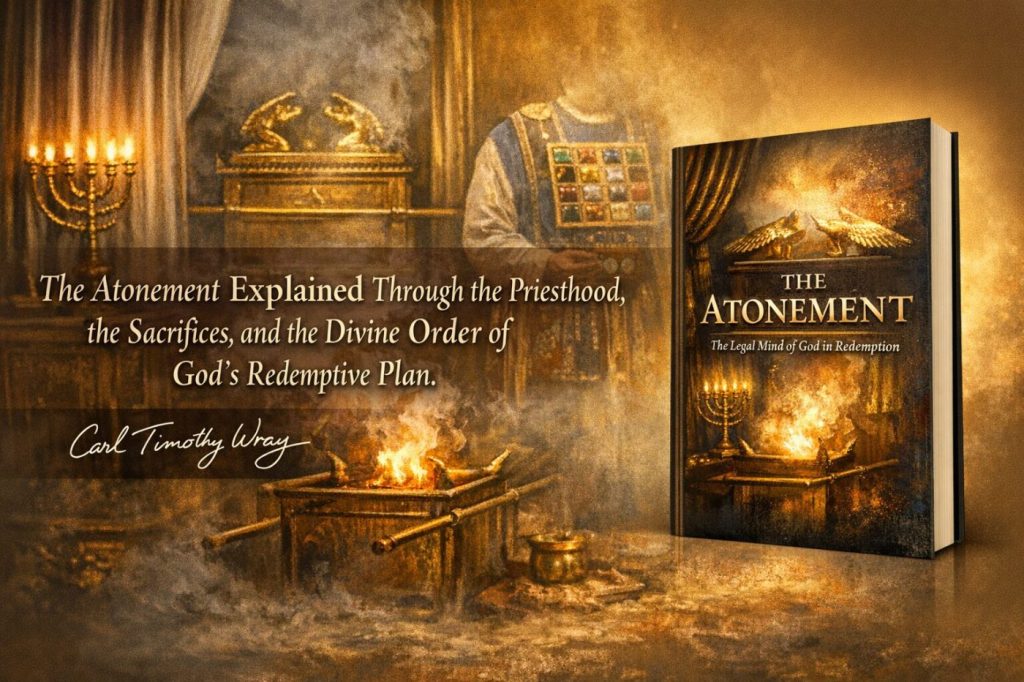
The Atonement Explained Through the Priesthood, the Sacrifices, and the Divine Order of God’s Redemptive Plan
The Atonement: Author
By Carl Timothy Wray
Carl Timothy Wray is the founder of The Finished Work of Christ and the author of hundreds of theological works exploring the full counsel of God from Genesis to Revelation. For over four decades, he has devoted his life to studying the Scriptures and unveiling the deeper patterns of divine revelation hidden within them. His writings focus on the finished work of Christ, the unfolding plan of the ages, the government of God, and the revelation of Jesus Christ in His people. Through his extensive library of teachings, Wray seeks to help believers see the unity of the Scriptures and understand the divine order through which God accomplishes redemption.
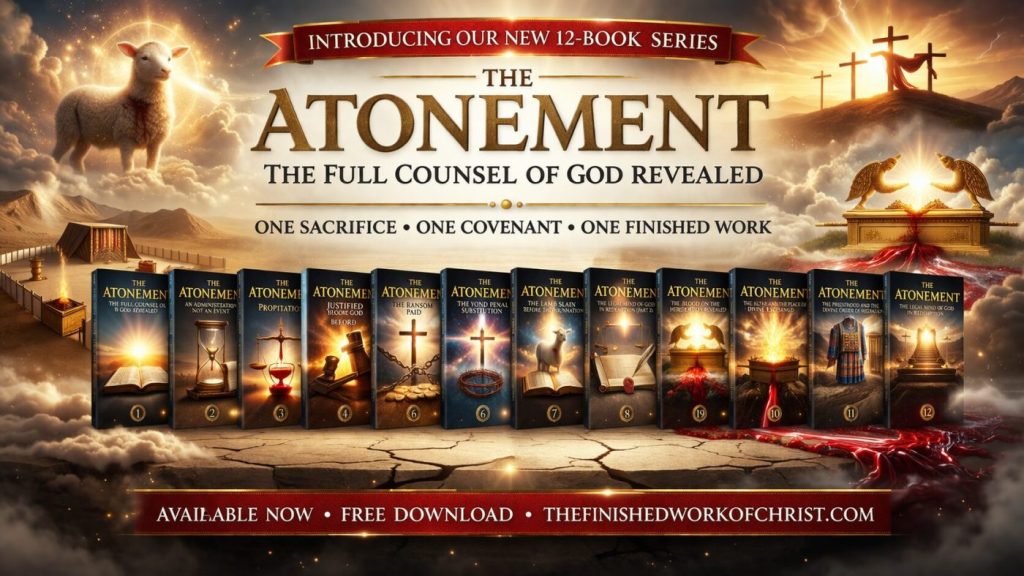
Atonement in the Bible is one of the most important and misunderstood concepts in Scripture. In this foundational volume, Carl Timothy Wray explores the meaning of atonement by examining the priesthood, the sacrificial system, and the divine structure through which God established redemption. From the law of Moses to the cross of Christ, this book reveals how atonement forms the legal and spiritual framework of God’s plan to reconcile humanity to Himself. By uncovering the patterns of priesthood, sacrifice, blood, and covenant, readers will gain a deeper understanding of how the entire Bible points to the redemptive work of Christ and the restoration of humanity through the finished work of God.
The Atonement: Introduction
The word atonement stands at the very center of the Bible’s message of redemption. From the earliest pages of Scripture to the final revelation of the Lamb in glory, the story of God’s dealings with humanity revolves around one profound question: How can a holy God reconcile a fallen creation to Himself without violating the righteousness of His own government?
The answer to that question unfolds through the divine wisdom of God’s redemptive plan. Redemption was not an afterthought in the mind of God, nor was it a desperate reaction to the fall of man. Rather, it was structured according to the counsel of His own will — a plan established within the depths of His eternal wisdom and revealed progressively through the patterns of Scripture.
Throughout the Old Covenant, God established a detailed system that illustrated the principles of atonement. The priesthood, the sacrifices, the altar, the blood, and the holy sanctuary were not random religious rituals. They were divine patterns designed to reveal the legal and spiritual order through which God would ultimately restore humanity. Every priestly garment, every sacrifice offered upon the altar, and every drop of blood sprinkled before the mercy seat pointed toward a greater fulfillment yet to come.
These shadows found their fulfillment in the person of Jesus Christ. In Him, the priesthood reaches its perfection, the sacrifices reach their completion, and the purpose of atonement is fully revealed. Christ stands as both the High Priest and the sacrifice, the mediator between God and humanity, and the Lamb through whom reconciliation is accomplished.
Yet to understand the fullness of Christ’s work, one must first understand the divine patterns that preceded it. The sacrificial system of the law was a prophetic drama revealing the mind of God concerning redemption. Each ritual contained a fragment of the greater story — a story that ultimately leads to the cross and beyond, to the restoration of all things.
This book begins a comprehensive exploration of that divine structure. By examining the priesthood, the sacrificial system, and the legal framework of redemption established in the Scriptures, we begin to see how God thinks about salvation. The atonement reveals not only the mercy of God but also His justice, wisdom, and perfect order.
As we journey through these pages, we will discover that the entire Bible testifies to a single reality: God has established a divine order through which redemption is accomplished and reconciliation is made possible.
To understand that order is to glimpse the profound wisdom of the God who designed it.
Chapter 1
The Problem Atonement Solves
The Question at the Heart of Redemption
Before the Bible reveals the solution of redemption, it first reveals the problem that redemption solves. The story of atonement begins with a profound question that echoes throughout the Scriptures: How can humanity be restored to fellowship with a holy God after sin has entered the world?
The entire redemptive narrative of the Bible revolves around this question. From Genesis to Revelation, the Scriptures reveal the unfolding answer to the problem of sin, alienation, and spiritual death. Without understanding the depth of this problem, the meaning of atonement cannot be fully appreciated.
Atonement is not merely a religious concept. It is the divine solution to the broken relationship between humanity and God.
Humanity Created for Fellowship with God
The opening chapters of the Bible reveal that humanity was created for communion with the Creator. Humanity was not created as a distant observer of God but as a participant in His life and purpose. Humanity was designed to walk in awareness of God, to live under His wisdom, and to participate in His divine order.
This original design reflects the heart of God for His creation. Humanity was made in the image of God and was given the privilege of stewardship within the created order. The relationship between God and humanity was meant to be one of fellowship, trust, and shared purpose.
The foundation of that relationship was life flowing from the Creator to His creation.
The Entrance of Sin into Human Experience
The harmony of that relationship was disrupted when humanity turned away from the wisdom and authority of God. Sin entered human experience, and with it came corruption, disorder, and spiritual blindness.
Sin introduced a new condition into human existence. Humanity began to experience life apart from the awareness of God’s presence and wisdom. The Scriptures describe this condition using powerful language: spiritual death, alienation, darkness of understanding, and separation from the life of God.
The human race did not cease to exist within God’s creation, but humanity entered a condition in which it could no longer properly perceive or participate in the life of God.
Spiritual Death and Alienation
One of the most striking descriptions of the human condition is the concept of spiritual death. The Scriptures describe humanity as being “dead in trespasses and sins,” a phrase that illustrates the loss of spiritual awareness and fellowship with God.
This death is not the cessation of physical life. Rather, it is a condition in which the human heart becomes darkened and unable to comprehend the things of God. Humanity continues to live physically, yet the awareness of God’s life and truth becomes obscured.
In this state, humanity becomes alienated from the life of God. The Scriptures describe people as being without hope and without the knowledge of God in the world.
The Barrier Between God and Humanity
Sin does more than corrupt human behavior; it creates a barrier in relationship. The holiness and righteousness of God cannot simply overlook sin, because God’s government is built upon truth and justice.
This introduces the central tension of the biblical story. God loves His creation and desires restoration, yet His righteousness cannot ignore the reality of sin. The problem is not merely moral failure but the disruption of the divine order through which humanity relates to God.
If humanity is to be restored, a solution must exist that honors both the justice of God and the mercy of God.
The Need for Atonement
This is where the concept of atonement enters the biblical narrative. Atonement is the divine provision through which the barrier between God and humanity can be removed.
Through atonement, sin is addressed, guilt is removed, and reconciliation becomes possible. The Scriptures reveal that God established a divinely ordered system through which atonement could be accomplished. This system would ultimately unfold through the priesthood, the sacrificial offerings, and the shedding of blood.
These elements were not arbitrary religious rituals. They were part of a carefully designed pattern that revealed the principles through which redemption would operate.
The Divine Wisdom Behind Redemption
From the earliest pages of Scripture, God began revealing the structure of redemption. The sacrificial system, the priesthood, and the holy sanctuary were all part of a larger divine pattern designed to teach humanity how reconciliation with God would occur.
Each element served as a prophetic picture pointing toward the ultimate fulfillment of atonement. The sacrifices revealed substitution, the priesthood revealed mediation, and the blood revealed the price of reconciliation.
These shadows were preparing humanity to understand the greater reality that would ultimately be fulfilled in Christ.
Atonement as the Foundation of Redemption
As we begin this journey into the study of atonement, it becomes clear that redemption is not random or accidental. It is structured according to the wisdom of God’s eternal purpose.
Atonement stands as the foundation upon which the entire redemptive plan is built. Through it, the justice of God is honored, the mercy of God is revealed, and the pathway of reconciliation is opened.
Understanding the problem that atonement solves allows us to appreciate the profound wisdom of the solution God has provided.
Chapter 2
The Legal Mind of God
God’s Government Is Established in Righteousness
To understand atonement, one must first understand the nature of God’s government. The Scriptures reveal that God does not act randomly or impulsively. His actions flow from the perfection of His wisdom, justice, and righteousness.
The throne of God is described as being established upon righteousness and justice. These are not merely attributes of God’s character; they are the foundation upon which His entire government operates. Every action God takes within creation is consistent with the integrity of His own nature.
Because God is righteous, His dealings with humanity must reflect that righteousness. Redemption, therefore, cannot be separated from the justice of God. The solution to humanity’s problem must honor the moral order upon which God’s government stands.
The Counsel of His Own Will
The Scriptures repeatedly affirm that God works according to the counsel of His own will. This means that the plan of redemption was not improvised after humanity fell into sin. Rather, it was conceived within the eternal wisdom of God long before it was revealed in history.
God’s purposes unfold according to a divine order. What appears to humanity as a series of historical events is, in reality, the unfolding of a plan that was established within the mind of God from the beginning.
The priesthood, the sacrifices, and the rituals of the law were not accidental developments. They were part of a carefully designed pattern through which God revealed the principles of redemption.
Justice and Mercy in Perfect Harmony
One of the greatest mysteries of redemption is how God brings together justice and mercy. These two aspects of God’s character are not in conflict with one another; they operate together in perfect harmony.
Justice demands that sin be addressed. Mercy desires the restoration of the sinner. Atonement reveals the divine wisdom through which both realities are satisfied.
Through the system of sacrifice and mediation, God established a way for sin to be dealt with while still extending grace to humanity. The sacrificial system demonstrated that reconciliation with God required both the removal of guilt and the restoration of relationship.
This balance between justice and mercy lies at the heart of the doctrine of atonement.
Redemption Requires a Legal Foundation
Because God governs creation according to righteousness, redemption must also operate within a legal framework. Sin is not merely a personal failure; it represents a violation of the divine order that governs life.
For reconciliation to occur, the consequences of sin must be addressed. This is why the Scriptures present redemption using legal language such as justification, redemption, ransom, and reconciliation.
Each of these terms reflects a different aspect of the divine solution. Together they reveal that God has established a structured process through which restoration becomes possible.
The system of atonement demonstrates that redemption is not arbitrary; it is the result of a divinely appointed order.
The Pattern Revealed Through the Law
The law of Moses served as the stage upon which the principles of redemption were displayed. Through the priesthood, the sacrifices, and the sanctuary, God revealed the structure through which atonement would operate.
The priest acted as mediator between God and the people. The sacrifices illustrated substitution and the cost of sin. The sanctuary symbolized the presence of God and the pathway through which humanity could approach Him.
Each element functioned as a teaching tool, revealing the deeper realities of redemption that would ultimately be fulfilled in Christ.
The law was therefore not merely a system of religious rules. It was a prophetic pattern designed to reveal the mind of God concerning reconciliation.
The Wisdom of God Revealed in Atonement
When the structure of atonement is examined closely, the wisdom of God becomes unmistakably clear. The priesthood, the sacrifices, the blood, and the sanctuary all work together as parts of a single divine design.
Each component contributes to the revelation of how God addresses the problem of sin while preserving the integrity of His government.
The priest mediates.
The sacrifice provides substitution.
The blood symbolizes life given in exchange for guilt.
The sanctuary represents the meeting place between God and humanity.
Together these elements reveal the profound wisdom of the God who established them.
Preparing the Way for the Greater Fulfillment
While the system of atonement under the law was powerful, it was never intended to be the final expression of redemption. The rituals of the law pointed beyond themselves to a greater fulfillment yet to come.
The priesthood anticipated a greater priest.
The sacrifices anticipated a greater sacrifice.
The blood of animals anticipated a greater offering.
These shadows prepared humanity to understand the work that would ultimately be accomplished through Christ.
As the story of redemption unfolds, the patterns established under the law lead us step by step toward the fulfillment of atonement in the person and work of Jesus Christ.
Chapter 3
The Birth of the Priesthood
The Need for a Mediator
As the story of redemption unfolds in the Scriptures, one truth becomes immediately clear: humanity could not simply approach the presence of God on its own terms. The holiness of God and the condition of fallen humanity created a gap that required mediation.
From the earliest days of the Old Covenant, God revealed that a mediator would stand between Himself and the people. This mediator would represent the people before God and carry out the sacred responsibilities required to maintain the relationship between the Creator and His covenant nation.
The priesthood was God’s appointed solution to this need. Through the priest, the people could approach God, and through the priest, the sacrifices required for atonement could be offered.
The priest therefore stood at the intersection between heaven and earth.
God’s Appointment of the Priesthood
The priesthood was not established through human ambition or personal desire. It was created by divine appointment. God chose a specific tribe and a specific family within that tribe to serve in this sacred role.
The tribe of Levi was set apart for service to the sanctuary, and from the family of Aaron the high priest would arise. This separation revealed an important principle: the priesthood was a calling that originated from God Himself.
No individual could simply decide to become a priest. The role required divine selection, preparation, and consecration.
This principle reinforced the idea that access to God must occur according to the order that God establishes.
The Priest as Representative of the People
One of the most profound aspects of the priesthood was the way the priest represented the people before God. When the priest entered the sanctuary, he did not come only as an individual. He came as the representative of the entire nation.
The high priest in particular carried the names of the tribes of Israel upon his garments, symbolizing that the people were being presented before God through the ministry of the priest.
In this way, the priest served as a bridge between humanity and the divine presence. His ministry illustrated that reconciliation required someone who could stand in the place of the people and perform the duties required for atonement.
This concept of representation would later find its ultimate fulfillment in Christ.
The Priest as Servant of the Sanctuary
The priest’s responsibilities extended far beyond the offering of sacrifices. The sanctuary itself required continual care and attention. The priests were entrusted with maintaining the sacred space where God’s presence dwelt among the people.
They tended the altar, maintained the lamps of the sanctuary, prepared the sacred bread, and burned incense before the Lord. Each of these duties symbolized aspects of worship, devotion, and communion with God.
Through their service, the priests maintained the rhythm of worship that connected the nation of Israel with the presence of their God.
The Consecration of the Priest
Before a priest could begin his ministry, he had to undergo a process of consecration. This preparation involved washing, anointing, and the receiving of sacred garments.
These acts symbolized purification and dedication. The priest was set apart from ordinary life and devoted entirely to the service of God. His life, his duties, and even his clothing reflected the sacred nature of his calling.
The consecration of the priest illustrated that those who approach God in service must do so with reverence and purity.
The Priesthood as a Prophetic Pattern
Although the priesthood functioned as a practical system within the life of Israel, it also served a deeper prophetic purpose. Every aspect of the priestly ministry pointed beyond itself to a greater reality.
The priest represented mediation.
The sacrifices represented substitution.
The sanctuary represented the dwelling place of God among humanity.
These elements together formed a prophetic pattern revealing the way God intended to bring about reconciliation.
The priesthood was therefore more than a religious institution. It was a shadow of the greater redemption that would eventually be fulfilled through Christ.
Preparing the Way for the Greater Priest
The limitations of the Old Covenant priesthood were evident. The priests themselves were human and subject to weakness. Their ministry had to be repeated continually, and the sacrifices they offered were unable to permanently remove sin.
Yet these limitations served an important purpose. They pointed forward to the need for a greater priest — one who could accomplish what the earthly priesthood could only symbolize.
This greater priest would not merely represent the people temporarily but would bring about a lasting reconciliation between God and humanity.
The Old Covenant priesthood therefore functioned as a preview of the ultimate priesthood that would be revealed in Christ.
Chapter 4
The Consecration of the Priest
Preparation Before Ministry
Before a priest could begin serving in the sanctuary, he had to undergo a careful and sacred process of preparation. The priesthood was not simply a role that a person stepped into casually. It required consecration, purification, and dedication to the service of God.
This preparation demonstrated an important principle: those who approach the presence of God must do so according to the order that God establishes. The priest could not minister before the altar until he had first been prepared according to the instructions given by God.
Through this process, the priest was set apart from ordinary life and devoted to the sacred responsibilities of his office.
The Washing of the Priest
One of the first acts in the consecration of the priest was the ritual washing with water. This washing symbolized purification and readiness to enter the holy service of God.
The act of washing revealed a foundational truth about approaching God: purity is required. The priest could not stand in the sanctuary while carrying the defilements of ordinary life. Before he could serve in the presence of God, he had to be cleansed.
This ritual pointed toward the deeper spiritual reality that those who minister before God must be purified from sin and prepared to walk in holiness.
The Anointing with Oil
After the washing, the priest was anointed with sacred oil. This anointing represented the setting apart of the priest for divine service. The oil symbolized the authority and empowerment granted by God for the responsibilities of the priestly office.
The anointing also marked the priest as belonging to God. From that moment forward, his life and ministry were dedicated to serving the purposes of the divine covenant.
The presence of the anointing demonstrated that the priest’s authority did not come from human status or personal achievement. It came from God.
The Sacred Garments of the Priest
Once the priest had been washed and anointed, he was clothed with the garments appointed for his office. These garments were not ordinary clothing; they were designed with symbolic meaning and represented the dignity of the priestly role.
The garments included various elements such as the robe, the ephod, the breastplate, and the head covering. Each piece reflected an aspect of the priest’s responsibility and his position before God.
Through these garments, the priest visually represented the sacred nature of his calling. His clothing signified that he stood in a role set apart from the ordinary life of the people.
Holiness as the Mark of the Priesthood
At the center of the priestly calling was the concept of holiness. The priest was set apart for the service of God, and his life was to reflect the holiness of the One he served.
This holiness was not simply moral behavior; it was a dedication of life and purpose to the service of God. The priest represented the people before God and therefore carried a responsibility to maintain the sanctity of that role.
The rituals of washing, anointing, and clothing all reinforced this principle: those who minister in the presence of God must be consecrated to His service.
The Priest as a Living Symbol
The consecration of the priest transformed him into more than an individual performing religious duties. He became a living symbol of the divine order through which humanity could approach God.
His purification represented the cleansing required for fellowship with God.
His anointing represented the authority given by God.
His garments represented the dignity and holiness of his office.
Every aspect of his preparation illustrated the seriousness of the ministry entrusted to him.
A Pattern Pointing to a Greater Priest
Like every other element of the Old Covenant system, the consecration of the priest pointed toward a greater fulfillment. The washing, the anointing, and the sacred garments all anticipated the ministry of the One who would ultimately fulfill the role of the perfect High Priest.
The preparation of the earthly priesthood revealed the pattern of the greater priesthood that would be revealed in Christ. Through Him, the principles of purification, consecration, and mediation would reach their complete expression.
The consecration of the priest therefore served as a prophetic picture, preparing the way for the ultimate work of redemption that God would accomplish through His Son.
Chapter 5
The Garments of the Priest
Garments Designed by God
When God established the priesthood, He did not leave the clothing of the priests to human choice or cultural fashion. The garments worn by the priests were specifically designed according to divine instruction. Every detail was carefully given, revealing that even the clothing of the priesthood carried meaning.
These garments set the priest apart from the rest of the people. When a priest stood before the altar or entered the sanctuary, his appearance visibly communicated that he served in a sacred office. The clothing itself reminded both the priest and the people that the ministry taking place was not ordinary.
The garments of the priest therefore functioned as visible signs of the divine order through which God had established the ministry of atonement.
Garments for Glory and Beauty
The sacred garments were described as being made “for glory and for beauty.” This phrase reveals that the priesthood was meant to reflect something of the majesty and holiness of God.
The priest did not represent himself when he ministered in the sanctuary. He represented both the people and the sacred order established by God. His garments reflected the dignity of the role he carried.
The beauty of the garments also pointed toward the perfection and holiness of the One whom the priest ultimately represented.
The Robe of the Priest
Among the garments of the priest was the robe worn beneath the ephod. This robe signified the priest’s role as one who stood in service before God. It covered the priest’s body and symbolized the covering required for those who approach the presence of the Lord.
The robe also represented the dignity and authority of the priestly office. When the priest entered the sanctuary clothed in this robe, he carried the visible marks of the ministry entrusted to him.
The robe reminded the people that access to God required mediation through the priest appointed by Him.
The Ephod
The ephod was a central garment worn by the high priest. It was a vest-like garment worn over the robe and served as the foundation for several other elements of the priestly attire.
The ephod signified the responsibility carried by the high priest in representing the people before God. It served as the garment upon which other symbolic pieces were attached, illustrating that the priest carried the weight of the nation in his ministry.
Through the ephod, the priest bore the responsibility of mediation between God and the people.
The Breastplate
Attached to the ephod was the breastplate, a carefully crafted piece that held twelve stones representing the twelve tribes of Israel. Each stone carried the name of one of the tribes, symbolizing that the priest carried the people upon his heart when he entered the presence of God.
This imagery revealed one of the most beautiful aspects of the priesthood. The priest did not come before God on behalf of himself alone. He carried the entire community with him.
The breastplate therefore symbolized representation and remembrance before God.
The Headpiece and the Mark of Holiness
The priest also wore a headpiece upon which a golden plate was placed bearing the inscription declaring holiness to the Lord. This declaration represented the sacred nature of the priest’s calling and reminded everyone who saw him that the ministry of the sanctuary belonged entirely to God.
The headpiece emphasized that the priest’s thoughts, intentions, and actions were to be dedicated to the service of the Lord.
Holiness was the defining mark of the priestly office.
The Priest as a Living Symbol
When the priest entered the sanctuary clothed in these garments, he became a living symbol of the divine order through which humanity approached God. His clothing reflected the holiness required for ministry, the responsibility of representation, and the dignity of the sacred office entrusted to him.
Every element of the priest’s attire communicated a message about the nature of mediation and the seriousness of approaching God.
Through these garments, the priesthood illustrated the structure of atonement established under the law.
The Garments Pointing to a Greater Reality
Like every aspect of the Old Covenant system, the garments of the priest pointed beyond themselves. They were not merely ceremonial clothing; they were prophetic symbols anticipating a greater fulfillment.
The priest represented the people before God, but his ministry was temporary. The garments he wore reflected a role that would ultimately be fulfilled in a greater and more perfect priest.
In Christ, the symbolism of the priestly garments reaches its fullest meaning. The One who perfectly represents humanity before God carries the people not merely upon symbolic stones but within the reality of His redemptive work.
The garments of the priest therefore serve as a powerful reminder that the Old Covenant was preparing humanity to understand the greater work of redemption that would be revealed through Christ.
Chapter 6
The Sacrificial System
The Altar at the Center of Worship
At the center of Israel’s worship stood the altar. It was the place where sacrifices were offered, where blood was shed, and where the relationship between God and His people was maintained through the process of atonement.
The altar represented the meeting point between divine justice and divine mercy. It was there that the consequences of sin were addressed and where reconciliation could begin. Without the altar, the entire system of atonement would have been impossible.
The presence of the altar in the life of Israel demonstrated a foundational truth: reconciliation with God required sacrifice.
The Principle of Substitution
One of the most important ideas revealed through the sacrificial system is the principle of substitution. The animal brought to the altar represented the life of the person offering the sacrifice.
The worshiper would bring an animal without blemish and present it before the priest. In doing so, the worshiper acknowledged that the consequences of sin required the giving of life. The life of the sacrifice stood in place of the life of the person who had sinned.
This act illustrated a powerful spiritual principle: guilt could be transferred and dealt with through the offering of a substitute.
The sacrificial system therefore taught the people that atonement involved the giving of life in place of life.
The Offerings of the Law
The law established several different types of offerings, each revealing a unique aspect of the relationship between God and humanity. These offerings included the burnt offering, the sin offering, the trespass offering, the peace offering, and the meal offering.
Each sacrifice had a specific purpose and communicated a particular dimension of worship and atonement. Some offerings addressed sin and guilt, while others expressed thanksgiving, fellowship, or dedication to God.
Together these sacrifices formed a complete system through which the people could maintain their covenant relationship with God.
The Burnt Offering
The burnt offering represented complete dedication to God. The entire sacrifice was consumed upon the altar, symbolizing total surrender and devotion.
This offering reminded the people that their lives ultimately belonged to God. Through the burnt offering, they acknowledged His authority and expressed their desire to live according to His will.
The rising smoke of the sacrifice symbolized the offering ascending before God as an act of worship.
The Sin Offering
The sin offering addressed the problem of guilt. When individuals or the community became aware of sin, this offering provided a means through which that guilt could be dealt with.
The sacrifice demonstrated that sin had consequences and that those consequences required a response within the divine order established by God.
Through the sin offering, the people learned that forgiveness and reconciliation required the acknowledgment and removal of guilt.
The Trespass Offering
The trespass offering dealt specifically with offenses that involved harm to others or violations of sacred things. In addition to the sacrifice itself, restitution was often required.
This offering emphasized that sin affected not only the relationship between humanity and God but also the relationships among people.
Through the trespass offering, the law demonstrated that reconciliation often required both sacrifice and restoration.
The Peace Offering
The peace offering represented fellowship with God. Unlike other sacrifices, portions of this offering were shared between the altar, the priest, and the worshiper.
This sharing symbolized restored communion between God and His people. The peace offering celebrated the harmony that existed when the covenant relationship was properly maintained.
It reminded the people that the ultimate goal of atonement was not merely the removal of sin but the restoration of fellowship.
The Meal Offering
The meal offering consisted of grain presented before God. It symbolized the fruit of human labor offered in gratitude to the Creator.
Although it did not involve the shedding of blood, the meal offering complemented the sacrificial system by expressing devotion and thanksgiving.
Through this offering, the people acknowledged that all provision ultimately came from God.
The Sacrificial System as a Prophetic Pattern
While the sacrifices served practical purposes within the life of Israel, they also carried a deeper prophetic meaning. Each offering pointed forward to a greater fulfillment that would come through the work of Christ.
The sacrifices revealed substitution.
The altar revealed the meeting place of reconciliation.
The blood revealed the cost of redemption.
Together they formed a symbolic language through which God was teaching humanity the principles of atonement.
Preparing the Way for the Ultimate Sacrifice
Despite their significance, the sacrifices of the Old Covenant were never intended to permanently remove sin. They had to be offered repeatedly, reminding the people that a greater solution was still to come.
These sacrifices prepared humanity to understand the ultimate sacrifice that would be offered through Christ. When that moment arrived, the patterns established under the law would finally reach their fulfillment.
The sacrificial system therefore served as both a practical means of worship and a prophetic preview of the redemption that would ultimately be accomplished through the Lamb of God.
Chapter 7
The Blood of Atonement
The Central Role of Blood in Redemption
As the sacrificial system unfolded in the life of Israel, one element appeared again and again: the shedding of blood. Every offering that dealt with sin required blood, and every act of atonement involved the application of that blood upon the altar or within the sanctuary.
This repeated emphasis revealed an important principle within the divine order established by God. Atonement required the giving of life, and the Scriptures declared that the life of the flesh was in the blood.
Because life was represented in the blood, the shedding of blood symbolized the giving of life to address the consequences of sin.
The Life Is in the Blood
The law clearly explained the reason blood was used in the sacrificial system. Blood represented life itself. When the blood of the sacrifice was poured out or sprinkled upon the altar, it signified that a life had been given in place of the guilty party.
This principle revealed that sin carried a cost that could not simply be ignored. The seriousness of sin required a response within the divine order of God’s government.
Through the blood of the sacrifice, the guilt of sin could be addressed and the relationship between God and the people could be preserved.
Blood as the Means of Cleansing
Another important function of blood within the sacrificial system was purification. The blood was applied not only to the altar but also to various elements of the sanctuary.
Through this act, the sanctuary itself was symbolically cleansed from the effects of sin among the people. The use of blood demonstrated that purification was necessary for the continued presence of God among His people.
The concept of cleansing through blood reinforced the idea that atonement involved both forgiveness and purification.
The Sprinkling of Blood
The priests performed various rituals involving the sprinkling of blood. These actions were not random gestures but carefully prescribed acts that communicated the seriousness of the sacrificial offering.
When the blood was sprinkled before the altar or within the sanctuary, it symbolized that the sacrifice had been presented before God. The act of sprinkling made the offering visible within the sacred space where God’s presence dwelt.
Through these rituals, the people were continually reminded that reconciliation with God required the shedding and presentation of blood.
The Blood on the Mercy Seat
One of the most significant uses of blood occurred on the Day of Atonement. On that day, the high priest entered the most holy place and sprinkled blood upon the mercy seat.
The mercy seat represented the meeting place between God and humanity within the sanctuary. When the blood was applied there, it symbolized that the requirements of atonement had been fulfilled.
This moment revealed the profound truth that reconciliation between God and humanity required both sacrifice and mediation.
Blood as a Prophetic Symbol
Although the sacrificial system was a practical part of Israel’s worship, the repeated use of blood carried a deeper prophetic meaning. Each sacrifice pointed beyond itself toward a greater offering yet to come.
The blood of animals could temporarily address the consequences of sin, but it could not permanently remove guilt. The repetition of sacrifices year after year demonstrated that a more perfect solution was required.
These sacrifices therefore prepared humanity to understand the significance of the ultimate sacrifice that would later be revealed.
The Greater Blood of Redemption
When the fullness of time arrived, the patterns established under the law found their fulfillment in Christ. The shedding of blood within the sacrificial system anticipated the offering of a greater life that would accomplish what the earlier sacrifices could only symbolize.
Through His sacrifice, the principles revealed in the law reached their complete expression. The patterns of substitution, cleansing, and reconciliation that had been illustrated through the blood of animals were fulfilled in the work of Christ.
The blood of atonement therefore stands at the center of the redemptive story, revealing both the seriousness of sin and the depth of God’s provision for reconciliation.
Chapter 8
The Day of Atonement
The Holiest Day in Israel’s Calendar
Among all the sacred observances established under the law, none carried greater significance than the Day of Atonement. This was the one day each year when the high priest entered the most holy place of the sanctuary to make atonement for the entire nation.
While daily sacrifices addressed individual acts of sin, the Day of Atonement dealt with the collective condition of the people and the cleansing of the sanctuary itself. It was the moment when the entire sacrificial system reached its highest expression.
On this day, the high priest stood as the representative of the whole nation, carrying the responsibility of presenting the necessary offerings before God.
The High Priest Enters the Most Holy Place
Unlike the ordinary priests, the high priest alone was permitted to enter the most holy place, and even he could do so only once each year. The most holy place represented the inner sanctuary where the presence of God dwelt above the mercy seat.
Before entering, the high priest carefully prepared himself through purification and the offering of sacrifices. His entrance into the most sacred space symbolized the approach of humanity into the presence of God through mediation.
The solemn nature of this moment revealed that access to the presence of God required careful preparation and the proper fulfillment of the divine order established by God.
The Two Goats
One of the most distinctive elements of the Day of Atonement involved two goats presented before the Lord. These goats represented two complementary aspects of atonement.
One goat was designated as the offering for the Lord. This goat was sacrificed, and its blood was taken into the sanctuary and sprinkled upon the mercy seat. Through this act, atonement was made within the sacred space where God’s presence dwelt.
The second goat, often called the scapegoat, was not sacrificed in the same way. Instead, the sins of the people were symbolically placed upon it, and it was sent away into the wilderness.
Together these two goats illustrated both the removal of sin and the cleansing required for reconciliation.
The Blood on the Mercy Seat
The sprinkling of blood upon the mercy seat represented the most sacred act of the entire ritual. The mercy seat was the symbolic throne of God within the sanctuary, the place where His presence rested between the cherubim.
When the blood of the sacrifice was applied there, it signified that the requirements of atonement had been fulfilled before God. The blood represented the life offered in place of the people, satisfying the divine order through which reconciliation could occur.
This moment illustrated the meeting point between divine justice and divine mercy.
The Removal of Sin
The second goat represented another essential dimension of atonement: the removal of sin from the community. After the sins of the people were symbolically placed upon the goat, it was led away into the wilderness.
This act illustrated the complete removal of guilt from the people. The sins that had separated the community from God were carried away, symbolizing that they no longer remained among them.
The image of the scapegoat revealed that atonement involved not only sacrifice but also the removal of the burden of sin.
The Cleansing of the Sanctuary
The Day of Atonement also involved the purification of the sanctuary itself. Because the people lived with sin and imperfection, the sanctuary symbolically carried the effects of those realities throughout the year.
Through the ritual of atonement, the sanctuary was cleansed so that the presence of God could continue to dwell among the people. This act reinforced the idea that holiness required purification and renewal.
The cleansing of the sanctuary illustrated the depth of God’s concern for maintaining the sacred relationship between Himself and His people.
A Prophetic Picture of the Greater Atonement
Although the Day of Atonement was the most sacred observance in the life of Israel, it was never meant to be the final expression of redemption. The ritual had to be repeated every year, reminding the people that the deeper problem of sin had not yet been permanently resolved.
The high priest who entered the sanctuary was himself a human being subject to weakness. The sacrifices offered were temporary symbols pointing toward a greater reality yet to come.
The entire ceremony served as a prophetic picture of the ultimate atonement that would be accomplished through Christ.
The Greater High Priest
In the fullness of time, the patterns revealed in the Day of Atonement reached their fulfillment. The high priest who entered the sanctuary once each year foreshadowed the coming of a greater High Priest who would accomplish a perfect and lasting reconciliation.
Through His work, the principles illustrated by the sacrifices, the blood, and the removal of sin would find their ultimate expression.
The Day of Atonement therefore stands as one of the most powerful prophetic images in the entire Old Covenant, pointing forward to the redemption that would ultimately be revealed through the Lamb of God.
Chapter 9
Christ the Fulfillment of Atonement
The Shadows Pointing to a Greater Reality
Throughout the Old Covenant, the priesthood, the sacrifices, and the rituals of the sanctuary served as powerful symbols revealing the principles of redemption. Yet these practices were never intended to be the final expression of God’s plan. They functioned as shadows pointing toward a greater reality.
The repetition of sacrifices year after year demonstrated that the system itself was incomplete. The blood of animals could temporarily address sin within the structure of the covenant, but it could not permanently remove guilt or transform the human condition.
The law therefore served as a prophetic picture, preparing humanity to understand the work that would ultimately be accomplished through Christ.
Christ as the True High Priest
One of the most significant aspects of Christ’s work is that He fulfills the role of the high priest. The high priest of the Old Covenant entered the sanctuary on behalf of the people, offering sacrifices and presenting blood before the mercy seat.
Christ embodies the greater fulfillment of this role. He stands as the mediator between God and humanity, representing both the divine purpose of reconciliation and the human need for restoration.
Unlike the priests of the Old Covenant, whose ministry was temporary and limited, Christ’s priesthood reveals the perfection of mediation within God’s redemptive plan.
Christ as the Perfect Sacrifice
The sacrificial system under the law revealed the principle that reconciliation required the offering of life. Animals were brought to the altar as substitutes for the people, illustrating the seriousness of sin and the cost of atonement.
In Christ, this principle reaches its ultimate fulfillment. The sacrifice offered through Him embodies the perfect expression of the substitution that the earlier sacrifices only symbolized.
The offering of Christ brings together the themes of substitution, reconciliation, and redemption in a single act that fulfills the patterns established throughout the law.
The Greater Blood of Atonement
The blood that was shed within the sacrificial system symbolized the giving of life required for atonement. Yet the continual repetition of sacrifices revealed that these offerings could not permanently resolve the problem of sin.
Through the sacrifice of Christ, the symbolism of the earlier sacrifices finds its complete expression. The patterns of cleansing, reconciliation, and restoration that were illustrated through the sacrificial system reach their fulfillment in the work accomplished through Him.
The blood of atonement therefore becomes the central symbol of redemption, revealing the cost of reconciliation and the depth of God’s provision for humanity.
The Removal of Sin
The Day of Atonement illustrated the removal of sin through the image of the scapegoat carrying the sins of the people away into the wilderness. This powerful image symbolized the desire for guilt to be completely removed from the community.
In Christ, this image finds its ultimate expression. The patterns of substitution and removal that were enacted through the sacrificial system point toward the deeper reality of redemption that addresses the root of humanity’s alienation from God.
The work of Christ therefore fulfills both aspects of the Day of Atonement — the sacrifice presented before God and the removal of sin from the people.
The Opening of Access to God
Under the Old Covenant, access to the presence of God was limited. Only the high priest could enter the most holy place, and even then only once each year. The sanctuary system illustrated the distance between the holiness of God and the condition of humanity.
Through the fulfillment of atonement in Christ, the barriers symbolized by the sanctuary are overcome. The patterns of mediation and sacrifice give way to the reality of reconciliation and restored relationship.
The work of Christ reveals that the purpose of atonement is not merely the removal of guilt but the restoration of communion between God and humanity.
The Completion of the Redemptive Pattern
When viewed through the lens of Christ’s work, the entire Old Covenant system takes on new meaning. The priesthood, the sacrifices, the blood, and the sanctuary all functioned as prophetic illustrations preparing humanity to understand the greater reality of redemption.
Each element of the law revealed a fragment of the divine plan. When these fragments are brought together, they form a unified picture pointing toward the fulfillment of atonement through Christ.
The patterns established under the law therefore reach their completion in the person and work of the One who fulfills the role of both priest and sacrifice.
The Revelation of God’s Redemptive Wisdom
In the fulfillment of atonement through Christ, the wisdom of God’s redemptive plan becomes fully visible. What once appeared as a complex system of rituals and sacrifices is revealed to be a carefully designed pattern pointing toward a greater reality.
The priesthood anticipated the mediator.
The sacrifices anticipated the offering.
The blood anticipated the life given for reconciliation.
Through Christ, these patterns find their ultimate meaning, revealing the profound wisdom of the God who established them.
Chapter 10
The Atonement Revealed in the Kingdom
The Fulfillment of the Divine Pattern
Throughout this study, we have traced the pattern of atonement from its earliest expressions in the law to its fulfillment in Christ. The priesthood, the sacrifices, the blood, and the Day of Atonement were all part of a divinely designed system that revealed how God would reconcile humanity to Himself.
These elements were never isolated religious rituals. They were pieces of a larger picture that pointed toward the greater work of redemption that would ultimately be accomplished. When viewed together, they reveal the wisdom of God’s plan unfolding across the pages of Scripture.
The fulfillment of this pattern reveals that atonement was always intended to lead to restoration.
Reconciliation Restored
At the heart of atonement lies the restoration of relationship between God and humanity. The sacrifices of the law addressed the consequences of sin within the structure of the covenant, but their deeper purpose was to illustrate the possibility of reconciliation.
Through the fulfillment of atonement in Christ, the barrier that once separated humanity from the awareness of God’s life is overcome. The patterns that once symbolized reconciliation now point to the reality of restored fellowship.
The goal of redemption has always been the renewal of communion between the Creator and His creation.
A Kingdom of Priests
The priesthood under the Old Covenant represented a small group of individuals who served as mediators between God and the people. Their ministry foreshadowed a greater reality that would emerge as the redemptive plan unfolded.
Through the fulfillment of atonement, the concept of priesthood expands beyond a single tribe or family. The work of reconciliation opens the way for a community that participates in the life and purpose of God.
This vision reveals a kingdom in which the principles of mediation, worship, and service extend beyond the sanctuary and into the lives of those who walk in the reality of redemption.
The Lamb in the Throne
The final book of the Scriptures presents a powerful image that brings the story of atonement to its ultimate conclusion. The Lamb who was once sacrificed is now seen at the center of divine authority.
This image reveals that the work of redemption is not merely an event in history but a defining reality within the kingdom of God. The Lamb who embodies the fulfillment of atonement stands at the heart of the divine order that governs creation.
Through this vision, the redemptive story reaches its culmination: the One who fulfilled the sacrifice now reigns within the fullness of divine authority.
The Restoration of All Things
The purpose of atonement extends beyond individual forgiveness. The redemptive work of God moves toward the restoration of the entire created order.
The patterns established under the law and fulfilled through Christ ultimately point toward the renewal of creation itself. The reconciliation that begins with the removal of sin leads toward the restoration of harmony between God and His creation.
The vision of redemption therefore encompasses both personal transformation and the renewal of the world.
The Wisdom of God’s Redemptive Plan
When the entire story of atonement is viewed together, the wisdom of God’s design becomes unmistakably clear. What once appeared as a complex system of rituals and laws is revealed to be a carefully crafted pattern leading toward a greater fulfillment.
The priesthood revealed mediation.
The sacrifices revealed substitution.
The blood revealed the cost of reconciliation.
The sanctuary revealed the presence of God among His people.
Each element served as a piece of the larger picture that ultimately revealed the depth of God’s love and the order of His redemptive plan.
The Beginning of a Greater Study
This book has introduced the foundational principles of atonement and the divine order through which God structured redemption. Yet the subject of atonement extends far beyond the boundaries of a single volume.
The priesthood, the garments of the high priest, the sacrificial system, the blood, and the Day of Atonement each contain layers of meaning that deserve deeper exploration.
This study therefore marks the beginning of a larger journey into the patterns and principles through which God has revealed His redemptive purpose.
The Invitation to Deeper Understanding
As we continue exploring the theme of atonement, we will discover that every element of the Old Covenant system points toward the same profound reality: God has established a divine order through which reconciliation becomes possible.
The patterns of the law lead us to the fulfillment of redemption in Christ. The fulfillment of redemption opens the door to the restoration of relationship with God. And the restoration of relationship reveals the unfolding purpose of the kingdom of God.
The study of atonement therefore invites us to look deeper into the wisdom of the God who designed it.
The Atonement: By Carl Timothy Wray

The Atonement Series:
- The Finished Work of Christ — God’s Full Counsel Revealed Through the Plan of the Ages
- The Finished Work of Christ: Meaning, Key Scriptures & FAQs
- Join Our Facebook Page